Cricket used to be referred as a “Gentleman’s Game.” It now seems like an oxymoron.
Just look at the events from the last couple of weeks. Contrasting actions from the England and Wales Cricket Board (ECB) & Bangladesh Cricket Board (BCB) shed light into a changing world and the role sports & media play in the larger scheme of things.
Why Shakib, Why?
A video went viral last week where Shakib Al Hasan broke the stumps twice in the same Dhaka Premier League (DPL) match. Have a look below. It is pretty disheartening.
What was the result of his actions? Three match ban and monetary fine. That’s all.
This is a proper recording of Bangladesh national cricketer #ShakibAlHasan's antics on the pitch. He has since apologized for his behavior. But the question is: Will the Bangladesh Cricket Board let him go with just an apology?pic.twitter.com/IqkfOFzQQ3
Shakib Al Hasan is one of my all-time favorite players. He might go down as the best all-rounder cricket has ever seen. Definitely Bangladesh’s all-time best.
This does not however, or at least should not, excuse him from such unruly behavior.
Mohammad Isam beautifully outlines the growing influence of Shakib’s indiscipline and his utter disregard for the “game, his colleagues, or the officials.” Since Shakib is an integral part of the Bangladesh national team, his previous bans have been reduced to accommodate him.
History of Indiscipline in Recent Bangladesh Cricket
What’s worse? It is not the first time, and most likely will not be his last.
Shakib’s first public outburst came way back in 2010, abusing a spectator who was blocking the sightscreen. A few more instances of trouble occurred in 2011, but he was not reprimanded. The first action taken against him was in 2014, when he was banned for 3 matches for displaying an inappropriate gesture on live television. A six month ban ( eventually reduced to three months) followed in 2014 due to internal disputes with coach Hathurusingha and his threats to quit international cricket. Finally, the most serious suspension was a year-long hiatus imposed by the ICC in 2019 for Shakib not reporting a bookie approach.
Just a few weeks ago, Mushfiqur Rahim, who himself has some history of anger & premature celebrations, displayed his rage on the field to his own teammate.
Nidahas Trophy was especially infamous for such antics. Snake-dance celebration, Shakib calling players back in the middle of a game, and Mahmudullah’s display of anger prior to his last ball six.
Although these senior players have to take responsibility, there is a larger picture at play here. Isam portrays that the entire Bangladesh system is to blame—biased umpiring, poor administration & leadership, local club bias/corruption, points manipulation, etc.
Poor environment breeds poor behavior. As simple as that.
Ollie Robinson: The Other Side of the Coin
England’s hands-on policy to deal with disciplinary issues lies on the other end of the spectrum.
27-year old Ollie Robinson had a magnificent debut in the first Test against England, taking 4/75 & 3/26 to go along with a solid 42. During the Test, his racist and sexist tweets reemerged from 2012. These comments are completely inexcusable, even if it was an 18-year-old tweeting it who did not have a professional contract back then.
He announces a short break from cricket to be with his family due to social media pressure.
Dom Bess deactivates his Twitter account as a precautionary measure
McCullum-Morgan-Buttler’s old tweets mocking English of other fans & players are bashed by twitterati.
England promises swift action, zero-tolerance policy, series of workshops, & self-education. Commentators like Nasser Hussain, captain Joe Root, and Jimmy Anderson have all pitched in to further the conversation on inclusiveness and focus on “improving [themselves] as people.” Even Prime Minister Boris Johnson had a say—claiming Robinson’s punishment was too severe.
In order to help make the society more inclusive & tolerant, actions need to be taken, but how far is too far?
Alex Hales & Joe Clarke
England is not the embodiment of gentleman’s game either. Far from it. Just like Bangladesh, this is not the first in England’s cricket either.
This was just a recent list of incidents. I am sure there are several more and numerous unreported cases.
Fine Line Between Cancel Culture And Laissez-Faire?
Hales, one of the catalysts of England’s rise to the top in limited overs cricket, has yet to make a comeback despite completing rehabilitation and performing in T20 leagues. Similarly, Joe Clarke has been performing consistently in T20 Blasts circuits, but it is unlikely he will ever be selected on the international arena.
On the other hand, punishments for Shakib and co vary are not harsh at all. Yes, racism and anger against an umpire are two different things, but there needs to be a standardized guidance from ICC.
This gets me to my final point—where do you draw the fine line?
Cancel and woke culture, accentuated by the age of social media, has been a major factor in all this. If nobody found out about the Robinson’s tweets, would he have been reprimanded? Resurfacing social posts and twitter policing, courtesy random people sitting behind screen’s and criticizing the world, can have a major impact on someone else’s career & life. Social media is good to awaken certain conversations, but whether it should be utilized for hasty actions is another question.
The BCB has employed a more laissez-faire approach while ECB’s handling is much more extreme, influenced by cancel culture. In reality, disciplinary guidelines should be somewhere in the middle.
George Dobell offers an apt solution—Amnesty. Instead of digging up old tweets and punishing retroactively, why not accept the mistake, “outline modern-day expectations and penalties, and provide a fresh start”?
One thing is for certain — cricket is no longer a gentleman’s game. Culture and societies are evolving and cricket should follow suit, albeit in a careful manner.
COPYRIGHT @Nitesh Mathur, aka Nit-X, 06/16/2021; Email at bcd@brokencricketdreams.com
Greek philosopher Heraclitus penned a now famous phrase, “Change is the only constant in life, ” and well, it seems that the Cricket World Cup (CWC) formats took this quote a little too seriously.
Group stage, round-robin, Super Sixes, Super Eights, knockouts—you name it, the format has been experimented with.
History Repeats Itself
From an 8-team event (1975, 1979), the CWC gradually grew to nine teams (1992), then 12 (1996, 1999), 14-teams (2003), and finally reached its inflection point with 16 teams in the 2007 Cricket World Cup.
The 2007 iteration was poorly received for various reasons, but one of the fallouts was halting the gradual expansion of Associate nations in World Cups. With genuine upsets from Ireland & Bangladesh against Pakistan, India, and later South Africa, the ICC lost a major chunk of funding.
The impact?
2011 & 2015 World Cups went back to the ‘90s formats with an elongated 14-team event, while the 10-team 2019 & 2023 events have revived the 1992 round-robin structure, providing as much game time (and hence, financial stability) for the big teams.
If It Is Broke, Fix It
The change of management has done wonders for the ICC—reducing the power of the Big 3, promoting the idea of cricket in the Olympics, and expanding the game with coordinated World Cups with a blockbuster World Cup schedule for the next decade:
Men’s ODI World Cup & Women’s ODI Champions Trophy (2023, 2027, 2031)
Women’s ODI World Cup & Men’s Champions Trophy (2025, 2029)
Women’s & Men’s T20I World Cups (2024, 2026, 2028, 2030)
World Test Championship Final (2023, 2025, 2027, 2029, 2031)
There is at least one major tournament for both men & women every year with the odd years also including the World Test Championship final.
Expansion Is the Will of the Nature
If you thought that was good news, hear this out.
The 54-match ODI World Cup is expanded to a 14-team affair (throwback to 2003) – 2 groups of 7, followed by Super Sixes, and finally the semi-finals & the finals.
The 55-match T20I World Cups will well and truly be a ‘world cup’—20 team tournament, 4 groups of 5, a Super Eight Stage, followed by semi-finals & finals. The T20I World Cup will guarantee at least 4 games for eight non-Test playing nations. Massive improvement.
With expanded World Cups, this provides incentive & motivation for Associate players to continue the game. Several Associate cricketers have taken premature retirements for opportunities elsewhere. This will add the fuel to keep them going.
Basketball has caught up with the FIFA benchmark of world cups with a 32-team event, while field hockey & rugby are 16-team affairs. It is time that cricket expand and catch up to the will of nature.
Revisiting the Glory Days
Remember Dwayne Leverlock’s one-handed stunner? Or Shapoor Zadran’s emotional celebration?
This is what World Cups are for—discovering new talents, cherishing the moments, providing a platform for smaller teams to grow, and promoting competition, not diminishing it.
The Associate Nations have provided numerous moments of glory—World Cup’s fastest century at the hand of Kevin O’Brien to hand England a defeat in Bangalore, Stuart Broad’s missed run-out/overthrow giving way for a Netherlands victory, Zimbabwe’s defeat to world-beaters Australia in 2007, and Bangladesh’s rise via CWC victories against Pakistan (1999), India, South Africa (2007), and England (2011, 2015).
Gruesome Qualifier Tournaments Out of the Window
With the expanded World Cup formats, one thing is for certain. The added salt to injury, also known as the Qualifiers, will have a lesser impact.
After Afghanistan & Ireland attained Test Status and became Full Members, the 2019 & 2023 formats were even more difficult to digest. It is a cricket sin for Full Members to not be a part of the World Cup. Zimbabwe & Ireland did not make it to the 2019 WC, and it is likely that even someone like Sri Lanka can lose out on a spot in the next world cup.
Case & point is the 2018 CWC Qualifier, one of the more closely fought tournaments in recent times. Scotland was in sight of qualifying at the expense of the West Indies or Afghanistan, when rain arrived and Scotland mathemagically lost by 5 runs due to the DL method. Zimbabwe also missed out on a qualification spot due a rained-out match.
An over or two should not determine fates for a World Cup qualification. Even worse was the T20 tournaments. After a 51-match qualification tournament for Associates, teams would enter a 3-match ‘pre-qualification’ stage in the actual world cup itself! Ludicrous.
In 2016, Bangladesh & Afghanistan proceeded to the next round while Zimbabwe, Scotland, Hong Kong, Netherlands, Oman, & Ireland crashed out.
Double disqualification, I like to call it. Survivor of the fittest ones that have the most money.
Warning: Potential Conflicts & T10 Format Ahead
Not everything will be fixed by expanding the Word Cup, however. Last month, the ICC backed T10 Cricket in Olympics. I am in full support of cricket in the Olympics albeit T20.
However, with a T20 World Cup now scheduled every two years, including 2028 & 2032, T20 cricket in the Los Angeles & Brisbane Summer Olympics look like a distant dream. Creating an international T10 format might be the only feasible choice, further crowding the international and the T10/T20 leagues calendar.
In any case, I will definitely take more context in cricket calendar, & support for the Associate & lower-ranked nations in exchange of embracing the T10 format.
It is the Little Moments That Matter
Did we really need a World Cup to prove that in the ‘80s the West Indians were a class apart or the Australians were the best in the world in the 2000s?
No, but a World Cup or Olympics is much more than that. So, why have predictable world cup formats?
Surprises & uncertainty, thrills & chills, unity in a divided world, and sportsmanship & hope amidst despair—that is what sport is all about.
It is about time cricket puts the world back in its so-called world cup.
March 8th, 2020 with 86,174 spectators. The crescendo beginning in the 2017 Women’s ODI World Cup peaked on that day in the World T20 final between Australia and India. However, progress has stalled due to the COVID-19 break. The post-pandemic stats below show how the counterparts stacked between March 2020 & January 2021:
Maximum possible days of international cricket scheduled (5 days maximum per tests)
Men: 128 days
Women: 16 days (including 5 Austria-Germany T20Is)
Total Matches Played (international + T20 Leagues)
Men: 540
Women: 144
(Check out Who Cares About Women’s Cricket, where we displayed detailed list of post-COVID statistics, thoughts about women’s cricket & WIPL)
Miscommunication at its finest
Women’s cricket resumed in September 2020 as West Indies toured England. Later in the year, New Zealand played against Australia & England, and Pakistan visited South Africa. It took Indian women an entire year before playing against South Africa in March 2021. Proteas won the series comfortably 4-1 (ODIs) & 2-1 (T20I).
Although lack of match practice, domestic tournaments, & national camps was the reason for India’s defeat, highly regarded coach WV Raman was the casualty, alleging a “smear campaign” against him. Replacement Ramesh Powar, who famously had a fallout with Mithali Raj in 2018, was picked as the head coach again.
Stark Payment Gap
Although women cricketers have seen a marked increase in revenue since 2017, it is nearly not enough (with New Zealand, England, India, & Australia expanding central contracts).
BCCI’s latest contracts caused uproar. The highest paid men’s bracket is worth fourteen times as much as the highest paid women’s bracket.
Grade A+, consisting of Kohli, Sharma, and Bumrah earn about 7 crores (INR) or about $964,000 (USD). Grade A earn 5 crores ($689,000), B with 3 crores ($413,000), & C, consisting of the likes of Kuldeep & Gill, earn around 1 crore ($138,000).
Their counterparts—Mandhana, Kaur, & Poonam (Grade A) earn 50 lakhs INR ($68,000), while stalwarts like Mithali Raj & Jhulan Goswami (Grade B) plummet down to 30 lakhs ($41,000). This is comparable to the current standard around the world, but things do need to change.
What’s worse? World T20 finalist prize money worth $500,000 has not been paid yet, 14 months later. It took Isabelle Westbury’s Telegraph article & subsequent social media outrage to get BCCI to act, finally paying the dues.
The most profitable cricket board needs to allocate resources properly. The least they can do is avoid media stunts and focus on tangible progressive changes.
Hope In Times of Uncertainty
There is still hope, however.
Indian women will play two Test matches (last Test in 2014) this year, one each against England & Australia. The Test in Australia will be a day-night affair, which adds another layer of excitement.
Ireland & Scotland women are also back in action right now with a T20 series. New Zealand’s England tour in September is the only other scheduled series prior to the ODI World Cup (March 2022).
The Hundred Is the Savior
The Hundred in July this year promises to be a game-changer for women’s cricket.
All men & women’s game will be held on the same day on the same ground, will be televised (including free-to-air games), and prize money will be shared evenly between the winners of the men’s & women’s tournaments. It has the potentialize to revolutionize the women’s game and become a template for other T20 leagues to follow.
Even Indian players have been given the green signal to participate in the Women’s Hundred & the Women’s Big Bash League (WBBL).
When Will the Attitudes Change Towards Women’s Cricket?
Australia, England, New Zealand are prime examples of how to recruit the future of women’s cricket, with efforts visible in the WBBL & New Zealand’s Super Smash tournaments.
Yet, there is still a long way to go. Each national board should prioritize women’s cricket, invest accordingly in the infrastructure, and work together with other nations to uplift standards.
Since MS Dhoni’s men lifted the inaugural T20I World Cup trophy in 2007, the Indian cricket team has failed to reach those heights again in the T20 format.
Indian Premier League is cricket world’s most lucrative and competitive tournament, providing Board of Control for Cricket in India (BCCI) the monopoly to dominate cricket politics. Its influence has reached such an extent that England is even proposing to host the remainder of the IPL by reducing the 5-Test series, but that is another story.
While IPL’s brand has hit the ceiling over the past decade, the quality of the Indian international T20I team has remained stagnant.
One of the main reasons is BCCI’s reluctance to let Indian cricketers play in foreign leagues—the Hundred, CPL, BBL, BPL, PSL, Abu Dhabi T10 among others.
1. The Argument – Out of Favor Players Need an Outlet
India is sending separate squads for the England Test tour and Sri Lanka limited-overs series, an insight into the future.
Separate squads for different formats mean more international spots for domestic players. Yet, fringe players have limited opportunities. Out-of-favor players should have multiple outlets to stake a claim or regain lost spots.
Players looking to break into the Indian Test squad usually grind it out in Ranji Trophy or county cricket, but what about limited overs specialists? How about domestic stalwarts without an IPL contract but can provide value overseas? Or consider Kuldeep Yadav’s case, who has been warming the bench for two seasons.
If you rest, you rust.
Rather than wait an entire year for the Syed Mushtaq Ali Trophy and IPL, these cricketers could sharpen their skills overseas. They would improve, become financially stable, and help BCCI learn more about them.
Win-win situation.
2. Retired Players
Yuvraj Singh had to retire from cricket altogether to qualify for a T10 tournament, while Harbhajan Singh and plenty of others were denied altogether in similar cases. Not a proper way to treat legends.
In 2007, Australia’s greatest era was coming to an end with retirements of Adam Gilchrist, Matthew Hayden, Shane Warne, & Glenn McGrath.
Their acquisition highlighted the early days of the IPL. Hayden was CSK’s mainstay (remember the Mongoose Bat?), Warne inspired Rajasthan Royals’ inaugural win, and Gilchrist did the same with Deccan Chargers in 2009.
Watson exemplifies these points. His Player of the Series performance in IPL 2008 reignited his flailing international career. Post-retirement, Watson regained form in PSL 2019 (Player of the Series), held prior to IPL 2019, which helped CSK in their run to the final.
3. Learn From the West Indies
West Indies just announced a blockbuster summer ahead. 4 Tests, 3 ODIs, and 15 T20Is, right in time for the T20 World Cup. The likes of Chris Gayle, Andre Russell, and Dwayne Bravo have returned. Consider this squad for a second:
Chris Gayle, 2. Evil Lewis, 3. Nicholas Pooran, 4. Shimron Hetmyer, 5. Kieron Pollard, 6. Andre Russell, 7. Jason Holder, 8. Dwayne Bravo, 9. Oshane Thomas, 10. Sheldon Cottrell, 11. Hayden Walsh Jr.
With Lendl Simmons, Andre Fletcher, Fabian Allen, Fidel Edwards, Akeal Hosein, & Obed McCoy on the sidelines and Sunil Narine yet to make his international comeback, this team is ready to complete their World Cup hattrick.
Benchmarking helps.
4. Match Practice and Pressure Situations
What is the secret sauce of this Caribbean generation?
In between World Cups, players employ their trade around the various leagues, gain valuable match practice in all conditions, simulate pressure situations, and experience playing with or against world-class opposition.
One can argue that West Indians were born for T20 format, but the same cannot be said about England.
Before 2015, England were adamant against the IPL and T20 leagues, except for Kevin Pietersen. Post the 2015 ODI World Cup debacle, they changed their thinking. The result? Ben Stokes, Jos Buttler, and Jofra Archer had stellar seasons, became better limited overs players as a result, and England won the 2019 Cricket World Cup.
Radical change. Rapid strides.
5. The Solution
While injuries and players undervaluing internationals for T20 obligations are genuine concerns, there is a solution—implement a maximum cap of 2-3 leagues per year. This will ensure clarity in communication and provide time to obtain No-objection certificates (NOC), which will help cricketers manage commitments without giving up international dreams.
It does not have to be an all-or-nothing, but frankly the conversation needs to start somewhere.
Safeguarding the IPL brand is hurting India internationally.
IPL helped catapult India to the 2011 Cricket World Cup, but others have caught up. It is time BCCI let their players develop internationally if they have any chance in future T20 World Cups.
IPL 2021 has unfortunately been suspended ‘indefinitely’. Seemed inevitable—here are five takeaways from this tournament.
1. India’s Problem of Plenty At the Top for India, Questions Elsewhere
Virat Kohli announced during the India-England series that he & Rohit Sharma would open for the T20I World Cup. Ishan Kishan & Suryakumar Yadav also had stunning debuts, but IPL 2021 has changed the narrative.
Dhawan, Shaw, & KL Rahul are back in the reckoning with dominating performances while Agarwal signed off with a blazing 99*. Forms of Rohit-Kohli, Gill, Kishan, and SKY on the other hand? Concerning.
While India has plenty of options at the top, lower order looks unstable. Pandyas are horridly out of touch, Tewatia was a one-season wonder, and Karthik’s form is hot and cold. On the bowling front, Natarajan is injured, Varun and Bhuvneshwar Kumar have fitness issues, Kuldeep-Chahal are in the worst phases of their careers, and Sundar-Ashwin failed to make a mark. Only positives were the Chahar cousins, Harshal Patel, & Jadeja. Good finds in Sakariya & Avesh as well.
2. England Burnt Out, Hope for South Africa, Doubts for West Indies
England arrived in India with the goal of experiencing conditions that will help them lift the World T20 trophy. Fast forward two months, Stokes-Archer are injured & Morgan’s magic is missing—both as captain and with the bat. Apart from century in the final game, Buttler flattered to deceive, Currans were inconsistent, Woakes-Malan barely played, & Roy-Livingstone-Billings did not even get a chance. Only Moeen Ali & Bairstow had positive seasons.
With a busy home Test summer around the corner, England need to manage their players carefully. A case of severe burnout.
South Africans, on the other hand, endured a resurgent campaign. Genius of AB De Villiers aside, forms of du Plessis, Morris, Miller, and even 42-year-old Tahir provides South Africa much needed hope. With Janneman Malan & Nortje in brilliant touch during the Pakistan series, the Proteas have a decent core of youth & experience.
Ngidi, Rabada, and QDK were not in top gear, but we all know what damage they can do.
Finally, West Indians witnessed high highs and low lows. Pollard played his best IPL innings, Hetmyer & Russell displayed their finishing potential, and Gayle produced a couple of match-winning performances as well. Yet much-hyped Pooran had one of the all-time worst IPL seasons—4 ducks & an average of 4.66. Not much of note from Allen, Holder, & Narine either.
3. Loyalty Is Temporary, Class Is Permanent
David Warner might only be considered a great modern-day Australian opener, but he is an absolute legend in the Indian Premier League.
Most fifties (50), third on list of centuries (4), and fifth highest run-scorer (5447), best for any foreign player. More importantly, he led Sunrisers Hyderabad to their only title in 2016 along with four qualifiers.
It took just 6 games, couple of unfortunate run-outs, a 110 strike-rate, and miscommunication with management to axe him. Expect Warner to don a jersey of another team next IPL.
Loyalty is fickle.
4. World T20 In Danger?
Unlike the successfully hosted IPL 2020, the way this edition ended was bit of a shame. IPL 2021 was supposed to be testing grounds to see if India can host the World T20 later this year. India failed.
UAE is the top contender to host the tournament, but multiple issues still to think about. IPL 2020 was in a strict bio-bubble with 8 teams involved. The World Cup will host 16 teams, and each team is allowed an extended squad of 23 players.
Man proposes COVID disposes.
5. Humanity Prevails
Jason Behrendorff had to be the most unfortunate cricketing story of IPL 2021.
Not picked in initial auction, called as a replacement for CSK, quarantined, and when he finally became eligible to play, the IPL was called off.
What’s worse? Australian government is not accepting their citizens (even jail threat), so the Australian contingent from the IPL must fly to Sri Lanka & Maldives until the travel ban ends.
Regardless, kudos to Behrendorff & earlier to Cummins for contributing to the COVID-19 emergency in India that set off a series of players donating to the cause.
Our thoughts and prayers with India and others suffering from the global pandemic.
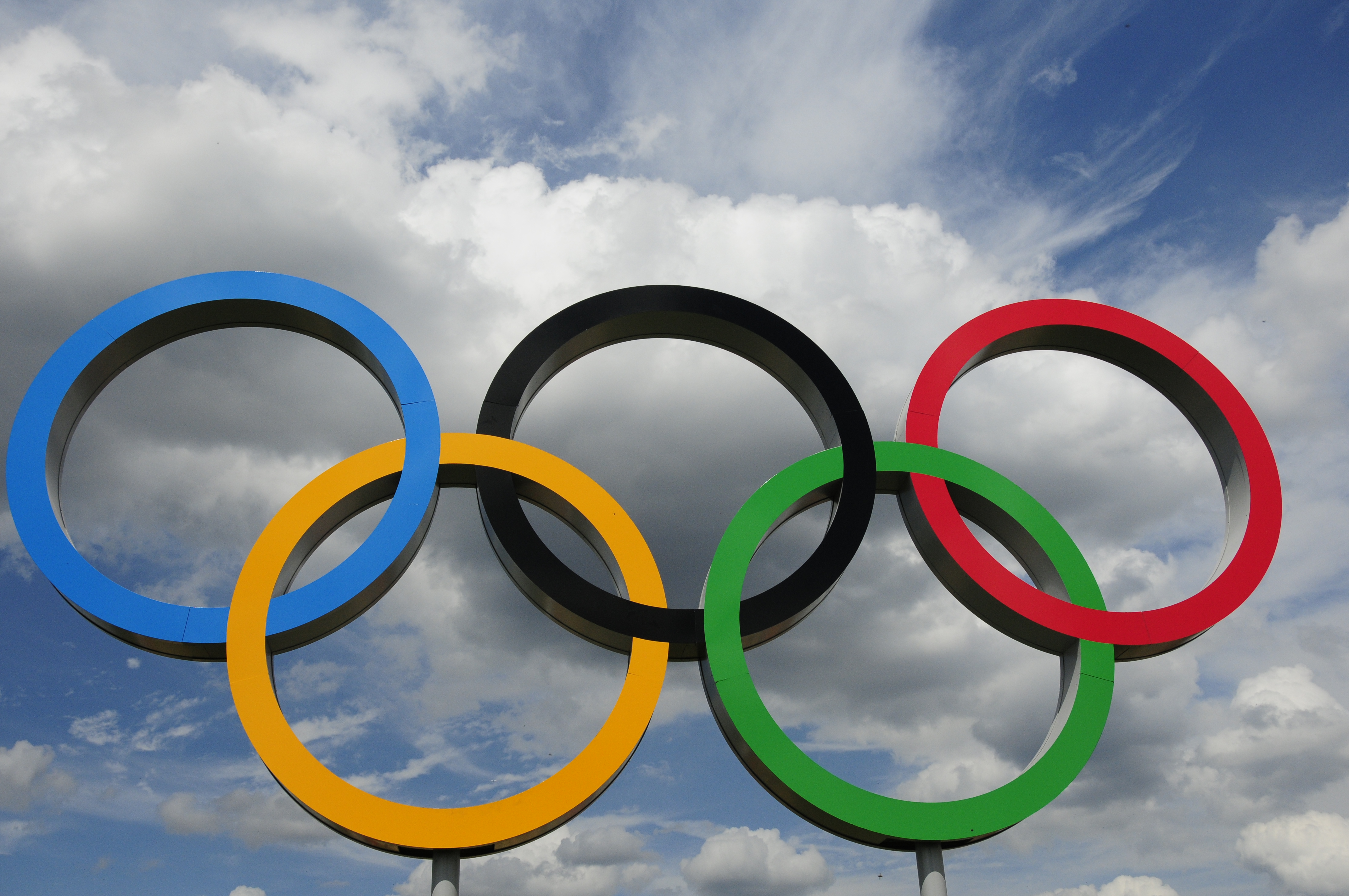
Cricket in Olympics has long been a hot topic among the cricketing fraternity and has re-emerged in the latest round of ICC meetings.
One particular revelation from this meeting reminded me of a scene from Madagascar 2. It goes like this.
“Attention. This is the ICC speaking. We have good news and bad news. The good news is we have made a landing in the Olympics. The bad news is—it is T10 cricket.”
So is there any merit in this idea or just totally absurd? We will talk about the history of cricket in the Olympics, the pros and cons, and whether I think it should be accepted or not.
Here is a bit of trivia for you—did you know the 1900 Paris Olympics included cricket?
1900 Olympics
Although cricket was initially scheduled in the inaugural modern 1896 Olympics, it was cancelled due to lack of interest. For the 1900 edition, Netherlands and Belgium pulled out after showing interest, while Great Britain & France sent club teams for the 2-day match.
Eventually Great Britain won by 158 runs with only five minutes remaining on day two. It would take 98 years for cricket to feature in another such tournament.
1998 Kuala Lumpur Commonwealth Games: 16 teams, 4 groups, and 50-overs format. The tournament saw teams like Jamaica & Barbados compete independently along with Malaysia, Canada, Northern Ireland, and Scotland. Eventually South Africa, Australia, and New Zealand won the gold, silver, and bronze respectively. Yes, South Africa actually won something.
Guangzhou2010 & Incheon 2014 Asian Games: Men/Women competitions in T20 format. India declined to send teams, while Bangladesh, Sri Lanka, Pakistan, Afghanistan, & even Japan won medals across the two tournaments. Apart from hosts China & South Korea, teams like Maldives, Nepal, and Hong Kong participated.
Pros & Cons
Pros:
Women’s Cricket will benefit from expansion to newer teams. One of the stories of the 2020 Women’s T20 World Cup was Thailand’s qualification. Imagine how other smaller countries could similarly rise from the Olympics.
Cricket has the potential to go from a ‘niche sport,’ only played in a fraction of the former British commonwealth to a much broader world audience due to television & media promotions
Due to a shorter window, the format would have to be a knock-out tournament, which would give more chances to multiple teams rather than the 10-team two month long slug fest known as the World Cup.
T10 takes about 2 hours to complete, which is a plus for short-spanned 21st century spectators.
Cons:
T20 World Cup, ODI World Cup, World Test Championship, & Olympics, not to mention T20 leagues. Too many tournaments will create dilution & overkill of cricket, which could have an adverse effect on the sport.
T10 in the Olympics would imply making it the fourth official international format. With T20I & Test cricket doing well, this would be curtains for the struggling 50-over ODI format.
Opposition to Cricket in Olympics
Cricket’s inclusion in the Olympics has historically been opposed by teams like England & India. England declined to send a team for the 1998 Commonwealth due to scheduling conflicts with County cricket.
Similar concerns drive the opposition to T20 cricket in the Olympics. Such a tournament would imply having qualification tournaments, which would hamper the T20 calendar and decrease value of the T20 World Cup, which leads to possibly decreasing revenues.
The Verdict: Yay or Nay?
T10 cricket is not the ideal format.
Some people say it is a shortened version of T20. Wrong. It is just an expanded Super Over. Cricket is a game of skills and talent, but T10 may just be a fluke, and nobody is interested in that. No place for bowlers and not great advertisement for cricket.
However, the game has evolved. There was even a time when colored clothing, day-night cricket, DRS, and T20 cricket had doubters.
So, should cricket be tried in the Olympics? Well, why not? It never hurts to try.
Of course, technicalities about the format and qualification process can be decided later.
So, When Can We See Cricket in Olympics?
Cricket will be played in the 2022 Birmingham Commonwealth Games. Only women’s edition will take place—T20, 8 teams, round-robin tournament, and a qualifier for a Caribbean nation. Finally, USA Cricket’s long-term goal has been to host the 2028 LA Olympics, although 2032 Brisbane Olympics is probably a better bet.
FAQs
Why is there no cricket in Olympics?
Cricket’s inclusion in the Olympics has historically been opposed by teams like England & India. England declined to send a team for the 1998 Commonwealth due to scheduling conflicts with County cricket. Similar concerns drive the opposition to T20 cricket in the Olympics. Such a tournament would imply having qualification tournaments, which would hamper the T20 calendar and decrease value of the T20 World Cup, which leads to possibly decreasing revenues.
What is the history of cricket in Olympics and other international events?
Although cricket was initially scheduled in the inaugural modern 1896 Olympics, it was cancelled due to lack of interest. For the 1900 edition, Netherlands and Belgium pulled out after showing interest, while Great Britain & France sent club teams for the 2-day match. Eventually Great Britain won by 158 runs with only five minutes remaining on day two. It would take 98 years for cricket to feature in another such tournament.
1998 Kuala Lumpur Commonwealth Games: 16 teams, 4 groups, and 50-overs format. The tournament saw teams like Jamaica & Barbados compete independently along with Malaysia, Canada, Northern Ireland, and Scotland. Eventually South Africa, Australia, and New Zealand won the gold, silver, and bronze respectively. Yes, South Africa actually won something. Guangzhou2010 & Incheon 2014 Asian Games: Men/Women competitions in T20 format. India declined to send teams, while Bangladesh, Sri Lanka, Pakistan, Afghanistan, & even Japan won medals across the two tournaments. Apart from hosts China & South Korea, teams like Maldives, Nepal, and Hong Kong participated.
When Can We See Cricket in Olympics?
Cricket will be played in the 2022 Birmingham Commonwealth Games. Only women’s edition will take place—T20, 8 teams, round-robin tournament, and a qualifier for a Caribbean nation. Finally, USA Cricket’s long-term goal has been to host the 2028 LA Olympics, although 2032 Brisbane Olympics is probably a better bet.
Other Innovations in Cricket
Image Courtesy: The Department for Culture, Media and Sport, CC BY 2.0 , via Wikimedia Commons