India Vs Australia Series Review: The Border-Gavaskar Trophy.
Usually a Test series is made up of a few iconic moments. This series was a compilation of iconic moments stitched together into a series.
Injuries:Pucovski–Warner & Ishant-Bhuvneshwar Kumar pre-series. Shami, Umesh, Ashwin, Vihari, Jadeja, Bumrah, KL Rahul, & Pucovski again during the series.
Adelaide:Kohli‘s 74 & Run-Out, India 36/9 via Cummins & Hazlewood, Paine & Burn score, Kohli returns home.
Melbourne: India’s resilient comeback win, Rahane’s magnificent ton, Ashwin-Smith duel, Rahane comforts Jadeja after run-out.
Sydney: Rohit Sharma returns to work, Shubman Gill’s emergence, Smith-Labuschagne master-student showcase, Siraj battles racial abuse, Matthew Wade’s brain fades, Paine drops & sledges, India hold on, Pant 97, Pujara-Pant + Vihari-Ashwin = Draw.
Brisbane: Nathan Lyon’s 100th Test & signed jersey by Team India, stranded on 399 wickets, Natarajan & Sundar debut, Saini injured, Siraj’s 5-for, Thakur-Sundar fightback, Gill’s 91 & Pant’s 89*, Pujara Fights Body Blows & Butterfly, 328 chased, The Gabba fortress breached.
The series went from being “too friendly” to racial abuses. There were plenty of mini contests like Paine vs Ashwin, Pujara vs Lyon, fielders vs the flying ball, & Pujara vs Cummins (my favorite battle) to name a few.
Here are my picks for the best moments, emerging players, and much more in this India Vs Australia Series Review! Comment IN THE COMMENTS SECTION below on your favorite moments.
*Note: Underlined & Bolded links are videos. Underlined without bold are links to other articles.
Interesting that toss went the wrong way in these games and batting second was not detrimental.
Player of Series
India
Australia Pat Cummins 4/21 Best Innings, 7/69 Best Match
Most Runs
Rishabh Pant – 274 Runs (5 innings)
Cheteshwar Pujara – 271 Runs (8 innings)
Marnus Labuschagne – 426 runs (8 innings)
Steven Smith – 313 runs (8 innings)
Most Wickets
Mohammad Siraj – 13 wickets (6 innings)
Ravinchandran Ashwin – 12 wickets (6 innings)
Pat Cummins – 21 Wickets (8 innings)
Josh Hazlewood – 17 Wickets (8 innings)
India Vs Australia Series Review: Stats
The Highlights
India
1. Cheteshwar Pujara is a Legend.
2018/19 – 521 runs, 100s-3 & 50s-1, best of 193, Average 74.42, Strike Rate 41.41, Balls Faced 1258
2020/21 – 271 runs, 100s-0 & 50s-3, best of 77, Average 33.87, Strike Rate 29.20, Balls Faced 928
Statistically, Pujara had a worse tour than 2018 by double the margin in almost every area. In reality? His impact this time was just as important, if not more. If Pujara was not present at Sydney or Brisbane, neither would have drawn the 3rd Test nor won the 4th. The Australian bowling line up at the final session of 4th Test had all the energy drawn out of them through the defense of Pujara. On the last day, Pujara was unfazed despite so many blows to the helmet, chest, and the worst – finger jarring. Act of character and survival upon which India prospered.
2. Youngsters & India A Deliver
In 2008, Sri Lanka unveiled the M Factor against India – Malinga, Muralitharan, Mahela, & Mendis (later Mathews).
Similarly, India had the S factor – Debutants Siraj, Sundar, Shubman, Shardul (first Test – 10 balls & injured).
Shubman Gill’s consistency & backfoot punches, Washington Sundar’s confidence, Siraj’s maturity, & Shardul’s ability to make things happen all contributed to India’s series victory. If one player could symbolize this series, it is Mohammad Siraj, leading from the front in his 3rd Test match. Father’s bereavement and on the back of racial abuse, he stood firm on his ground and delivered.
January 11th is Rahul Dravid’s birthday, India A & India U-19 Coach (2016-19), now the head of the National Cricket Academy, and a mentor to many of these youngsters. Rishabh Pant & Vihari, a product of the India A system, provided Dravid with a perfect birthday gift on the eve of his birthday.Pant will always be questioned, but when India needed him, he delivered.
3. Rahane & Team Management
In our India vs Australia preview, we said that after 2014, “Rahane has failed to go to the next level,” & needs a “Pujara 2018 or Laxman 281 to elevate to legendary status.”
Verdict: Rahane has now successfully elevated himself to legendary status – as a batsman, player, & captain.
Although Rahane’s Melbourne knock rejuvenated the side, special mention needs to go to Ravi Shastri, Bharat Arun, the physios, & the support staff. In hindsight, the 36/9 rejuvenated the side, but it could easily have gone the 2011 England-Australia tours with 4-0. Credit to the team management & leadership group to keep the team together and motivated (The law of averages helped India as chances for the rest of the series went India’s way).
With all the Rahane vs Virat vs Rohit Twitter battles, one should remember that this is Kohli’s team (emphasis on fast bowlers & overseas victories) which Rahane took forward with Rohit & co in the leadership group. Team effort, no less.
Australia
1. Labuschagne, Smith, & Warner
739 runs, 100s-2, 50s-4, best of 131, average of 49.27.
Sounds pretty good, right?This is the combined stats of Marnus Labuschagne & Steven Smith and vastly skewed by the performance in the last two matches. They were good, but not the usual. Smith lost the duel to R Ashwin over the series, while Labuschagne capitalized on dropped chances. For a side carrying injured openers, a Joe Burn, and a couple of inconsistent keepers, a lot more was expected from these two.
David Warner was visibly unfit, & 67 runs (from which 48 came in one innings) at 16.75 does not reflect a player of his caliber. Against Warner, every bowler looked like Stuart Broad.
Starc took 11 wickets at 40.72 (74.7 SR) & Lyon with 9 wickets at 55.11 (SR: A whopping 124.6)
Alarming numbers. Lyon looked decent for the first couple of Test matches without much ‘luck,’ especially with Hazlewood & Cummins going through the Indian line-up. As the series progressed, it became clear that Lyon was having an underwhelming series. Pujara’s dancing down the wicket blocks & Pant’s hit was too much to digest. Starc? Inconsistent, out of form, & slightly injured. Amidst a long tour, COVID Bio-Bubbles, and against a certain Pujara, not rotating quicks cost Australia.
Speaking of inconsistent keepers, Tim Paine & Matthew Wade: A Tale of Two Careers.
8, 33, 30, 40, 13, 4, 45, 0, and a whole load of ways of getting out
Look, I like Wade & Paine. Paine even had a great series with the bat, including a match-winning 72. I admire players who started early, were dropped, improved, & fought back into the XI. These two have been in-and-out since 2010-11 & have finally managed some success at the international level, but is it enough? One of Australia’s flaws this series was not capitalizing on strong situations, and Wade was always at the center. Not converting a single start might be too much for the Australian selectors. On the other hand, Paine will still be in the side at least as a batsman, but lots of question on his keeping and captaincy. Also, Tim & his Paineful reviews.
Murmurs about Alex Carey trying a summer England gig after being released from Delhi Capitals…
3. The Lone Bright Spots
Not everything was bad for Australia though.
8 innings, 162.1 overs, 51 maidens, 21 wickets, 4/21 Best innings & 7/69 Best match
That’s Pat Cummins for you. Most overs bowled. Highest wicket taker. Most maidens. Player of the Series. Consistently threatened India’s batting from the first Test to the last. Intensity, eyes on fire, perfect line & length. Hazlewood was really good too, but Cummins was just on another level.
Debutants Cameron Green & Will Pucovski were of the highest quality. Although Green did not have much to show in the wickets column (none after 6 matches & 44 overs), he ticked several boxes. A tall bowler at 140 kph, safe pair of hands with 10 feet reach, can dig in when needed, and explode as his blistering 84 displayed. Pucovski never looked out of place with a confident 62, sandwiched between unfortunate injuries.
The Awards
We like to spice things up with our own awards for the series.
The 4th Test overshadowed the Broken Cricket Dream awards for Australia, otherwise Joe Burns falling career, Pucovski’s repeated injuries, & Wade’s dismissals were ideal candidates. Here they are:
India
Australia
Emerging Player
Shubman Gill & Mohammad Siraj
Cameron Green
Surprise Package
India’s Resilience & Character Sundar, Shardul, Siraj
Tim Paine – The Batsman Marnus Labuschagne – The outfielder
Broken Cricket Dream
The Injuries The Dropped Catches Kuldeep Yadav
Tim Paine – The Captain Tim Paine – The Keeper Nathan Lyon 399*
India Vs Australia Series Review: The Awards
Who would have been your Emerging Player? Surprise Player? Broken Cricket Dream? Let us know below WITH COMMENTS!
In terms of the World Test Championship, India are at the top with the England home series to go, while Australia drop to #3 with a South Africa 3-match series to happen…somewhere (Australia virtually out of the WTC).
The India-Australia rivalry has taken the next step and few are even calling for a 5 match series. I am not sure if that should happen in the COVID environment and strict quarantine days, but definitely a possibility in the future.
Ashes 2005 Comparsion
Is the 2020-21 India vs Australia series the greatest test victory of all time? Probably not.
Ashes 2005 is usually hailed as the pinnacle of Test cricket extravaganza and rightly so. Both teams at their peaks, Australia’s 2005 meriting Top 2 All Time status (a squad which maybe only Steve Smith & Pat Cummins could have made), full crowds inspiring the next generation, England winning the Ashes (2-1) for the first times since 1986-87.
Was India’s Melbourne victory the greatest comeback of all time as the cricket Twitter family suggested at the time? No. Not even close.
Was India’s draw the greatest match saving draw of all time? Nope.
Was India’s chase at the Gabba the highest ever or the most enthralling? Nah.
The 36 All Out worst collapse of all time? Almost, but not really.
Legacy of the India Vs Australia 2020 Series
But the fact that all of the above happened in the same series under the backdrop of COVID-19 and depression around the world (both economically & mentally speaking).
India 36/9 at Adelaide, Kohli going home, Ishant-Umesh-Bhuvi-Shami-Bumrah less India, without the stars of Sydney in Jadeja, Ashwin, & Vihari, Siraj battling father’s bereavement & racial abuse. Gabbatoir breached. You cannot predict this. None of us could have.
So let me ask this again—Was the 2020-21 India-Australia the greatest ever Test series? No, but in terms of the context and stories, this may as well be the greatest story of them all.
Why compare anyway? I am just glad we have both series to cherish in our memories forever.
Anyway, what are your thoughts on this India Vs Australia Series Review? Would love to hear your thoughts in the comments section below! Also feel free to share/discuss on our Twitter & Facebook pages!
If you like this content about India Vs Australia 2020, feel free to follow us on our social media accounts.
India Vs Australia 2020, a series to cherish forever.
In the time of COVID and hardship, this is exactly what was needed. Not only did this series entertain, it also taught us valuable life lessons as well.
The series can be summed up by Nelson Mandela’s quote, “The greatest glory in living lies not in never falling, but in rising every time we fall.”
Whenever India looked like they were gone, they found a way to get back up.
36/9 in Adelaide and without Virat Kohli at Melbourne. Surely India cannot recover at the Boxing Day Test? Well exactly the opposite happened as India achieved a memorable victory. The entire team rose to the occasion & Rahane, the stand-in captain, stood up with a magnificent century.
Resilience.
Injuries to fast bowlers of the Class of 2018. Before the series, No Ishant, no Bhuvi. Midway through the series, Shami, Umesh, and Bumrah out. By the end, Ashwin, Jadeja, & Vihari are done. Battered & bruised, they draw the third test.
Did the Indian team decide to give up at any point in time? Does India play for the draw in the 4th test? No & No. They go for the win. And they indeed win.
Courage.
Life Lesson 1: It is okay to make mistakes. You will suffer setbacks. The important part is to regroup, learn from these initial setbacks & mistakes, and find your feet again. Keep working. Keep going. Just never give up.
2. Just Be Yourself
Moment: Pant-Pujara Partnership
Oh he plays too slow! No intent shown….Oh he is too reckless. Gets out against the run of play.
This is not a description about one player but a paraphrasing of criticism for two different players, Pujara and Pant.
Balance is important. Criticize these two at your own peril.
Pujara scored his slowest fifty in the first innings of the 3rd Test. He followed it up by his 3rd slowest in the second innings. He went to break his own slowest 50th at the historic Gabba chase.
Pant ‘throws it away’ in the 2019 World Cup Semi-Final. Pant has ‘thrown it away’ several times before. In the third test, he plays a ‘rash’ shot at 97. Hopes of India’s win diminish, but the fact India had hope in the first place is due to Pant. Fortune favors the brave.
Pujara ended the series with a strike rate of 29.2. Pant with 69.89. Neither got a century, yet the partnerships of 148 (265)in Sydney and 61 (141) at Brisbane were monumental in India’s victory.
Cheteshwar Pujara and Rishabh Pant. Chalk and cheese. Yin and Yang.
Life Lesson 2: Adapting to different situations & circumstances in life is important but not at the expense of your innate being. Always learn from others, listen, take their advice, but at the end of the day, you are unique, and that is good enough. Never change who you are for others, and never forget where you came from.
3. Character & Determination
Moment: Hanuma Vihari & R Ashwin in the 3rd Test
Hanuma Vihari had a disastrous series till Day 5 of the 3rd Test. In his 5 innings, he scored 16 & 8, 21, and 4 & 23*. By the 4th day, he had run himself out after looking uncomfortable with a 4 (38), dropped a couple of crucial chances, and had been hit numerous times at forward short leg.
When Pujara & Pant depart on Day 5, Vihari has only scored 3*(31) with a session & a half to go. Just to put salt on the wound, Vihari suffers a hamstring injury. His new partner, R Ashwin, neither has form on his side nor a functioning back.
But boy, does he have spine? Post tea, he gets battered with short deliveries and gets hit on the ribs & shoulders.
Response? They pull off one of the major heists in recent Test cricketing memory. Vihari 23*(161) with over 4 and a half hours of batting & 39*(128) in 3 hours for Ashwin. Partnership of 62*(259).
If this is not one of the greatest displays of character & determination, I just don’t know what is.
Life Lesson 3:Sometimes things are in your favor. At other times, they are not. Vihari could have easily retired hurt and cared for his place in the 4th Test. These moments are what life is all about. Even when you are not 100% physically or mentally, stay in the moment & give it your all.
Mark Twain is credited to have said, “Do the thing you fear, and the death of fear is certain.”
The embodiment of fearlessness was displayed by India’s youth in this tour—Debutants Shubman Gill, Mohammad Siraj, Washington Sundar, (almost debutant) Shardul Thakur, and none more so than the experienced Rishabh Pant.
Gill’s backfoot punches are a thing of beauty. Beauty + Consistency + Positive Approach = Brilliance of Shubman Gill. Scores of 45, 35*, 50, 31, 7, and the 91 that gave India belief in Brisbane.
Thakur & Sundar did not fear against Starc-Cummins-Hazlewood. Neither did they blindly hit. They played proper cricketing shots & dominated. On Day 5 and near victory, Sundar pulled dangerous Cummins for six, Pant paddle swept Lyon, & Sundar got out playing a reverse sweep. Fearless stuff.
Life Lesson 4: You will face challenges and difficulties, whether that is related to school or work. Next time you fear how hard the upcoming exam is or if you have self-doubts about completing a project, take a deep breath and invoke your inner Rishabh Pant.
Luck is when opportunity meets preparation. The youngsters, reserves, & stalwarts of India were prepared when this opportunity came.
Although Rahane’s century was the highlight of Melbourne’s victory, Bumrah and Ashwin were among the wickets, Shubman Gill contributed with a 45 & 35*, & ever dependable Jadeja made a steady 57 along with his fielding efforts.
The Sydney draw was masterminded by Pant-Pujara & Ashwin-Vihari partnerships, but also had key contributions from Gill-Sharma & Jadeja again. In the final Test, the improbable counterattack by Thakur-Sundar, Siraj’s 5-for, & Gill-Pujara-Pant-Sundar took India to victory.
India utilized 20 squad members, Pant was the highest score with only 274 runs, & Siraj the highest wicket taker with 13 wickets. It was a truly a team effort from India’s point of view. Australia had more centuries, highest wicket taker, & most run scorer (since they played all 4 matches).
Life Lesson 5: Learn to work with others. The more diverse the ideas, the better. Individual excellence along with the greater good is the best way forward. Bring others along with you.
If you like this content about India Vs Australia 2020, feel free to subscribe above for FREE and follow us on our social media accounts. We discuss regularly about cricket on our Twitter platform, but also have Facebook, Instagram, and Pinterest Accounts. ALSO TWEET AHEAD AND SHARE!
So why does Cummins get a special mention? Because he was the highest wicket taker at 21 wickets and player of the series? No.
Pat Cummins bowled 162.1 overs, the most by a pacer in this Test series (Lyon with 187). Hazlewood was next with 144.4. This is an amazing feat considering Cummins was marred by injuries in his early career (Test debut in 2011, but did not play any tests between 2012-16).
He was just as intense on Day 1 of the first Test as he was on Day 5 of the 4th. In the final hour of the series, if there was one bowler who Tim Paine could depend on, it was Pat Cummins. Still bowling at 140 clicks, hitting the perfect line & length (Spooky pitch map by the way).
Accuracy, Consistency, Intensity. That’s Pat Cummins for you.
Pujara and the rest of the Indian batsmen had drained the Australian bowling unit. Cummins must have been out of energy. He must have tired, but it did not show. Bowled his heart out.
Life Lesson 6: Success comes before work only in dictionary. If you want to pursue any field, be like Pat Cummins. Give it your 100%. Work hard, play hard, fail, learn, cherish moments of glory,repeat.
7. Fine Line Between Banter & Abuse
Moments: Ashwin-Paine Banter, Mohammad Siraj Racial Abuse
The heat of the moment got to Tim Paine in the 3rd Test match with his banter against Ashwin. It came back to bite him since Australia lost their fortress after 33 years, the Gabbatoir. Paine later came back for an emergency press conference to address the issues. At other times in the series, commentators were guilty of making derogatory remarks against Marnus Labuschagne.
Life Lesson 7:Racism is not acceptable in any form. Speak up if you are a victim or a by-stander. Try to learn from other cultures. If you are not sure about a cultural reference or how to pronounce a name, just ask. Don’t Assume. Embrace diversity. Be nice.
8. Walk the Talk: Performance Matters
Moments: Tim Paine & Matthew Wade’s Performances
Tim Paine had a decent series with the bat, especially the counter attacking Player of the Match 73* at Adelaide. The rest of his performance though was below par.
Dropped catches at Sydney & Brisbane, missed DRS reviews, useless banter, & fielding placements. He needs to walk the talk with his captaincy.
The other keeper in the XI, Matthew Wade also needs to walk the talk. He has done a great job plugging holes in Australia’s line up as a middle order, opening batsman, and taking hits from Neil Wagner. In this India Vs Australia 2020 series, he has managed to get out with a soft dismissal on 3-4 occasions.
Life Lesson 8:Words need to be accompanied with actions to have any meaning. Walk the talk & never take anything for granted. When you are doing well, make the most out of your opportunity because the good times can end very quickly.
9. Leadership Matters
Moments: Siraj leads the attack, Rahane consoles Jadeja after Run Out
If I had to remember this series by one story alone, it would be Mohammad Siraj. Siraj comes from a humble background, was in bereavement of his father’s loss, and was racially abused. Bumrah gets injured, and India play the Brisbane Test with a total of 4 Test matches among the 5 bowlers, with Rohit Sharma being the most experienced bowler.
Siraj becomes the leader of the attack, gives advice to Saini, Natarajan, & Thakur, and takes a well deserved 5-fer. It has been a great boon to Indian cricket that the transition from Zaheer Khan to Ishant Sharma, Ishant Sharma to Bumrah, and Bumrah to Siraj has been smooth. Arms around shoulders.
Speaking of leadership, Rahane’s captaincy & calm demeanor (the Jadeja moment & reaction after series victory) were central to India’s win. In addition, the physio’s efforts during this injury-marred series, and support staff’s influence with Bharat Arun & Ravi Shastri cannot be understated.
Life Lesson 9: Be the leader you want others to be. Lead with humility and vision. Take responsibility. Guide others. Sharing is caring. Creating other leaders is the most significant sign of leadership.
10. Do Not Get Ahead of Yourself
Moments: The Gabba Fortress Breached
The pre-series talk included several predictions of Australia sweeping 4-0 and even after Sydney, Gabba’s statistics were the talk of the town. We all know what happened.
India needs to be warned as well. This was an expected surreal win, but the Indian team should not get ahead of themselves. If India gets complacent, who knows, England might provide India a taste of their own medicine later this year.
Life Lesson 10: Pride and ego can lead to positive growth if utilized correctly. Hubris and arrogance, on the other hand, will certainly bring your downfall.
11. Bonus Story: Superstitions For The Win
This is a fun personal story.
I have always enjoyed underdog stories. I mean, this entire blog is about “Broken Cricket Dreams.” One of the Test matches I have always waited for is a 5th Day hard fought draw.
Due to time zones, I had missed Faf’s Adelaide debut & a similar New Zealand-England match earlier in the decade. The 2015 South Africa blockathon (143 runs in 143.1 overs) resulted in a narrow defeat. The end of the decade, I thought my dream would come true with the Azhar Ali-Fawad Alam-Rizwan effort. It was not to be.
I am also known for my jinx ability & superstitions (just for the fun of it). So 3rd Test Day 5, I had been asked by my friend and family to not tweet a thing. I went one step ahead and decided to not speak either for the day.
After almost 9 and a half hours, the dream finally came true. India had saved the Test match. And guess what? It was a kind of peaceful exercise, not being on social medial 24-7. Anyway…
India Vs Australia 2020 Legacy
Surely this is a tour that Allan Border & Sunil Gavaskar would be proud of.
For a generation or two, the 1999 World Cup Semi-Final, 2005 Ashes, 2001 Laxman’s 281, Belinda Clarke’s 229* were the moments to cherish. In the last 5 years, cricket has rejuvenated itself. All formats with memorable moments.
T20 World Cup – Remember The Name
Women’s World Cup 2017, WT20 2020 – 86,000 spectators
If you like this content about India Vs Australia 2020, feel free to subscribe above for FREE and follow us on our social media accounts. We discuss regularly about cricket on our Twitter platform, but also have Facebook, Instagram, and Pinterest Accounts
India Vs Australia – a friendly evenly contested series.
India revived their 1992 jersey, and the tour started accordingly with twin defeats via the brilliance of Steven Smith. This tour will be remembered for the Australia media’s fascination for ‘King’ Kohli, international fielding of grade-school standards, emergence of Hardik Pandya, the Jadeja-Chahal concussion fiasco, and Wade’s non-review.
Australia, on the other hand, erased the poor IPL 2020 memories. Aaron Finch, Steven Smith, Glenn Maxwell – all came back with a bang. Good performances by youngsters and comeback kids as well.
Here are my picks for the best moments of the series, the emerging players, and where these two teams go from here? COMMENT BELOW ON YOUR FAVORITE MOMENTS.
India still have not solved their middle muddle. Shreyas Iyer returned with scores of 2, 38, 19, 12*, and 0 across formats. None of India’s batsman bowl and none of the bowlers bat well. The #4 position and the 6th bowling option is still a major worry.
Chahal leaked 89 & 71 runs and was eventually dropped for the third. Although he was the man of the match in the first T20I, it is still a matter of concern in the flat ODI pitches. Time to bring Kul-Cha back together?
First time since 2008 that Virat Kohli has not registered a century. Came close with a 89 and 63, but 2020 has just been that kind of year.
Shardul Thakur has a knack of taking wickets as we can see from his 3/51 in the 3rd ODI.
T20Is
Although Sanju Samson gave India impetus with innings like 23(14) and 15(9), it was just not enough. With the likes of Rishabh Pant, Ishan Kishan, and Suryakumar Yadav in the background, Samson may not have too long of a rope.
Hardik Pandya dedicated his Player of Series award to T. Natarajan and deservingly so. Although Pandya finished things off, Natarajan’s 3/30, 2/20, and 1/33 were crucial to limit India’s targets.
India have found a balance in the finishing power. If one of the top order batsmen fail to finish the chase, Pandya will. If Pandya fails, Jadeja will.
In 2016, Manish Pandey was among the rising stars scoring an unbeaten century in a 300+ run chase. Forward to 2020. Did not get a game in the ODIs and struggled in his only T20I opportunity – 2 (8).
Australia
ODIs
Steven Smith famously said a month ago that he “found his hand.” He was not joking as he displayed with scores of 105and 104 in just around 62 balls both innings. WOW.
Glenn Maxwell could not hit a fly in IPL 2020. Put the Australia jersey on and boy, was he on fire? The entire 2 months of IPL – 0 sixes. 3 ODIs, 3 T20Is – 16 sixes in total including quickfire 45(19), 63*(29), 59 (38), 54 (36), 22 (13) across formats. Australia have found their finisher.
Although Smith & Maxwell were the catalyst, the solid platform provided by Aaron Finch with 2-100s and 1-50. He is growing in his captaincy role as well.
Does Australia have a Mitchell Starc problem? 1/65, 0/82, & wide balls does not reflect the stature of Starc.
The leggie Mitchell Swepson joins the party. His 1st wicket of the series? None other than Virat Kohli.
Moises Henriques made a comeback with important contributions with both bat and ball. In the 2nd T20I – 3/22 in his 4 overs along with a 30(20) got Australia close to the target.
We like to spice things up with our own awards for the series. Here they are:
Australia
India
Emerging Player
Mitchell Swepson
T Natarajan
Surprise Package
Matthew Wade/ Moises Henriques
Ravindra Jadeja + Hardik Pandya
Broken Cricket Dream
D’Arcy Short
Manish Pandey
Who would have been your Emerging Player? Surprise Player? Broken Cricket Dream? Let us know below WITH COMMENTS! Also please subscribe!
Where Do They Go From Here?
Earlier I had predicted 2-1 India for the ODIs and 2-1 Australia for the T20Is. The results were reversed, but this India Vs Australia series had closed contests regardless. By no means, did these teams perform at their bests. They have a lot to ponder over, especially heading into the Border-Gavaskar Test series and the World T20 next year.
In limited overs, India have to fix their middle over phase – both in batting style and the bowling combinations. For the test series, India have an Ishant Sharma size hole along with concussion/injury issues for Jadeja and Rohit Sharma.
Australia’s injury woes are at another level. First Stoinis and Warner in the limited overs series. Then, the debutant Green and Will Pucovski with concussions during the warm-up games and now even Steven Smith has a soar back. Here is the complete list:
We will do a World T20 Watch from now till the world cup next year. Here is our predicted T20 XI line up as of now based on this series. Several ifs and buts at this point, but it will get clearer along the journey.
India’s limited overs selections need a rethink. ODIs and T20Is are now separate entities and hence, need different criteria. Gone are the days of the three format players barring a couple from each team.
Each position needs a specific role with a like-for-like understudy. Here is my World T20 XI for India as of now:
Today’s Scenario: Mithali Raj Lifts the 2017 Cricket World Cup
In our segment Just Imagine, we explore how a specific moment in cricket could have lasting ripple effects. Going back in time, we ask a simple question: What Would Happened if…? and reflect on its consequences.
Since the Women T20 Challenge is in full flow among the teams—Trailblazers, Velocity, and the Supernovas, we imagine what would have happened if India had not collapsed against England in the 2017 Cricket World Cup Final?
Match:
England vs India, July 23rd 2017, Final, Lord’s, London, ICC Women’s World Cup
Background:
The 2017 Cricket World Cup was a watershed moment in several ways for women’s cricket. It was widely broadcasted and viewed, the matches were highly competitive, several remarkable individual performances were on show, and to cap it off—an intense final.
The hosts were favorite to win the trophy, while India captured the imagination of the world during the tournament.
In the group stages, India had won 5/7 games while brushing Australia aside in the semi-finals thanks to Harmanpreet Kaur’s magnificent 171*—maybe the best world cup innings by an Indian in a semi-final, certainly in the last decade. On the other hand, England squeaked past the Proteas with 2 balls to spare. Their only defeat in the tournament coming at the hand of India via Smriti Mandana’s elegant 90.
The final was a classic low-scoring thriller. Ebbs and flows throughout.
England scored 228/7. In response, Mandana and Raj fell cheaply before Punam Raut and Kaur stabilized and registered 50s.
Chasing 229, India are sitting comfortably at 191-3.
38 needed off 44 balls. Punam Raut 86* (114), Veda Krishnamurthy 28* (28). Then, next ball, there is an appeal for LBW…
What Actually Happened:
42. 5 Shrubsole to Raut OUT:
Punam has asked for a review but the umpire says sorry, you took too long.Do England have wink of an opportunity? This was the wrong shot. Length ball sliding in from wide of the crease, Punam plays all around the delivery. Looked to work it square when he could’ve played in down the ground. Hit on the knee roll. That would’ve gone on to hit the stumps. Has she done enough though?
If Punam Raut had straight batted the shot, or if the DRS review was called in time, and the decision (magically) overturned, what would have happened?
The Consequence:
Punam Raut hits an unbeaten century in the final. Veda seals the deal with an exquisite six.
Jhulam Goswami, the star with 3 wickets on the final, and captain Mithali Raj retire as World Cup winners. The 2017 squad return as legends. Their stories now etched in stone along with the 1983 and 2011.
The BCCI want to capitalize as usual.
They have a template—2007 T20 World Cup and the 2008 IPL. Upon the Indian men’s victory, the experiment of IPL turned into an unprecedented success, changing the global cricket game forever.
They have an opportunity again.
The Women’s IPL launches in 2018. All the world cup heroes are in their prime. Raj captains the Chennai Super Kings, Harmanpreet the marquee player for Kings XI Punjab, and Mandhana starring for the Mumbai Indians. With foreign players such as Heather Knight, Nat Sciver, and the world’s greatest Ellyse Perry, the WIPL is a financial and global success.
This T20 experience gained helps Indian women win the 2020 T20 World Cup defeating Australia in their background in front of a 86,174 crowd at the MCG.
Reflection – Inaction Trumps Imagination
Well, things did not turn out that way, did it?
Winning and losing is part and parcel of the game. Yes, one moment can change histories, but sometimes if action is taken in the right time, it could pay dividends as well.
India’s performance had already delighted audiences around the world and Goswami-Mithali-Harmanpreet-Mandana were household names.
Why then, has the WIPL not been put into action?
It did not need to be an 8 team tournament. A 5-6 team tournament would be wonderful as well. In 3 years, teams would have stabilized, rivalries and fanbase would have fostered, and ultimately, women’s cricket would have benefitted.
Instead, we are watching the 3rd T20 Women’s challenge as an afterthought of a 56 match exhausting Men’s IPL, just taking a break before the Playoffs. Meanwhile, most of the foreign players like Heather Knight, Alyssa Healy, and Ellyse Perry are employing their trade at the WBBL, and we are just waiting for the Hundredfor a competitive world T20 women’s league.
With the likes of Shefali Verma, Deepti Sharma, and Jemimah Rodrigues, India’s future is still bright, but by the time WIPL commences, India women’s stars would have already retired.
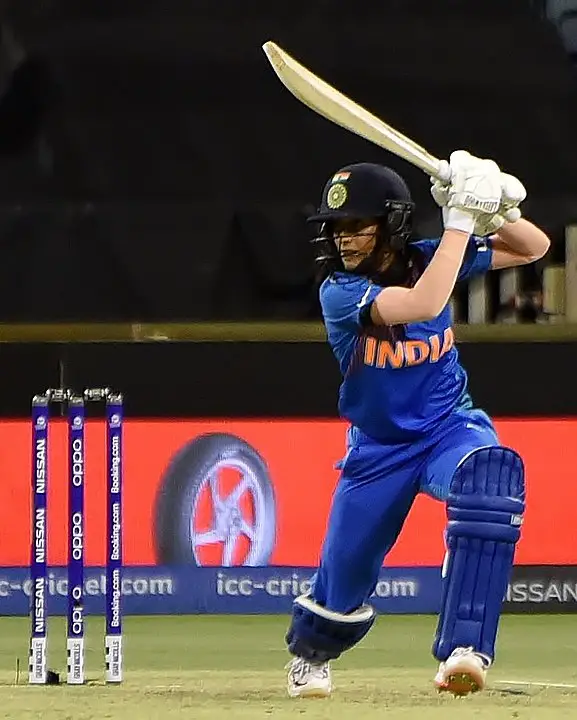
Jemimah Rodrigues times a cover drive to perfection
Inspired By Conversations with Vandit and ESPNCricinfo’s Alternative Universe Series.
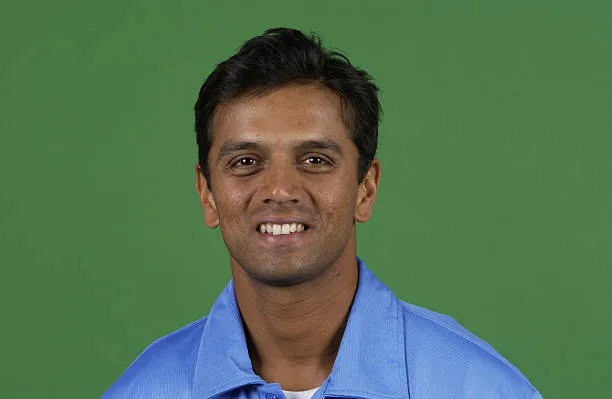
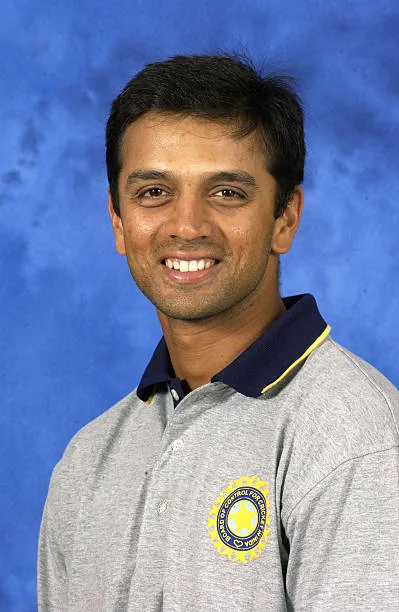
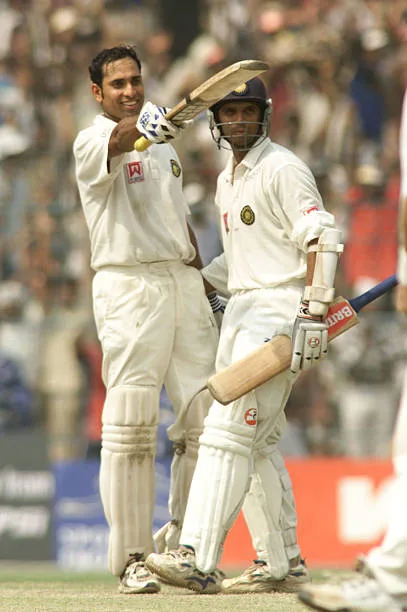
Rahul Dravid, the Wall as he is affectionately known, has been my cricketing hero—my role model for as long as I can remember.
My favorite memory of the great Indian legend—Rahul Dravid, was when he carried his bat in England at The Oval. In that series, when all the chips were down, he fought for the team until the very end.
At the end of his career, it was a reminder of what he stood for. Today I discuss my favorite Rahul Dravid memories and what he taught me.
My First Memory of Rahul Dravid
My first memory of watching cricket was Dravid’s roar and fist celebration in that famous 2003 Adelaide victory with a trademark square cut to Stuart MacGill after scoring 233 and 72*. Early next year, the 2004 ODI series versus Pakistan sealed my love for cricket and my awe for the dashing wicket-keeper batsman with sunglasses, as his image was in those days.
Before we get into the philosophy, let us get the stats out of the way.
164 Test Matches and 344 ODIs, 48 international centuries, a 17 year international career, over 10,000 runs in each format
Holds the world record for the most number of catches in Test matches
Most balls played in a Test career (31,258)
Indian Team captain (Led them to first Test victory in South Africa along with series victories in West Indies and England. Also was the captain during India’s 2007 World Cup).
Holds the Test record for most number of runs in a partnerships (6921 with Sachin Tendulkar)
With VVS Laxman, Dravid shared a 376-run partnership (2001) & 303-run partnership (2003), both vs Australia
Dravid in England
In England, his record even more stellar:
Dravid’s first international match was a Test match in Lord’s against England, where he made 95, missing his century by just five runs (He would eventually get on the Lord’s Honours Boards fifteen years later in 2011).
Twice Man of the Series (with 3 tons each) – 2002 and 2011
Test series win as a captain – 2007
On the other end of the spectrum in limited overs cricket:
After Dravid retired as a player, he tried commentary and coaching. Well, the commentary stint did not last that long. As a coach, Dravid took over as a player-mentor with the Rajasthan Royals in IPL 2014 and later with the Delhi Daredevils.
The Under-19 & NCA Stint
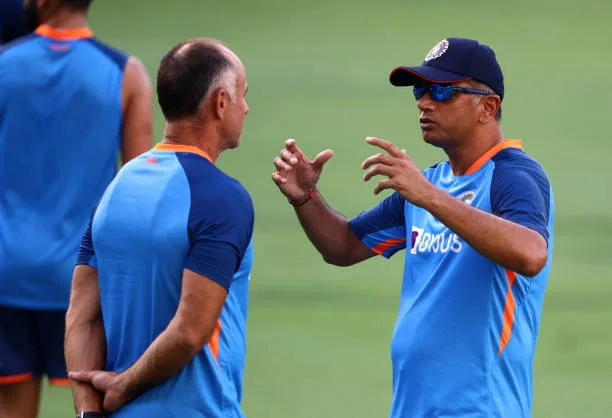
National recognition in the coaching setup came when Dravid was selected as the head of the National Cricket Academy (NCA) and the Under-19/A Teams. This is where Rahul Dravid had the most success as a coach. Training the next generation of Indian cricketers, helping them technically & mentally, and giving them confidence was what India needed at the time. Additionally, setting up A tours paid India dividends with the future overseas Test victories.
The rise of Shubman Gill, Prithvi Shaw & the contributions of Shardul Thakur & Washington Thakur in the historic Gabba Test could be traced back to this stint.
After India crashed from defeat in the first round of the 2021 T20 World Cup, Dravid was handed over the reins as the coach of the national side. Rohit Sharma replaced Virat Kohli as captain.
During the year, several players were given opportunities, a change of mindset was promised and even delivered. However, inconsistency in selection, multiple captains, overkill of cricket, injuries, & inability to play modern-day T20 cricket meant India crashed out in the 2022 T20 World Cup semifinal against England.
So, how can we judge Dravid’s coaching career so far? Not great, not bad, somewhere in the middle. Sort of like his captaincy career.
The Legacy
Numbers aside, it was how he carried himself on and off the field that shone through. Whether it was the ability to contribute to victories in tough overseas conditions, the consistency throughout his career, or the adaptability to suit the needs of the team, Dravid was always there. Opening the batting, donning the gloves to accommodate an extra batsman, stepping away for the youngsters in the 2007 T20 World Cup, and even bowling handy off-spin, he was a perfect team player.
Navjot Singh Sidhu summarized it perfectly, “Rahul Dravid is a player who would walk on broken glass if his team asks him to.”
Even in tough phases of his career, examples of perseverance and resilience were aplenty, like his 40-ball stay for a single against Australia. During days of batting collapses, or in the case of the 2011 tour of England- an entire series of collapses, we could depend on him. Grinding opposition bowlers down, building partnerships after partnerships, and staying in the game were his forte. For the highlight reels, his innings may not be the most flamboyant, but probably the most essential. As they say, “When the going gets tough, the tough get going.”
Off the field, mentoring youngsters in the U-19, India A, or the IPL, delivering the Don Bradman Oration lecture, being an example of Fair Play as Rajasthan Royals’ captain, and avoiding controversies, Dravid’s genuine and graceful demeanor complemented his skills on the ground.
The combination of perseverance and resilience, determination and discipline, as well as humility and team-before-self attitude — that is what Rahul Dravid has taught me.
What We Can Learn from Rahul Dravid?
Challenges will come throughout life, but as long as we have the determination to face and overcome the obstacles, things will be get better. Giving up is not an option, but improving is. We should always strive for excellence without sacrificing morals. Even if we do succeed in achieving our goals once or twice, that is not enough. Being consistent with the process, adapting with time, repeating the good and learning from the bad, that is what matters. In the long run, the results do not matter as much as the journey. Finally, regardless if we are a member of a company, a leadership group, a sports team, or a band, interests of the team always outweigh individual glory.
These lessons can be applied to any aspect of life, not just cricket, and that for me is why Rahul Dravid is my cricketing role model.
I will leave you with some of my favorite quotes on Rahul Dravid:
“If you really want to see aggression, look into Dravid’s eyes”—Matthew Hayden
“The wolf who lived for the pack” — Harsha Bhogle
“If you can’t get along with Dravid, you’re struggling in life”—Brett Lee
Rahul Dravid – Frequently Asked Questions
Who is Rahul Dravid?
Rahul Dravid was an Indian cricketer and is Team India’s current men’s head coach. From 1996-2013, he was India’s top batters. He is arguably India’s Best #3 batter, scored in numerous important overseas victories, and served as India’s captain.
What is the middle name of Rahul Dravid?
Rahul Dravid’s middle name is Sharad. His full name is Rahul Sharad Dravid.
When did Rahul Dravid retire?
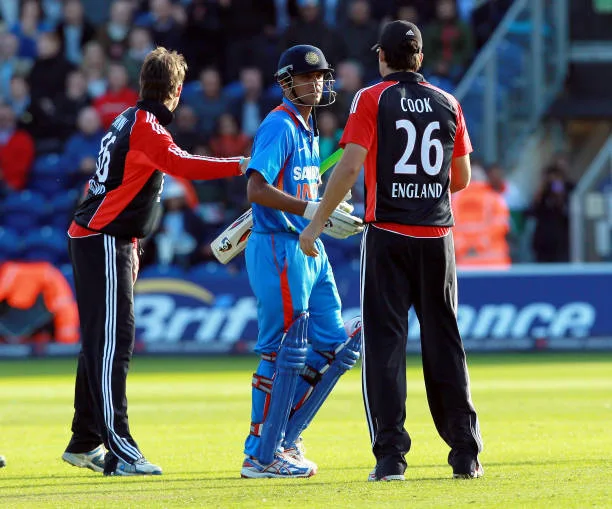
Rahul Dravid announced his retirement from international cricket in 2013. He retired from T20Is and ODIs in the horror series against England in 2011. He continued to play Test cricket, but retired after the tour of Australia in the next year. Finally, Rahul Dravid retired from T20 league after Champions League 2014, when he captained the Rajasthan Royals.
Why is Rahul Dravid called the Wall?
Rahul Dravid is called the ‘Wall’ due to his ability to survive tough sessions for long periods. Dravid has been the architect of several of India’s key overseas victories – Headingly 2002, Adelaide 2013, Rawalpindi 2004, Kingston 2006, and the disastrous England tour of 2011 (where India lost 0-4). Overall, Rahul Dravid faced 31,258 balls in Test cricket, more than any cricketer in history.
How many balls did Rahul Dravid play in international cricket?
Rahul Dravid played a mammoth total of 46,591 balls in international cricket (31,285 Test, 15,285 ODI, and 21 T20I)
Which IPL teams did Rahul Dravid play for?
Rahul Dravid played for the Royal Challengers Bangalore from 2008-2010 and the Rajasthan Royals from 2011-2014.
Did Rahul Dravid play for Scotland?
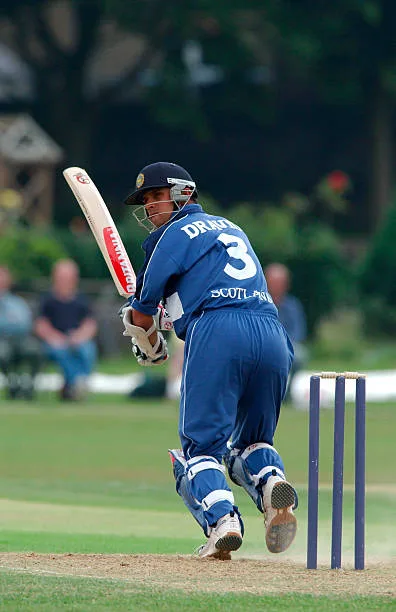
Yes, Rahul Dravid represented Scotland as an overseas player. He played for Scotland in the national Cricket League against teams like Hampshire, Scotland, Lancashire, etc.
What are Rahul Dravid’s nicknames?
Dravid has had a couple of nicknames, The Wall and Jammy.
Also Read: If enjoyed reading this article, enjoy the others from Life Lessons category and Cricketing Heroeslinked below.
Today’s Scenario: Freddie Flintoff Keeps His CoolTo Yuvraj Singh
Match:
England vs India, 19th September 2007, Durban, South Africa – Super 8s (2007 T20 World Cup)
Background:
After crashing out of the 2007 ODI World Cup, India had sent a young team to South Africa under MS Dhoni. Sachin Tendulkar, Rahul Dravid, and Sourav Ganguly had opted out with India experimenting with a younger team. New Zealand and South Africa were sitting comfortably in the Super 8 group, England were already out, and India needed to win to stay alive.
The Moment:
Andrew Flintoff exchanged a few words with Yuvraj Singh prior to the 18th over, when Yuvraj was still playing on 14 runs. India – 171/3.
What Actually Happened:
Enter the young lad, Stuart Broad. Next, we witnessed history. With the adrenaline rush, Yuvraj hits 6,6,6,6,6, and 6. Smashes it to all parts of the ground, with Ravi Shashtri’s iconic commentary in the background. Yuvraj scores the fastest T20 half century in 12 balls, and India end up with 218/4. England come close with 200/6. Yuvraj carries the form in the semi-finals a couple of matches later and destroys Australia with 70 (30). As an underdog team, India are crowned the world champions in the inaugural T20 World Cup.
Just Imagine:
If Andrew Flintoff had kept his cool and not said anything to Yuvraj Singh, what would have happened?
18.1 – Stuart Broad to Yuvraj Singh, hits it in the air and gets caught at long off.
The Consequence:
India scratch their way up to 185/5. England chase comfortably. India crashes out of the 2007 T20 World Cup. Australia win yet another world cup in the decade, this time the T20 World Cup.
The proposed Indian Premier League (IPL) is discarded. Stuart Broad becomes a star and goes on to take 500 wickets in limited overs cricket. Andrew Flintoff captains England to the the 2010 T20 World Cup win. This starts a new cricket revolution in England which attracts the best players from all over the world—The Hundred. Yuvraj Singh and MS Dhoni are dropped post-2007, never to make a comeback. Without a spinning all-rounder, a world-class finisher, or a Captain Cool in their side, India fails to win the 2011 Cricket World Cup at home.
…
Ominous, isn’t it?
Well, these are just my thoughts on the importance of that moment.
As mathematician Edward Lorenz implied in his remarkable work that is now known as the “Butterfly Effect,”— even a flap of a butterfly’s wings can cause a tornado in another part of the world. Every single action, no matter how big or small, may have an immense impact down the road.
But anyway, what do you think would have happened had this match turned out differently?
Send us some moments you would like us to imagine, and as always, please subscribe, write in comments below and share!
Check out our next article in the Just Imagine series regarding Carlos Brathwaite in the 2019 Cricket World Cup.
Inspired By Conversations with Vandit and ESPNCricinfo’s Alternative Universe Series.