In his 8th Test, Zak Crawley scored 267. By himself.
Ollie Pope was the Player of the Match in South Africa in just his 6th Test, scoring 135* and taking six catches.
Jamie Smith took Test cricket by storm with scores of 70, 95, 111, 67, 89, 40, 44*, 184, 88, 51 in his first year, batting in the lower order.
Ben Stokes once scored 258 runs at 130.3 SR in South Africa. On a good, he wins you Test matches single-handedly. On a great day, he wins you World Cups.
Harry Brook is already England’s next big start with 10 tons at 26, and Ben Duckett pioled up 462 runs against India not too long ao.
England don’t lack talent. This batting line up is designed to look unbeatable on their best days.
The problem is…this team is built only for those days. At the slightest hint of discomfort, it falls apart.
The Argument: England Optimized for Their Best Days, Not the Non-Ideal Ones
I have been trying to build habits for the last couple of years: going to the gym, eating healthy, reading. Some stick. Most vanish within a few months.
It finally dawned on me why I was not consistent. I was trying to optimize for my ideal day—getting up early, meditating, coming home, hitting the gym, cooking, writing, reading, all while sleeping at a reasonable hour.
The moment I stayed a little later at work, my ideal day completely fell apart. Come home, eat junk, watch TV, go to sleep.
“Don’t have enough time? Do the short version. Don’t have enough energy, do the easy version. Find a way to show up, not put up a zero for that day because doing something is almost always infinitely better than doing nothing.”
England optimized for their peak. On their best days, they could chase record 4th innings totals. On their worst, they simply didn’t show up.
Crawleys, Ollies, and a Whole Lot of Dropped Dollies
In the first two Tests, England lasted just 32.5, 34.4, 76.2, and 75.2 overs. The Ashes was lost then and there.
Ben Duckett managed only 221 balls across all ten of his innings.
Zak Crawley was dismissed in the first over three times, and twice more within the first five. Even though he had a couple of decent innings later, the opening partnership never gave England enough time at the crease.
Ollie Pope started positively but was dropped after the 3rd Test, having survived just 189 balls at an average of 20.83.
Jamie Smith’s horrendous shot, Will Jacks’ dropped catch, the list goes on. At least Stokes fought, but even he ended up a walking wicket by the end of the series.
This was supposed to be the worst Australian team of the decade. And maybe it was. No Hazlewood, Cummins barely played, Lyon hobbled out of the series.
And yet, they still found a way to get the job done.
In the first Test, Australia were 83/6. Carey and Starc did the bare minimum and hung around for 35 runs to take the total to 132. Enough to swing momentum back to Australa.
Weatherald and Labuschagne did not set the series on fire. Yet they batted 288 and 404 balls respectively. On his worst days, Labuschagne took screamers at slip and plucked wickets before lunch bowling his Dibbly Dobblies. Khawaja, out of form, batting out of place, sidelined by golf injury & controversy, with risk of a mid-series career-end, came back to score crucial knocks of 82 & 40 at Adelaide.
Even Scotty Boland wasn’t at his accurate best, yet he and his fellow 35-year old pacers, Neser and Starc, maintained their fitness level and discipline through the series.
Add in-form players, Mitchell Starc, Steve Smith, Alex Carey, Beau Webster, and Travis Head, and you’ve got a world-beating, Ashes-conquering side.
Commentators say Australia won the ‘big moments.’ I say, they just did the bare minimum, and England crumbled under pressure.
The Australian Test team managed to show up. They did not put up a Zero even on their worst days.
It is easy to criticize this England side through the lens of recency bias.
England’s peak from 2010-12 was built on a simple formula: The grit of Cook-Strauss-Trott at the top, with the KPs and Bells to capitalize further down. It worked brilliantly.
In the following decade, England tried to replicate this strategy without much success. Stoneman, Carberry, Compton, Lees, Hameed, Malan, Vince, Sibley, Denly, Burns. A revolving door with the same result.
And so, the pendulum swung the other way. England overcorrected.
Fortune favors the brave. Eoin Morgan showed it can be done in limited overs cricket, so why not try that out? Surely, it can’t be any worse than 68/10 at MCG in 2022, right?
The easy answer: England needs more Joe Roots, players who can adapt to Bazball on their best days, but have an inner Cook-ball when the situation demands.
But that’s easier said than done. County Cricket does not produce dozens of Joe Roots anymore.
What England need is an insurance policy. A compromise blending the old and the new. Think Sehwag-Dravid, Smith-Amla, Langer-Hayden, Fleming-Astle, partnership-builders alongside dominators.
Even when Crawley scored 267, Burns and Sibley had dented the swing threat for 27 balls. When Pope scored 135, Joe Denly batted exactly 100 balls, Sibley 95, and Crawley scored 44 (137). Stokes, meanwhile, had the advantage of a 55.3-over old ball when he came in to bat before his 258.
A strong batting line-up needs all sorts of characters.
I am not suggesting that England go back to Sibley-Burns. That experiment has failed, but the Crawley-Duckett-Pope experiment has not delivered either.
Crawley averages 31.98 in FC cricket, 31.18 in Test cricket, 32.22 in the preceding India series, and 27.30 in the Ashes. Is that the standard England want to settle for? Is flamboyance more important than victories?
Why Don’t England Succeed for Long Periods of Time?
On the TalkSport podcast, host Jon Norman asks Jarrod Kimber and ‘Bumble’ a deceptively simple question, “Why is that England don’t maintain their success for long?”
Apart from the 1950s, there is not a single period of Test cricket dominance in their cricketing history unlike the West Indies of the 80s, Australia of the 2000s, or the current Indian age. They show glimmers of brilliance—think Ashes 2005, the 2010-12 era, and the early days of Bazball.
The pattern is clear: England’s peaks come when everything falls into place, but they lack a backup plan on their ‘bad days.’ As James Clear says,
“In a lot of ways, the bad days are more important the good days…What can I stick to even on the bad days, and that becomes the baseline. That’s where you start from, and then on the good days, you have got capacity to go ahead and ramp it up.”
High ceilings are useless without a floor, and that is why long-term success has always eluded them. Hopefully, England management recognizes this and can harness the talents of Jacob Bethell, Asa Tribe, and James Rew to build that floor for future Test dominance.
****
On a personal note, this year I am optimizing my schedule for non-ideal days. Too early to say if this system is working better to build habits, but I am definitely more consistent now than without this mindset.
Who won the player of the series in the 2019 Cricket World Cup? It was none other than Kane Williamson!
Can you remember who are all the player of the tournament in Cricket World Cups?
Let us help you. Here is everything you need to know about the player of the tournament trophy.
Key Takeaways
The first player of the tournament in the Cricket World Cup (Men’s) was awarded in 1992.
Three batters, two bowlers, and three all-rounders have so far won this award in the eight instances so far.
New Zealand (2), India (2), and Australia (2) share the most player of the tournaments with South Africa & Sri Lanka winning it once each.
The player of the tournament had the following characters: 3 left handers, 4 right handers, and one ambidextrous (Lance Klusener – left hand bat, right hand bowl) .
World Cup Player of the Tournament – At a Glance
Player
World Cup
World Cup Venue
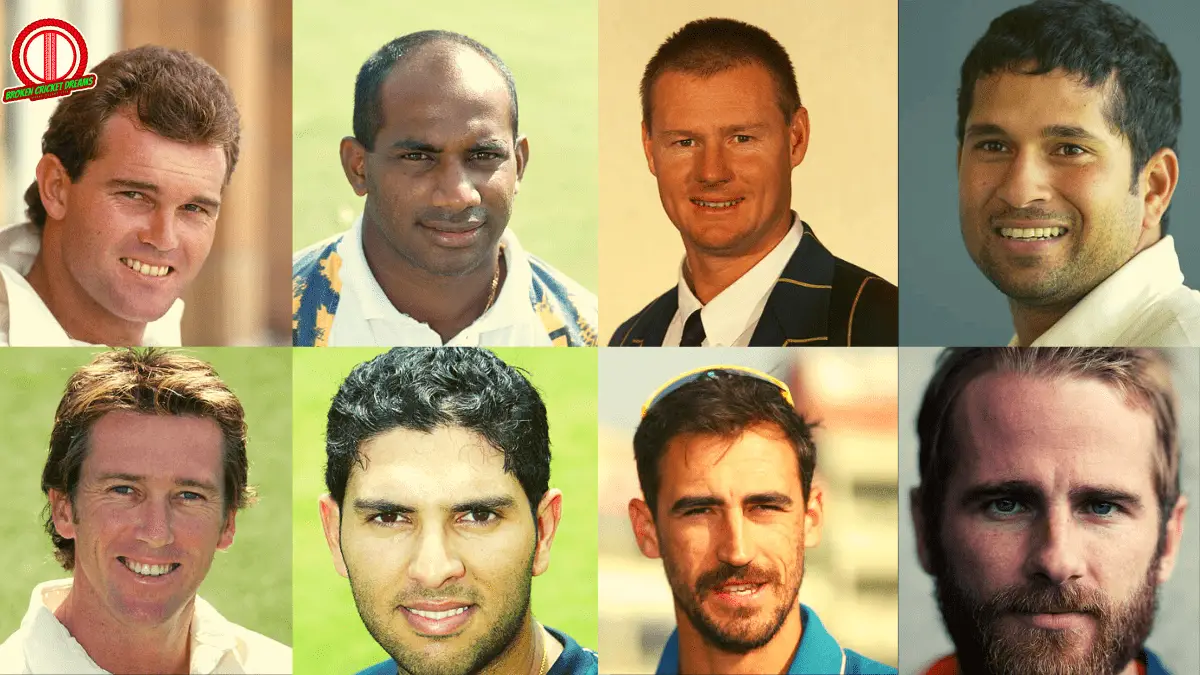
Martin Crowe
1992
Australia, New Zealand
Sanath Jayasuriya
1996
India, Sri Lanka, Pakistan
Lance Klusener
1999
England, Wales
Sachin Tendulkar
2003
South Africa, Zimbabwe, Kenya
Glenn McGrath
2007
West Indies (Caribbean Islands)
Yuvraj Singh
2011
India, Bangladesh, Sri Lanka
Mitchell Starc
2015
Australia, New Zealand
Kane Williamson
2019
England, Wales
*POTM – Player of the Match
List of All 8 Man of the Tournament in Cricket World Cups
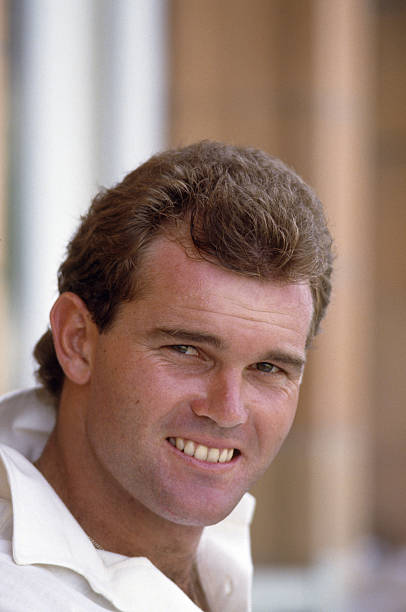
1. Martin Crowe (New Zealand), 1992 Cricket World Cup
A dream run. A sad ending. Having pulled his hamstring, Crowe was run-out on 91. He watched on the sidelines as a new captain tried to defend a spirited Pakistan. 1992 was a World Cup of firsts. Colored clothing,new ODI strategies,South Africa’s re-entry, rain controversies, round-robin format.
Martin Crowe is fondly remembered by many due to his inspiring captaincy and runs across the board. An average of 114 at 90 strike in 1992 is spectacular!
Revolutionized ODI cricket in the Powerplay. Sanath Jayasuriya (with Romesh Kaluwitharana) gave birth to a new brand of aggressive cricket. Chipped in with wickets and catches as well for a complete all-round show.
Perhaps the greatest player of the tournament performance of All-Time. Runs at an insane strike, finishing games left and right, and 17 wickets to top it off. People will remember that run-out in the semi-final that crushed South African cricket for a generation, but should also remember him as a pioneer of lower-order hitting/finishing in ODI cricket.
If Klusener was the greatest all-round performance, Tendulkar gets the best batting show award. Except for the match again Kenya, New Zealand, and the final, Tendulkar had eight innings of note. The 98 (75) vs Pakistan will go in folklore as one of the greatest innings of all-time in limited overs cricket.
Even though McGrath did not take a single 4-fer in this World Cup and was (only) player of the match twice, he was at his consistent best. Took at least a wicket in every match, 2 wickets thrice, and 3-wickets on six occasions. His spell in the semi-final broke South African hearts yet again.
Australia were so dominant for 15 years, they needed a maverick to knock them out of the quarter-finals. Yuvraj did it with clutch performance of 57*(65). Battling cancer behind the scenes, Yuvraj Singh went from good to legendary status in a space of 9 games.
It is only after Yuvraj was left out of the team, that we see what a gem he was to Indian cricket. As all-rounder in the Top 5. Yuvraj-Raina provided India with the balance they needed and with Dhoni, formed one of the greatest middle orders.
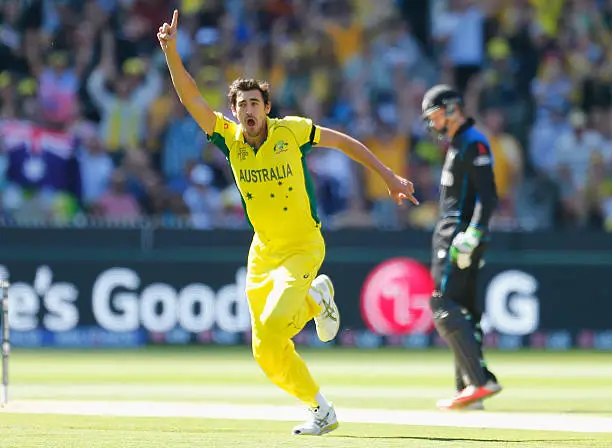
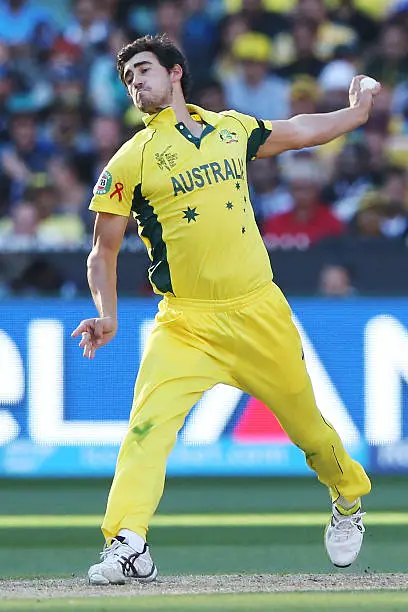
If McGrath has been the most consistent World Cup bowler, Starc has definitely been the most destructive (10.18 average, 17.4 SR, 3.5 economy – geez those numbers are out of the world!). The Australia vs New Zealand match at Eden Park and the first over to Brendon McCullum in the Final encapsulates Mitchell Starc’s career. Fast, inswinging yorkers that can change the momentum in space of a few balls.
In the prime of his life, Williamson’s 2019 was marked by pure batsmanship and character. Keeping cool in the final and couple of centuries highlighted his campaign.My favorite was the 106((138) against South Africa on a tough pitch, taking NZ from 80/4 to 245/6. He timed the chase with that late cate and slog sweep in the last two overs to perfection.
Whether it is the all-round show of Jayasuriya, Klusener, Yuvraj, the pure batting class of Williamson, Crowe, Tendulkar, or the bowling genius of Australians, McGrath & Starc, it has been just great to watch.
And even though from 1975-1987, we did not have player of the tournament awards, there were still many memorable performances from that era by Kapil Dev Glenn Turner, Vivian Richards, David Boon, and many more!
Which player will capture the hearts and imagination of cricket fans in 2023?
Frequently Asked Questions (FAQ) – Man of the Tournament in Cricket World Cups
Who won the player of the tournament in the 2019 Cricket World Cup?
Kane Williamson won the player of the tournament award in the 2019 Cricket World Cup.
When was the first man of the tournament given in Cricket World Cups?
The first man of the tournament trophy was awarded to Martin Crowe in the 1992 Cricket World Cup.
Which Indian cricketers have won the player of the series award in Cricket World Cups?
Sachin Tendulkar (2003) & Yuvraj Singh (2011) are the only two Indians to win the player of the tournament trophies in the ODI Cricket World Cup.
Other 2023 Cricket World Cup Content
If you liked reading facts about the World Cup, consider checking these articles out:
Who has taken the most wickets in a single ODI World Cup?
Let’s get to the facts right away!
Key Takeaways
Mitchell Starc (27) and Glenn McGrath (26) have taken the most wickets in a single ODI Cricket World Cup in 2019 & 2007 respectively.
Among the Top 17 most wicket takers in one CWC (Cricket World Cup), Mitchell Starc had an insane 2015 World Cup – 10.18 average, 17.40 strike rate, and 3.50 economy – the best stats in all departments.
Shahid Afridi in 2011 took 5 wickets twice & 4 wickets twice as well, the most for any bowler. On the flip side, Glenn McGrath took 4-wickets or above zero times in his astonishing run to 26 wickets in 2007.
Australians have featured as the top wicket-taker in an ODI World Cup on six out of the 12 occasions. Glenn McGrath & Mitchell Starc both appear twice.
Player
Wickets
World Cup
Mitchell Starc
27
2019 CWC
Glenn McGrath
26
2007 CWC
Chaminda Vaas
23
2003 CWC
Muttiah Muralitharan
23
2007 CWC
Shaun Tait
23
2007 CWC
Mitchell Starc
22
2015 CWC
Trent Boult
22
2015 CWC
Brett Lee
22
2003 CWC
Shahid Afridi
21
2011 CWC
Glenn McGrath
21
2003 CWC
Evolution of the Most Wickets in a Single World Cup (1975-2023)
1975: Gary Gilmour (Australia) – 11
1979: Mike Hendrick (England) – 10
1983: Roger Binny (India) – 18
1987: Craig McDermott (Australia) – 18
1992: Wasim Akram (Pakistan) – 18
1996: Anil Kumble (India) – 15
1999: Geoff Allott (New Zealand), Shane Warne (Australia) – 20
2015: Mitchell Starc (Australia), Trent Boult (New Zealand) – 22
2019: Mitchell Starc (Australia) – 27
List of Top 17 Wicket Takers in a Single ODI World Cup
We filtered with a cut-off of 20 wickets in a single world cup. 17 bowlers have taken 20 or more wickets in a cricket world cup. Here is the complete list.
1. Mitchell Starc (Australia) – 27 Wickets, 2019 ODI World Cup
Who has taken the greatest number of wickets in the Cricket World Cup (ODI)? Here’s a quick preview: Glenn McGrath has taken the most ODI World Cup wickets (71). Both McGrath & Mitchell Starc have dominated World Cup bowling from every measure.
The World Cup is closer than it appears. Less than 30 days to go for the 2023 Cricket World Cup now, can you believe it?
So, let’s dive right in and find out all about the greatest World Cup wicket-takers.
ODI Cricket World Cup Wicket Takers – By the Numbers
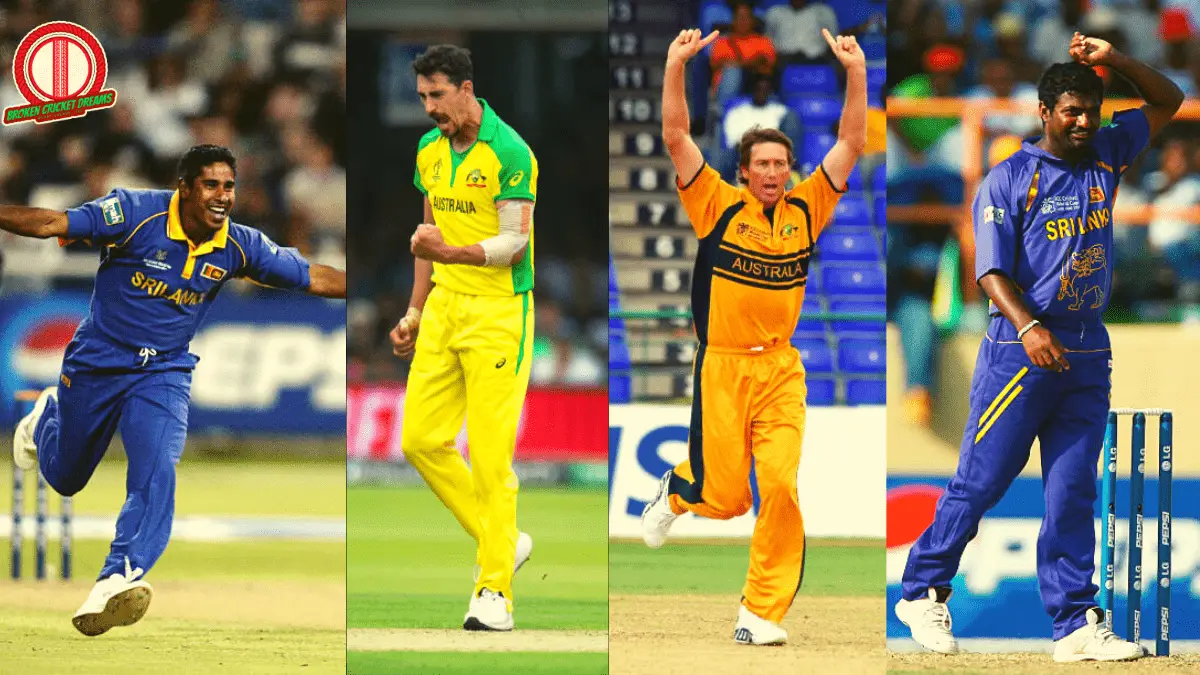
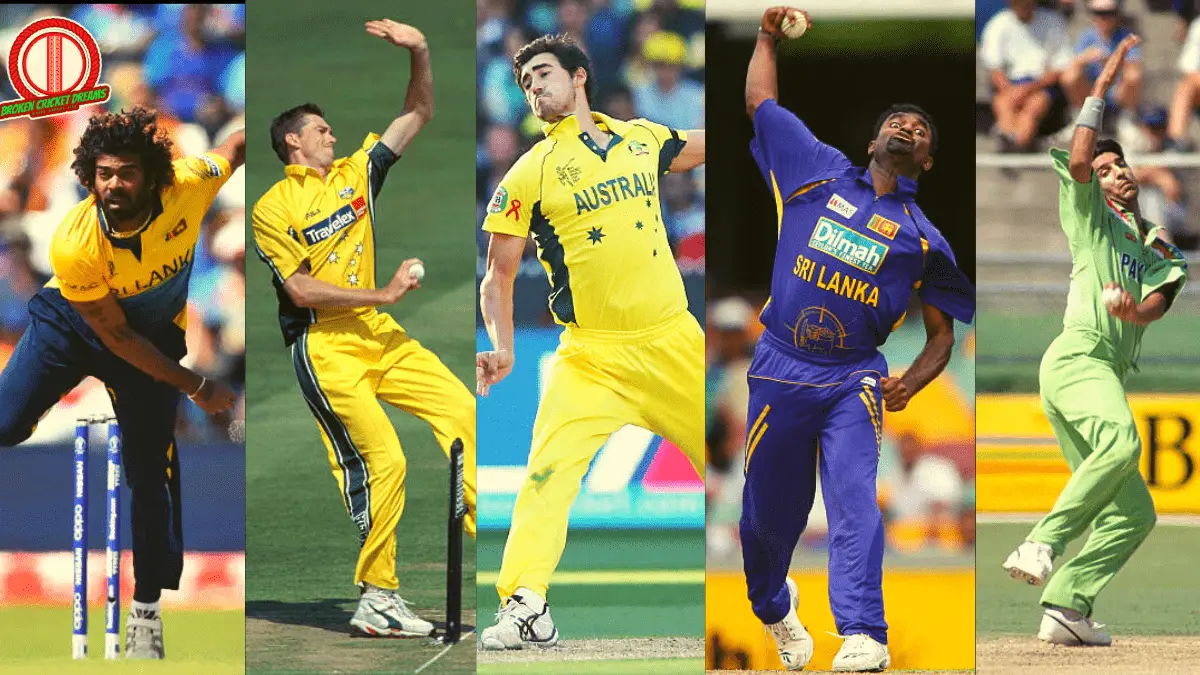
The top 5 wicket takers in the ODI Cricket World Cup (CWC) are Glenn McGrath (71), Muttiah Muralitharan (68), Lasith Malinga (56), Wasim Akram (55), and Mitchell Starc (49).
From the Top 20 wicket-takers in the ODI CWC, nations most represented are as follows: Australia (5), New Zealand (4), Sri Lanka, Pakistan (3), South Africa, India (2), and Bangladesh (1). Surprisingly, the West Indies do not make the Top 30 in this list.
Mitchell Starc has the best average (14.81), bowling strike rate (19.12), and most occurrences of 4 wickets or more (6: 3 – 4-fers, 3 – 5-fers). On the other end of the spectrum, Shakib Al Hasan has the worst average (35.94) and strike rates (42.14).
The best figures from this group of 20 are Glenn McGrath (7/15), Tim Southee (7/33), Chaminda Vaas (6/25), Mitchell Starc (6/28), and Lasith Malinga (6/38). Note that Shane Bond also has World Cup figures of 6/23, but his overall wicket tally of 30 ranks him at #26 in this list.
Mitchell Starc (49), Trent Boult (39), Tim Southee (34), and Shakib Al Hasan (34) are the only active players still in this list who are expected to play in the 2023 ODI World Cup.
The ODI Cricket World Cup: Who Has Taken the Most Number of Wickets?
Honorable Mentions: Shane Warne – 32, Chris Harris – 32, Mohammad Shami – 31, Anil Kumble – 31, Shaun Pollock – 31, Shane Bond – 30, Ian Botham – 30, Shoaib Akhtar – 30, and Shahid Afridi – 30.
Final Thoughts
Although these players have taken the greatest number of wickets in the Cricket World Cup, but more than the numbers, they have given us plenty of memories to remember them by.
Think Wahab Riaz vs Watson, Chaminda Vaas’s hat-trick, Boult vs Starc at Eden Park, Wasim Akram in the final, that Shane Bond spell, Imran Tahir’s celebrations, and much more.
I will leave you with this question for the 2023 ODI World Cup is, “Can Mitchell Starc break the World Cup record for the most wickets?”Comment below!
The top 5 wicket takers in the ODI Cricket World Cup (CWC) are Glenn McGrath (71), Muttiah Muralitharan (68), Lasith Malinga (56), Wasim Akram (55), and Mitchell Starc (49).
Frequently Asked Questions (FAQ) – Most Number of Wickets in the Cricket World Cup
Who has taken the most wickets in World Cup?
Glenn McGrath (71), Muttiah Muralitharan (68), Lasith Malinga (56), Wasim Akram (55), and Mitchell Starc (49) have taken the most number of wickets in the Cricket World Cup.
How many World Cup wickets does Mitchell Starc have?
Mitchell Starc has taken 49 ODI World Cup wickets from just 18 matches. He boasts an absurd bowling average of 14.18 & strike rate of 19.12. He has taken 4-wickets thrice and 5-wickets thrice as well.
Can Mitchell Starc break the World Cup record for the most wickets?
Yes he can. If he is fit and plays in all the games on India’s pitches, then he can take 23 wickets to break Glenn McGrath’s record of 71 wickets. In case Australia reaches the final, he may have as many as 11 matches to break the World record (otherwise, he can play a maximum of 9 matches in the group stage).