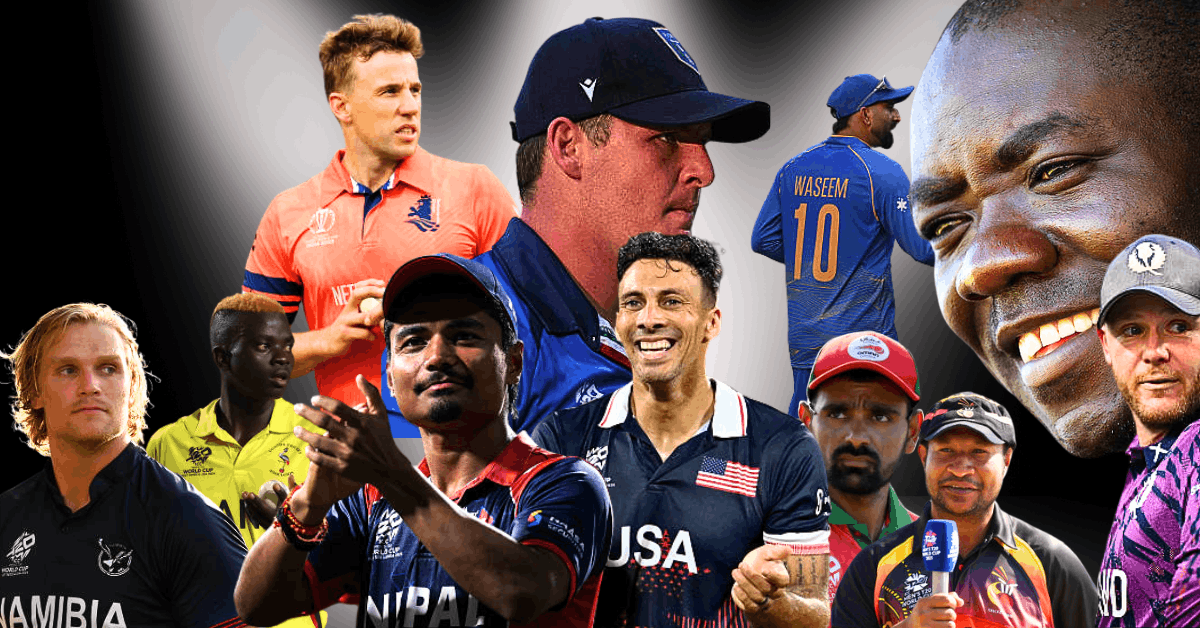
The women’s victory fueled social media with calls for Full Membership to Scotland. That made me wonder—What exactly are all the criteria to become a full member?
Full Member Criteria: What Do The Official ICC Documents Say?
According to ICC’s website, Clause 2.1 outlines 22 conditions that need to be satisfied to even apply for full membership.
You read that correctly, twenty-two. Here are some of the major highlights.
Have appropriate structure for both men’s and women’s cricket
Generate a minimum of 10% of their own total revenues for four years prior to applying
A debt to equity ratio of not more than 2:1 in the past four years
Features on the Men’s ODI Ranking table
Should have qualified for 3 Men’s ODI & T20 WC in past eight years
Have defeated at least one Full Member in the Top 10 in a Men’s Cricket World Cup, World Cup Qualifier, or the T20 World Cup
Have won at least four times against two or more Full Members in bilaterals in the past 8 years
Have participated in at least one Women’s WC (ODI or T20) in the past 4 years or feature in the women’s ODI ranking table
Have participated in two editions of the U-19 WC in the past 8 years
Have domestic structure (Men’s 50-over and 20-over competitions with List A status and at least 3 teams)
Have ‘satisfactory’ women’s pathway structures and junior men’s pathway structures in place
Have ‘sustained and sufficient pool of players’ in senior men’s, women’s, and U-19 men’s teams
Have ‘strong domestic participation levels’ and ‘evidence of significant growth’ in the past 8 years
Have 2 ICC accredited venues
Has talent/coaching/umpire/curator development programs over the past 4 years
Once they fulfill all the conditions, boards can write to the ICC with an ‘intent to apply’ and complete the written application after which there will be a preliminary assessment, reviews, and even a possible inspection.
How Did Afghanistan Qualify?
I know what you must be wondering. How in the world did Afghanistan qualify (and not lose their status) after the Taliban takeover, where higher education was banned for girls?
At the very end of the document, the ICC conveniently slips in Clause 3.5, which states
“In its sole discretion, and where the Applicant is able to demonstrate exceptional circumstances justifying its inability to satisfy one or more of the applicable Membership criteria, the Membership Committee may recommend the acceptance of the application notwithstanding the fact that the Applicant does not satisfy all of the relevant Membership criteria.”
Scotland now meet more of the ICC full member performance criteria than two current ICC full members.
— Andrew Nixon (@andrewnixon79@mastodon.world) (@andrewnixon79) May 5, 2024
Full Membership No Longer Equals Test Status
Growing up, I always had the impression that Full Membership = Test Status, but the word ‘Test’ does not even appear once on the ICC Membership Criteria document.
“Full Members are the governing bodies for cricket of a country recognised by the ICC, or nations associated for cricket purposes, or a geographical area, from which representative teams are qualified to play official Test matches (12 Members).”
“Associate Members are the governing bodies for cricket of a country recognised by the ICC, or countries associated for cricket purposes, or a geographical area, which does not qualify as a Full Member, but where cricket is firmly established and organised (94 Members).”
Hence, Full Membershipmeans there is a pathway to Test status, but nowhere does it claim that playing Test cricket is a necessity for Full Members.
Should Newer Full Members Even Play Test Cricket?
Okay, a slight digression. Should newer full members even play Test cricket?
As Ireland have found out, it is not cheap to host Test cricket. In fact, it causes more financial strain to the national boards. Ireland won their first Test seven years after their Test status, but scheduling Test matches? Well, that’s a whole another matter.
Cricket Ireland famously cancelled a Test against Bangladesh and replaced it with a T20 series because they would lose a million pounds for that one Test.
I am all for a ‘Test fund’ that was proposed a decade ago, innovations in Test cricket, or a two-tiered World Test Championship with relegation & promotion, but forcing a cricket board to play Test cricket can bring down the financial situation of the entire sport in the country.
"We should give the Scotland men's team Test Status" is a pretty weird reaction to the Scotland women's team qualifying for a T20 World Cup to be honest. https://t.co/ve8eb7dQZt
Apart from finances, Ireland’s elevation to Test status did more harm than good.
Irish cricketers used to be considered domestic players and therefore, the golden generation – Boyd Rankin, Paul Stirling, Tim Murtagh, etc. played as domestic cricketers in the County circuit. However, post 2017, they have had to sign up as overseas players which County teams may be reluctant to do.
If Scotland does accept to play Test cricket, adjustments would need to be made in County Cricket rules.
Show Me the Money
If not Test cricket, what is Full Membership all about?
*Top 8 Teams (non-India) include England ($41.33 million), Australia ($37.53 million), Pakistan ($34.51 million), New Zealand ($28.38 million), West Indies ($27.50 million), Sri Lanka ($27.12 million), South Africa ($26.24 million), and Bangladesh ($26.74 million).
Ireland ($17.64 million), Zimbabwe ($17.64 million), and Afghanistan ($16.82 million) relatively earn less but a larger chunk than the Associate nations.
Currently $67.16 million is divided among 94 Associate Members. On average, each Associate member gets about $714,468, which is substantially less than what Ireland and Afghanistan now receive.
If a cricket board receives Full Membership, then they are ensured a small piece of the annual funding pie. What’s more? They will get regular FTP matches against the top teams helping them improve further. ICC already earns enough money from World Cups that they have surplus to distribute to their members. Adding two more members and changing the redistribution of wealth will not change much.
Should Scotland and Netherlands Receive Full Member Status?
Let’s get back to the heart of the topic, should countries like Scotland and Netherlands receive Full Member Status?
In 2000, Bangladesh were gifted Full Membership and Test status after winning the 1997 ICC Trophy, defeated Kenya in 1998, and defeating Scotland & Pakistan in the 1999 ODI World Cup. Meanwhile, Bangladesh’s Women’s Team only made their international debut in 2007 and gained ODI status in 2011 (qualified for the 2014 T20 WC as hosts, qualified for the 2022 ODI WC), much after they were elevated to Full Status.
I argue that Scotland and Netherlands have already done much more than Bangladesh ever did prior being elevated to Full Member Status.
Scotland in ICC Tournaments
Let’s look at Scotland. The men’s team has already defeated the likes of England & West Indies, featured in multiple World Cups, have a growing women’s team, and have a couple of solid venues.
Timeline
Here is a quick timeline of their recent past. Scotland have perhaps suffered more than any other team with the curtailed 10-team World Cup format, narrowly losing out on two consecutive ODI World Cups despite playing extremely good cricket.
1992: Becomes an independent cricket Associate Member
1997: Ends 3rd in the ICC Trophy and qualifies for the 1999 ODI World Cup
2004: Wins the ICC Intercontinental Cup
2012: Defeats Bangladesh in a T20 match
2017: Defeats Zimbabwe in an ODI match
2018: Defeat Afghanistan, UAE, Nepal, Hong Kong, (and tied against Zimbabwe), *lost against West Indies due to DLS/rain
2018: Defeats England by 6 runs after scoring 371
2022: Defeats West Indies in the T20 World Cup
2022: Scotland women team get ODI status
2023: Defeat West Indies, Zimbabwe, Ireland, UAE, Oman but fall one spot short of the 10-team ODI World Cup
2024: Scotland women qualify for the T20 World Cup
World Cup Records
ODI WC: Qualified for the 1999 (0/5), 2007 (0/3), 2015 (0/6)
*Note: Scotland have featured in 4/5 U-19 World Cups in the last 8 years.
*NR – No Result
Netherlands in ICC Tournaments
Timeline
Netherlands have had a dream couple of years and even qualified for the 2023 ODI World Cup. They have defeated South Africa, England, and West Indies, and their women’s team even reached the quarterfinals in 1997.
1988: Women’s team qualify for the 1988 ODI World Cup
1994: Men’s team ends 3rd in the ICC Trophy and qualifies for the 1996 ODI World Cup
1997: Women’s team qualify for the quarterfinal
2001: Wins the ICC Trophy
2003: Defeats Namibia in the 2003 ODI World Cup
2006: Get ODI status
2007: Women play a Test match against South Africa
2009: Defeats England in the T20 World Cup
2010: Defeats Bangladesh in the ODI World Cup
2014: Chased 193 in 13.5 overs against Ireland to qualify for the Super 10s
It’s clear that these two countries have done more than Bangladesh and Afghanistan for over three decades now (and are doing better than Zimbabwe has been in recent years).
Sure, there may be a checkbox here or there that these two cricket boards may not have hit, but they have done almost everything right.
Dear ICC, it is my honest request. I plead with you to give Scotland and Netherlands Full Membership.
If that means, use Clause 3.5, wave some hands, and give out some funds, then why not?
If not now, when? Take the chance.
It’s time for the European Cricket Dream. Let’s make it happen.
If you like these kinds of in-depth deep dives on finances and administration of cricket, check out the following:
After the defeat, or ‘thrashing’ India received from England in the 2022 WC semi-finals, fans worldwide were frustrated at another disappointing finish. Here are my honest thoughts for Those Who Care and Run Indian Cricket. An open letter, “Enough is enough.”
Dear Indian Cricket Administrators,
Enough is enough.
2014 T20 World Cup Final. 2015 ODI World Cup Semi-Final. 2016 T20 World Cup Semi-Final. 2017 Champions Trophy Final. 2019 ODI World Cup Semi-Final. 2021 World Test Championship Final. 2022 T20 World Cup Semi-Final. 2023 World Test Championship Final.
9 Long Years. 7 ICC knockout matches. 3 captains. Different coaches. Same result. So close, yet so far.
When India suffered 0-4 losses to England & Australia in the 2011 disastrous Test tours, MS Dhoni frequently said, ‘It is the processthat matters.’ The same talks continued throughout the decade.
Process. Journey. Learnings. Yes, learning is good. Making mistakes is good…if and only if, they lead to tangible changes. Not if they result in the same mistakes again.
We have Questions. More questions. LOTS of questions. What is the exact process? Who decides these processes? Because if the same story plays over and over again, and India keeps losing in key moments, then there is an inherent problem with the process itself.
Then the blame game starts. IPL vs internationals. Not able to play in overseas leagues. Injuries. Handling the ‘pressure.’ Retrospective selection debates. Rest & rotation.
Excuses.Enough is enough.
This letter is not to single out individuals, players, coaches, team management, or even the system. I’m not questioning the commitment or the lack of trying. These are professionals, and they try to do their best on and off the field.
Rather, I’m questioning the status quo. The Hero Worship. Administrative bias. Selections and Experimentation. Media leaks. Lack of the winning mentality.
The current England team is doing something right. After the 2015 World Cup debacle, they took some tough decisions. The team of Eoin Morgan, Andrew Strauss, and Nathan Leamon invested in a system that would produce results and backed players that fit their system.
Enjoy the journey. Learn from the process. Keep improving. All this is good, but at the end of the day, results matter. The IPL wouldn’t still exist if it wasn’t a profitable venture. Brazil (5), Germany (4), and Italy (4) wouldn’t be as feared in the soccer world if they hadn’t won that many trophies consistently over time.
You know why West Indies in the 2010s were so good? Because they won World Cups AND had fun doing it. That’s the ideal situation. Process plus results. Why can’t India get there? Why can’t India win both bilaterals and World Cups?
The Power of the IPL and depth of India’s pool of talent—A blessing and a disguise. There is a key difference between gradual progress and stagnation. It is high time that Team India starts converting this golden generation of players and financial power into trophies.
Lost opportunity. Enough is enough.
The fans are just as much as stakeholders in the game as the administrators and players themselves.
One of these days, the confidence in the team might be a disappear. The team needs to start winning world tournaments. That’s it.
And this is not to say that India is a bad team. Not even close. Coming to the semi-finals in almost every competition ten years in a row is no joke. However, the final hurdle is sometimes the most important step. And not getting over that step points to deeper issues.
It’s a well-known idiom to “Hope for the best and Prepare for the worst.” But maybe, just maybe, that is not the right way to go.
Don’t play safe. For once, just go all out. Try something new. Take some risks. Make courageous selections.
Indian fans can live with defeat. What they can’t live with is manner of defeats and making the same mistakes over and over again.
Something needs to change. Otherwise, all that will be left is Broken Dreams.
Because enough is enough.
Sincerely, A Cricket Fan
Join 5,104 other subscribers
Salary of Cricketers (Men’s) from Each of the 12 Nations (Updated 2025)—The Complete Guide
24 Cricketers with Musical Talent Who Will Rock You Ft. Don Bradman, Sreesanth, and AB De Villiers
15 Cricket Problems That Needs to Be Solved in the Next Decade | How to Fix Cricket 101
Top 11 Cricketers Who Retired Too Early – The Lost Generation of Alastair Cook, Kevin Pietersen, AB De Villiers, Hashim Amla, and Michael Clarke
Most Beautiful Cricket Stadium in Each of the 12 Countries – Lord’s, Newlands, MCG, Galle,…Which Is Your Favorite?
List of 63 South African Born Cricketers Who Represented Other Nations: How Many South African Cricketers played for Australia, England, and New Zealand?
USA Cricket—The Complete Guide to Cricket in America (Updated 2023)
22 Unlucky Cricketers Wasted Talents: Alex Hales, Fawad Alam, Robin Uthappa, Can You Guess The Rest?
What Rahul Dravid Taught Me
The Brutal Economics of Associate Cricket: The 2026 T20 World Cup Was the Most Global Ever, But Can Associates Survive?
Ranking the 78 Greatest Australian Cricketers of All-Time (Men’s)
England Are Built for Their Best Days. Australia Win on Their Worst.
SA20 Auction gathered lots of attention around the world.
This was not like South Africa’s earlier failed attempts to a T20 league. Graeme Smith is at the head of the organization (league commissioner), the IPL groups own all the franchises, and there was even an auction in this one. This was actually quite an enthralling event to witness.
Big Takeaways & Highlights from SA20 Auction
Sri Lankan (most) players go unsold despite a stellar Asia Cup performance
MI Cape Town stay true to their franchise and get as many as six uncapped South African players
This was a proper T20 league auction. Not one where home grown players’ reputation was kept in thought. T20 captain Temba Bavuma, Test captain Dean Elgar, and Andile Phehlukwayo were all unsold.
Tristan Stubb’s profile skyrockets. From an injury replacement at Mumbai Indians to $519,000 price at the SA20 auction.
Just like the IPL, the auction propelled a few relatively unknown names in the bags of riches. In this case, it was Donavon Ferreira at $311,000.
Prior to the auction, each franchise could acquire the services of maximum five players – 1 South African (capped), 1 uncapped, and three overseas players.
MI Cape Town (owned by Mumbai Indians group): Kagiso Rabada, Rashid Khan, Sam Curran, Dewald Brevis (uncapped)
Durban Super Giants (owned by Lucknow Super Giants group): Quinton de Kock, Jason Holder, Kyle Mayers, Reece Topley, Prenelan Subrayen (uncapped)
Base price -175,000 Rands ($10,000): Chris Wood, Duanne Olivier, Daryn Dupavillon
SA20 Auction Round 10 – The Nexxt
This was an express round for uncapped players.
Players
International Team
Franchise
Price Sold (South African Rands)
US Dollar Conversion
Jordan Cox
*Uncapped English player
Sunrisers Eastern Cape
R. 325,000
$18,000
Dilshan Madushanka
Sri Lanka
Durban Super Giants
R. 275,000
$15,235
List of Unsold Players in Round 9
Base price -175,000 Rands ($10,000): Andile Simelane, Tiaan van Vuuren, Jonathan Bird, Caleb Seleka, Matthew Boast, Bryce Parsons, Dunith Wellalage
SA20 Auction Round 11 – The eXXpress Auction
Players
International Team
Franchise
Price Sold (South African Rands)
US Dollar Conversion
Johnson Charles
West Indies
Durban Super Giants
R. 425,000
$24,000
Adam Rossington
*Uncapped English
Sunrisers Eastern Cape
R. 425,000
$24,000
Nandre Burger
*Uncapped South African
Joburg Super Kings
R. 175,000
$10,000
Donavon Ferreira
*Uncapped South African
Joburg Super Kings
R. 5,500,000
$311,000
Matthew Breetzke
*Uncapped South African
Durban Super Giants
R. 175,000
$24,000
Mitchell van Buuren
*Uncapped South African
Paarl Royals
R. 175,000
$10,000
Wihan Lubbe
South Africa
Paarl Royals
R. 350,000
$20,000
Marco Marais
*Uncapped South African
Pretoria Capitals
R. 175,000
$10,000
Delano Potgieter
*Uncapped South African
MI Cape Town
R. 175,000
$10,000
Roelof van der Merwe
South Africa/Netherlands
Sunrisers Eastern Cape
R. 175,000
$10,000
Marques Ackerman
*Uncapped South African
Sunrisers Eastern Cape
R. 175,000
$10,000
Ferisco Adams
*Uncapped South African
Paarl Royals
R. 325,000
$18,000
Imraan Manack
*Uncapped South African
Paarl Royals
R. 175,000
$10,000
Christiaan Jonker
South Africa
Durban Super Giants
R. 175,000
$10,000
Evan Jones
*Uncapped South African
Paarl Royals
R. 1,700,000
$96,000
Malusi Siboto
*Uncapped South African
Joburg Super Kings
R. 175,000
$10,000
Ramon Simmonds
*Uncapped South African
Paarl Royals
R. 175,000
$10,000
James Fuller
*Uncapped South African/New Zealand
Sunrisers Eastern Cape
R. 425,000
$24,000
List of Unsold Players in Round 10
Base price – 850,000 Rands ($48,000): Adam Lyth
Base price: – 425,000 Rands ($24,000): Jeffrey Vandersay, Jake Lintott, Paul Walter, Tom Moores, Sam Cook, George Scrimshaw
Base price -175,000 Rands ($10,000): Grant Roelofsen, Glenton Stuurman, Mbulelo Budaza, Ziyaad Abrahams, Aya Gqamane, Steve Eskinaz, Diego Rosier, Khaya Zondo, Johan van Dyk, Pieter Malan, Dayyan Galiem, Henry Brookes, Farhaan Behardien, Pite van Biljon, Unmukt Chand, Bayers Swanepoel
SA20 Auction – Round 12 – The eXXpress Auction
Players
International Team
Franchise
Price Sold (South African Rands)
US Dollar Conversion
Odean Smith
West Indies
MI Cape Town
R. 1,700,000
$96,000
Jimmy Neesham
New Zealand
Pretoria Capitals
R. 3,600,000
$203,000
Eoin Morgan
England
Paarl Royals
R. 2,000,000
$113,000
Kusal Mendis
Sri Lanka
Pretoria Capitals
R. 425,000
$24,000
Brydon Carse
England
Sunrisers Eastern Cape
R. 425,000
$24,000
Sarel Erwee
South Africa
Sunrisers Eastern Cape
R. 175,000
$10,000
Simon Harmer
South Africa
Joburg Super Kings
R. 200,000
$11,000
Wiaan Mulder
South Africa
Durban Super Giants
R. 1,900,000
$107,000
Caleb Seleka
*Uncapped South African
Joburg Super Giants
R. 175,000
$10,000
Daryn Dupavillon
South Africa
Pretoria Capitals
R. 1,700,000
$96,000
Ziyaad Abrahams
*Uncapped South African
MI Cape Town
R. 175,000
$10,000
Wesley Marshall
*Uncapped South African
MI Cape Town
R. 175,000
$10,000
Aya Gqamane
*Uncapped South African
Sunrisers Eastern Cape
R. 175,000
$10,000
Codi Yusuf
*Uncapped South African
Paarl Royals
R. 175,000
$10,000
Olly Stone
England
MI Cape Town
R. 850,000
$48,000
Grant Roelofsen
*Uncapped South African
MI Cape Town
R. 175,000
$10,000
Shane Dadswell
*Uncapped South African
Pretoria Capitals
R. 175,000
$10,000
Eathan Bosch
*Uncapped South African
Pretoria Capitals
R. 175,000
$10,000
Tom Abell
*Uncapped English
Sunrisers Eastern Cape
R. 850,000
$48,000
Final List of Unsold Players in Round 12
Temba Bavuma, David Bedingham, Andile Phehlukwayo, Roston Chase, Craig Overton, Siyabonga Mahima, Thimas Kaber, Paul Walter, Sam Cook, Diego Rosier, Farhaan Behardein, Pieter Malan, Rahkeem Cornwall, Hardus Viljoen
Frequently Asked Questions – Get to Know the Players
Who is Junaid Dawood?
Junaid Dawood is a 25-year-old leg break bowler who plays domestic cricket in South Africa.
Who is Shaun von Berg?
Shaun von Berg is a South African bowling allrounder from South Africa.He is a 36-year-old cricketer who has played 124 first class matches and has taken 447 wickets. He was recently purchase by the Pretorius Capitals in the SA20 auction.
Does Ross Taylor still play cricket?
Even though Ross Taylor retired earlier in 2022, he still plays exhibition cricket. He played for the Road Safety series and was in the SA20 auction. He was unsold with base price at 850,000 Rands ($48,000).
Who is Nandre Burger?
Nandre Burger is a 27-year-old South African cricketer. He is a left-handed medium-fast bowling all-rounder.
Who is Donavon Ferreira?
Donavon Ferreira is a 24-year-old South African cricketer. He is a wicketkeeper from Pretoria. He was sold for 5,500,000 South African Rands ($311,000) in the SA20 Auction to Joburg Super Kings.
Who is Matthew Breetze?
Matthew Breetze is a 23-year-old South African cricketer who is a wicket-keeper from the Eastern Province.
Which team purchased Mitchell van Buren in the SA20 Auction?
Mitchell van Buuren, a 24-year-old legspinner from South African was purchased by the Paarl Royals.
Who is Wihan Lubbe?
Wihan Lubbe is a South African cricketer who has played 2 T20Is.
Was Unmukt Chand picked up the 2022 SA20 Auction?
No, Unmukt Chand, an U-19 World Cup winning captain from India who now plays for Team USA, was not picked up for SA20 Auction. His base price was 175,000 South Africa Rands.
Who are the captains in SA20 cricket league in South Africa?
Rashid Khan (MI Cape Town), Quinton de Kock (Durban Super Giants), Aiden Markram (Sunrisers Eastern Cape), Faf du Plessis (Joburg Super Kings), David Miller (Paarl Royals), and Wayne Parnell (Pretoria Capitals) are the six captains of the SA 20 franchise league.
How many foreign players can play in the XI in SA20?
Four foreign players can play in the XI at the same time in SA 20.
At the beginning of a One Day International (ODI) match, the teams would list 12 players, where the twelfth man actually could make a tangible impact in the game — The Super Sub.
They could either replace a bowler and finish their quota, be picked as a wicketkeeper (which usual substitutes could not without special permission) or could replace a batter for the remainder of the game.
Vikram Solanki, pictured above, was the first SuperSub. On July 7th, 2005 he became the first SuperSub after replacing Simon Jones (but didn’t get to bat since England finished the chase early).
The SuperSub Rule briefly lasted between 2005 and 2006, but due to its controversial nature, was removed by 2006.
Why did the SuperSub Innovation Fail?
The Super Sub rule failed due to the rigidity in the system.
The substitute player had to be picked before the toss. Hence, variations in the game could nullify the substitute selection. What if a team went with four pace bowlers and the ball started to stop a bit? What if a team needed an extra batter after an early collapse? The Super Sub could not flow with the game and hence, it failed to bring the results it once promised.
In addition, teams brought specialist fielders to replace bowlers to keep energy in the field, which was frowned upon by the opposition.
The X Factor Rule in Big Bash
The Big Bash is now trying out some innovations like the X-Factor.
The X-Factor has the chance of substituting a player after the 10th over in a T20 game, thereby giving both teams a fair level playing field and flexibility.
If ODI Cricket is to Survive, SuperSub and Other Innovations Need to Comeback
At a time when ODI cricket is struggling to find relevance, South Africa are willingly forfeiting an ODI series and jeopardizing their World Cup direct qualification chances to accommodate home grown T20 Leagues, innovations like the SuperSub should be added again.
If the ICC doesn’t act now, the ODI game is good as over.
What do you think? What other innovations could make the ODI game relevant again?
At the beginning of a One Day International (ODI) match, the teams would list 12 players, where the twelfth man actually could make a tangible impact in the game — The Super Sub. They could either replace a bowler and finish their quota, be picked as a wicketkeeper (which usual substitutes could not without special permission),or could replace a batter for the remainder of the game.
Who Was the First SuperSub in Cricket?
Vikram Solanki, pictured above, was the first SuperSub. On July 7th, 2005 he became the first SuperSub after replacing Simon Jones.
Why did the SuperSub Innovation Fail?
The Super Sub rule failed due to the rigidity in the system since the substitute player had to be picked before the toss.
How long did the SuperSub rule last?
The SuperSub rule lasted about one year, between 2005 and 2006.
The entire list of 360 degree players is as follows:
AB De Villiers
Kevin Pietersen
Glenn Maxwell
Jos Buttler
Suryakumar Yadav
Dinesh Karthik
Glenn Phillips
The next generation of cricketers will add to this list, I am sure.
What is a 360 Player?
A 360-degree player is someone who utilizes each and every open area of the cricket ground. Traditionally, cricketers have been trained to play in the V, but due to limited overs cricket, the run scoring areas has expanded.
Suryakumar Yadav has shown that even though he was built with traditional cricket training (as can be seen from those perfect straight drives and classic shots), he has a lot more shots.
What shots of Suryakumar Yadav make him unique?
He has three shots that sets him apart:
The sweep — Most modern day cricketers have the sweep shot, but what sets SKY apart is his range. Due to his beautiful wrist work, he can hit the ball anywhere from Deep Mid Wicket to Deep Square to Fine Leg behind the 45.
The swipe — This swipe shot is something indescribable by the human eye. Most cases, it is used to hit a fast bowler over Square Leg for six. However, as seen in his marvelous 117 (55) vs England in 2022, he utilized this shot to great effect. One shot, in particular, caught my eye. He swiped the ball behind his leg and guided it almost straight behind Jos Buttler’s (WK) head for a one bounce four he
The inside out shot — Another shot that has become a Suryakumar Yadav trademark. This can be employed against both spin and pace. As seen once again during that 117, he has perfected this shot. He hit an inside-out shot behind 3rd man for a majestic boundary!
The Pull — Suryakumar Yadav began his career with a first ball pull over Fine Leg. Usually, boundaries here a bit shorter, and the fact that he can almost choose where to hit it makes him an effective 360 degree player.
And not only can he hit these wristy tricky shots, he can also play the classic straight drives. Another one of his shots that caught my eye during his incredible innings was that straight six with a little dance move. Here is highlights of his innings. If you have watched it once or twice, I request y’all to watch this innings again because it was that good.
Can Suryakumar Yadav Keep It Going?
There is no doubt that Suryakumar Yadav is in the form of his life.
These are just some of the many shots that help SKY cover what was once thought the unreachable areas of the ground. I hope he continues improving and stays in immaculate touch at the international level.
He has had to wait his time, but we have seen his gradual evolution from a finisher at KKR to a complete middle order batter at Mumbai Indians.
Surya did not receive his international cap as early as he should have, but he is making every innings count at the international level. That 117, with 14 fours and 6 sixes was a coming of age for him, and I just hope for the best for him going forward.
Cricket Food For Thought #3: Time for T20 & Test Cricket to Separate?
By Nitesh Mathur, Broken Cricket Dreams, @BCD 6/10/2022
New Zealand’s first Test against England started on 2nd June, 2022, a Test match in which Trent Boult played right after playing the IPL final on 29th May, 2022 representing the Rajasthan Royals. In fact, New Zealand’s tour of England began much earlier on the 20th May. Two tour matches had already been played before Boult reached the shores of England.
****
David Miller & Hardik Pandya starred in Gujarat Titans’ road to IPL glory. Ten days later, they were playing for opposing teams when the 5-match India vs South Africa bilateral series began.
****
This series is going to end on 19th of June. Then, India play in Ireland on the 26th and 28th of June, before they play their Test match against England beginning on the…1st of July.
The situation has reached such a point that a special flight is being arranged for coach Rahul Dravid, Shreyas Iyer, and Rishabh Pant.
Warning For Test Cricket
The World Test Championship, although not perfect, has put some context for Test match cricket. However, with T20 leagues overtaking the yearly calendar and T20 World Cups occurring every two years now, ICC Chairperson Greg Barclay has warned
“…Some of the smaller Full Members will have to accept from a resourcing point of view that they can’t play the amount of Test cricket that they wanted to. So we may see a lessening of that, maybe they play four or five Tests a year whereas England, Australia and India I think will be playing Test cricket as they are now.”
– Greg Barclay, icc chairperson
Radical Proposal
I have spoken at length about overkill of cricket and T20 leagues, mental health issues many a times before, but radical times demand radical actions.
Today I propose a separation of T20 and Test cricket as sports. Jonny Bairstow might disagree but workload management and overburdening the cricket schedule is about to hit the edge.
Just like football and futsal are treated as different sports, T20 and Test cricket should be classified as separate sports as well. So what should this separation entail?
A player cannot play both T20 and Test formats at any level.
Separate coaches, teams, players, tournaments, and scouts for both sports. So Rahul Dravid should not go fly and coach the Test team.
Separate governing bodies and budgets
Women’s and Men’s Test matches managed under the same administrative body. Similarly women’s & men’s leagues managed under the same body (Men’s/Women’s Hundred, IPL, Big Bash, CPL, etc.)
Instead of distributing budgets, resources, etc. to these two formats, have a separate funding base
Distance the Heart & Mind
We all would love Virat Kohli playing for RCB and India in all formats all the time, but that is no longer possible. I claim, it is no longer necessary either.
When the IPL begun, each franchise had a marquee player (Dravid – RCB, Ganguly – KKR, Laxman – Deccan, Tendulkar – Mumbai, Yuvraj – Punjab, MS Dhoni – CSK). This was to develop a fan base and for continuity.
Fast forward to 2022. No Suresh Raina, Virat Kohli & Rohit Sharma had off years, MSD was good but we only saw glimpses. IPL 2022 was rather about T20 specialists, The Mohsin Khans, Dinesh Karthiks, and Tim Davids.
T20 as a sport has become self-sufficient. Virat Kohli is needed at Ranji, not Royal Challengers.
Instead of franchising County Cricket or looking to forcefully promote Ranji Trophy, high profile players in domestic tournaments will raise the levels of first class/Test cricket, drive finances, and evolve as a sport faster.
****
Oh and what about ODI cricket? I completely forgot about it!