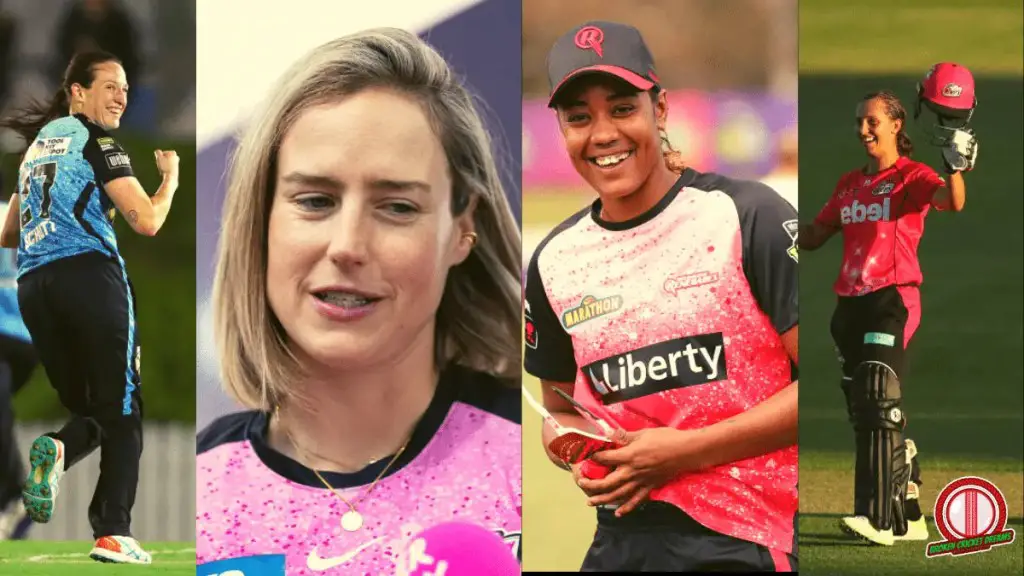
Women’s cricket has become mainstream over the last decade, especially with the breakthrough 2017 ODI World Cup and the 2020 T20 World Cup final, but how much do we really about it?
The general public can remember who won the 1979 Cricket World Cup, Kapil Dev’s 1983 catch, Wasim Akram’s 1992 swing, South Africa’s collapses, and Australia’s dominance in men’s cricket. Here we will educate ourselves about the Women’s Cricket World Cup—How many World Cups have happened, what happened in each world cup, who is the highest runs scorer, wicket taker, and much more!
By the end of this article, you will know everything from history to prepare yourself for the upcoming 2022 Cricket World cup.
Cricket’s first ODI World Cup was the 1973 Women’s Cricket World Cup, not the 1975 Men’s Cricket World Cup.
Denmark played cricket? That’s right. While teams like Ireland and Netherlands made their impact in men’s world cup in the 2000s, teams like Ireland, Denmark, and Netherlands made their Women’s World Cup debut from the 1988 & 1993 world cups onwards.
In the 1973 World Cup, Jamaica & Trinidad and Tobago played as separate nations, not under West Indies.
In the 1973 & 1982 World Cup, an International XI was fielded as one of teams, comprised of players from England, New Zealand, Netherlands, Australia, India, Trinidad, and Jamaica.
Format: Round Robin (3 matches each), 6 matches total
Highest Run-Scorer: Margaret Jennings (127) – Australia
Highest Wicket Taker: Sharyn Hill (7) – Australia
Venue: New Zealand
Fun Fact:Australia won their first cricket world cup….first of their 20 world cups (5 men’s ODI, 1 T20 WC, 3 U-19 WC, 6 women’s ODI WC, 5 T20I WC)…WOW.
3. Hansells Vita Fresh 1982 Women’s Cricket World Cup
Venue: New Zealand
Winner: Australia 🥇
Runners Up: England 🥈
Teams: 5 (Australia, England, New Zealand, India, International XI)
Format: Triple Round Robin + Final (12 matches each), 31 matches total
Highest Run-Scorer: Jan Brittin (391) – England
Highest Wicket Taker: Lyn Fullston (23) – Australia (most in any women’s WC)
Fun Fact:Jackie Lord took 8-2-10-6 against India, women’s cricket best WC bowling figures to date. Electing to bat, NZ were bundled out for 80 in 58.5 overs via Diana Edulji’s 11.5-7-10-3 (60-over match). In reply, Lord helped bundle India for 37 in 35 overes.
Each team played each other THREE TIMES! Can you imagine that in today’s day and age? Also International XI makes a comeback.
Highest Run-Scorer: Debbie Hockley (456) – New Zealand (most in any women’s WC)
Highest Wicket Taker: Katrina Keenan (13) – New Zealand
Fun Fact:Belinda Clark 229* (pushing Australia to 412/7, best WC score ever till date) and Charlotte Edwards’ 173 broke ODI batting world records, Pakistan collapsed for 27/10 (lowest ever WC score), and Jhulan Goswami, on ball duty, was inspired to take up the sport as a child.The beginning of professionalization of women’s cricket (from skirts/culottes to trousers)
Teams: 8 (Australia, New Zealand, India, South Africa, England, Sri Lanka, Ireland, Netherlands)
Format: Round Robin + Semi-Finals + Finals, 31 matches total
Player of the Tournament:Lisa Keightley
Highest Run-Scorer: Karen Rolton (393) – Australia
Highest Wicket Taker: Charmaine Mason (17) – Australia
Fun Fact:A classic Australia Vs New Zealand final in New Zealand, who actually won their first (and only) ODI World Cup. The 2015 men’s world cup was actually just a revenge battle.
Teams: 8 (Australia, India, New Zealand, England, West indies, Sri Lanka, South Africa, Ireland)
Format: Round Robin + Semi-Finals + Finals, 31 matches total
Player of the Tournament: Karen Rolton (Australia) (Rolton boasts the best WC average across women’s WC – 74.92)
Highest Run-Scorer: Charlotte Edwards (280)
Highest Wicket Taker: Neetu David (20)
Fun Fact:Featured a star cast—Belinda Clark, Lisa Sthalekar, Karen Rolton, Lisa Keightley, Cathryn Fitzpatrick, Charlotte Edwards, Katherine Brunt, Isa Guha, Mithali Raj, Jhulan Goswami, Anjum Chopra, Neetu David, Anisa Mohammed—a clash of generations.
Teams: 8 (England, Sri Lanka, West Indies, India, Australia, New Zealand, South Africa, Pakistan)
Format: 2 Groups + Super Six + Final, 25 matches total
Player of the Tournament:Suzie Bates (New Zealand)
Highest Run-Scorer: Suzie Bates (407) – New Zealand
Highest Wicket Taker: Megan Schutt (15) – Australia
Fun Fact:India & Pakistan were the two teams that failed to qualify for the Super Sixes, while West Indies qualify for the Finals for the first (and only) time.
Looking at the events over the past few months—stepping down from RCB captaincy, then giving up T20I leadership to focus on the 2023 ODI World Cup and World Test Championship, and finally relinquishing ODI captaincy altogether to Rohit Sharma—Test captaincy resignation was bound to happen.
We just could not have guessed it would be so soon, especially after the recent success of the Indian Test team.
Today we look at 5 ways how Virat Kohli’s Test captaincy transformed Indian cricket and what holds in his career ahead.
Although India won matches all around, they failed to win a series in SA or Australia (they did win historic series against WI 2006 & England 2007 though).
Phase 2 – The Horror
In the six years of Phase 2, India only achieved 6 victories & 10 draws (out of 32 total). (StatsGuru)
3 Vs West Indies (Kingston 2011, North Sound 2016, Gros Islet 2016)
2 Vs Sri Lanka (both Colombo 2015)
1 vs England (Lord’s 2014)
The 8-0 (4-0 vs England followed by 4-0 Vs Australia) will be forever etched as a horror phase for Indian Test cricket. Whoever watched those two tours, realize the depths of despair Indian cricket was in. (I personally watched every single ball of that 2011 England series…Except for Dravid’s 3 tons, it was a pretty dreadful experience)
When Virat Kohli took over as captain in 2014 from MS Dhoni, India was ranked the #7 Test team in the world. Captain Virat Kohli made an impact right away with his twin tons in Adelaide, the second of which was a heartbreaker.
In order to go for the win, Kohli was prepared to lose. This was the learning phase.
Just three and half years between July 2017 & December 2021, team India won 14 matches away & 3 draws (out of 31 total). (StatsGuru)
9 SENA Victories
2 Vs South Africa (Johannesburg 2018, Centurion 2021)
3 Vs England (Nottingham 2018, Lord’s 2021, Oval 2021)
4 Vs Australia (Adelaide 2018, Melbourne 2018 & 2020, Brisbane 2021)
2 Vs West Indies (North Sound 2019, Kingston 2019)
3 Vs Sri Lanka (Galle, Colombo, Pallekele 2017)
2020-2021 season alone had 5 SENA victories, almost as many as the 2000s put together! And this does not even include the great Vihari-Ashwin draw at Sydney.
Although the 1-2 loss against South Africa dented Kohli’s legacy, the fact that India were favorites in a country they had never won is a testament to his leadership. From #7 to #1 for 4-5 years? Not bad, I say (Watch India getting the ICC Test mace as Shastri interviews Kohli)
The most widely recognized contribution of captain Virat Kohli is the development of a fast-bowling culture in Indian cricket.
If you watched 83, the movie based on India’s 1983 World Cup winning campaign under captain Kapil Dev, India’s first true fast bowling allrounder. In the story, you can see that India were not expected to build fast bowlers. There was no proper system, zero support staff, and the infrastructure was lacking.
Over the years, India started to develop some medium pacers—Venkatesh Prasad, Javagal Srinath, (most prominently) Zaheer Khan, Munaf Patel, Sreesanth, Irfan Pathan, Praveen Kumar, RP Singh, Agarkar, and Balaji. Although they all had good seasons, except Zaheer Khan, none lasted for more than 5 years.
The Turnaround
After the second coming of ‘unlucky’ Ishant Sharma after his 7-74 at Lord’s 2014, the story changed. Kohli recognized that for India to win overseas, they had to take 20 wickets. For that to happen in the spicy & bouncy pitches, he & coach Ravi Shastri were willing to give complete freedom to his fast bowlers, who were then developed under bowling coach Bharat Arun (and mentored by Zaheer Khan early in their careers or in respective IPL teams).
Fast forward five years, Ishant Sharma cannot even find a place in the XI in the lost series against South Africa. Why? Well, because…
Jasprit Bumrah is the best bowler in the world. Mohammad Shami is the king of second innings reverse swing. Umesh Yadav is as good as it gets for a fast bowler in Indian conditions. Mohammad Siraj is a revelation, and Shardul Thakur takes 5-fers and breaks crucial partnerships for breakfast.
Bhuvneshwar Kumar, Naveep Saini, Deepak Chahar, and T. Natarajan cannot even make the team, while Hashal Patel, Prasidh Krishna, Chetan Sakariya & other domestic giants and IPL stars keep the backbone of the pipeline strong.
In today’s world, if you make the Indian Test squad as a fast bowler, you are the best in the world, let alone India.
Test cricket has been in a self-described existential crisis for about two decades now. For any business venture to succeed, money is needed. To raise money, you need customers.
In the cricketing world, customers are spectators & the spectators have been rapidly dwindling. Oh yeah, and where does cricket get most of its customers? That is right, India.
Indian cricket has been at the heart of cricket’s financial & global growth but with the horror second phase (2011-2016) combined with the expansion of the IPL, Test cricket was at threat.
In comes Virat Kohli.
Interviews after interviews, post-match presentations after post-match presentations, Kohli reiterated his commitment to Test cricket. When the World Test Championship would be under scanner, Kohli would come out in its support.
The wins overseas and watching India play a positive brand of cricket definitely has brought new fans of Test cricket and has re-energized skeptical viewers of the game.
When Kohli was captain, two of his personality traits swept the whole team— (1) Obsession with fitness, and (2) Emotions galore.
With improved sporting infrastructure and rise of T20 cricket, the standards of cricket have improved by leaps and bounds over the past decades.
However, it is captain Virat Kohli who ensured that fitness is an expectation, not just a premium add-on bonus at the international level. He set the example by prioritizing fitness himself and giving his all in the field.
Test cricket is a momentum-based game and Kohli’s momentum shifts with his emotions.
Many a time, Kohli’s enthusiasm lifted India in the field and his encouragement helped the fast bowler channel their best game. Sledging no longer hurt India as they fought fire with fire. His attitude and aggression are often criticized, but as a captain, he usually brought the best in his team.
So, we can say that captain Virat Kohli made the Indian Test team stronger—both physically and mentally.
In limited overs cricket, the constant chopping and changing by both the captain and the selection committee was detrimental to India’s progress. In Test cricket, though, he managed his players rather well.
Although Ajinkya Rahane & Cheteshwar Pujara were out of form for extended periods of time, he continuously backed his senior players. Pujara’s contribution in Australia speaks for himself and Rahane played the occasional match winning innings abroad.
Some may have thought that R Ashwin’s career might have been over a couple of years ago, but credit to both Ashwin’s reinvention & Kohli’s backing, Ashwin is back.
Finally, by mid-2021 Kohli’s machinery was set. The team had a template that they played with, and the players fulfilled their roles in the large machinery created by Kohli-Shastri-Arun-support staff. This allowed the likes of Axar Patel, Mohammad Siraj, Shardul Thakur, Shreyas Iyer, Shubman Gill, Prithvi Shaw, Mayank Agarwal, Washington Sundar—aka the next generation of Indian cricket—to seamlessly fit in the system and contribute in match-winning ways.
The stats are crystal clear. With 40 wins out of 68 Tests with a win-loss ratio of 2.352, he is not only India’s best Test captain but in the league of Graeme Smith, Ricky Ponting, and Steve Waugh.
Captain Virat Kohli might have called it a day, but his mark on Indian Team will be felt for a very, very long time.
Anyway, wipe off your tears. It is not the end till the end.
Kohli the batter still has time and will have the final laugh.
Watch Out.
If you like this content on Captain Virat Kohli, please subscribe above for FREE and follow us on our social media accounts.
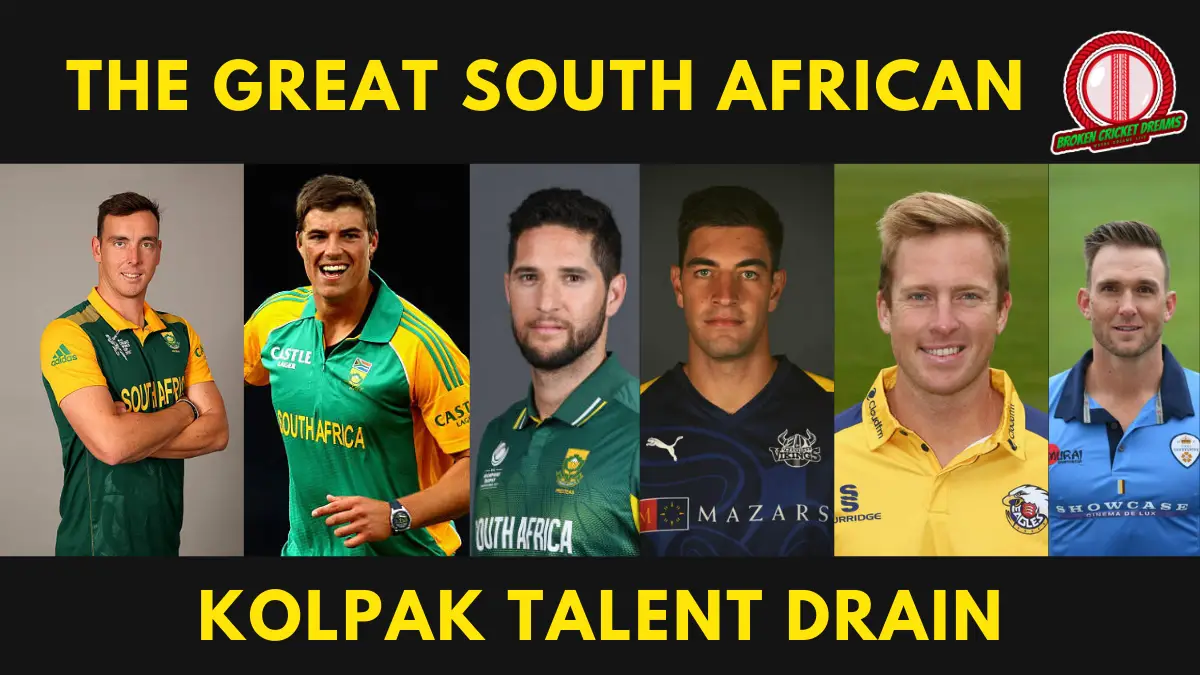
Time for another World XI with Twists – Kolpak South African Cricketers Edition.
Huge revelation today – Quinton de Kock bid adieu to Test Cricket at the age of 29 after India brushed them aside in the first Test at Centurion. For more than a decade, South Africa have suffered a loss of talent to England through the Kolpak deal and now they have lost yet another great player, this time to overkill of cricket.
What Has South African Cricket Been Through Recently?
From being the #1 Test side for over a decade to becoming the “team in transition,” things have been far from ideal for South African cricket fans.
AB De Villiers retired from all of cricket, finally quashing the “Will he-Won’t he-Should he Return” debate. Faf du Plessis (retired from Tests to focus on T20I comeback), Imran Tahir, and Chris Morris have been shunted out from national selection due to their T20 leagues commitments. Dale Steyn hung up his boots, while Vernon Philander, Hashim Amla (lack of form) and Morne Morkel (now an Australian citizen) retired prematurely and took Kolpak deals post-retirement. In 2021, the domestic system has been restructured, SJN (Social Justice and briefly Nation Building) report has sparred nobody including Boucher-Smith, and the QDK kneeling controversy has further added to the fuel.
Only the 4/5 wins and positive brand of cricket in the 2021 T20 World Cup was a shining light. That too ended in a traditional disqualification due to net run rate.
However, since Brexit the Kolpak deal no longer holds, and the players are eligible for comeback. Blessing Muzarabani has been a ray of hope for Zimbabwe while David Wiese (ex-South African international) had a stellar T20 World Cup with Namibia. Wayne Parnell became the 1st official Kolpak player to make a comeback while Duanne Olivier is inching closer and closer.
Can Kolpak South African cricketers revive the Proteas ill-fated destiny?
Today’s Twist
Build 2 World XIs:
(1) A current XI of Kolpak South African Exodus players who are eligible for a South African comeback (Note they do not have to be contracted by a domestic team yet. Only that they are not retired and could comeback sometime in the future)
(2) An All-Time Best XI of Kolpak Players (retired)
The Catch
The XI needs to have five bowlers & a wicketkeeper.
*Note this does NOT include the list of players who were born in South Africa and are now settled in different countries representing England, Australia, New Zealand, Namibia, Netherlands, USA, etc. Those players are in the list linked below.
Overall around 69 cricketers have taken up Kolpak deals at some points in their career (49 from South Africa, 6 Zimbabwe, 2 New Zealand, and 12 West Indies – 7 Barbados, 3 Jamaica, 1 Trinidad and Tobago, 1 Guyana).
Additionally, around 39 cricketers were born in South Africa but have represented other countries & left South Africa earlier like Devon Conway and Kevin Pietersen. Then there are some like Dawid Malan (born in England, raised in South Africa, went back to England for international cricket) and Dane Piedt (left for USA but has not played an international for them yet), who are in neither of those lists.
Hence, there are at least 80 high profile cricketers that were from South African origin but did not represent the Proteas for at least some portion of their careers (Remember SA was banned from international cricket due to Apartheid in the 1980s, which was the beginning of the exodus).
Let us add another layer. Due to overkill of cricket, politics, and financial opportunities, AB De Villiers, Quinton de Kock, Hashim Amla, Morne Morkel, and Graeme Smith retired relatively early. Others took up coaching opportunities outside, further weakening the domestic circuit.
*Grant Elliot is a South African born cricketer, who played for New Zealand and later took a Kolpak deal after retiring from New Zealand duty.
What do you think about Kolpak South African cricketers’ comeback? COMMENT BELOW AND LET US KNOW!
Current Kolpak XI Eligible for South African Comeback
From the 49, here are 14 Kolpak South African cricketers who are eligible for an international comeback. Practically, the reserve South African XI disappeared in a decade.
Previous Teams: Cape Cobras, Western Province, South Africa A
SA Domestic Team (Current): Boland
Claim To Fame
Stiaan van Zyl became the 100th player to score a Test century on debut and yet, he left for England after just 12 Tests.
What did South Africa Miss?
A top order batter who could bowl fast medium, South Africa missed the balance (especially after Kallis’ retirement), reserve depth in batting, and a weaker domestic system without a batter of his caliber.
2. Richard Levi (2014)
International Debut:February 6, 2012International Matches: 13 T20Is
Age Left: 26 Age Now: 33
County Team: Northamptonshire (earlier Somerset)
T20 Teams: Mumbai Indians
Previous Teams: Cape Cobras, Western Province, South Africa A, South Africa U-19, South Africa XI
SA Domestic Team (Current):Has not played again in SA domestic circuit yet
Claim To Fame
Fastest T20I hundred (off 45 balls against New Zealand in 2012) at that time. Also had most sixes in a T20I (13) in that innings. Played only 13 T20Is before heading out.
What did South Africa Miss?
A swashbuckling opening batter in limited overs (Think Brendon McCullum-Martin Guptill-Colin Munro esque) who was ahead of his times when the T20 format was in its infancy. Could have been an ideal foil for QDK-Amla at the top in T20Is.
3. Rilee Rossouw (2016)
International Debut:August 20, 2014International Matches: 36 ODIs, 15 T20Is
Previous Teams: Free State, Eagles, South Africa A, South Africa U-19
SA Domestic Team (Current):Knights (T20)
Claim to Fame
After beginning his international career with a series of ducks, he stabilized his spot in the international team with3 ODI hundreds, 7 fifties and two T20I fifties (here is his 78 vs Australia, where he overshadowed the likes of QDK, Miller, and Duminy).
Played the 2015 ODI World Cup and the 2016 T20 World Cup. Now sought after in T20 leagues around the world.
What did South Africa Miss?
The messiest exit of all and the one that hurt the most. South Africa had heavily invested in Rossouw, and he had become the next big middle order player in the South African line-up, one that would almost certainly replace the great AB De Villiers. Rossouw exited over an iPhone email to coach Russell Domingo and even spelled Domingo’s first name incorrectly. Scored a century in his last ODI (122 vs Australia) and was the player of the series in that series (311 runs). Little did Protea fans know that it was to be his final time in South African colors.
4. Heino Kuhn – WK (2018)
International Debut:July 6-9, 2017International Matches: 4 Tests, 7 T20Is
Age Left: 33 Age Now: 37
County Team: Kent (Northerns earlier)
Previous Teams: Titans, South Africa A
SA Domestic Team (Current):North West
Claim To Fame
Overall 11,000 first class runs with 24 hundreds and 58 fifties. Did not light up the international circuit in his short stay, but is a stalwart of South African domestic circuit.
What did South Africa Miss?
Left after CSA conveyed the message to him that his chances at international cricket would be limited. The domestic circuit was further weakened by his exit in his first class prime.
5. Colin Ingram (2014)
International Debut:October 8, 2010Interational Matches: 31 ODIs, 9 T20Is
Age Left:Age Now: 36
County Team: Glamorgan
Previous Teams: Free State, Eastern Province, Warriors, South Africa A
T20 Teams: Islamabad United, Trinbago Knight Riders, St. Lucia Zouks, Oval Invincibles, Hobart Hurricanes, Adelaide Strikers, Delhi Capitals
SA Domestic Team (Current):Has not played again in SA domestic circuit yet
Claim To Fame
With 3 ODI hundreds and 3 fifties in ODIs and a 78 in T20Is, he had a decent limited overs career. However, these days he is known for being the most famous South African T20 export, playing in almost all leagues around the world.
Stability in the middle order in limited overs cricket. It is clear after 15 years of T20I cricket that boundary percentage, pressure situation experience, and T20 leagues are the backbone of world winning T20I sides. Apart from Faf du Plessis, Imran Tahir, and AB De Villiers, Colin Ingram would have bolstered SA in this regard.
6. Dane Vilas – WK
International Debut:March 30, 2012International Matches: 6 Tests, 1 T20I
Age Left: 30 Age Now: 36
County Team: Lancashire
Previous Teams: South Western Districts, Lions, Cape Cobras, South Africa A, South Africa XI
SA Domestic Team (Current):Has not played again in SA domestic circuit yet
Claim to Fame
Has scored over 9700 first class runs with 22 centuries. Appeared in the movie Hansie as Allan Donald.
What did South Africa Miss?
SA missed out on a great wicket-keeping substitute. AB De Villiers took the burden as keeper for most of his career. and Quinton de Kock’s entry signaled the end of Vilas’ international career. However South Africa would have liked long-term wicket-keeping reserves just like India had Parthiv Patel, Wriddhiman Saha, Dinesh Karthik, and Rishabh Pant in case of injury to MS Dhoni (or playing alongside for an extended batting order).
Reserve depth in the medium pace allrounder-finisher slot. After Viljoen, Wiese, & Parnell left, Chris Morris, Andile Phehlukwayo, Dwaine Pretorius, and Wiaan Mulder were the only names left. With Morris’ strained relationship with CSA and Phehlukwayo’s loss of form, SA does not have many options anymore. At only 32 and back in SA domestic circuit, there may be an opening for a comeback.
County Team: Worcestershire (Sussex, Kent earlier)
Previous Teams: Cape Cobras, Eastern Province, Warriors, South Africa U-19, South Africa A
T20 Teams: Islamabad United, Karachi Kings, Barbados Tridents, Pune Warriors, Delhi Daredevils
SA Domestic Team (Current):Western Province
Claim To Fame
Youngest player to get a CSA contract after his early age/U-19 World Cup heroics, Parnell burst onto the scene around the 2009 T20 World Cup. Good performances lead to a great IPL deal, and Parnell became a rising star.
He played in a couple more World Cups but injuries meant other bowlers jumped ahead in the pecking order. He left for a Kolpak deal but has come back, still only 32.
What did South Africa Miss?
A left-arm seamer for variation. Marco Jansen grabbed eyeballs with his great debut against India, but that is exactly what South Africa have been missing. Among the Steyn-Morkel-Philander-Rabada-Nortje generation, there haven’t been as many left-arm swing bowlers in the last decade for South Africa apart from Parnell (like Boult, Starc, and Shaheen). Good allrounder as well.
9. Simon Harmer (2016)
International Debut:Jan 1-5, 2015, International Matches: 5 Tests
Age Left: 27 Age Now: 32
County Team: Essex
Previous Teams: Border, Warriors, Eastern Province, South African Universities, South Africa A
SA Domestic Team (Current):Titans
Claim To Fame
He is well known for self-acclaimed statement that he is the best-off spinner in the world. With 719 first class wickets and the highest wicket-taker in England first class for the last five years, that may actually be true (along with Nathan Lyon and Ravichandran Ashwin).
Although leg spinners were in demand in 2010s (Tahir) and left arm spinners are now at the top of the demand list (Maharaj, Shamsi, Fortuin, Linde), they have been missing a world class off spinner. Aiden Markram’s off-spin can only take you so far…
County Team: Hampshire (Middlesex, Worcestershire other teams)
T20 Leagues: Pune Warriors, Chennai Super Kings, Kings XI Punjab, Lahore Qalandars
Previous Teams: Dolphins, Warriors, KwaZulu-Natal, South Africa A
SA Domestic Team (Current):Boland
Claim To Fame
With Steyn-Morkel-Philander at their peak, Abbott did not get consistent opportunities but made the most of it when he was given a chance, especially in limited overs. The 2015 World cup semi-final broke the backbone of the South African team as an injured Vernon Philander was picked (due to political interference/quota system) over Kyle Abbott, the man in-form. South Africa lost, and slowly began to crumble.
Abbott announced his Kolpak decision after everything had been confirmed (without informing CSA) on the same day as Rilee Rossouw—the ultimate double jolt.
What did South Africa Miss?
South Africa missed a smooth transition between the Steyn-Morkel generation and the Rabada-Ngidi generation. Abbott had been earmarked as the next leader in line but that did not happen. Thankfully, Rabada had a great couple of years and Nortje followed it up with a good partnership.
Abbott is back in SA although he has not yet committed to an international return. His first goal is to get back in form due to the Covid-induced break.
11. Duanne Olivier (2019)
International Debut:Jan 12-14, 2017, International Matches: 10 Tests, 2 ODIs
Age Left: 26 Age Now: 29
County Team: Yorkshire
Previous Teams: Free State, Knights, South Africa U-19
T20 Teams: Jaffna Stallions, Jozi Stars
SA Domestic Team (Current):Lions
Claim To Fame
48 Test wickets in 10 matches at an average of 19.25, what a brilliant start to his career. In the second series against Pakistan, he took two 5-fers in a match and went onto take 24 wickets in the series (best haul in a 3-match series since 1902-03), thereby becoming the player of the series.
What did South Africa Miss?
When one door opens, another closes.
Abbott left on January 1st, 2017. Olivier began his journey on January 12th, 2017. It looked like South Africa had found a replacement right away. It worked in their favor for about two short years, before he was picked by Yorkshire. Broken dreams for South African fans again.
12. Marchant de Lange (2017)
International Debut:Dec 26-29, 2011, International Matches: 2 Tests, 4 ODIs, 6 T20Is
Age Left: 25 Age Now: 31
County Team: Glamorgan
Previous Teams: Eastern, Free State, Titans, Knights, Pretoria University, South Africa Academy
SA Domestic Team (Current):Has not played again in SA domestic circuit yet
Claim To Fame
In a bowling attack comprising of Dale Steyn, Morne Morkel, Imran Tahir, and Jacques Kallis, de Lange came up with figures of 23.2-3-81-7 in his debut bowling performance.
What did South Africa Miss?
Unfortunately, injuries meant he could never cement a place in the South African squad and hence, took the Kolpak deal in 2017. Still only 31 and the joint highest wicket taker in the Hundred, he could be a dark horse for a comeback.
Squad:
13. Cameron Delport (holds a British passport and signed with Essex – plays T20 leagues around the world)
14. Farhaan Behardien, former South African T20 captain, has signed with Durham (before Brexit so his future is safe with them) but has not played yet due to COVID.
*This does not include Dane Piedt & Juan (Rusty) Theron, who have gone to the United States as an alternate option.
List of All-Time Kolpak South African Players
South Africa Exodus XI
Faf du Plessis (2007, came back again)
Neil McKenzie (2010)
Jacques Rudolph (2007, came back to SA again; later went back to England as an overseas player)
Hashim Amla (2019)
Ashwell Prince (2013)
Justin Kemp (2008)
Andrew Hall (2008)
David Wiese (2017)
Paul Harris (2006, came back again)
Ryan Maclaren (2007, came back to SA again; later came back to England as an overseas player)
Morne Morkel (2018)
First Choice Squad:
12. Alfonso Thomas (2008), 13. Lance Klusener, 14. Shaun Pollock (2008), 15. Nicky Boje (2008), 16. Vernon Philander (signed but cancelled), 17. Charl Langeveldt (2008), 18. Andre Nel (2009)
Squad: 19. Claude Henderson, 20. Greg Smith (2004), 21. Riki Wessels, 22. Charl Willoughby, 23. Martin van Jaarsveld, 24. Zander de Bruyn (2005), 25. Garnett Kruger, 26. Tyron Henderson (2007), 27. Dillon du Preez, 28. Dominic Telo, 29. Friedel de Wet, 30. Johan van der Wath, 31. Nantie Hayward (2008), 32. Johann Myburgh (2011), 33. Gareth Roderick (2012), 34. Alviro Peterson (2015), 35. Daryn Smit – WK (2017)
List of Non-South African Kolpak Players
Dwayne Smith (2008, West Indies – Barbados)
Brendon Taylor – WK/Captain (2015, Zimbabwe, later came back)
Murray Goodwin (2005, Zimbabwe)
Grant Flower (2004, Zimbabwe)
Shivnarine Chanderpaul (2017, West Indies – Guyana)
Grant Elliot (2017, New Zealand)
Brendan Nash (2013, West Indies – Jamaica, born in Australia)
Wavell Hinds (2008, West Indies – Jamaica)
Kyle Jarvis (2013, Zimbabwe)
Blessing Muzarabani (2018, Zimbabwe, later came back)
Fidel Edwards (2015, West Indies – Barbados, later came back)
Squad:
12. Ravi Rampaul (2016, West Indies – Trinidad & Tobago), 13. Ottis Gibson (2004, West Indies – Barbados), 14. Miguel Cummins (2019, West Indies – Barbados), 15. Tino Best (2017, West Indies – Barbados), 16. Pedro Collins (2007, West Indies – Barbados), 17. Corey Collymore (2008, West Indies – Barbados), 18. Jermaine Lawson (2008, West Indies – Jamaica, later moved to the USA), 19. Andre Adams (2008, New Zealand), 20. Anthony Ireland (2007, Zimbabwe)
What Was the Kolpak Deal?
The Kolpak ruling was named after Maros Kolpak (handball player from Slovakia) by the European Court of Justice. It was submitted on 28 November, 2000 and decided on 8 May, 2003.
County cricket had limited each team to have at most one overseas player. Earlier in 1995, the Bosman ruling had already admitted players from EU (like the Netherlands) to be considered as domestic players. The Kolpak ruling now allowed citizens of other countries with EU Association Agreements to have the same rights to work. Hence, a cricketer from South Africa, Zimbabwe, Jamaica, or Barbados did not eat up the overseas spots of counties.
However, they had to give up their international career until the Kolpak contract expired.
Why Did Kolpak Deal End?
With Brexit, the UK withdrew from the European Union (effective 31 January, 2020), thereby ceasing the Kolpak deal.
Yes, Kolpak players can now play for South Africa (beginning in 2022). They are already able to be picked domestic South African sides. Wayne Parnell has played a few ODIs upon his return and Duanne Olivier has starred in some Test matches.
Has Kolpak ended?
Yes, the Kolpak deals ended as of January 31st, 2020, when the United Kingdom officially left the European Union.
Why do South African cricketers leave South Africa?
South African cricketers leave South Africa for multiple reasons—financial opportunities, administrative drama, quota system, Apartheid, passport of another country through family citizenship, and decreasing value of the South African Rand (7.81 rands = $1 in Jan 30, 2012 to 18.52 on April 29, 2020).
How many cricketers took the Kolpak deal?
Overall around 69 cricketers took Kolpak deals at some points in their career (49 from South Africa, 6 Zimbabwe, 2 New Zealand, and 12 West Indies – 7 Barbados, 3 Jamaica, 1 Trinidad and Tobago, 1 Guyana).
Which Kolpak South African players are available for a national comeback?
Stiaan van Zyl, Richard Levi, Rilee Roussow, Heino Kuhn, Colin Ingram, Dane Vilas, Hardus Viljoen, Wayne Parnell, Simon Harmer, Kyle Abbott, and Duanne Olivier are eligible for a South African cricket team national comeback (or have already been picked).
83 Movie Review – The much-anticipated Bollywood film on India’s unlikely 1983 World Cup victory has hit the theaters.
Watch it or Skip It? Here is my 83 movie review. Comment on what you thought of the movie. Below my Verdict, you will see India’s 1983 match scorecards, highlights of the semi-finals and finals, interviews, and the trailer/clips from the movie.
Guest Appearances from Kapil Dev (spectator) & Mohinder Amarnath (as father Lala Amarnath)
Other characters include Mr. Wankhede, Clive Lloyd, Viv Richards, Joel Garner, Michael Holding, Jeff Dujon, Indian army, little Sachin Tendulkar (and older brother)
Where Can I Watch 83 movie? (And Other Frequently Asked Questions)
Where Can I Watch 83 movie?
The sports drama film, 83, is available on Netflix in different languages. *This may vary by region.
Is there a 1983 film on India’s World Cup win?
Yes, Kabir Khan’s 83 depicts team India’s miraculous journey in the 1983 Cricket World Cup.
Which actors are part of 83 movie cast?
Ranveer Singh (as Kapil Dev), Tahir Raj Bhasin (Sunil Gavaskar), Saqib Saleem (Mohinder Amarnath), Dhairya Karva (Ravi Shastri), Deepika Padukone (Kapil Dev’s wife, Roma Bhatia), Neena Gupta (Dev’s mother), Jiva (Kris Srikkanth), and Pankaj Tripathi (PR Man Singh) are some of the prominent cast members of the movie, 83.
83 is unlike any sports drama out there. Rather, it is an extended highlight reel (which has been shot spectacularly well) of the 1983 World Cup from the point of view of the players sprinkled in with some inspirational music.
The movie begins with that Viv Richards’ shot in the 1983 World Cup Final. Madan Lal’s seemingly innocuous delivery, Richards attempted pull, Yashpal Sharma closing in, and captain Kapil Dev running towards and completing that catch.
The movie pivots back to the months prior to the World Cup, where the Indian cricket team receives the invitation to the 1983 Prudential World Cup and manager PR Man Singh starts his preparation for the tour.
The rest of the movie is set in England. 83’s theme revolves around doubt cast by the rest of the world on Kapil Dev’s team and how they overcame it. The Indian cricket board, MCC officials, English journalist David Firth, Indian journalists, Indian fans, the commentators, and even some of the players themselves—none of them gave Team India a chance.
In order to NOT spoil the movie for you, I am not going to go in the details but let me lay out the general idea.
The rest of the movie basically dives into each and every fixture for India in the World Cup—What happened between each match, the conversations in the dressing room and net practices, the shenanigans in the hotel or bus during downtime, cultural influence back home, support from wives and family, and finally, the tension in the match itself. The direction of Kapil Dev’s 175* is the best moment of the movie, giving life to an innings uncovered due to BBC’s strike.
Ranveer Singh’s portrayal of captain Kapil Dev is spot on with accurate bowling action, accent, and leadership moments. Another character who is central to the movie is Pankaj Tripathi as PR Man Singh. He is the glue that keeps the movie together.
With Ranveer Singh highlighting the show, I had an underlying fear that he would overshadow the rest of the characters.
This could not have been farther from the truth as each actor came into his own just like each of the actual players coming to the party in the 83 WC. Ammy Virk (Sandhu) and Jiiva’s (Srikkanth) comic timing, Jatin Sarna’s (Sharma) fluency, and Tahir Raj Bhasin’s embodiment as Sunil Gavaskar with his subdued demeanor add immense value to the movie.
Even though they do not get as much screen time, Saqib Saleem (as Amarnath) and Nishant Dahiya (Roger Binny) shine and provide the best moments in the film while portraying their vulnerable side. From Patil & Shastri to Kirmani & Sunil Valson, each character has been given due role.
Boman Irani’s (Farokh Engineer) commentary acts like the fourth wall, conveying the differences in perception between the rising Indian dressing room and the outside world.
The beauty of this movie is that halfway in the movie you will feel like you are watching the actual players and are hooked into the storyline.
83 Movie Review – The Verdict: To Watch or Not to Watch?
Pros: Screenplay; Chemistry Between the Actors; Seamless Immersion of Real-Life Photos in the movie
Cons: Climax Ends Too Quickly (Not much focus on post-match speeches or the aftermath); Political References Interrupting flow of the World Cup
Verdict:
Is 83 the greatest sporting movie of all time? No, not even close.
Remember the Titans, the Rocky movies, Last Dance documentary, Moneyball, and Invictus all rank higher up that list. In terms of Bollywood, Chak de India, Lagaan, Iqbal, and Bhaag Milkha Bhaag are the golden standard.
Comparing 83 to any other sports movies would be an injustice. You see, there isn’t a rousing emotional speech in this one. There isn’t much background of players’ personal lives either like other stereotypical sport movies. The sole focus is on the couple of months preceding June 25th, 1983, and they do this exceedingly well.
The movie’s delivery is simple because Kapil Dev was a simple man.
The strength of 83 lies in the inside jokes and stories. We may have heard a few of them during the numerous interviews over the years, but 83 has breathed life into these characters on the big screen.
Credit to the writers of the movie for infusing little details like Keki Tarapore’s influence on Indian fast bowling and for illuminating on the aura of West Indian players at that time—Captain Clive Lloyd, Sir Vivian Richards, and the fast-bowling unit, Joel Garner, Michael Holding, Andy Roberts, and Malcolm Marshall.
If you are a cricket fan, this is a 5/5.You will enjoy each and every moment of this movie. If you are watching objectively from a film critic point of view, there is a little more left to be desired at the very end.
While it cannot be claimed that this is the single greatest underdog story in sporting history, it definitely ranks among the top. What India’s 1983 journey can claim is the Most Consequential Underdog story.
In 83, you will see that Team India came in with dire financial situation and zero expectations. The Indian cricket board facility looks archaic, allowance per day & food is at a bare minimum, the 83 WC is just a stopping point for a self-funded trip to Miami, and there is no respect from the cricketing world.
The only WC game India had won so far was against East Africa (1975), and they even lost to Sri Lanka in 1979, a team with no Test status back then (equivalent of USA defeating Ireland in today’s world).
Fast forward 30 years, the BCCI controls world cricket as a multi-billion-dollar governing body, depth of Indian cricket is unparalleled, cricket is central to India’s culture and economy, and the Indian Premier League, limitless sponsorships, world class facilities & coaches are a given.
India is at a great position today due to the efforts & hard work of these men in 1983. If there was ever a fairytale story to get inspiration from, this is it. Never lose hope despite outside noises. Keep believing – you never know, it might come true.
I will leave you with one final thought – What if India had NOT won the 1983 World Cup? What if Kapil Dev had dropped Richards? If Dev had failed to arrest the slide at 17–5, with the 175*, would we be playing the Zimbabwe Premier League today?
Sounds okay but could be better. Let us try again.
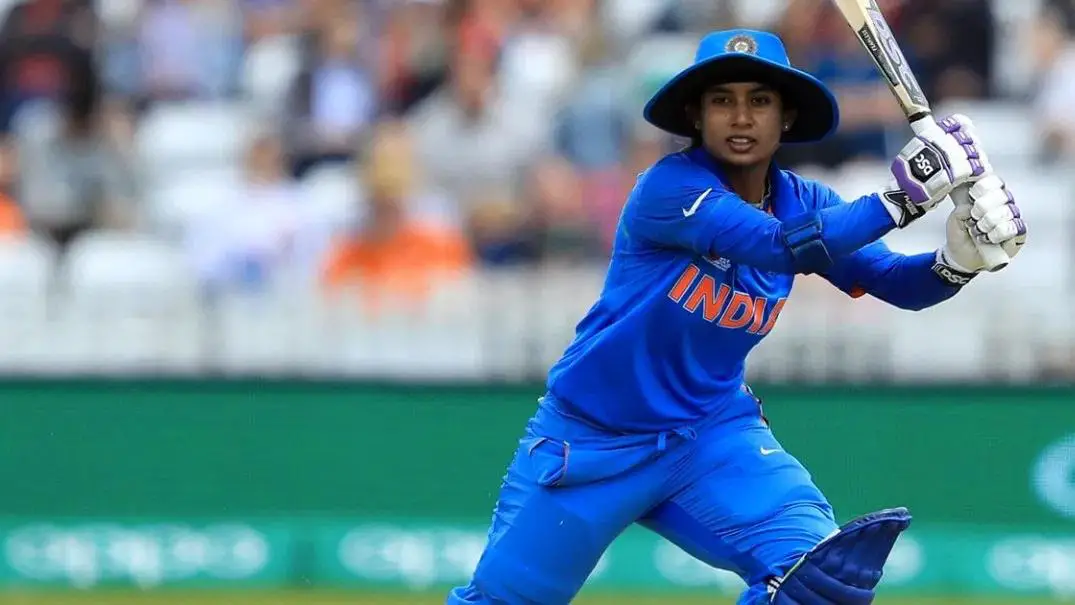
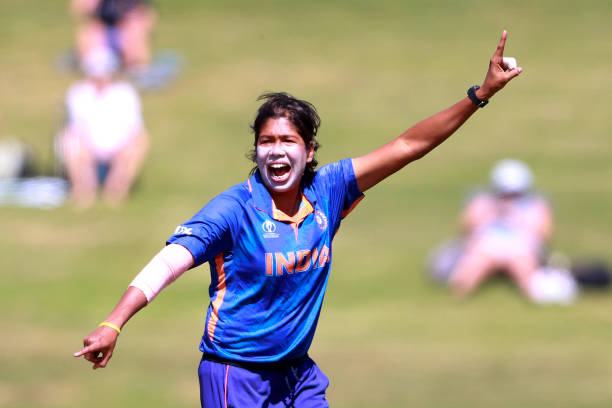
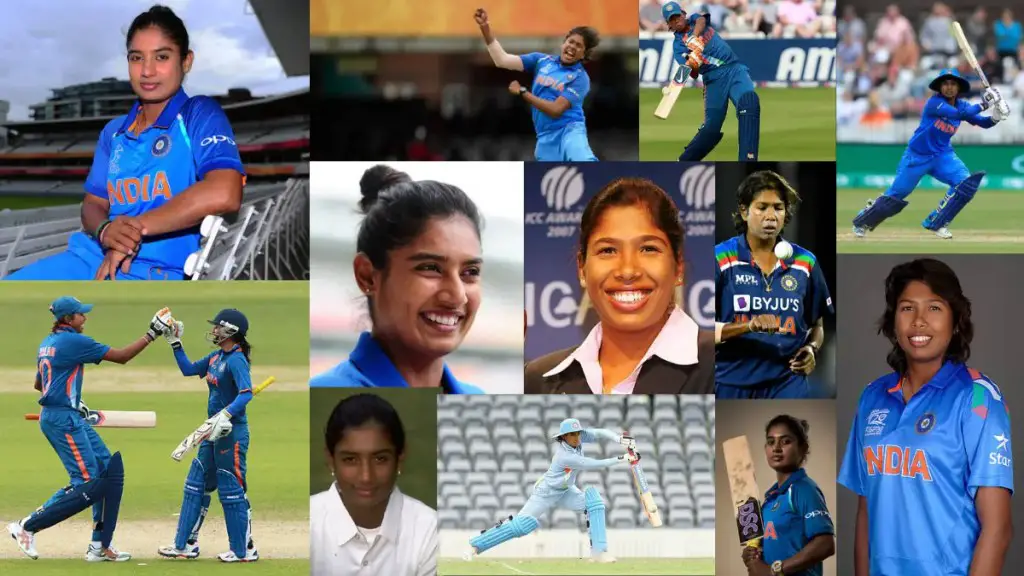
Mithali Raj & Jhulan Goswami—The Eternal Legends? Scratch that. How about
Goswami & Raj: Stalwarts that Let the Flame Burning for India’s Women Cricket.
I have to be brutally honest here. I had a tough time finishing this article.
It took me weeks. I mean how could I summarize such long careers, awe-aspiring legacies, and inspirational stories with a mere couple of phrases? In fact, it took me an entire day just to research just the sheer number of records and awards these two possess (all of them listed below).
103 days away from the 2022 Women’s ODI Cricket World Cup Final, let us look back at the glorious careers of Mithali Raj & Jhulan Goswami—Where Did It all begin? Statistics and legacies, ups and downs, the final hurrah, and of course what can we learn from the lives of India’s best women batter and fastest bowler?
It has been 8216 days and 7291 days since Mithali Raj’s and Jhulan Goswami’s debut respectively. That is a really long time, let alone for a sporting career. Let us trace back to where it all began.
Jhulan’s Inspiration
Jhulan Goswami did not actually start playing cricket till the relatively late age of 15. It was the 1997 ODI World Cup Final between Australia and New Zealand that sowed the seeds of cricket deep into her roots.
She was a ball picker in that World Cup final at the Eden Gardens when Australia’s World Cup winning celebrations ignited her passion to take up the sport.
It was now her dream to lift the World Cup trophy for India.
Mithali Raj’s talent was picked early, and she was in the national radar by the time she was 14. However, actually devoting her career to cricket was not such an easy decision.
Early Decisions, Discipline, and the Passion to Excel
In their interviews with Gaurav Kapur in Breakfast With Champions and Mithali Raj’s chat with Ravichandran Ashwin in DRS With Ash, we gain a bit of insight in their lives—Raj’s early interest & training in the Indian classical dance form of Bharatnatyam, her fascination with books, and what obstacles both Goswami & Raj had to overcome during their journey.
Although both of their parents were supportive of their decisions to play cricket, there was backlash from extended family and the rest of society, especially when women’s cricket in India was in its infancy. Raj states that her toughest decision was to choose World Cup selection games over her 12th grade board exams. In any case, they both started training in cricket academies, disciplined their routines, and woke up around 4 AM to get ready for practice.
In Raj’s case, the discipline stemmed from an army family background. For Jhulan, originally from the small town of Chakdaha, it was the two hours travel by train for practice.
Debut
It was an evident in their early days of international cricket that these two were going to make an indelible impact in Indian cricket.
Opening the batting, Raj scored 114* against Ireland in her debut ODI on 26 June, 1999 just at the age of 16. Goswami would follow suit on January 5th, 2002, opening the bowling against England and returning with figures of 7-0-15-2. Her high arm release, bowling speed, and the beautiful smooth action would be a breath to behold in the years to come.
Records and Statistics of Mithali Raj & Jhulan Goswami
In these tributes, I usually like to add a statistics section to paint the whole picture of the cricketer, but this one is a bit unique. Since Raj & Goswami have played so much cricket & have been consistently excellent, they practically have all the individual records to their name.
Slowly scroll down, sit back, and just reflect how dominant these two legends have been for two decades.
Joint Records Held by Raj & Goswami
2nd – Joint Longest Test Careers (debut 14 January, 2002)
157 – Highest Partnership for the 7th Wicket in Test Cricket (Aug 14-17, 2002)
Mithali Raj Stats
Matches
Runs
Best
Average
100s
50s
Tests
12
699
214
43.68
1
4
ODIs
220
7391
125*
51.32
7
59
T20Is
89
2364
97*
37.52
0
17
Mithali Raj Career Statistics
Mithali Raj Records
Leading scorer in women’s cricket across formats (10454+)
Only Indian captain to lead the country in two ODI World Cup finals
Tests
3rd Youngest Test Captain (At 22)
Youngest Player to score 200+ (19)
2nd Highest Individual Score (214)
ODIs
Most Runs (7391* and counting)
Longest ODI Career (Debut: 26 Jun 1999)
Most Career Matches (220)
Most Consecutive Matches (109 – Between April 2004-February 2013)
Youngest Player to score 100+ (16)
Hundred on Debut (114*)
Most consecutive 50s (7 between 7 Feb-25 June 2017, 70*, 64, 73*, 51*, 54, 62*, 71)
Mithali Raj became a core member in the early 2000s. Two of her most prominent innings in this phase was the 214 against England in Taunton and 91* vs New Zealand in the 2005 World Cup semi-final.
Jhulan Goswami’s best days came between 2006 & 2008. Her all-round form (3-46 & 2-62, 69 at #3, 5-33 & 5-45) helped India win a Test series in England on her way to become the ICC Women’s Cricketer of the Year.
World Cup Dream
Although Raj & Goswami have accomplished almost everything in the sport, there is one elusive achievement they have yet to realize—the World Cup dream.
Bright Promises
Mithali Raj has played in 5 ODI World Cups, dating back to the 2000 Women’s Cricket World Cup in New Zealand, when India made the semi-finals. Next time in 2005, both Jhulan & captain made the team. It would be India’s first run to the World Cup final, losing to Australia. Raj was India’s highest scorer with 199 runs (5th overall), and Jhulan was at #3 in the wickets (13 wickets).
Then followed two World Cups of relative disappointments.
Rock Bottom of 2009 & 2013
In 2009, India did not make it past the Super Six stage, but Raj made it into the Team of the tournament (247 runs, 2 – 50s, best of 75*). Goswami, who did not have a great time with the ball, was India’s captain during the tournament.
The 2013 Cricket World Cup, however, was arguably the lowest moment as India failed to get out of the qualifying stage. This time captaincy was back with Mithali Raj while Jhulan had a decent tournament with 9 wickets in just 4 games. Raj did score a 103* against Pakistan for the 7th Place Playoffs.
Around this time, Jhulan & Raj graduated to become the seniors in the Indian national setup. In the 2010 T20 World Cup, Goswami recalls a conversation with Raj,
“I think we should take women’s cricket to such a platform where the young girls can get inspired…People won’t recognize women’s cricket until we do something at the World Cup.”
2017 World Cup and the Broken Dream
The moment came in the form of the 2017 Women’s Cricket World Cup, which was the watershed moment for world cricket and eventually lead to the grand success of the 2020 T20 World Cup final.
Post-2017, media coverage, funding, and women’s cricket grew in leaps and bounds. Mithali Raj herself reflects that she had more interviews after 2017 then in the first 18 years of her career.
India’s successful march to the finals was another great storyline of the tournament. By this time, a good core had formed around Raj & Goswami with Smriti Mandhana, Harmanpreet Kaur, Veda Krishnamurthy, Deepti Sharma, Shikha Pandey, Poonam Yadav, and Punam Raut all contributing with match -winning performances.
Raj followed up her consistent scores of 71, 45, 53, 69 with a 109-run knock against New Zealand. She ended up as the second highest run getter of the tournament with 409 runs (1 run behind Tammy Beaumont). Goswami had a decent run herself, taking 10 wickets overall with the best of 3/23 and providing India with miserly opening sells.
Despite the golden run, it was not to be as Anya Shrubsole’s magic deprived India of the World Cup victory.
So close, yet so far. Broken Cricket Dream.
T20 World Cups
India has not had the rub of the green in the T20 World Cups in T20 World Cups either. After qualifying for the semi-finals in 2009 & 2010, they crashed out in the group stages in 2012.
They did not get far in 2014 & 2016 either except that Mithali Raj was the 3rd highest run getter with 208 runs in 2014.
In 2018, India had a bright run with 4 wins in 4 matches in the group stage before crashing out in the semi-finals again. Mithali had retired by the time 2020 T20 World Cup came around and Jhulan did not play in a T20 World Cup since 2016.
Jhulan Goswami was India’s captain briefly from 2008 to 2011, captaining India in 25 ODIs (W: 12, L: 13).
Mithali Raj, on the other hand, has had a couple of captaincy stints. First was around the 2005 ODI Women’s World Cup, the second stint during the 2013 World Cup, and the final one around the 2017 Women’s World Cup. In all, she captained India in 8 Tests (W:3, D: 4, L: 1) and 143 ODIs (W: 85, L: 55), the most by any Indian captain.
The Captaincy-Controversy Complex
These days India’s captaincy is synonymous with controversy. The same applies here as well.
Although Ramesh Powar is back as India’s head coach now and the relationship has reconciled, in 2018, a public battle of words between Raj & coach Ramesh Power took place. There was discussion on Raj’s strike rate and batting position during the 2018 T20 World Cup and she was eventually dropped from the 2018 semifinals, which India lost.
Eventually, Mithali Raj retired from the T20Is in 2019 and Harmanpreet Kaur replaced Mithali as captain.
Women’s IPL Without Goswami & Raj Already a Failure for BCCI
However, it has already failed before it began. In order to cultivate a strong fan base, Mithali Raj & Jhulan Goswami would have been wonderful ambassadors as players. I am sure they will still be invovled in some way or the other, but without creating a team around them, the BCCI has already lost a golden opportunity.
They have given everything for Indian cricket. They deserve one final farewell, preferably in front of their home crowd.
What Can We Learn from Mithali Raj & Jhulan Goswami?
Just like the 1997 World Cup moment inspired her, Jhulan herself has inspired numerous other cricketers like Pakistan’s Kainat Imtiaz (who was a ball picker when India toured Pakistan in 2005).
The legacies of Mithali Raj & Jhulan Goswami are far beyond the numbers. They have not only changed cricket but have also changed the perception of fans towards women’s cricket.
When they debuted, Indian women’s cricket was not at a great place. BCCI had not taken over women’s cricket yet, lots of the early tours required self-sponsoring, practices were on turf wickets, and the facilities/physios were not as prominent back then.
The fact that India has reached so many semi-finals & finals and a trophy seems to be right around the corner is credit to their work over the years. Mithali Raj & Jhulan Goswami have not only contributed by their own skills but have also mentored and brought others along the way.
Life Lessons
Longevity & consistency, coming back from disappointments, breaking barriers, mentoring others, staying focused on your goals, and always, always daring to dream—This is what Mithali Raj and Jhulan Goswami teach me.
I hope their magnificent careers and lives teaches you some valuable life lessons as well.
Quotes on Mithali Raj & Jhulan Goswami
Here is some advice in their own words.
“Young boys and young girls saying – We saw your match, we want to play cricket, where can we go, and enroll ourselves? So that’s a success for me, because getting the girls to watch cricket is a big thing.’
– Mithali Raj on Breakfast with Champions
“”Be committed and persistent in what [you] do. Channel your energy and be consistent”
– Mithali Raj advice to young girls in DRS With Ash
“But winning the World Cup was a dream. You chase that dream. You wake up every day and think about lifting that trophy…But that blot will remain unless you win the World Cup. Irrespective of me being in the team or not.”
-Jhulan Goswami on the World Cup dream
“I live with this dream. I live with this passion and want to do something for women’s cricket.”
-Jhulan Goswami on Women’s Cricket
“You have been a trendsetter…an inspiration…and a role model.”
– R Ashwin on Mithali Raj
Final Hurrah for the Iconic Duo?
Raj & Goswami are still fit and raring to go as we saw against Australia series this year. Goswami redeemed herself from a high pressure last over no-ball with a match winning shot in the very next game. They still have it in them.
On March 5th, 2022, India begins its journey to the 2022 Women’s ODI World Cup against Pakistan. Who knows, these might be the final 7 games that we might see of these legends.
We all hope that they can go two steps forward and achieve their World Cup dream. But even if they do not, it has been two delightful careers sandwiched in one that have mesmerized the fans for two decades.
Broad & Anderson were left out as Joe Root decided to bat first, under-fire Starc bowled Rory Burns first ball of the Ashes, debut captain Cummins got a 5-fer, England collapsed for 147, Australia replied with 425 via Mr. Fortunate David Warner (94) & fluent Labuschagne (74), comeback kid Stokes’ no-balls were not-called (until they were when he got a wicket), Robinson got 2 in 2, and Travis made sure that the match turned on its Head, he also got 15% fined for audible cussing, batter of the year Root (89) & Malan (82) dared to dream with a 172-run partnership before things crashed down the next morning in typical English collapse manner, Lyon ended his 400th wicket wait with 4/91, England were bundled for 297, Australia casually made 20/1, England were docked WTC points on overrate, Hobart got the 5th Test (as the second D/N match of the Ashes), oh and Gabba suffered an embarrassing power blackout.
Whew! That should all but cover it.
As most of us expected, Australia’s streak is back on the Gabba (after the Rishabh Pant thing that happened last year). Can England come back from this defeat? Do the 2 day-night matches bring England back into the running? Will Broad-Anderson impact the final result?
“I think Aussies will win it. I know it’s not going to be easy for them but I have a lot of confidence in the pace trio of Starc, Cummins, and Hazlewood especially in home conditions.”
“I agree with a likely 2-1 Auz win. However I have a gut feeling that this could end in a draw maybe 2-2. Joe Root being England’s key man with the stick and Wood being important with the ball. Also Leach stepping up.”
“Already reassessed after Anderson news. Not happy! Depends so much on Brisbane. Get a draw and we could keep it to 2-1, lose then 4-0 is on. Runs/MVP – Root all the way. So far ahead of the rest. Woakes in the wickets. Broken Dream? Fear for Rory burns technique against bounce..”
– Jonny on the importance of first Test for England
Ashes 2021 Predictions Categories
England winning the Ashes undefeated was not part of anyone’s predictions, so this match does not hurt anybody’s predictions.
For the Australian summer, we asked our twitter followers to reply with #BCDPredictions in the following categories:
#Scoreline
#MostRuns
#MostWickets
#MVP
#SurprisePackage
#BrokenDream
My Ashes 2021 Predictions
For comparison, here are my Ashes predictions:
#Scoreline: Australia 2-1
#MostRuns: Zak Crawley (England)/Steve Smith (Australia)
The predictions have been ordered based on the margin of victory predicted in Australia’s favor (since most people picked Australia as the Ashes winner).
(“I will go with same team as of yours just one change” – Pat Cummins most wickets)
#Scoreline: Australia 2-1
#MostRuns: Zak Crawley (England)/Steve Smith (Australia)
#MostWickets: Ollie Robinson/Pat Cummins
#MVP: Jos Buttler/Steve Smith
#SurprisePackage: Dawid Malan/Travis Head
#BrokenDream: England Wastes DRS; Lose close game
Other Articles on England and Australia
Here ar some of my earlier content on Australia or England.
If you like this content and want to support Broken Cricket Dreams, subscribe here. You will Never miss any content. Articles directly to your mailbox!
Here were our #BCDPredictions concerning Ashes 2021 Predictions. What did you think? What are YOUR predictions? Comment Below!