I finally got around to watching the cult classic, Field of Dreams last month, and I haven’t stopped thinking about it ever since.
It’s a story of broken baseball dreams. Of author Terence Mann. Of Archie “Moonlight” Graham, who played only one professional match and never got a chance to bat.
But more than anything, it is a story of sports and life. And a son and his dad. (If you haven’t watched it, go do that. Now. Trust me, you’ll shed a tear or two).
Watching it reminded me of why I started writing in the first place, back in June 2020 in the middle of the pandemic.
One random afternoon, my brother said, “Why don’t you write about cricket? You talk about it all the time. You used to enjoy writing essays in college. And you had a broken dream. I have an idea—You should start a blog and call it ‘Broken Cricket Dreams.’”
That was it. That’s how BCD was born.
Five years, 400 posts, and 685,500 words later, I am still writing.
Just like in our 200th Article Special which was filled with music from Frank Sinatra to John Lennon, this one is shaped by movie quotes.
1. “Words And Ideas Can Change the World…What Will Your Verse Be?”
Movie:Dead Poets Society (1989)
“No matter what anybody tells you, words and ideas can change the world.
We don’t read and write poetry because it is cute. We read and write poetry because we are members of the human race. And the human race is filled with passion.
Medicine, law, business, engineering, these are noble pursuits and necessary to sustain life. But poetry, beauty, romance, love, these are what we stay alive for.’
[Walt Whitman’s Poetry] ‘…That you are here. That life exists. An identity. The powerful play goes on, and you may contribute a verse.’
What will your verse be?”
Reflection #1
I think about this quote often.
In school, we were always sorted into boxes. You were either a “math or science” kid or a “literature and humanities” kid. I was placed in the STEM category, went on to study mathematics, and now work with computer technology.
But there was always another side. I liked geography. Loved music. Shakespeare and the Greek writers moved me.
Maybe I never had to choose just one. Maybe what makes life rich is the mix of the ‘noble pursuits’ that keep life going and the poetry that gives it meaning.
Because words and ideas can change the world. Sometimes, they start revolutions. Other times, they quietly shift the way someone sees things.
Dead Poets Society is in itself a work of art that changed the way I view society. And what a soulful performance by the late Robin Williams. Those speeches stayed with me since middle school.
Oh captain, my captain. Whatever my verse will be, I just hope it is honest.
2. “If You Build It, He Will Come.”
Movie:Field of Dreams (1989)
“The one constant through all these years Ray, has been baseball….
America…it’s been erased like a blackboard. Rebuilt and erased again. But baseball has marked the time.
This field, this game, it’s part of our past, Ray. It reminds us of all that once was good. And it could be again…Oh, people will come Ray. People will most definitely come.”
Reflection #2
This quote teaches me two things.
One: sports transcends boundaries. What baseball is to the US, soccer is to Brazil, and cricket is to India—these sports are a cultural heartbeat that connects folks from different walks of life.
Two: “If you build it, they will come” applies to more than just a ghostly baseball fantasy. It holds true in any business. If you do the groundwork and make something worthwhile, people will come.
For me, that was the blog. For years, I felt like I was writing into the oblivion. But now, people have started to come. And I am grateful for every connection this journey has brought me.
3. “Is This Heaven? No, It’s Iowa.”
Movie:Field of Dreams (1989)
“Is there a heaven? Oh yeah…It’s where dreams come true.
….Maybe, this is heaven.”
Reflection #3
This one hits especially close. I spent four years in Iowa and looking back, those were some of the best years of my life. That place shaped me in ways I am still discovering.
We are always chasing the next thing—the next degree, job, or milestone. But sometimes, if we just stop for a moment and look around, we realize that maybe this is enough. Maybe, this, indeed, is heaven.
And the final scene from Field of Dreams? Still gets me every time.
4. “Let me speak endlessly, kindly. And even by accident—Let no harm come from my words.”
Movie:Anand (1971)
“Mann ko aashirvaad Baba. Jo sada hasta rahe.
Main Kabhi chup na rahun. Bolta rahun. Beshumar Bolun. Achha Bolun.
Galti se bhi burai na nikle mere moon se.”
Translation
“Bless my heart, old sage. That I shall always laugh.
Let me never be silent. Let me speak endlessly, kindly.
And even by accident—Let no harm come from my words.”
Reflection #4
One of the most beautiful moments of Hindi cinema.
Anand, a man going through terminal illness, chooses to live with joy even while knowing that his days are numbered. And when he asks for blessings, he doesn’t pray for healing, but for the strength to keep spreading light until his last breath.
That’s a motto I’d like to live by.
5. “Each Man’s Life Touches So Many Other Lives.”
Movie:It’s a Wonderful Life (1946)
“Strange, isn’t it? Each man’s life touches so many other lives. And when he isn’t around…it leaves an awful hole, doesn’t it?”
Reflection #5
I will keep writing. Some pieces might spark something in a reader just enough for them to feel that they are not the only one. Others won’t. But that’s okay, I’ll keep writing anyway.
It’s A Wonderful Life reminds me how precious life really is and not to take any of it for granted. We are all here for a reason and our words, work, or even a passing conversation can have an impact far beyond what we’ll ever realize.
So, Why Do I Write?
Sometimes my brain gets overcrowded. I am wrestling with my thoughts, going through internal debates. It can get muddled up there pretty quickly.
Writing helps me sort through it. It brings me clarity. Sometimes, I don’t even know what I’m really thinking until I write it down. My favorite days are the ones where I start with a pre-conceived notion and over the course of research and a few edits, my own viewpoint shifts completely.
In a way, every piece is its own journey of self-discovery.
****
I never thought I’d be a writer. But it turns out this is the one thing that brings me real flow. Maybe even more than watching or playing cricket itself.
When I am writing, I lose track of time. It’s well past midnight as I write this. I should sleep, but well, I’m still here trying to tie all the loose ends together.
This wasn’t the dream. But maybe, it’s something even better.
The freedom to think, to express whatever I want, whenever I want. To be able to share it with the world, and more than anything, to have a family that supports me no matter what.
Maybe, this is heaven.
****
Thank you all for reading and supporting over these past few years. I appreciate you all.
Before you Go, Consider Supporting and buying my book on Amazon!
Have you ever seen Harsha Bhogle hit six sixes like Yuvraj Singh, hit a straight drive like the God of Cricket — Mr. Sachin Tendulkar, or bowl deadly inswinging yorkers like Wasim Akram?
I bet not.
Then how exactly did Harsha Bhogle become the voice and face of world cricket?
The tournament’s entertainment value is increasing by the day, but this World Cup is still missing two things — a thriller & Harsha Bhogle’s voice. Unfortunately, Mr. Bhogle has caught another fever, dengue, and has had to subsequently miss a few matches.
It is the days that he is not present that you miss his voice the most.
Okay okay, I know I am deviating. Anyway, back on topic. Where were we again?
Oh yes, how did Harsha Bhogle become Harsha Bhogle?
Did he take voice coaching lessons? Did he get a PhD in phonetics & linguistics? No, no he did not.
Harsha’s mother and uncle had arrived in India from Lahore on an army train right before the Partition in 1947.
He remarked in The Grade Cricketer’s podcast, “For my father’s generation, survival was important.” Just like many Indians in that generation, he grew up in a middle-class household. Both his parents were professors. So naturally, education was at the forefront of his upbringing.
Bhogle completed his undergraduate in chemical engineering and then went on to graduate from IIM Ahmedabad in 1985. He even worked in advertising for a couple of years after his education.
However, he did not forget his first love, cricket.
He had played Division A level cricket in Hyderabad along with competing at Osmania Nizam University & company teams. In Hyderabad, he had played with the likes of Arshad Ayub and Mohammad Azharuddin, a cricketer he would later write a biography of. (As an aside, he was once offered the opportunity to bat at #3, but said no. He was eventually picked for the university team but unfortunately did not make the XI).
The Greatest Weapon
Harsha Bhogle’s greatest weapon is his voice.
He found his voice during elocution & debate contests in high school. The ‘Eureka’ moment in his career came when he realized he could combine this gift with the love of cricket.
His broadcasting journey began with a 15-minute commentary stint during a Hyderabad vs Kerela Ranji Trophy match. Later in 1983, he took part in his first ODI broadcasting assignment on Doordarshan-Hyderabad.
By the time we arrived at the 1992 Cricket World Cup in Australia and New Zealand, Bhogle was recognized as the “sexiest voice on radio.”
“I didn’t look like a model, I didn’t play a 100 Test matches. There was lots of things I wasn’t. So, I didn’t have the option to say ‘No’ to anything…When you say ‘Yes,’ it’s a fantasy world. You don’t know where you will go when you say yes.”
From All India Radio & the BBC to Kutti Stories with Ravichandran Ashwin & Cricbuzz Live, Bhogle’s evolution is his mark of success. Sometimes he is having fun with Gaurav Kapur & Joy Bhattacharya, while at others, he is critically analyzing the state of world cricket with Ian Bishop, Nasser Hussain, and Mike Atherton.
To hone his skills and stay relevant in the broadcasting world, he did anything and everything. He has covered matches in makeshift commentary boxes in Hyderabad, written for several newspapers, transitioned to radio, become the face of cricket during live television, conducted quiz shows, talked about mental health, given inspirational speeches to the next generation, written books, interviewed the CEO of Google, Sundar Pichai, and has done a heck of a lot more. Bhogle’s multilingual background aided in his evolution as a broadcaster. He wrote magazine columns in Marathi, took broadcasting assignments in English, interviewed in Hindi, and joked in Hyderabadi.
Throughout his career, he has interviewed Sir Garfield Sobers, heard memorable stories from another great Indian commentator, AFS Talyarkhan, and possibly most importantly, covered the career of Sachin Tendulkar.
The Voice That Propelled Sachin Tendulkar
An article on Harsha Bhogle is incomplete without a mention of Sachin Ramesh Tendulkar.
Even Ian Bishop took a step aside when Harsha concluded one of the great careers in one of the legendary segments of cricket commentary.
“This is an indicator what one man meant to a nation. With Tendulkar, it was not just cricket…He’s been a good man, apart from being a great cricketer, Tendulkar…Tendulkar meant to India more than just the numbers. It’s as if Tendulkar was born to be great and everyone just looked after him. Everyone in Indian cricket, in Mumbai cricket, looked after him. Everyone will have their own Tendulkar story to tell…Those 22 yards made that little boy from Bandra the legend that he became.
Without the voice of Bhogle, Sachin’s shots might not have been heard around the world.
What Characteristics Makes Harsha Bhogle Good?
Bhogle often says that for broadcasting metrics, “Chappell is my guru for work ethic.”
He prepares for each interview, writes down notes, talks to Simon Taufel to understand the rulebook, and draws from the wisdom of other cricketers to understand how to analyze techniques and read the pitch conditions.
He continues to learn and innovate. Not many would have the courage to dive into the world of Twitter, YouTube, and podcasts. He keeps on learning. But that’s how he has managed to stay relevant in the industry for over four decades. Two of his own quotes describe him best,
“The day you think you know everything in life, you’ve descended already. You’re gone.”
“Sometimes, we wait for the big things to happen in life…Be happy with small times….But don’t wait for the big thing to happen.”
Final Thoughts
When things are all said and done, what will I remember the most about Harsha Bhogle?
Along with the voice, came the infectious personality — the expressions, inflections in the voice, historical references, the smile, research into players’ backgrounds, and the contrast between serious bits & humor. He talks mostly about cricket but speaks with an open mind.
As cricket fans, we like to talk about our cricket heroes, the greatest Test match players, and the best World Cup finishes.
Sometimes, we should sit back and appreciate the people who make the cricket community great — The commentators, the umpires, the ground staff, the security staff, administrators, and many other individuals behind the scenes.
I will leave you all with this quote by American poet and civil rights activist, Maya Angelou:
“People will forget what you said, people will forget what you did, but people will never forget how you made them feel.”
And Harsha Bhogle did exactly that. He provided us with the little moments of joy to live by.
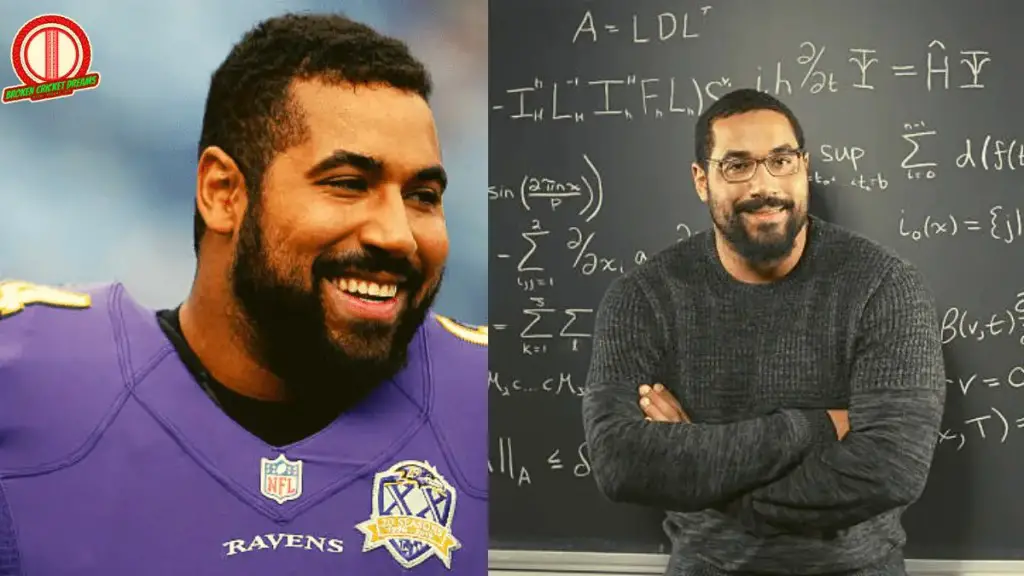
Title: Mind and Matter: A Life in Math and Football
Authors: John Urschel and Louisa Thomas
Pages: 238
Chapters: 28
Publisher: Penguin Press, New York, 2019
⭐⭐⭐⭐⭐
Rating: 5 out of 5.
Mind and Matter Summary
This book is a goldmine for people who like mathematics, college football, sports, and reading in general.
For the mathematician, there are mentions of John von Neumann, Pascal, Fermat, Heisenberg, Bernoulli, Schrodinger, Kolmogorov, Leibniz, Newton, Godel, G.H. Hardy, Einstein and brief dives into the topics of probability, dynamical systems, Markov Chains, physics, measure theory, gambling, game theory, linear algebra, numerical analysis, set theory, and logic. For the football fan, there are references to locker room talks, deep friendships, training drills, college football season, tryouts, the NFL draft, CTE, concussions, injuries, and more.
Urschel reflects on the constant internal push and pull between doing mathematics and playing football. We learn how he developed these interests and navigated both spheres of his life without losing proficiency in either one. He ended up playing at the highest level in NFL with the Baltimore Ravens and completed his PhD in mathematics from MIT, specializing in linear algebra, graph theory, and numerical analysis. We also learn about important events that occurred during his education like the Jerry Sandusky scandal and how it impacted the Penn State community.
Quick Review
Two aspects that I really enjoyed were how (1) the writing style matched (2) the content of the book. The book seamlessly alternates between football and mathematics at different stages of his life. For example, he talks about Concussion in one chapter and moves on to Heisenberg’s Uncertainty principle in the next. The length of each chapter ranges from 4-15 pages, making it an accessible read.
I definitely recommend Mind and Matter for all ages looking to pick up a short, fun, and inspirational book.
Quotes from “Mind and Matter: A Life in Math and Football”: 5 Life Lessons We Can Learn from John Urschel
Background
Let’s start with a little back story. My family gifted me this book on my birthday.
In my undergraduate years studying mathematics, Urschel’s poster hung outside the math department. For four years, I walked by it, the image slowly getting ingrained in the deep echelons of my memory. I always smiled when I saw it but did not give it much deep thought.
However, over the years, I have often been conflicted and never really come to terms with balancing my own interests, whether that is as a mathematician, sports enthusiast, programmer, teacher, writer, or as a violinist.
I am glad to have finally received the opportunity to read this book, which breathed life into Urschel’s poster and provided me with some topics of reflection. The perfect gift.
In any case, here are a few quotes and life lessons that stuck with me from John Urschel’s life.
1. “So often, people want to divide the world into two. Matter and energy. Wave and particle. Athlete and mathematician. Why can’t something (or someone) be both?”
At some point in our childhood, we have all been asked the question, “What do you want to be when you grow up?”
Humans are multi-dimensional creatures. Kids especially are innately curious and are fascinated by different sort of things like solving puzzles, running around, reading a book, etc.
But as we grow up, there is the societal narrative to pick a field, choose a profession, and sacrifice interests that will not result in monetary gain later on.
Life Lesson 1: You can be a jack of many trades. You can be a master of one. Life is about choices and there really isn’t a right or wrong way. You can go the route of John Urschel, Justin Timberlake, Albert Einstein, Farhan Akhtar, Elon Musk or the way of Michael Phelps, Sachin Tendulkar, and John Nash. Be curious, be yourself. Why limit yourself to one sky when you can explore many galaxies?
2. “Nothing made me want to take that class more than being told that I couldn’t do it. That was my nature. If someone thought I wasn’t up for something, then I had to show them wrong.”
The only way to reach the peak is to overcome the struggle.
Stressing is bad, but struggling can be good.
Life Lesson 2: Challenges can be daunting, but they have the potential to mold you into the person you want to become. Take the extrinsic negative noise and convert it into positive intrinsic motivation. A ‘can do’ attitude is the way to go.
3. “I decided to stay. I did not know what would happen to the football team… But I loved Penn State, and I loved my teammates. I wasn’t going to walk away.”
I’ll jump directly into the life lesson on this one.
Life Lesson 3: Friendships and relationships are often the strongest bonds and the easiest ones to break. When someone close to you is in need, be there for them. Make time for your loved ones regardless of how busy you are. Send a quick text or give them a call.
4. “I wanted challenges. I liked the feeling of being tested—even if I disliked the tests we took at school.” Improvement did not always come easily. It took work. But there was nothing like realizing that what had seemed hard before now seemed easier, or that what I had done badly before I could now do well. Solving problems like the Einstein puzzle gave me satisfaction and clarity I rarely felt anywhere else. It gave me a sense of purpose. It gave me a sense of power.”
Similar to #2 but with a slight distinction.
Challenges are a common theme in Urschel’s journey, but here he stresses that these challenges came from within. Hence, overcoming them was more satisfying.
Life Lesson 4: If you do things that you enjoy, then even the greatest of challenges become child’s play.
5. “He was struck by the diligence and determination that brought to the work—or make me want to work even harder. ‘It is fascinating to see your progress and enthusiasm..'”
And finally, whatever you do, do it with a smile!
Life Lesson 5: Hardwork is good, but do you know what is even better? Hardwork plus enthusiasm.If you work with a smile, this will provide positive energy to those around you. A win-win situation.
Bonus: Relationship Between Math & Football by John Urschel
Here are a few quotes from John Urschel’s Path to Math& NFL film interviews that shed light into both of his topics of interest.
“Football helped my math career in a number of ways. In football, you’re constantly being challenged, every single day. You’re being knocked down and you have to get up, constantly fight back. Build this sense of resiliency. That has helped me in my math, the resiliency. Even when I try 99 things and I fail, I still try the 100th time. Stay curious.
“Math certainly defines football. Football is a game of numbers, and this governed by math. The physics going on, the forces, the momentums, the passes, the kicks, the catches, this is all mathematics….Every football player is just like a math formula in a way…My quantitative thinking is what helps me see what [the opposition does] and immediately know what I’m supposed to do.”
“The biggest similarity is intuition. In mathematics, intuition is a really strong thing that can help you. In football, you need instincts to make split second decisions.”
And finally, I am going to leave you with this one really cool fact: He wears #64 on the field, “a perfect square and perfect cube. A true mathematician’s number.”
John Urschel is famous for simultaneously pursuing professional careers in football and mathematics. He went to the highest level with the Baltimore Ravens in the NFL an became a professor of mathematics.
How did John Urschel Contribute to Mathematics?
John Urschel’s contributions have been in spectral graph theory, linear algebra, and numerical analysis among others. The Spectral Bisection of Graphs and Connectedness is one of his searly significant mathematical contributions.
Why did John Urschel Retire?
John Urschel retired because he wanted to focus on mathematics full-time and give time to his daughter and family. There was also an additional layer of concern with concussion he had suffered earlier.
What lessons can we learn from Sachin Tendulkar’s life?
Today is a day of great reflection because today we celebrate the 50th birthday of the great Sachin Tendulkar.
Sachin Ramesh Tendulkar, SRT, or the ‘God of Cricket’—regardless of how you referred to him, for most cricket fans between 1989 and 2013—the love of cricket coincided with the love of Sachin. He represented hope, excellence, and discipline for billions of people around the world.
Let’s reflect back on those 24 precious years and see what we can learn from Sachin Tendulkar’s life. Or at least here is what Sachin Tendulkar taught me.
7 Lessons We Can All Learn from Sachin Tendulkar’s Life
1. We Must Accept Finite Disappointment, but Never Lose Infinite Hope
Quote By: Martin Luther King Jr.
After Kapil Dev & his men lifted the 1983 Cricket World Cup trophy, playing cricket for India and lifting the World Cup became a dream for every schoolboy. Sachin was no different. Fast forward three years into his career, he was selected for the 1992 ODI World Cup.
First time, no luck. Then, 1996 semi-final happened. Sachin Tendulkar stumped. Eden Gardens stunned. India collapse—A common sight in the nineties. It was followed by 1999 hardships & disappointment, 2003 (Final – so close, yet so far), and last, but certainly not the least, the 2007 Cricket World Cup. India crashed out in the group stage. It seemed to be curtains on Sachin Tendulkar’s lifelong dream.
Life Lesson 1: Disappointments are a part and parcel of life. The important thing is to never lose sight of the hope, dream, or end goal you have deep down. If you persevere and keep at it, who knows, maybe one day that dream may come true.
Quote By: Late American basketball legend Kobe Bryant (and quote from his English teacher, Mr. Fisk) while accepting the ESPY ICON AWARD
This speech is so beautiful, it is worth writing it in full here.
“We are not on this stage just due to talent or ability. We are up here because of 4 AM. We are up here because of two-a-days. Or five-a-days. We are up here because we had a dream and let nothing stand in our way. If anything tried to bring us down, we used it to get stronger. We were never satisfied. Never finished. We’ll never be retired. My high school English Teacher, Mr. Fisk. He had this beautiful quote, ‘Rest at the end. Not in the Middle.’ And I took that to heart. I believe there is time to rest at the end, but the time is not now.”
– Kobe BryanT
Just like Kobe Bryant and other legendary sports stars around the world, Tendulkar had to work hard for it.
Sachin Tendulkar was definitely a gifted a cricketer, but that alone did not make him great. Sure, he had natural timing and great hand-eye coordination, but he still had to put in the hard yards. Hours and hours in the nets, days and days in the Bombay Maidans under the sun, honing his technique slowly but surely. One day at a time, he got better. And he just never stopped.
Life Lesson 2: What differentiates excellence from just adequate performance is the work ethic. To achieve greatness in any field, the end result is directly proportional to the amount of work you put in.
3. The Price of Anything is the Amount of Life You Exchange For It
Quote by: Henry David Thoreau, American philosopher and writer
From an outsider’s point of view, Sachin Tendulkar was a superstar and public figure. But this definitely came at a cost. Staying away from family for the better portion of two decades, always being under media pressure, recovering from career threatening injuries, and maintaining international level fitness would not have been easy.
Life Lesson 3: Sacrifice.Whether that is time, family, plans with friends, delicious food, sacrifice in some extent is necessary to progress to the next level.
4. Sometimes It is the People No One Can Imagine of who do the Things No One Can Imagine
Quote By: Alan Turing, Father of Computer Science and Artificial Intelligence
Who would have thought that a 5-foot four schoolboy from Mumbai become the first ODI double centurion, go on to score hundred 100s, and become the idol that would inspire a nation of a billion?And even after he debuted for India, not many could have imagined the scale at which Tendulkar was able to conquer the cricketing world. There have been many 16- & 17-year-old debutants in cricket, but none like Sachin.
Life Lesson 4: If you can put your mind to it and imagine the impossible, you can achieve the impossible. Don’t let anyone ever tell you that you that cannot do something.
5. Only Those Who Will Risk Going Too Far Can Possibly Find Out How Far One Can Go
Quote By: T.S. Eliot, American Poet
Tendulkar did not stop until he reached the height of individual excellence. Sunil Gavaskar, the original ‘Little Master’ had set the bar with 10,000 Test runs and 34 Test centuries. How far would Sachin go? 35? 50? Once he got past, he did not stop. 34,347 runs across formats, scoring hundred 100s and 164 fifties, he finally hung up his boots. But by the time he was done, he had expanded the horizons of what batting excellence looks like.
Life Lesson 5: Beware of complacency. Take some risks. How far can you push the barriers in your profession?
Sachin Tendulkar had the weight of a nation’s expectations but never showed it. He always carried himself with grace and did not let the public know about the stress and mental pressure he must have been going through. That, my friends, is courage.
Life Lesson 6:It is more important how you carry yourself rather than what you achieve.
7. Without Continual Growth and Progress, such words as improvement, achievement, and success have no meaning.
Quote By: Benjamin Franklin, American writer, thinker, politician, scientist, diplomat, printer, publisher, everything.
With such a long career, ups and downs are bound to occur.Teams figured out some of his weaknesses, injuries occurred, and so did prolonged loss of form. What mattered was that Sachin continued to reinvent himself and bring out a new version to overcome certain obstacles. Prime examples are the 241* in Sydney when he famously gave up the cover drive & the second wind in 2010 (at the age of 37, he dominated the South African bowling attack, scored double centuries, and looked fluent as ever).
Life Lesson 7: Keep the curiosity alive and continue to learn. You can only make substantial progress if you struggle initially, experiment with possible solutions, and ultimately overcome the challenges. Lather, rinse, and repeat.
Sacrifice, patience, longevity, work ethic, reinvention, curiosity, grace. The list goes on. We can learn so much from Sachin Tendulkar, a cool head on broad shoulders that taught a country how to excel, win, and most importantly, dream.
What life lesson has Sachin instilled in you? What has he meant to you?
Other Articles on Cricket, Philosophy, and Life Lessons
If you liked this article, be sure to check these articles below on Cricket Life Lessons:
This is going to be a different sort of article — No World T20 match reviews, not dissecting India’s disaster or praising Namibia’s story, no analysis or stats either, and surprisingly, not even any predictions. Just pure reflection with a hint of philosophy.
91 years after Don Bradman hit his first out of 12 Test double centuries, I finally have my first double as a writer. How did I get here? Why did I start this journey? What have I learned?
To give this article a twist, the theme of this article will rally around the lyrics of some pieces of music. I would highly encourage you to click on the song and give them a listen as well.
“It means no worries for the rest of your days. It’s our problem-free philosophy…
Hakuna Matata!”
Situation: Finally starting this blog and website after England Vs West Indies 1st Test as cricket resumed post-COVID
What Is My Story?
I have been watching cricket for my whole existence, ever since the 2003 Cricket World Cup. My close ones tell me that I used to memorize the line ups of all the teams, from Australia to Zimbabwe, dragged my plastic bat around the house, and tried to copy actions of bowlers like Brett Lee, Harbhajan Singh, and Anil Kumble and the strokes of batters like Sachin Tendulkar, Ricky Ponting, Sanath Jayasuriya, Rahul Dravid, and Mohammad Yousuf.
Not much has changed 18 years later. From Afghanistan to Papua New Guinea, I still memorize players’ names, follow most cricket, play cricket casually with my brother and friends, and try to copy mystery spinners like Ajantha Mendis and Theekshana (since Rashid Khan is too hard to emulate). Moreover, I now go into in-depth analysis before the game, after game, read articles on Cricinfo, watch CricBuzz Live, crunch up the numbers, and more.
You can say that I am obsessed with cricket. Not much has changed all these years…except that I talk a lot more now.
I was told I should start writing about cricket but for years, I never took that action. However, after Jason Holder & a hobbling Campbell secured a victory after Jermaine Blackwood’s counterattack, I was filled with emotion. In that moment, I realized what we had all missed during the sports break. A few minutes later, I began my journey as a cricket writer.
Life Lesson #1
From that moment, I changed my working philosophy—If you have any idea, take the action. Do not just play scenarios in your head or think what others would think of you or how you would be judged. Take your destiny in your own hands, channel your inner Timon & Pumba, and live a problem-free life just as you want.
Situation: Cricket writing fulfilled a life long dream
What Was My Underlying Motivation?
Once this website opened, the natural question was what it going to be called? What was my motivation? Here is the story.
I dreamed of becoming a cricketer, as did billions of people around the globe. Staying till the end, winning matches for your team are moments I would visualize and imagine.
I finally got my opportunity and began playing school level cricket way back in third and fourth grades. A few months later, our school finally was invited for a knockout tournament. I was guaranteed a place in the second match. In the first match, we lost a last over thriller, and our team was knocked out. We moved, and little did I know that it would be my last game of cricket or sports.
Broken Cricket Dreams.
Guess what? There are numerous other fans with similar stories. And that is why we created this platform. You can share your own pain and share your joy from cricket. Here, dreams come true. Little did I imagine that people would appreciate my content, I would get a chance to interact with some of my favorite players, journalists, writers, and love the game even more from the outside.
Life Lesson #2
Always expect the unexpected. Life may not go to plan, but whatever comes your way might be a blessing in disguise as writing was for me. Don’t have regrets, smile, enjoy your journey, celebrate the struggle, dream big, follow your passion, appreciate the small things in life, and things will be good.
“You may say I am a dreamer, but I am not the only one…:
Situation: Cricket Twitter
Sharing Is Caring
Living in a non-cricket playing nation, it was difficult to find people to talk to with whom I could share this passion for cricket. Before I started this website, I used to talk in-depth about each and every cricket match with my family and a couple of close friends. Since I had no other outlets, I used to chew their brains off.
What I have realized since the inception of this website 15 months ago is that even though I am a dreamer and live in my own cricket bubble….I am not the only cricket fan on Earth. In fact there are more like me. There are fans of the game who go to even more of an extent for the love of the game. Fans with a greater sense of loss or broken dreams.
The other, more darker aspect of Twitter and social media in general is the divisiveness. When things are going well, social media is usually a nice happy place. However, fan wars, cancel culture, trolling, tagging cricket players themselves, abusing their families take away from the game.
Life Lesson #3
Loving one country does not mean detesting the opposition. You can have too different views without contradicting each other. Spread Love. Sharing is Caring, Shouting is Not. Man has created boundaries. Cricket can unite the broken world. This is where the final line of John Lennon’s song comes in.
I hope someday you will join us, and the world will live as one”
“When there was doubt, I ate it up and spit it out.
I faced it all, and I stood tall,
And I did it my way.”
Situation: Trying to be me
Thinking Outside The Box
One of my main goals when starting this project was to do things differently from a normal cricket or news site. There are several better platforms for that.
I have tried to make content unique by embedding my personality via life lessons, philosophy, and cultural references or by experimenting with different styles and formats (A Shakespearean play, The Comedy of Overs,for example). Everything has not worked. I have struggled, doubted myself, overworked, but in the end, I learned, improved, changed things, and progressed further.
Life Lesson #4
There are millions of ways to manifest your love for something. I choose to portray my love of cricket via writing. Yours might be different. There is no one right or wrong answer. You can express your love or admiration for anything in numerous ways. Just whatever you do, give it your all and do it YOUR way. Be honest. Be yourself.
Life is a game. You win some, you lose some. Sportsmanship make your life easier. You become a better human being when not bogged down by failures. Learn from failures, work hard, and rise again. Any setbacks just make you stronger.
Situation: Thank You to everyone out there reading this
Thank You
Okay, this is not really a goodbye. I just love this piece of music. This is just the beginning of my writing journey, but I wanted I want to end this article with a Thank You. Thank you for all my readers and all the followers on Twitter, Facebook, and Instagram as well. I love the engagement and learning from y’all. Friendly banter, memes, stories, art make my day. Hoping for many more years of conversation ahead!
Life Lesson #5
Be grateful. For everything and everyone. Hug your family. Keep in touch with your friends. Make that call you have been waiting for. Reach out if there are any mental health struggles. Appreciate one another. This pandemic has taught us some harsh lessons. Cherish every moment. To be human is to be grateful.
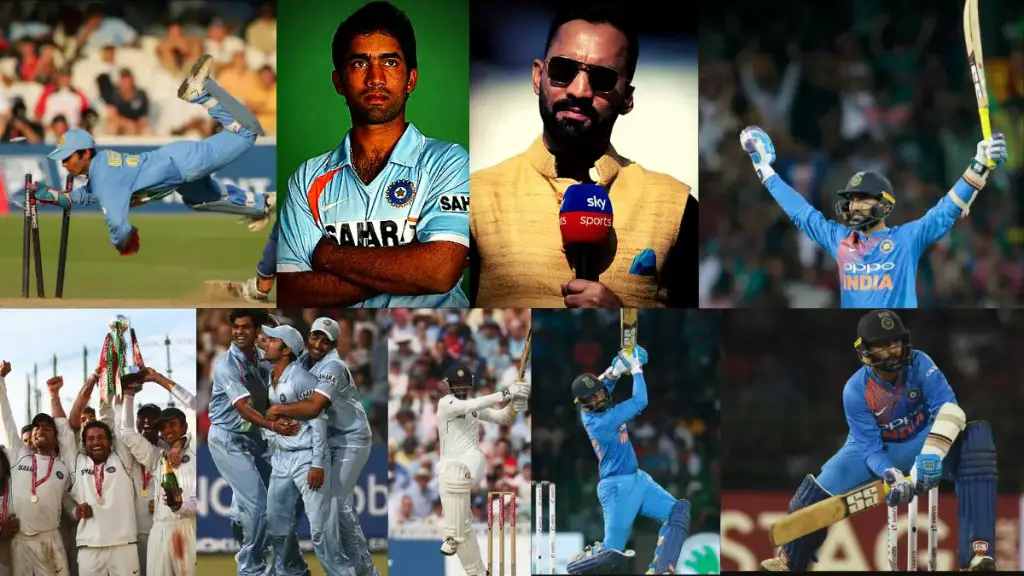
If you like this content on Dinesh Karthik, please subscribe and follow us on our social media accounts.
If you are one of my new followers, I will leave you with some of my best writing and featured articles.
Featured Articles
I. My Favorite Cricket Heroes and What We Can Learn From Them?
My cricket writing journey began with a tribute to Rahul Dravid. Since then, I have written about some of my other favorite players—Dale Steyn, Ellyse Perry, Ross Taylor, Faf Du Plessis & AB De Villiers, Umar Gul, Nicholas Pooran, Dinesh Karthik, Lasith Malinga, Joe Denly, Sam Curran, Dean Jones, the Bangladesh Fab Five, and the duo of Suresh Raina & MS Dhoni.
Just swipe the photos for more articles in each category.
Have you ever tried to compile an XI of South African born players playing for other countries? Or wondered what the most beautiful stadiums in the world are? Here is some of my lists—Players who retired too early, most underrated cricketers, unluckiest XI, commentators XI, most stylish, etc.
India Vs Australia 2020, a series to cherish forever.
In the time of COVID and hardship, this is exactly what was needed. Not only did this series entertain, it also taught us valuable life lessons as well.
The series can be summed up by Nelson Mandela’s quote, “The greatest glory in living lies not in never falling, but in rising every time we fall.”
Whenever India looked like they were gone, they found a way to get back up.
36/9 in Adelaide and without Virat Kohli at Melbourne. Surely India cannot recover at the Boxing Day Test? Well exactly the opposite happened as India achieved a memorable victory. The entire team rose to the occasion & Rahane, the stand-in captain, stood up with a magnificent century.
Resilience.
Injuries to fast bowlers of the Class of 2018. Before the series, No Ishant, no Bhuvi. Midway through the series, Shami, Umesh, and Bumrah out. By the end, Ashwin, Jadeja, & Vihari are done. Battered & bruised, they draw the third test.
Did the Indian team decide to give up at any point in time? Does India play for the draw in the 4th test? No & No. They go for the win. And they indeed win.
Courage.
Life Lesson 1: It is okay to make mistakes. You will suffer setbacks. The important part is to regroup, learn from these initial setbacks & mistakes, and find your feet again. Keep working. Keep going. Just never give up.
2. Just Be Yourself
Moment: Pant-Pujara Partnership
Oh he plays too slow! No intent shown….Oh he is too reckless. Gets out against the run of play.
This is not a description about one player but a paraphrasing of criticism for two different players, Pujara and Pant.
Balance is important. Criticize these two at your own peril.
Pujara scored his slowest fifty in the first innings of the 3rd Test. He followed it up by his 3rd slowest in the second innings. He went to break his own slowest 50th at the historic Gabba chase.
Pant ‘throws it away’ in the 2019 World Cup Semi-Final. Pant has ‘thrown it away’ several times before. In the third test, he plays a ‘rash’ shot at 97. Hopes of India’s win diminish, but the fact India had hope in the first place is due to Pant. Fortune favors the brave.
Pujara ended the series with a strike rate of 29.2. Pant with 69.89. Neither got a century, yet the partnerships of 148 (265)in Sydney and 61 (141) at Brisbane were monumental in India’s victory.
Cheteshwar Pujara and Rishabh Pant. Chalk and cheese. Yin and Yang.
Life Lesson 2: Adapting to different situations & circumstances in life is important but not at the expense of your innate being. Always learn from others, listen, take their advice, but at the end of the day, you are unique, and that is good enough. Never change who you are for others, and never forget where you came from.
3. Character & Determination
Moment: Hanuma Vihari & R Ashwin in the 3rd Test
Hanuma Vihari had a disastrous series till Day 5 of the 3rd Test. In his 5 innings, he scored 16 & 8, 21, and 4 & 23*. By the 4th day, he had run himself out after looking uncomfortable with a 4 (38), dropped a couple of crucial chances, and had been hit numerous times at forward short leg.
When Pujara & Pant depart on Day 5, Vihari has only scored 3*(31) with a session & a half to go. Just to put salt on the wound, Vihari suffers a hamstring injury. His new partner, R Ashwin, neither has form on his side nor a functioning back.
But boy, does he have spine? Post tea, he gets battered with short deliveries and gets hit on the ribs & shoulders.
Response? They pull off one of the major heists in recent Test cricketing memory. Vihari 23*(161) with over 4 and a half hours of batting & 39*(128) in 3 hours for Ashwin. Partnership of 62*(259).
If this is not one of the greatest displays of character & determination, I just don’t know what is.
Life Lesson 3:Sometimes things are in your favor. At other times, they are not. Vihari could have easily retired hurt and cared for his place in the 4th Test. These moments are what life is all about. Even when you are not 100% physically or mentally, stay in the moment & give it your all.
Mark Twain is credited to have said, “Do the thing you fear, and the death of fear is certain.”
The embodiment of fearlessness was displayed by India’s youth in this tour—Debutants Shubman Gill, Mohammad Siraj, Washington Sundar, (almost debutant) Shardul Thakur, and none more so than the experienced Rishabh Pant.
Gill’s backfoot punches are a thing of beauty. Beauty + Consistency + Positive Approach = Brilliance of Shubman Gill. Scores of 45, 35*, 50, 31, 7, and the 91 that gave India belief in Brisbane.
Thakur & Sundar did not fear against Starc-Cummins-Hazlewood. Neither did they blindly hit. They played proper cricketing shots & dominated. On Day 5 and near victory, Sundar pulled dangerous Cummins for six, Pant paddle swept Lyon, & Sundar got out playing a reverse sweep. Fearless stuff.
Life Lesson 4: You will face challenges and difficulties, whether that is related to school or work. Next time you fear how hard the upcoming exam is or if you have self-doubts about completing a project, take a deep breath and invoke your inner Rishabh Pant.
Luck is when opportunity meets preparation. The youngsters, reserves, & stalwarts of India were prepared when this opportunity came.
Although Rahane’s century was the highlight of Melbourne’s victory, Bumrah and Ashwin were among the wickets, Shubman Gill contributed with a 45 & 35*, & ever dependable Jadeja made a steady 57 along with his fielding efforts.
The Sydney draw was masterminded by Pant-Pujara & Ashwin-Vihari partnerships, but also had key contributions from Gill-Sharma & Jadeja again. In the final Test, the improbable counterattack by Thakur-Sundar, Siraj’s 5-for, & Gill-Pujara-Pant-Sundar took India to victory.
India utilized 20 squad members, Pant was the highest score with only 274 runs, & Siraj the highest wicket taker with 13 wickets. It was a truly a team effort from India’s point of view. Australia had more centuries, highest wicket taker, & most run scorer (since they played all 4 matches).
Life Lesson 5: Learn to work with others. The more diverse the ideas, the better. Individual excellence along with the greater good is the best way forward. Bring others along with you.
If you like this content about India Vs Australia 2020, feel free to subscribe above for FREE and follow us on our social media accounts. We discuss regularly about cricket on our Twitter platform, but also have Facebook, Instagram, and Pinterest Accounts. ALSO TWEET AHEAD AND SHARE!
So why does Cummins get a special mention? Because he was the highest wicket taker at 21 wickets and player of the series? No.
Pat Cummins bowled 162.1 overs, the most by a pacer in this Test series (Lyon with 187). Hazlewood was next with 144.4. This is an amazing feat considering Cummins was marred by injuries in his early career (Test debut in 2011, but did not play any tests between 2012-16).
He was just as intense on Day 1 of the first Test as he was on Day 5 of the 4th. In the final hour of the series, if there was one bowler who Tim Paine could depend on, it was Pat Cummins. Still bowling at 140 clicks, hitting the perfect line & length (Spooky pitch map by the way).
Accuracy, Consistency, Intensity. That’s Pat Cummins for you.
Pujara and the rest of the Indian batsmen had drained the Australian bowling unit. Cummins must have been out of energy. He must have tired, but it did not show. Bowled his heart out.
Life Lesson 6: Success comes before work only in dictionary. If you want to pursue any field, be like Pat Cummins. Give it your 100%. Work hard, play hard, fail, learn, cherish moments of glory,repeat.
7. Fine Line Between Banter & Abuse
Moments: Ashwin-Paine Banter, Mohammad Siraj Racial Abuse
The heat of the moment got to Tim Paine in the 3rd Test match with his banter against Ashwin. It came back to bite him since Australia lost their fortress after 33 years, the Gabbatoir. Paine later came back for an emergency press conference to address the issues. At other times in the series, commentators were guilty of making derogatory remarks against Marnus Labuschagne.
Life Lesson 7:Racism is not acceptable in any form. Speak up if you are a victim or a by-stander. Try to learn from other cultures. If you are not sure about a cultural reference or how to pronounce a name, just ask. Don’t Assume. Embrace diversity. Be nice.
8. Walk the Talk: Performance Matters
Moments: Tim Paine & Matthew Wade’s Performances
Tim Paine had a decent series with the bat, especially the counter attacking Player of the Match 73* at Adelaide. The rest of his performance though was below par.
Dropped catches at Sydney & Brisbane, missed DRS reviews, useless banter, & fielding placements. He needs to walk the talk with his captaincy.
The other keeper in the XI, Matthew Wade also needs to walk the talk. He has done a great job plugging holes in Australia’s line up as a middle order, opening batsman, and taking hits from Neil Wagner. In this India Vs Australia 2020 series, he has managed to get out with a soft dismissal on 3-4 occasions.
Life Lesson 8:Words need to be accompanied with actions to have any meaning. Walk the talk & never take anything for granted. When you are doing well, make the most out of your opportunity because the good times can end very quickly.
9. Leadership Matters
Moments: Siraj leads the attack, Rahane consoles Jadeja after Run Out
If I had to remember this series by one story alone, it would be Mohammad Siraj. Siraj comes from a humble background, was in bereavement of his father’s loss, and was racially abused. Bumrah gets injured, and India play the Brisbane Test with a total of 4 Test matches among the 5 bowlers, with Rohit Sharma being the most experienced bowler.
Siraj becomes the leader of the attack, gives advice to Saini, Natarajan, & Thakur, and takes a well deserved 5-fer. It has been a great boon to Indian cricket that the transition from Zaheer Khan to Ishant Sharma, Ishant Sharma to Bumrah, and Bumrah to Siraj has been smooth. Arms around shoulders.
Speaking of leadership, Rahane’s captaincy & calm demeanor (the Jadeja moment & reaction after series victory) were central to India’s win. In addition, the physio’s efforts during this injury-marred series, and support staff’s influence with Bharat Arun & Ravi Shastri cannot be understated.
Life Lesson 9: Be the leader you want others to be. Lead with humility and vision. Take responsibility. Guide others. Sharing is caring. Creating other leaders is the most significant sign of leadership.
10. Do Not Get Ahead of Yourself
Moments: The Gabba Fortress Breached
The pre-series talk included several predictions of Australia sweeping 4-0 and even after Sydney, Gabba’s statistics were the talk of the town. We all know what happened.
India needs to be warned as well. This was an expected surreal win, but the Indian team should not get ahead of themselves. If India gets complacent, who knows, England might provide India a taste of their own medicine later this year.
Life Lesson 10: Pride and ego can lead to positive growth if utilized correctly. Hubris and arrogance, on the other hand, will certainly bring your downfall.
11. Bonus Story: Superstitions For The Win
This is a fun personal story.
I have always enjoyed underdog stories. I mean, this entire blog is about “Broken Cricket Dreams.” One of the Test matches I have always waited for is a 5th Day hard fought draw.
Due to time zones, I had missed Faf’s Adelaide debut & a similar New Zealand-England match earlier in the decade. The 2015 South Africa blockathon (143 runs in 143.1 overs) resulted in a narrow defeat. The end of the decade, I thought my dream would come true with the Azhar Ali-Fawad Alam-Rizwan effort. It was not to be.
I am also known for my jinx ability & superstitions (just for the fun of it). So 3rd Test Day 5, I had been asked by my friend and family to not tweet a thing. I went one step ahead and decided to not speak either for the day.
After almost 9 and a half hours, the dream finally came true. India had saved the Test match. And guess what? It was a kind of peaceful exercise, not being on social medial 24-7. Anyway…
India Vs Australia 2020 Legacy
Surely this is a tour that Allan Border & Sunil Gavaskar would be proud of.
For a generation or two, the 1999 World Cup Semi-Final, 2005 Ashes, 2001 Laxman’s 281, Belinda Clarke’s 229* were the moments to cherish. In the last 5 years, cricket has rejuvenated itself. All formats with memorable moments.
T20 World Cup – Remember The Name
Women’s World Cup 2017, WT20 2020 – 86,000 spectators
If you like this content about India Vs Australia 2020, feel free to subscribe above for FREE and follow us on our social media accounts. We discuss regularly about cricket on our Twitter platform, but also have Facebook, Instagram, and Pinterest Accounts