Back in 2022, I was at the University of Iowa finishing my PhD when I noticed a force quietly taking over campus: Caitlin Clark.
Over the next couple of years, Clark reshaped women’s college basketball: Viewership exploded with her jaw-dropping 3 pointers, every game was sold out (unfortunately before I could get a ticket), and Iowa reached the Final Four one season and finished as NCAA championship runners-up the next.
After graduation, she was picked up by the WNBA for a whopping…$78,000, far below the value she brought to the league.
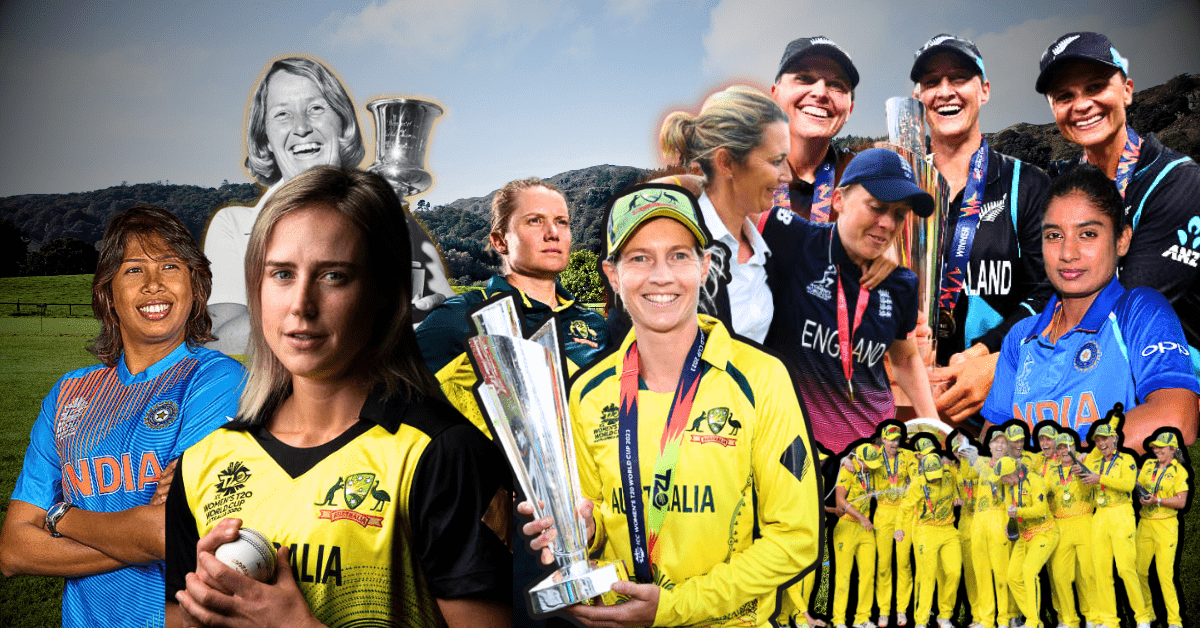
Women’s cricket is entering a similar era. India’s World Cup victory has sparked excitement and optimism that the sport may finally see professional growth and meaningful investment.
But as momentum builds, the finances become increasingly important. In my previous article on The Economics of Women’s Cricket, we explored how each cricketing nation is investing in the women’s cricket. In this article, we broaden the scope and ask:
How wide is the gender pay gap across major sports?
Where does cricket sit within that debate?
And most importantly: are women cricketers earning a livable wage that supports a basic standard of living in their countries?
Will the Clark effect translate to cricket? Let’s find out.
Key Takeaways
Nat Sciver-Brunt earns an estimated $931,978 per year, one of the highest for a women’s cricketer (without sponsorships). However, that is less than the highest paid women in tennis, golf, and other sports where players are making $4-10 million annually.
Rishabh Pant and Pat Cummins (~$4-4.5 Million) are among the highest paid cricketers, but their annual salaries are not as competitive as Stephen Curry ($59.6M) or Shohei Ohtani ($70M).
The average international women’s cricketer in Australia, India, England, and New Zealand earns about $100,000-$200,000 a year, while players in Pakistan, Sri Lanka, Bangladesh, and Zimbabwe earn between $2,000-$12,000 per year.
Tennis was the pioneer in pushing for pay parity with the US Open offering equal prize money for both men & women in 1973.
When the gender pay debate comes up, there are usually two sides of the debate.
Revenue-proportional pay: Athletes should earn proportional to the amount of money they generate for the league.
Investment-driven growth: Paying athletes fairly strengthens the league, improves quality, and drives revenue over time.
To understand pay in women’s cricket, I’ll compare league revenue, player salaries, and recent investments across team sports like basketball and soccer, and individual sports like tennis and golf.
We also look at Gross National Income (GNI) per capita with Atlas method, a social marker that determines the average income based on GDP, currency exchange rates, inflation, etc. (including income earned outside of the country).
For example, we will be looking at several leagues in the US. It’s good to keep in mind that the GNI of the United States is $83,660 (2024) so we can see how athletes salaries fare in comparison.
League by League Revenue and Salary Breakdown
I read over 110 articles to bring you salary and revenue information from different sports all in one sports.
*Note: Although the NFL is the most profitable league in the US sports market ($20.24 billion), we do not consider it in our analysis since there is no women equivalent of the NFL.
1. Basketball
Pay Disparity:Extremely High
NBA: National Basketball Association, WNBA: Women’s National Basketball Association
The average NBA salary ($11.9M) is over 116 times higher than the average WNBA salary ($102,249).
Even the lowest-paid NBA player makes more than 4 times the highest paid WNBA athlete.
The NBA generates approximately $28.9 million per player, while the WNBA revenue player generates $1.22 million per player.
NBA vs WNBA at a Glance
Category
NBA
WNBA
Founded
1946
1996
Estimated Salary Range
$1.16-$55.76 Million
$66,000-$250,000
Average Salary
$11.9 Million
$102,249
League Revenue
$13 billion (2024)
$180-200 Million (2023)
Salary as % of League Revenue
0.09% (11.9M/13B)
0.05% ($102K/190M)
Number of Teams
30
13
Number of Games/Team
82
34
Average Attendance
18,834/match 22.2 million (total)
10,986/match 3.14 million (total)
Highest Paid Athlete (Men): $59.6 million (Stephen Curry), $304 Million (Jaylen Brown for 5-year contract)
Highest Paid Athlete (Women): $252,450 (Jackie Young on contract extension), $249,244 (Kelsey Mitchell)
The WNBA has secured a $2.2 billion deal for the next 11 years, averaging $200 million/year, up from the current deal of $60 million/year.
According to Sportico, the NBA is projected to hit $14.3 billion revenue in the 2025/26 season.
Revenue Per Player:
NBA: $28.9 million = ($13 billion league revenue)/(30 teams x 15 players per standard roster
WNBA: $1.22 million = ($190 million)/(13 x 15)
Bottom Line: While salaries remain far below NBA levels, rising media deals and growing brand valuation suggest the WNBA’s momenum may finally be shifting.
In 2022, the US Women’s team won a historic equal-pay settlement of $22 million in 2022, divided among 30 players on the USWNT roster (~$733,333 per player).
The USWNT, USMNT (Men’s National Team) CBA came to an agreement to pool FIFA prize money and split it equally (after 10% to US soccer for youth programs). The US Women’s Team has won 4 FIFA World Cups and 5 Olympic golds, while the men have not made it past the quarter-finals in recent history.
According to Forbes, top USWNT players like Alex Morgan and Megan Rapinoe earned around $7 million in 2023, combining on-field and off-field earnings. In contrast, the top male players like Kylian Mbappe, Cristiano Ronaldo, and Lionel Messi earn around $120 million annually.
MLS: $2.86 million = $2.23B/(30 teams x 26 players)
NWSL: $223,000 = $75M/(14 x 24)
Note: MLS has 20 players on the roster with up to 10 supplemental players. Similarly, NWSL has 22 minimum players with up to 4 supplemental players.
Bottom Line: Although NWSL salaries are lower than MLS salaries, the disparity in league salary is nowhere near as extreme as basketball. Culturally, women’s soccer is more popular and the US women’s national team has made strides in pay parity (though other national soccer teams may still face wide gaps).
ATP: Association of Tennis Professionals, WTA: Women’s Tennis Associations
The median earnings for male professional tennis players ($22,362) is lower than for female players ($75,888). This is due to over 1000 professional men players compared to about 550 women.
The prize money for Grand Slams and other tournaments are largely equal.
Highest Paid Athlete (Men): $20.3 million (Jannik Sinner, $47.3 million total with off-court earnings), $13.3 million (Carlos Alcaraz, $48.3 million with off-court earnings)
Highest Paid Athlete (Women): $12.4 million (Aryna Sabalenka, $15 million with off-court), $12.2 million (Coco Gauff, $25 million with off-court)
Prize money for this year’s Roland-Garros will total EUR 49.6m, up 12.3 per cent on 2022. With the aim of ensuring a more even distribution between players, the tournament organisers have significantly increased the prize money for first-round losers in the women’s and men’s… pic.twitter.com/3HC75KlnIP
In 1973, the US Open became the first Grand Slam to offer equal prize money for both men & women ($25,000 then) after movement driven by Billie Jean King. The other Grand Slams would take a quarter of a century to make the same move: 2001 (Australian Open), 2006 (French Open), 2007 (Wimbledon).
Australian Open offered equal pay in 1984 and reverted to paying the men more in 1996 before going back in 2001.
In 2024, 28 men & 15 women earned at least $2 million. In his career, Novak Djokovic has won more than $190.2 million in prize money alone. Roger Federer is said to have breached the $1 billion mark.
2023 French Open total prize money was $56.8 million (€ 49.6 million). The winner of a Grand Slam, like the US open is about $2.5 million whereas even a first-round loss can yield $100,000.
According to Forbes, the world’s top ten highest paid tennis players made an estimated $285 million (the record was $343 million during the height of Federer-Nadal-Djokovic-Serena Williams).
The US Open’s revenue in 2024 was about $559.6 million. About 3.2 million fans attended the Grand Slams in 2025 (1.1 million – US, 1 million – Australian, 650,000 – French, 550,000 – Wimbledon)
Bottom Line: Prize money in professional tennis is far more balanced than most other sports. While off-court earnings still have large gaps, equal Grand Slam payouts show that both men & women have more equitable financial opportunities for this individual sport.
The average PGA salary (~$1.48M) is nearly seven times the median LPGA salary (~$213K).
Although women golfers are earning up to $6M in recent times, the highest paid male golfers are earning between $60-90M.
PGA vs LPGA at a Glance
Category
PGA
LPGA
Founded
1929
1950
Estimated Salary Range
$6,000-$92 million
$2,300-$6 Million
Average Salary
$1.48 million (2021)
$213,159 (Median 2024)
Winning Prize Money
$4.3 million (US Open) $3.6 million (The Masters) $3.3 million (PGA Championship) $3.1 million (Open Championship)
$2.4 Million (US Open) $487,500 (The Annika)
Highest Paid Athlete (Men): $92 million (Jon Rahm, $102 million including off-course earnings), $67 million (Scottie Scheffler)
Highest Paid Athlete (Women): $4.5 million (Nelly Korda, $12.5 million with off-course)
Growth Trend and Recent Landmark Changes
Tiger Woods’ career earnings total about $120 million with Rory McIlroy closing in at $108 million.
According to Reuters, LIV golf, backed by Saudi funding, has invested about $5 billion over the last couple of years. The organization reportedly offered players like Jon Rahm $300 million to defect from the PGA Tour.
PGA, in response, upped the 2025 season prize money to $366.9 million. Combined with other tournaments, PGA golfers have an opportunity to play for $700 million in a year.
The total prize money for the ladies’ US Open was a $12 million purse and the Memorial PGA tournament was about $20 million. Other tournaments like the Chevron Championship, Evian Championship, and the AIG Women’s Open had a total purse around $8-10 million.
CBS and NBC renewed a 9-year media rights contract in 2022 for about $700 million.
The LPGA is currently in negotiations for a media deal that will put all North American golf matches live on TV. More investment like the ones with FM, U-NEXT deal in Japan is around the corner.
Bottom Line: Despite being around since the 1950s, the gap between top male and female golfers remain among the widest in professional sports.
National Professional Fastpitch (also known as the Women’s Pro Softball League) ran from 2004-2021. The average season salaries were around $3,000.
Although MLB players earn high average salary ($4.66M), they also play the most games (162), which brings their amount per match down to about $28,800.
Bottom Line: Softball players earn a fraction of their MLB counterparts, but the landscape is improving. AUSL is a major upgrade from the now defunct National Professional Fastpitch in terms of investment and support. Meanwhile, the men still have the potential to earn substantial amounts of money both on and off the field.
The NHL and Rogers Communications announced a $11 billion media rights deal in Canada. The NHL also has 7-year deals with Disney & Turner Sports around $200-400 million.
The PWHL signed deals with Fox, Paramount, and other networks.
Premier Hockey Federation, the precursor to the PWHL, paid its players an average of $45,000-$60,000 with top salaries reaching $80,000.
Bottom Line: The pay disparity may look extreme, but PWHL is a new league and is growing rapidly. Only time will tell if it succeeds, but it will take a lot to match a 100-year old NHL league.
UFC fighter Rousey said in 2019, “How much you get paid should have something to do with how much money you bring in. I am the highest paid fighter not because Dana or Lorenzo wanted to do something nice for the ladies. They do it because I bring in the highest numbers. They do it because I make them the most money. I think the money that they make should be proportionate to the money they bring in.”
College Sports, Law Suits, and Miscellaneous
College sports in the US is a separate altogether, but with NIL (Name, Image, and Likeness), college athletes have started to get paid. However, now we are seeing disparity in college pay as well. Men’s basketball players earned an average of $171,272, while the women earned about $16,222 in 2024.
After tennis in 1972, several other individual sports followed equal prize money. By 2004, volleyball and skating offered equal prize money. By 2019, skiing, snowboarding, biking, and even the World Surf League announced equal prize money for both female & men competitors.
IPL: Indian Premier League, WPL: Women Premier League
The average IPL salary (~$460K) is higher than the highest-paid WPL player ($415K) with IPL players earning on average 5.5 times more than their WPL counterparts.
The revenue per player is approximately $2.7-$3.8 million in the IPL compared to about $816K in the WPL.
Even in the lower-tier cricket nations (Pakistan, Sri Lanka, Bangladesh, Zimbabwe), where salaries are lower, player earnings are still significantly above their countries’ GNI.
Category
IPL
WPL
Founded
2008
2023
Salary Range
$24,000-$3.2 Million
$12,000-$415,000
Average Salary
$459,743 (2023)
$82,522 (2023)
League Revenue
$691.3 Million (5761 Crore INR)
$71.86 Million (637 Crore INR)
Salary as % of League Revenue
0.067%
0.11%
Number of Teams
10
5
Number of Games/Team
14
8
Average Attendance
26,000/match
9,000-13,000/match
Highest Paid Athlete (IPL): $3.21 Million (Rishabh Pant)
The average salary for a WBBL player is $30,812 while the average BBL salary is $110,312. The Women’s Hundred pays around $38,077, while the men’s Hundred pays around $75,440 on average.
Men’s vs Women’s Salaries in Cricket (Country By Country Breakdown)
Australia, England, New Zealand, and India now have equal match fees for both men & women. West Indies has signed a MOU to create a pathway for equal match fees by 2027.
Note that match fees is not the same as equal salary, but it is still a step in the right direction. Match fees is how much a player is paid per match. However, women cricketers do not play as much volume of cricket (for example, NZ have equal match fees for Test cricket but the White Ferns have not played a Test in ages).
Bottom Line: Since 2017, women’s cricket has gained momentum through increased visibility, equal match fees, and the emergency of women’s franchise leagues, important steps toward professionalizing the sport. However, more needs to be done in the lower-tiered country to diminish the gap within women’s cricket. Finally, even though men’s cricketers earn high salaries, it is nowhere in comparison to the MLB or the NBA.
For the highest paid cricketers, we looked at franchise league earnings along with match fees and central contracts. Here is an example of how we calculated Pooran and Klaasen’s earnings.
Country
Men
Women
Australia
$3.6-$4.5 Million (Pat Cummins)
$831,951 (Ash Gardner)
England
$3.5-$3.85 Million (Jos Buttler)
$931,978 (Nat Sciver Brunt)
New Zealand
~$2.29 Million (Daryl Mitchell)
$435,755 (Amelia Kerr)
India
$4-$4.4 Million (Rishabh Pant)
$757,420 (Smriti Mandhana)
West Indies
$3.1-$4.1 Million (Nicholas Pooran)
$269,200 (Deandre Dottin)
South Africa
$3.5-$3.9 Million (Heinrich Klaasen)
$400,000-$480,000 (Marizanne Kapp)
Sri Lanka
$1.6-$1.8 Million (Matheesha Pathirana)
$226,741 (Chamari Athapaththu)
Pakistan
~$750,000 (Babar Azam)
N/A
Bangladesh
$390,000-$410,000 (Mustafizur Rahman)
$17,000-$20,000 (Nigar Sultana)
Ireland
$600,000-$800,000 (Josh Little)
$60,000-$100,000 (Gaby Lewis)
Zimbabwe
$122,000-$516,000 (Sikandar Raza)
N/A
Afghanistan
$2.2-$3.36 million (Rashid Khan)
N/A
Final Thoughts
Women in sports continue to earn far less than their male counterparts, but times are changing. Investment and visibility towards women’s sport is increasing, and so are their salaries.
Caitlin Clark may not get a paycheck close to Steph Curry’s at the moment, but the impact of athletes like Caitlin Clark & Angel Reese, Billie Jean King & Serena Williams, and of course, Harmanpreet Kaur leading India to victory is reshaping the landscape and pushing world sports closer to fair pay.
At 3:30 AM, I woke up with a jolt. First instinct: check Cricinfo. Were Kohli and Rohit still batting? Had I overslept my the innings-break nap?
Kohli was in the 20s, Rohit nearing his fifty. Phew. Relief. Breathe. They were still alive.
With one eye half-shut and one thumb on Twitter, I watched the duo bat on, one ball at a time.
At 4:47 AM, Rohit brought up his century, moments after Kohli reached his 50. Kohli gave him a hug. Both smiled. The crowd erupted. For that moment, the world seemed to pause. As if nothing else mattered.
Through the series, I celebrated each run, every fist bump, every catch and dive of Rohit and Kohli. My dad and brother would talk before and during each game as if the world’s luck depended on us.
I’d pray that India win the toss and bat. And shut off the TV after Kohli’s ducks.
But why was I acting like this? Growing up, you wouldn’t called me RoKo’s #1 fan. I used to watch every ball of any international game, follow all the T20 leagues, and stay up for a Bangladesh-Zimbabwe Test. So, why did this meaningless ODI bilateral series suddenly matter so much?
Maybe it was the realization that the end is near. Maybe because Australia appreciated these two players and knew how to give a proper farewell.
Both Kohli and Rohit retired from T20Is after winning the T20 World Cup. Expected.
Both retired from Tests. Slightly unexpected.
Then Rohit was replaced by Gill as ODI captain. Shocking. Questions started to murmur: Are they going to make it two more years? Will every series be an examination? Why is Jaiswal waiting in the wings?
And then Kohli scored two consecutive ducks for the first time in his career and waved goodbye to his beloved Adelaide supporters. All hell broke loose. Was the 3rd ODI going to be his last? Is his form dropping off the cliff? Was our childhood finally coming to an end?
We have seen transitions before. Father Time waits for no one.
Gavaskar and Kapil faded, Tendulkar and Dravid retired, Dhoni left (kinda). With each passing generation, India found new heroes, leaving behind a tinge of nostalgia for the past.
But for that one hour and seventeen minutes, Father Time paused, letting Rohit and Kohli shine, giving us a glimpse of what two upcoming emotional years could look like.
The post-match interviews ended. The sun rose. I drifted back to sleep. Time had moved on, but the memory of that morning will stay with me forever.
Thank you all for reading!
This is part of a new series of short articles, all under 500 words, where I try to make every word count. This one ended up at 429 words.
“The King Is About to Arrive”
I will leave you with these pieces of commentary gold from SEN cricket.
Once upon a time, a father observed his three sons arguing. So just like any dad, he decided to teach them a lesson.
He gave each of his kids a bundle of sticks and asked them to break it.
The first son went in with confidence, but fell short of breaking it. The second kid tried really hard as well, but couldn’t break through. The third son also ended up with the same result.
Then, the father separated the bundle, and asked his sons to repeat the task. To their surprise, each of them was able to break all the sticks this time around, one by one.
What did they learn? Unity is Strength. By keeping the sticks together, the whole became stronger.
Much like this tale, India’s 2024 T20 World Cup campaign was marked by unity. There was no one performer or one star this time around.
Virat Kohli, the golden boy of Indian cricket for over a decade, could not make a run for his life. India found a new match winner in every game—Bumrah, Arshdeep, Suryakumar Yadav, Pandya, Rohit, and Axar all produced player of the match performances while Rishabh Pant and Shivam Dube played handy cameos throughout the World Cup.
In the final, Kohli steadied the ship with a 76, Axar’s 47 marked India’s recovery, and Dube’s 27 (16) provided the finishing spark that was much needed. In the second innings, Bumrah started with one of the balls of the tournament to dismiss Reeza Hendricks and Arshdeep took out Markram.
What followed was a brilliant counterattack from South Africa through Quinton de Kock, Tristan Stubbs, and Heinrich Klaasen, who unleashed one of the most memorable innings in a World Cup final.
But then, South African ran into the bundle of sticks.
Rishabh Pant helped India get an injury break and disrupted South Africa’s momentum. Pandya then dismissed Klaasen with a clever wide delivery, Bumrah gave nothing away and went through Jansen’s gates. Following up, Arshdeep bowled a cracker of a 19th over and stifled Maharaj, Hardik kept it tight in the 20th, and SKY, who had a middling tournament by his standards, came through with one of those acrobatic catches when it mattered the most.
Even if one of those pieces in the last 28 balls had not come together, India would have lost. But together, they proved to be too strong to break.
Ludwig van Beethoven, perhaps the most recognized composer of them all, left his best for last.
Beethoven’s wrote his Ninth Symphony when he was almost completely deaf. The fourth moment, Ode to Joy, is often regarded as one of the greatest pieces of classical music of all-time. Composer Tan Dun states that
“Everybody loved Beethoven. The enemy loved Beethoven. The friends loved Beethoven. The dictatorship loved Beethoven. But also, the gentle, the people, the kids, the mothers, the women loved Beethoven.”
Rahul Dravid, one of the greatest cricketers of all-time, left his best for last as well. Although Dravid is not going deaf, his hairs have definitely grayed. The WTC Final and 2023 ODI World Cup Final losses would have been hurting deep into his heart.
Everybody loves Rahul Dravid, friends and foes alike. Dravid is one of the most loved and respected cricketers out there (and was also named India’s most sexiest man in 2005, fun fact). He has accomplished everything..well almost everything except for a World Cup. He had won a World Cup with the U-19 team earlier team, but this was different. This was personal.
In 2007, India crashed out of the group stage under Dravid’s captaincy in the Caribbean. History must have been weighing on him. The weight of the nation must have been weighing on him.
17 years later, Dravid came back to the Caribbean yet again with the quest of a World Cup. At last, Dravid orchestrated his most famous symphony.
“Something needs to change. Otherwise all that will be left is broken dreams.”
After the semi-finals loss against England, Rohit Sharma insisted on a change of approach, which was apparent in the dream 2023 ODI World Cup run at home (until the final). By the time we got to June 2024, the change was complete.
Both Rohit and Virat had transformed their playing styles. Rohit Sharma’s 92 against Australia will be talked about for years to come.
What about Virat Kohli? If South Africa had won the final, Kohli’s final knock may have been criticized. In hindsight, it was exactly the knock India needed from its talisman. The 2014 semi-final knock vs South Africa, the 82* at Mohali, the 82* in Adelaide and those sixes against Haris Rauf. People will always remember those, but they will now also remember how Virat Kohli & Rohit Sharma helped India win a World Cup.
Their leadership and legacy is now etched in history with this World Cup dream. Broken Dreams no more.
Jasprit Bumrah was the section leader for India’s bowlers.
He delivered with several solo performances, but also guided the rest of the bowlers along with him.
When there is a Bumrah, there is always a way. How does he keep doing it? Regardless of the format, pitch conditions, opposition, he delivers day in and day out. Player of the tournament for a reason. We are seeing the development of one of the greats in front our eyes.
India should appreciate, cherish, and keep Bumrah in cotton wool for as long as possible.
“It’s your reaction to adversity, not adversity itself that determines how your life’s story will develop.”
– Deiter F. Uchtdorf, German aviator and religious leader
This quote embodies Hardik Pandya. He is always in the news for one reason or the other, but this season has been really tough for him.
Hardik Pandya was booed all throughout IPL 2024 after he became Mumbai Indians’ captain. MI did not qualify for the playoffs and to make matters worse, he was in abysmal form himself. There were calls to not select him in the World Cup squad.
And the way he reacted to this adversity and came back is a story to behold. He kept his cool in the press conferences in the IPL and let his performances do the talking in the World Cup. He struck first against Pakistan, had a couple of great all-round shows, and capped it off with Klaasen-Miller’s wickets in the final.
Pastor T.D. Jakes once said, “A setback is a setup for a comeback.”
Rishabh Pant has endured the unimaginable over the last couple of years. The fact that he survived is a big deal on its own. To have the motivation and drive to play cricket again and that also at the highest level, is spectacular.
And then to make a comeback in the IPL and later in international cricket is out of the world. His scores of 36*, 42, 18, 20, 36, 15 might not blow the opposition out, but it is exactly what was needed by the #3. Kept the momentum going.
And boy, he was quite active behind the stumps! Not to forget the Gulbadin moment in the final.
Axar Patel was the missing ingredient India did not realize they had.
Over the last few ICC events, India have carried both Jadeja & Pandya in the XI, but somehow were always missing a bowling option or batting depth that ended up haunting them. Recall batting collapses in 2017 Champions Trophy Final & 2019 ODI SF or lack of bowling options in the 2016 T20 WC SF or 2023 ODI WC Final.
With Axar, Rohit could rotate the bowling around, add Kuldeep or Siraj based on conditions, and switch up the batting line up. The Grade Cricketer podcast sums Axar’s impact really well.
“The versatility is unrivaled….What..What a cricketer. He can bat 5 and make 47 in a World Cup final and also spin teams out in Test matches. I don’t know who else can do that!”
You can’t help but feel happy for Kuldeep Yadav. After all that he went through from 2020-22, Kuldeep is back with a bang!
He did not play the first few matches in fast bowling friendly USA, but the difference in the Caribbean with figures of 2/32, 3/19, 2/24, 3/19 before the 0/45 in the final. With Bumrah and Kuldeep in your XI, opposition just has 12 overs to hit.
His selection in the squad was courageous. His selection in the XI was courageous. Even though he started with scores of 14 (16), 0*(2), and 3 (9), he was persisted with. That was courageous.
And just like the lion in Oz, he lifted himself up when it mattered the most. Staying till the end of the chase with 31*(35) when India were struggling against USA, 34 (24) vs Bangladesh, 28 (22) vs Australia, and saving his best for last—27 (16).
For a known spin basher, he started off with a six against Marco Jansen in the final. Courage.
From 108/4 in 14 overs, India scored 68 in the final 6, and the rest, as we say, is history.
In this WC, Jadeja did not bat much, bowl much, and did not even inflict a direct hit. But the fact that he was there made all the difference.
Rohit Sharma was able to rotate the bowlers, keep flexibility in the batting order, and kept the opposition at bay with the thought that India still has a #8 with three first class triple centuries, a luxury South Africa did not have. Also announced his retirement along with Rohit & Kohli.
Ended with figures of 3-0-13-1, 4-0-19-0, and 4-0-25-0. Pretty solid returns.
Yuzvendra Chahal
Although Chahal is India’s highest wicket taker in T20Is, he is yet to play a T20 World Cup match. But does that really matter anymore?
Sanju Samson
The victory you know. The luck factor, you don’t. In all seriousness, if you have someone with the skill of Sanju Samson on the bench, you must have an absolutely amazing team.
Yashasvi Jaiswal
Jaiswal’s time will come. He will carry the torch of Indian cricket for the next generation along with Shubman Gill and a few others.
Rinku Singh, Khaleel Ahmed, Avesh Khan
Although the reserve players did not get a chance in the final 15, they traveled with the squad throughout the tournament and attended several matches. Not once, did they show their disappointment. When India were happy, they were happy.
God’s Plan.
Support Staff, Physios, Selectors
Ajit Agarkar and co have been criticized for picking the seniors and dropping Rinku Singh. At the end, it all worked out, didn’t it?
Also we cannot forget the contributions of the physios, data analysts, support staff, and several hundred others who played a role in the background. India’s victory could not have been possible without them.
Final Thought, Thank You Team India
In an orchestra, everyone from the first chair to the last stand must be focused and switched on at all times. The bows need to go in the same direction, the entrances need to be spot on, the solos need to be spectacular, the tempo should be consistent, and the instruments need to be in tune. Finally, the director needs to ensure all the sections—the strings, woodwinds, brass, and percussion are all on the same page.
And when everything comes together, it is just so beautiful.
Thank you to India’s bowlers, batters, fielders, coaches, support staff, and the fans. They joined together and delivered when it mattered the most.
And the celebration was felt around the world. Robin Uthappa, R Ashwin, Rayudu, Ishant Sharma were visibly emotional on camera. So many cricketers before them have helped India grow and many such cricketers will continue to move Indian cricket forward.
Today we discuss the batters with the most runs in a single World Cup. Can anyone break Sachin Tendulkar’s record?
Let’s get straight into it.
Key Takeaways
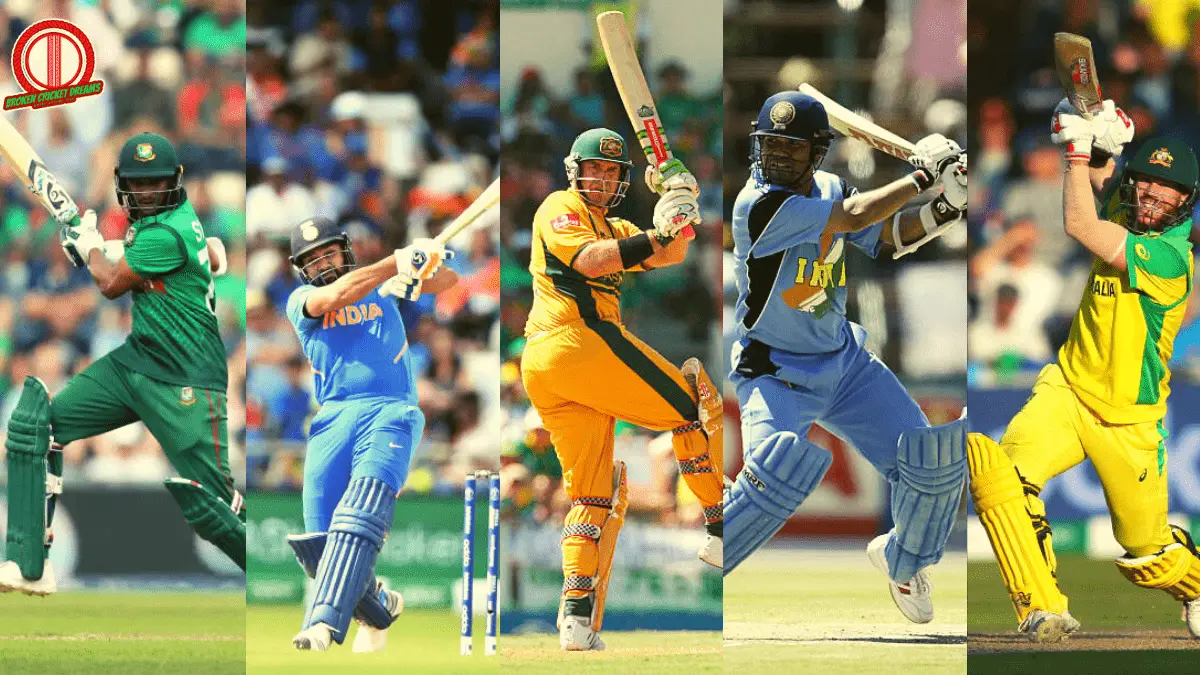
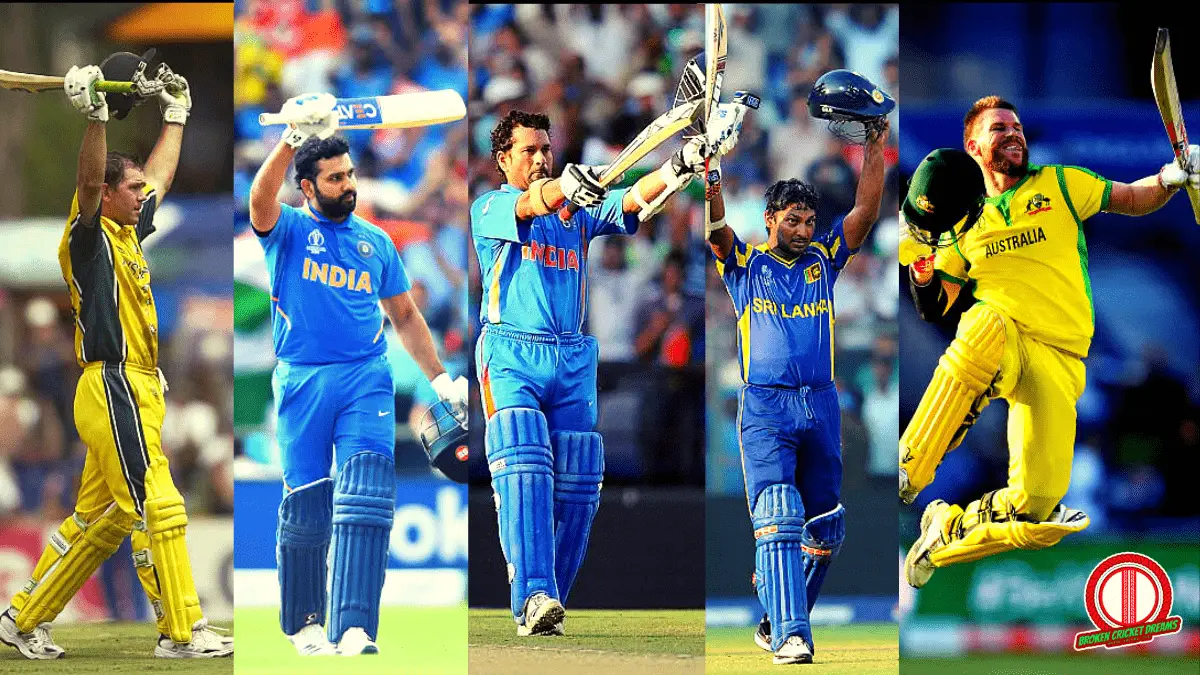
Sachin Tendulkar scored the most runs in a single World Cup – 673 runs in the 2003 CWC. He is followed closely by Matthew Hayden (659 in 2007), Rohit Sharma (648 in 2019), and David Warner (647 in 2019).
Among batters with 450+ runs in a single tournament, Martin Crowe (114.00 average) in 1992 and Kumar Sangakkara (108.20) in 2015 had the highest average.
Sachin Tendulkar appears in this list thrice (2003, 1996, and 2011) while Kumar Sangakkara features twice (2015 & 2011).
There were many prolific performances in the 2019 CWC, yielding 9 450+ scores. The 2019 CWC was followed by 2007 CWC (7 450+ scores), 2011 & 2015 (3), 1996 & 2003 (2), and 1987, 1992, & 1999 (1).
In this group, AB De Villiers had (by far) the best strike rate – 144.31 (His 162* off 66 balls kind of skews the result). Other batters with 100+ SR are Kumar Sangakkara (105.87), Martin Guptill (104.58), Adam Gilchrist (103.89), Aaron Finch (102.01), and Matthew Hayden (101.07).
*Aravinda de Silva struck at 107.69 for his 448 runs & Jason Roy hit 443 runs at 115.36.
At a Glance: Most Runs in a Single World Cup Tournament: The Top 10
Player
Runs
World Cup
Sachin Tendulkar
673
2003
Matthew Hayden
659
2007
Rohit Sharma
648
2019
David Warner
647
2019
Shakib Al Hasan
606
2019
Kane Williamson
578
2019
Mahela Jayawardene
548
2007
Martin Guptill
547
2015
Kumar Sangakkara
541
2015
Ricky Ponting
539
2007
Evolution of the Most Runs in a Single World Cup (1975-2023)
1975: Glenn Turner (New Zealand) – 333
1979: Gordon Greenidge (West Indies) – 253
1983: David Gower (England) – 384
1987: Graham Gooch (England) – 471
1992: Martin Crowe (New Zealand) – 456
1996: Sachin Tendulkar (India) – 523
1999: Rahul Dravid (India) – 461
2003: Sachin Tendulkar (India) – 673
2007: Matthew Hayden (Australia) – 659
2011: Tillakaratne Dilshan (Sri Lanka) – 500
2015: Martin Guptill (New Zealand) – 547
2019: Rohit Sharma (India) – 648
Top 28 Most Runs in a Single ODI Cricket World Cup
The filter of 450 World Cup runs cut-off yielded 28 instances. Here are all the details.
1. Sachin Tendulkar (India) – 673 Runs, 2003 ODI World Cup
Who has scored the most runs in a single ODI Cricket World Cup?
Sachin Tendulkar scored the most runs in a single World Cup – 673 runs in the 2003 CWC. He is followed closely by Matthew Hayden (659 in 2007), Rohit Sharma (658 in 2019), and David Warner (647 in 2019).
Who has the highest World Cup average for batters scoring over 450 runs?
Martin Crowe (114.00 average) in 1992 and Kumar Sangakkara (108.20) in 2015 had the best average among this group.
Who has scored the most centuries ODI Cricket World Cup?
Here is a quick answer: Rohit Sharma & Sachin Tendulkar have scored the joint highest number of hundreds in ODI Cricket World Cups at 6 centuries each.
Rohit Sharma has a chance to go ahead of the pack by scoring more hundreds in the upcoming 2023 ODI Cricket World Cup.
Key Takeaways
10 cricketers have scored 4 or more centuries in the ODI Cricket World Cup. Rohit Sharma & Sachin Tendulkar lead the pack with 6 each, with Kumar Sangakkara, Ricky Ponting, and David Warner close behind with 5 each.
Sri Lanka, India, and Australia have 3 representatives each from this list while South Africa has only one in AB de Villiers
Rohit Sharma and David Warner are the only current players in the list. Joe Root is currently sitting at 3 World Cup tons.
Here is a quick preview: India is going with experience to help them go all the way in this upcoming World Cup.
Let’s dive right in.
Key Takeaways from India World Cup 2023 ODI Squad
The average age of India Asia Cup 2023 squad is 32.7. India is going with a squad that has lots of experience but there are a couple of new faces as well. They have youngsters like Shubman Gill (24), and Ishan Kishan (25), On the other end of the spectrum, we havestalwarts like Ravichandran Ashwin (37), Virat Kohli (34) and Rohit Sharma (36).
The 15-member India’s World Cup squad has average ODI match experience of 97 ODIs (1449 ODIs among 15 players). Virat Kohli (281), Rohit Sharma (251) & Ravindra Jadeja (186) are their most experienced players.
India’s squad composition is as follows: 7 proper batters (0 part time bowlers), 4 all-rounders, and 4 proper bowling options. In total, India has 8 bowling options (1 off spin, 1 left arm spin, 1 left arm wrist spin, and 5 right arm pace) in their squad if absolutely needed. India do not have a leg-spinner or left arm pace bowler.
India has 2 left-handed batting options (Kishan) and two wicketkeeping options.
Axar Patel has been ruled out due to quadriceps strains.
KL Rahul has been nursing a back injury since IPL 2023. Shreyas Iyer has been out since the beginning of the year due to a thigh injury. They both returned to the fold.
Jasprit Bumrah is returning after a back injury. Prasidh Krishna is returning from a back injury as well. They have both returned, but Krishna did not make it to the final squad.
10 India Players Who Were Unlucky to Miss Out
Axar Patel, Yuzvendra Chahal, Washington Sundar, Bhuvneshwar Kumar, Arshdeep Singh, Deepak Chahar, Shikhar Dhawan, Ruturaj Gaikwad, Yashasvi Jaiswal, Ravi Bishnoi
Usually with India’s squads, you have a feeling of how the campaign is going to go.
This time, I cannot really say. With an overkill of cricket, ODIs have been squeezed out of the ODI calendar.
Add to that, KL Rahul, Shreyas Iyer, Bumrah, Prasidh Krishna are just coming out of injury, Tilak Verma has not played a single ODI, and Shami hasn’t played for a while. At the same time, there is discussion about who didnt’t make the squad, Yuzvendra Chahal & one of the off-spin options.
This is still a great squad, with a mix of youth & experience. My only concern is the lack of match time, recurring injuries, and relative instability.
But with home advantage, you never know. Can India repeat the magic of 2011? Have your say in the comments below!
Frequently Asked Questions – India World Cup 2023 Squad
What is the average age of India’s 2023 Cricket World Cup squad?
The average age of India Asia Cup 2023 squad is 32.7. India is going with a squad that has lots of experience but there are a couple of new faces as well. They have youngsters like Shubman Gill (24), and Ishan Kishan (25), On the other end of the spectrum, we havestalwarts like Virat Kohli (34) and Rohit Sharma (36).
Who is selected for India’s 2023 Cricket World Cup and India Asia Cup 2023 squad?
Rohit Sharma (C), Shubman Gill, Ishan Kishan (WK), Virat Kohli, Shreyas Iyer, KL Rahul, Ravindra Jadeja, Hardik Pandya, Ravichandran Ashwin, Kuldeep Yadav, Jasprit Bumrah, Shardul Thakur, Mohammad Shami, Mohammad Siraj, and Suryakumar Yadav made it in India’s 2023 Cricket World Cup squad.
Can India win the 2023 ODI World Cup?
Yes, India can win the 2023 ODI World Cup if they make full use of home conditions and home injuries do not occur anymore.
Will Bumrah play the 2023 ODI World Cup?
Yes, it seems that Jasprit Bumrah has recovered from his injury and will play in the 2023 ODI Cricket World Cup. Bumrah has been selected for the 2023 Asia Cup squad.
Today we will discuss the salary of an Indian Premier League (IPL) player in India.
Let’s dive into a question that’s been on everyone’s mind – just how much do these players make?
Trust me, you’re in for some jaw-dropping revelations!
IPL Salary – By the Numbers
The average salary of an Indian Premier League (IPL) player is $459,743 per season (average of 24 players in each squad with average spending of $11,079,800 per team). In total, $110,798,000 have been spent for 241 players, divided among 10 teams.
The average salary for a domestic Indian Premier League is $407,185 ($65,964,000 spent for a total of 162 domestic players). The average salary for an overseas IPL cricketer is $567,519 ($44,834,000 for 79 signed overseas players).
Punjab Kings spent the most on overseas players at $831,429 per player, while Chennai Super Kings (CSK) paid their overseas players the least, still at $449,750. Due to auction dynamics, the opposite happened for domestic players – PBKS paid the least – only $284,733 for domestic players, while CSK paid the most – on average, $458,294 per player per season.
Note: All amounts shown are as of December 2022, when the auction for IPL 2023 took place. At this time, the conversion is as follows: $1 = INR 82 (so overall $110 Million is equivalent to about INR 909 Crore, the total amount spent all teams combined).
Here is a currency converter calculator so you can view the amount estimates in your own currency. For more information on conversion rates, check this Investopedia article out.
The Indian Premier League (IPL) – What is the Average IPL Salary?
Average SRH Auction Price: $430,920 ($10,773,000 spent on players)
Average Domestic Price: 416,647 ($7,083,000 spent on 17 players)
Average Overseas Price: $461,250 ($3,690,000 spent on 8 players)
Total Number of Squad Players: 25
Maximum Cost: $1,615,000 (Harry Brook)
Minimum Cost: $24,000
Player
Salary
Harry Brook IPL Salary
$1,615,000
Washington Sundar IPL Salary
$1,067,000
Rahul Tripathi IPL Salary
$1,036,000
Mayank Agarwal IPL Salary
$1,006,000
Abhishek Sharma
$792,000
Heinrich Klaasen IPL Salary
$640,000
Bhuvneshwar Kumar IPL Salary
$512,000
Marco Jansen IPL Salary
$512,000
Kartik Tyagi
$487,000
Abdul Samad
$487,000
Umran Malik IPL Salary
$487,000
Thangarasu Natarajan IPL Salary
$487,000
Vivrant Sharma
$317,000
Aiden Markram IPL Salary
$317,000
Adil Rashid IPL Salary
$243,000
Mayank Dagar
$219,000
Glenn Phillips IPL Salary
$182,000
Akeal Hosein IPL Salary
$121,000
Mayank Markande IPL Salary
$60,000
Fazalhaq Farooqi IPL Salary
$60,000
Upendra Yadav
$30,000
Sanvir Singh
$24,000
Nitish Kumar Reddy
$24,000
Anmolpreet Singh
$24,000
Samarth Vyas
$24,000
Final Thoughts
It’s interesting to explore the intriguing world of cricket salaries and get a glimpse into the financial side of the game.
The IPL is the global leader in T20 franchise cricket, and it is clear why. Players get the big bucks, which is a huge motivation in bringing the best players in the world together.
Frequently Asked Questions (FAQ) – Salary of Indian Premier League (IPL) player
What is the average salary for an Indian Premier League (IPL) player in India?
The average salary of an Indian Premier League (IPL) player is $459,743 per season (average of 24 players in each squad with average spending of $11,079,800 per team). In total, $110,798,000 have been spent for 241 players, divided among 10 teams.
Is Indian Premier League (IPL) the richest cricket league in the world?
Yes, in fact, the Indian Premier League (IPL) is the richest cricket league in the world. They spend over $110 million (or 915 Crore INR) per season just for their players..
How much money does KL Rahul make in the IPL in India?
KL Rahul makes $2,073,000 (17 Crore INR) per season in the IPL.
Who are the most expensive players in the IPL?
Sam Curran ($2,256,000), Cameron Green ($2,134,000), KL Rahul ($2,073,000), Ben Stokes ($1,981,000), Rohit Sharma, Andre Russell, Rishabh Pant, Ravindra Jadeja, Nicholas Pooran ($1,951,000), Ishan Kishan ($1,859,000), and Virat Kohli ($1,829,000) are the most expensive players in the IPL.
India and Pakistan have gone head-to-head 7 times in the ODI Cricket World Cup (Men’s). India has won all 7 out of 7 (1992, 1996, 1999, 2003, 2011, 2015, 2019).
Sachin Tendulkar (313), Virat Kohli (193), Saeed Anwar (185), Rohit Sharma (155), and Misbah-ul-Haq (132) are the highest scores in Ind-Pak ODI WC matches. On the other hand, Venkatesh Prasad (8), Javagal Srinath (7), Wahab Riaz (7), Anil Kumble (5), and Mushtaq Ahmed (5) have taken the most wickets in these contests.
The highest score in Indo-Pak matches is Rohit Sharma’s 140, followed by Virat Kohli’s 107, Saeed Anwar’s 101, and Sachin Tendulkar’s 98. On the bowling side, Venkatesh Prasad’s 5/27, Wahab Riaz’a 5/46, Sohail Khan’s 5/55, and Mohammad Shami’s 4/35 are the best figures.
In each of the seven occasions, the team that won the toss chose to bowl first and six times, it was won by the team batting first. Only in 2003, did a team win chasing.
Sachin Tendulkar has won the player of the match award in India-Pakistan World Cup matches thrice, while Navjot Sidhu, Venkatesh Prasad, Virat Kohli, and Rohit Sharma and have each won the award once.
Ground: Sydney Cricket Ground (SCG), Sydney, Australia
Toss:, India won the toss and chose to bowl first
The Story & Memorable Moments
This match will forever be remembered for Javed Miandad’s jumping imitation of Kiran More. Other than that, it was a slow-moving affair. Young Tendulkar’s match-winning fifty and Kapil Dev’s finishing prowess did the job for India despite Mushtaq Ahmed’s double wicket over. Pakistan responded with a slow but steady 88-run partnership between Miandad & Sohail but would collapse from 105/2 to 173 all out.
This game provided us with one of the most iconic India-Pakistan memories: Venkatesh Prasad vs Aamer Sohail.Chasing 289 in the World Cup quarterfinals on the back of Sidhu’s brilliance and steady contribution from the rest of India’s Top 6, the match hung in balance after Pakistan had 84 runs on the board after just 10 overs. After Saeed Anwar departed, Sohail was still looking aggressive.
Sohail vs Prasad ball 1 – hit through the covers and Sohail pointed to Prasad where the ball went. The next ball, CLEAN BOWLED! This is what India-Pakistan games are for. Memories we will cherish forever.
Yet another Venkatesh Prasad special. Dravid, Azharuddin, and Tendulkar each played decent knocks, and Srinath-Prasad’s eight wickets together sealed the victory in a low-scoring contest.
Toss: Pakistan won the toss and chose to field first
The Story & Memorable Moments
If I had to pick one shot from an India-Pakistan World Cup match, it is Sachin Tendulkar’s epic upper cut against Shoaib Akhtar for a six! This time, Pakistan put int one heck of a battle. Saeed Anwar led the charge with a century, but India chased 275 with 4 overs to spare thanks to Tendulkar’s tremendous knock. Yuvraj Singh & Rahul Dravid did the rest and took India home with a steady 99-run partnership.
Virat Kohli’s love affair with Adelaide & Australia continued. Kohli’s century as well as India’s crunch ICC players – Dhawan & Raina came to the party with quick 70s. Sohail Khan starred with the ball for Pakistan with 5 wickets, but no one apart from Misbah stood up with the bat as India won by a mammoth 76 runs. It was also the beginning of the brief but brilliant bowling partnership between Umesh-Mohit Sharma, and Mohammad Shami.
Toss: Pakistan won the toss and chose to field first
The Story & Memorable Moments
We can safely say that this was one of the more one-sided India-Pakistan matches. When Kuldeep Yadav bowled one of the balls of the tournament to dismiss Babar Azam for 48, it was all but over in the 24th over.Earlier, India had bludgeoned 336 runs with the help of Rohit Sharma’s magnificent 140, Kohli’s 77, and KL Rahul’s 57. Although Amir took 3 wickets, it just wasn’t the same as the 2016 T20 Asia Cup and 2017 Champions Trophy battle. Oh yeah, and all the rain delays took away from the drama as well.
Who has Scored the Most Runs in India Pakistan ODI World Cup Matches? Top 10 Run Scorers in Ind-Pak CWC Matches
Player
Country
Matches
Runs
Best
100s/50s
Average/Strike Rate
Sachin Tendulkar
India
5
313
98
0/3
78.25/83.24
Virat Kohli
India
3
193
107
1/1
64.33/91.03
Saeed Anwar
Pakistan
3
185
101
1/0
61.66/91.58
Rohit Sharma
India
2
155
140
1/0
77.50/116.54
Misbah-ul-Haq
Pakistan
2
132
76
0/2
66.00/82.50
Mohammad Azharuddin
India
2
118
59
0/1
39.33/80.27
Aamer Sohail
Pakistan
2
117
62
0/2
58.50/82.97
Suresh Raina
India
2
110
74
0/1
110.00/115.78
Rahul Dravid
India
2
105
61
0/1
105.00/63.63
Ajay Jadeja
India
3
97
46
0/0
32.33/83.62
Who has Taken the Most Wickets in India Pakistan ODI World Cup Matches? Top 10 Wicket-Takers in Ind-Pak CWC Matches
Player
Country
Matches
Wickets
Best
4-fer/5-fer
Average/Economy
Venkatesh Prasad
India
2
8
5/27
0/1
9.00/3.69
Javagal Srinath
India
4
7
3/37
0/0
25.14/5.00
Wahab Riaz
Pakistan
3
7
5/46
0/1
23.71/5.53
Anil Kumble
India
3
5
3/48
0/0
28.40/4.73
Mushtaq Ahmed
Pakistan
2
5
3/59
0/0
23.00/5.75
Sohail Khan
Pakistan
1
5
5/55
0/1
11.00/5.50
Zaheer Khan
India
2
4
2/46
0/0
26.00/5.24
Mohammad Shami
India
1
4
4/35
1/0
8.75/3.88
Ashish Nehra
India
2
4
2/33
0/0
26.75/5.35
Waqar Younis
Pakistan
2
4
2/67
0/0
34.50/7.39
Ind vs Pak 2023 World Cup Match
When is Ind vs Pak 2023 World Cup Match?
India vs Pakistan will be held on Saturday, 14 October, 2023 at 2 PM local time. Mark your calendars.
Where will be the 2023 World Cup Ind vs Pak match be held?
The Ind-Pak 2023 WC match will be held in Narendra Modi Stadium in Ahmedabad, India.
Final Thoughts
Let’s be honest. India-Pakistan WC matches have rarely been competitive. There have been moments of enertainment – think Venkatesh Prasad-Sohail, Tendulkar vs Shoaib, Kohli & Rohit’s hundreds, and Wahab Riaz’s 5-fer.
The new generation of Pakistan cricket promises to make this a more even contest – Babar Azam, Shaheen Shah Afridi, Rizwan, Shadab, Rauf, and more. For India, this may be the final chance for the likes of Rohit Sharma & Virat Kohli.
Whatever happens, whatever the result, I hope the game is played in great spirit, the crowd has a good & safe time, and we get to see a competitive, edge-of-the-seat contest.
That’s all from me. What do you think? Type your prediction below – who do you think will win this upcoming 2023 ODI World Cup match, Pakistan or India?
Pakistan vs India World Cup – Frequently Asked Questions (FAQ)
When is India vs Pakistan in the 2023 Cricket World Cup?
India vs Pakistan will be held on Saturday, 14 October, 2023 at 2 PM local time
Who has scored the most runs in India-Pakistan World Cup matches?
Sachin Tendulkar (313), Virat Kohli (193), Rohit Sharma (185), Rohit Sharma (155), and Misbah-ul-Haq (132) are the highest scores in Ind-Pak ODI WC matches. On the other hand, Venkatesh Prasad (8), Javagal Srinath (7), Wahab Riaz (7), Anil Kumble (5), and Mushtaq Ahmed (5) have taken the most wickets in these contests.
Who has taken the most wickets in India-Pakistan World Cup matches?
After the defeat, or ‘thrashing’ India received from England in the 2022 WC semi-finals, fans worldwide were frustrated at another disappointing finish. Here are my honest thoughts for Those Who Care and Run Indian Cricket. An open letter, “Enough is enough.”
Dear Indian Cricket Administrators,
Enough is enough.
2014 T20 World Cup Final. 2015 ODI World Cup Semi-Final. 2016 T20 World Cup Semi-Final. 2017 Champions Trophy Final. 2019 ODI World Cup Semi-Final. 2021 World Test Championship Final. 2022 T20 World Cup Semi-Final. 2023 World Test Championship Final.
9 Long Years. 7 ICC knockout matches. 3 captains. Different coaches. Same result. So close, yet so far.
When India suffered 0-4 losses to England & Australia in the 2011 disastrous Test tours, MS Dhoni frequently said, ‘It is the processthat matters.’ The same talks continued throughout the decade.
Process. Journey. Learnings. Yes, learning is good. Making mistakes is good…if and only if, they lead to tangible changes. Not if they result in the same mistakes again.
We have Questions. More questions. LOTS of questions. What is the exact process? Who decides these processes? Because if the same story plays over and over again, and India keeps losing in key moments, then there is an inherent problem with the process itself.
Then the blame game starts. IPL vs internationals. Not able to play in overseas leagues. Injuries. Handling the ‘pressure.’ Retrospective selection debates. Rest & rotation.
Excuses.Enough is enough.
This letter is not to single out individuals, players, coaches, team management, or even the system. I’m not questioning the commitment or the lack of trying. These are professionals, and they try to do their best on and off the field.
Rather, I’m questioning the status quo. The Hero Worship. Administrative bias. Selections and Experimentation. Media leaks. Lack of the winning mentality.
The current England team is doing something right. After the 2015 World Cup debacle, they took some tough decisions. The team of Eoin Morgan, Andrew Strauss, and Nathan Leamon invested in a system that would produce results and backed players that fit their system.
Enjoy the journey. Learn from the process. Keep improving. All this is good, but at the end of the day, results matter. The IPL wouldn’t still exist if it wasn’t a profitable venture. Brazil (5), Germany (4), and Italy (4) wouldn’t be as feared in the soccer world if they hadn’t won that many trophies consistently over time.
You know why West Indies in the 2010s were so good? Because they won World Cups AND had fun doing it. That’s the ideal situation. Process plus results. Why can’t India get there? Why can’t India win both bilaterals and World Cups?
The Power of the IPL and depth of India’s pool of talent—A blessing and a disguise. There is a key difference between gradual progress and stagnation. It is high time that Team India starts converting this golden generation of players and financial power into trophies.
Lost opportunity. Enough is enough.
The fans are just as much as stakeholders in the game as the administrators and players themselves.
One of these days, the confidence in the team might be a disappear. The team needs to start winning world tournaments. That’s it.
And this is not to say that India is a bad team. Not even close. Coming to the semi-finals in almost every competition ten years in a row is no joke. However, the final hurdle is sometimes the most important step. And not getting over that step points to deeper issues.
It’s a well-known idiom to “Hope for the best and Prepare for the worst.” But maybe, just maybe, that is not the right way to go.
Don’t play safe. For once, just go all out. Try something new. Take some risks. Make courageous selections.
Indian fans can live with defeat. What they can’t live with is manner of defeats and making the same mistakes over and over again.
Something needs to change. Otherwise, all that will be left is Broken Dreams.
Because enough is enough.
Sincerely, A Cricket Fan
Join 5,104 other subscribers
Salary of Cricketers (Men’s) from Each of the 12 Nations (Updated 2025)—The Complete Guide
24 Cricketers with Musical Talent Who Will Rock You Ft. Don Bradman, Sreesanth, and AB De Villiers
15 Cricket Problems That Needs to Be Solved in the Next Decade | How to Fix Cricket 101
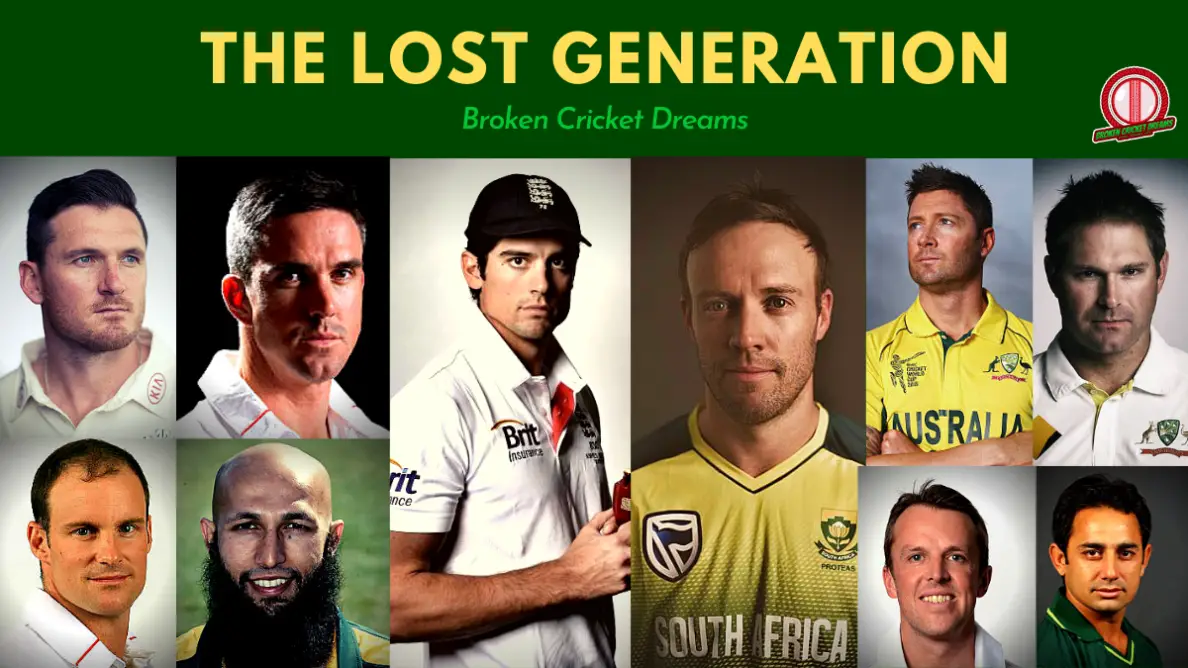
Top 11 Cricketers Who Retired Too Early – The Lost Generation of Alastair Cook, Kevin Pietersen, AB De Villiers, Hashim Amla, and Michael Clarke
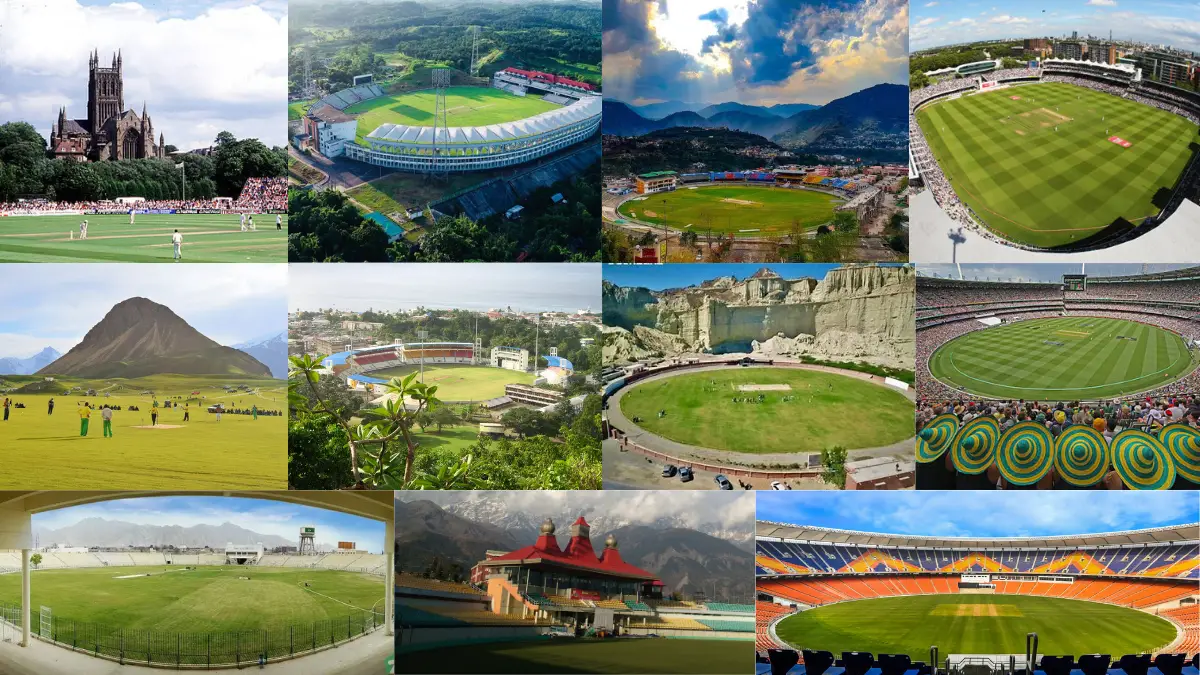
Most Beautiful Cricket Stadium in Each of the 12 Countries – Lord’s, Newlands, MCG, Galle,…Which Is Your Favorite?
List of 63 South African Born Cricketers Who Represented Other Nations: How Many South African Cricketers played for Australia, England, and New Zealand?
USA Cricket—The Complete Guide to Cricket in America (Updated 2023)
22 Unlucky Cricketers Wasted Talents: Alex Hales, Fawad Alam, Robin Uthappa, Can You Guess The Rest?
What Rahul Dravid Taught Me
When Rohit and Kohli Paused Time and Reminded Us of Their Magic
Economics of Women’s Cricket: How Australia’s $65 Million Investment Gives Them an Edge Over the Rest of the World
Watching Pujara Bat Was Poetry in Motion. Quietly Unforgettable, Pujara Retires.
Should Virat Kohli…be in India’s T20 World Cup squad? Should he not? The burning question in every Indian fan’s mind. Rohit Sharma is getting increasingly annoyed with every press conference (Here are his conferences after the 1st ODI and 2nd ODI vs England).
Virat Kohli has now been rested for the West Indies 5-match T20I series. India’s series against South Africa and Ireland gave a hint of India’s new aggressive gameplay and how the future might look without Kohli. These five games against the West Indies will make it clear, can India survive without Virat Kohli?
Here is my take—Virat Kohli should be in the Indian T20 World Cup squad but as a floater, not the #3 batter.
What are the Pros of Having Virat Kohli in India’s T20 World Cup Squad?
Several international players have come to Virat Kohli’s defense. Rohit Sharma reiterated that even though each player suffers from ups and downs in his or her career, the player’s quality never reduces. Here are some other reasons why a player like Virat Kohli might be valuable in a T20 World Cup.
Experience matters in a World Cup
Great record across formats in Australia consistently for the past 14 years
Player of the tournament in 2014/2016 T20 World Cups. Single handedly carried India.
Although IPL record is poor, his recent T20I stats have been pretty decent
Virat Kohli’s T20I Stats Since December 2020 (Post-Pandemic Break)
One of the misconceptions from Virat Kohli’s bad form is due to all formats getting mixed – Tests, ODIs, T20Is, and IPL. He has horrid IPL seasons and been found out at the Test level at times as well, but in ODIs and T20Is, he has been pretty solid.
In summary, since Dec 2020, Virat Kohli in T20Is has stats:
17 matches, 15 innings, 514 runs, 46.72 average, 134.55 SR, best of 85, 6 fifties, 1 duck
Here are his overall career T20I stats:
99 matches, 91 innings, 3308 runs, 50.12 average, 137.66 SR, best of 94*, 30 fifties, 3 ducks
What are the Cons of Having Virat Kohli in India’s T20 World Cup Squad?
Now that we have discussed some of the positives, now let us discuss what is on everybody’s mind. Kapil Dev, Venkatesh Prasad, and lots of other cricketers have asked for players to be picked on form and merit, not reputation.
So, is there a way to fitting Virat Kohli in the squad while considering both of these things?
The answer is YES. Virat Kohli can play a similar role to what Steve Smith played during Australia’s 2021 T20 World Cup victory run.
Possible Scenarios for Virat Kohli
Since India are going with an ultra-aggressive batting approach, there will be volatile days when the team may collapse. Going for 225 everyday, the team might end up collapsing for a score below 100.
In this case, a Grant Elliot-esque insurance policy is needed. For India, Virat Kohli can be that insurance policy (In the current setup, either Dinesh Karthik comes in earlier to do this role or Axar Patel has been sent to delay DK’s entry. In both cases, India lost momentum. Virat Kohli instead of Axar Patel would be the ideal scenario)
Here are some get possible scenarios:
If openers have a blazing start, send in Sanju Samson-Suryakumar Yadav-Hardik Pandya, etc. depending on the situation/number of overs left. Push Virat Kohli down the order until absolutely necessary.
If an opener gets out early, still send Suryakumar Yadav in hoping he will continue the positive approach. However, if another wicket falls during this tricky phase, send Virat Kohli at #4 to stem the flow of wickets.
While chasing, if it is a tricky small run-chase in difficult batting conditions, send Virat Kohli at #3.
Another option is to carry him in the World Cup squad without playing him in the XI. In case another batter is horridly out of form during the World Cup or gets injured, Virat Kohli can adapt to whatever role is necessary.
In this way, India will still be utilizing Virat Kohli’s core skills and experience rather than expecting him to be India’s modern T20 #3 batter.
Final Thoughts
Rohit Sharma made it clear in his press conference that each player will be given confidence, especially since India are trying to play with a new approach. Failures will happen, but judgements should not be made based on one or two series.
Based on his recent IPL stats, Kohli should not make it. Based on his recent T20I stats, he should be in contention for the World Cup, but not necessarily a certainty. But based on captain Rohit Sharma’s statements, Virat Kohli will be on that plane to Australia and more than likely, in the XI. So, why not give him our full support as fans?
These were my two cents. I have presented you with both perspectives. What do you think? Which side are you on?
Here is the Quora article that instigated this idea.