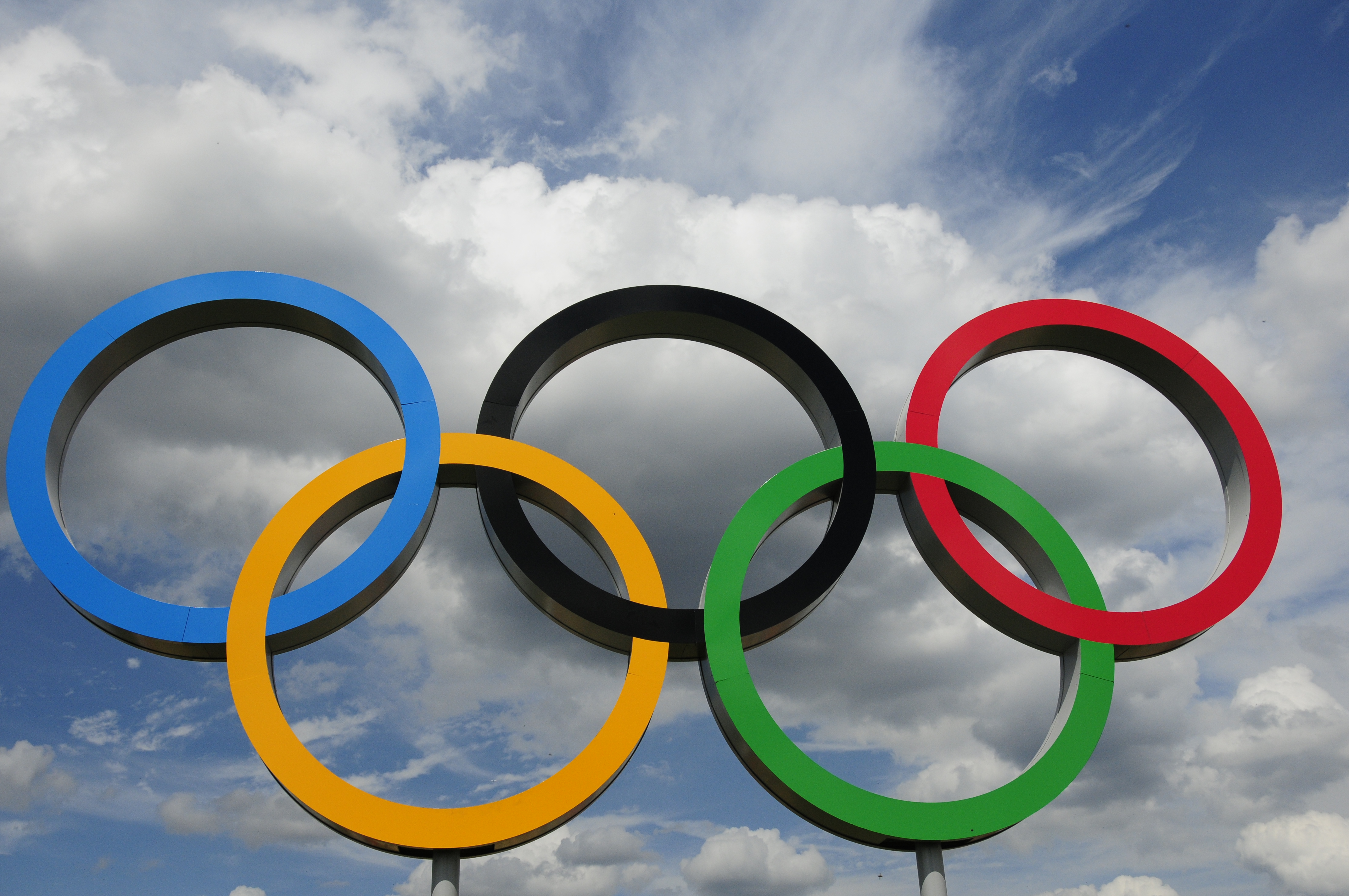
Cricket in Olympics has long been a hot topic among the cricketing fraternity and has re-emerged in the latest round of ICC meetings.
One particular revelation from this meeting reminded me of a scene from Madagascar 2. It goes like this.
“Attention. This is the ICC speaking. We have good news and bad news. The good news is we have made a landing in the Olympics. The bad news is—it is T10 cricket.”
So is there any merit in this idea or just totally absurd? We will talk about the history of cricket in the Olympics, the pros and cons, and whether I think it should be accepted or not.
Here is a bit of trivia for you—did you know the 1900 Paris Olympics included cricket?
1900 Olympics
Although cricket was initially scheduled in the inaugural modern 1896 Olympics, it was cancelled due to lack of interest. For the 1900 edition, Netherlands and Belgium pulled out after showing interest, while Great Britain & France sent club teams for the 2-day match.
Eventually Great Britain won by 158 runs with only five minutes remaining on day two. It would take 98 years for cricket to feature in another such tournament.
1998 Kuala Lumpur Commonwealth Games: 16 teams, 4 groups, and 50-overs format. The tournament saw teams like Jamaica & Barbados compete independently along with Malaysia, Canada, Northern Ireland, and Scotland. Eventually South Africa, Australia, and New Zealand won the gold, silver, and bronze respectively. Yes, South Africa actually won something.
Guangzhou2010 & Incheon 2014 Asian Games: Men/Women competitions in T20 format. India declined to send teams, while Bangladesh, Sri Lanka, Pakistan, Afghanistan, & even Japan won medals across the two tournaments. Apart from hosts China & South Korea, teams like Maldives, Nepal, and Hong Kong participated.
Pros & Cons
Pros:
Women’s Cricket will benefit from expansion to newer teams. One of the stories of the 2020 Women’s T20 World Cup was Thailand’s qualification. Imagine how other smaller countries could similarly rise from the Olympics.
Cricket has the potential to go from a ‘niche sport,’ only played in a fraction of the former British commonwealth to a much broader world audience due to television & media promotions
Due to a shorter window, the format would have to be a knock-out tournament, which would give more chances to multiple teams rather than the 10-team two month long slug fest known as the World Cup.
T10 takes about 2 hours to complete, which is a plus for short-spanned 21st century spectators.
Cons:
T20 World Cup, ODI World Cup, World Test Championship, & Olympics, not to mention T20 leagues. Too many tournaments will create dilution & overkill of cricket, which could have an adverse effect on the sport.
T10 in the Olympics would imply making it the fourth official international format. With T20I & Test cricket doing well, this would be curtains for the struggling 50-over ODI format.
Opposition to Cricket in Olympics
Cricket’s inclusion in the Olympics has historically been opposed by teams like England & India. England declined to send a team for the 1998 Commonwealth due to scheduling conflicts with County cricket.
Similar concerns drive the opposition to T20 cricket in the Olympics. Such a tournament would imply having qualification tournaments, which would hamper the T20 calendar and decrease value of the T20 World Cup, which leads to possibly decreasing revenues.
The Verdict: Yay or Nay?
T10 cricket is not the ideal format.
Some people say it is a shortened version of T20. Wrong. It is just an expanded Super Over. Cricket is a game of skills and talent, but T10 may just be a fluke, and nobody is interested in that. No place for bowlers and not great advertisement for cricket.
However, the game has evolved. There was even a time when colored clothing, day-night cricket, DRS, and T20 cricket had doubters.
So, should cricket be tried in the Olympics? Well, why not? It never hurts to try.
Of course, technicalities about the format and qualification process can be decided later.
So, When Can We See Cricket in Olympics?
Cricket will be played in the 2022 Birmingham Commonwealth Games. Only women’s edition will take place—T20, 8 teams, round-robin tournament, and a qualifier for a Caribbean nation. Finally, USA Cricket’s long-term goal has been to host the 2028 LA Olympics, although 2032 Brisbane Olympics is probably a better bet.
FAQs
Why is there no cricket in Olympics?
Cricket’s inclusion in the Olympics has historically been opposed by teams like England & India. England declined to send a team for the 1998 Commonwealth due to scheduling conflicts with County cricket. Similar concerns drive the opposition to T20 cricket in the Olympics. Such a tournament would imply having qualification tournaments, which would hamper the T20 calendar and decrease value of the T20 World Cup, which leads to possibly decreasing revenues.
What is the history of cricket in Olympics and other international events?
Although cricket was initially scheduled in the inaugural modern 1896 Olympics, it was cancelled due to lack of interest. For the 1900 edition, Netherlands and Belgium pulled out after showing interest, while Great Britain & France sent club teams for the 2-day match. Eventually Great Britain won by 158 runs with only five minutes remaining on day two. It would take 98 years for cricket to feature in another such tournament.
1998 Kuala Lumpur Commonwealth Games: 16 teams, 4 groups, and 50-overs format. The tournament saw teams like Jamaica & Barbados compete independently along with Malaysia, Canada, Northern Ireland, and Scotland. Eventually South Africa, Australia, and New Zealand won the gold, silver, and bronze respectively. Yes, South Africa actually won something. Guangzhou2010 & Incheon 2014 Asian Games: Men/Women competitions in T20 format. India declined to send teams, while Bangladesh, Sri Lanka, Pakistan, Afghanistan, & even Japan won medals across the two tournaments. Apart from hosts China & South Korea, teams like Maldives, Nepal, and Hong Kong participated.
When Can We See Cricket in Olympics?
Cricket will be played in the 2022 Birmingham Commonwealth Games. Only women’s edition will take place—T20, 8 teams, round-robin tournament, and a qualifier for a Caribbean nation. Finally, USA Cricket’s long-term goal has been to host the 2028 LA Olympics, although 2032 Brisbane Olympics is probably a better bet.
Other Innovations in Cricket
Image Courtesy: The Department for Culture, Media and Sport, CC BY 2.0 , via Wikimedia Commons
While the IPL is in full swing in India, the Pakistan-South Africa series is catching the attention of many.
In the 3rd T20I, Pakistan chased down 204 runs with 9 wickets & 2 overs to spare, courtesy a 197-run partnership from Mohammad Rizwan & Babar Azam, who scored 122 (59). Earlier in the day, news broke that Azam also dethroned Virat Kohli as the #1 ICC ODI batsman after a mammoth 1258 days.
Add Fakhar Zaman’s brilliant 193 in the ODI series, Hafeez’s second coming, & the fast bowling line up, the question should be asked—Is the IPL really the best T20 tournament without Pakistani players?
The Fall of Pakistan Cricket
Pakistan dominated the Indo-Pak cricket rivalry in the 1990s, while India has crushed it in the 2010s. Only in the 2000s, did we have battle of equals.
For India’s tenacious Rahul Dravid, Pakistan had Younis Khan. Similarly, the elegance of Yousuf & Tendulkar, stability of Inzamam & Laxman/Ganguly, & exuberance of Afridi & Sehwag were on par with each other. The destructiveness of Shoaib Akhtar-Asif-Sami on one side matched the abilities of Irfan Pathan-Zaheer Khan-Kumble-Harbhajan on the other.
India narrowly won the 2004 Test series 2-1 & ODI series 3-2 held in Pakistan. Pakistan returned the favor next year with a 1-1 drawn Test series & 4-2 ODI victory held in India. Both memorable events.
Hence, the struggle of Pakistan cricket team over the last decade & lack of competitiveness in recent ICC tournaments has been disheartening. The new generation of Pakistan cricket is slowly making this a battle of equals again.
The New Generation of Pakistan Cricket Rises
Mohammad Rizwan is currently the best T20I batsman in the world (sorry Dawid Malan). Shaheen Shah Afridi can compete with the Rabadas & Bumrahs of the world. The leg spin of Shadab Khan & Usman Qadir with a line up of Afridi-Naseem Shah-Hasan Ali-Haris Rauf can send shivers down the opposition camp.
Babar Azam is the best player in the world. Period.
Each IPL team can benefit from Haider Ali & Faheem Ashraf’s power, experience of Mohammad Hafeez & Shoaib Malik, and the pace of discarded Mohammad Amir & Mohammad Hasnain.
“Imagine Babar-Kohli opening for RCB, Fakhar-Rohit hitting double centuries, & Bumrah-Shaheen bowling together at the death.”
With South African, Sri Lankan, & West Indian foreign contingent in the prime of their careers from 2007-2017, absence of Pakistani players in the IPL made sense.
It no longer does.
South Africa & Sri Lanka’s Eternal Transition Period
Kumar Sangakkara & Mahela Jayawardene once used to captain IPL teams. They are now the only Sri Lankan representation in IPL 2021 (as coaches) as no SL players were picked in the auction. Gone is the era of Malinga-Murali-Dilshan.
With an eternal transition process in South Africa, only Rabada-Nortje (and Ngidi to a certain extent) have risen to the occasion. Otherwise, AB De Villiers & Faf Du Plessis from an earlier generation are still carrying the South Africa baton. Similarly, lots of West Indians in the IPL are from the World Cup winning generation (Gayle, Narine, Pollard, Russell).
The lack of variety in foreign talent is hitting the brand of the IPL. It seems that only India & England are producing new talent year in & year out, with Australia & New Zealand close behind.
It is time for some more talent to flow in—Pakistani talent that is. On the flip side, BCCI’s reluctance to let Indians play abroad should also be reconsidered, but that is a story for another day.
Looking Back to IPL 2008
The inception of the tournament in 2008 is the perfect template to follow.
Rajasthan Royals benefitted from having Pakistan talent in their squad with Kamral Akmal, Younis Khan, & most importantly Sohail Tanvir, the maiden purple cap winner. The Knight Riders enjoyed the pace duo of Shoaib Akhtar & Umar Gul, who took a match-winning 4-fer. KKR also had Salman Butt & the ageless Mohammad Hafeez in their ranks.
Few others participated in the IPL as well—Shahid Afridi (Deccan Chargers), Shoaib Malik & Mohammad Asif (Delhi Daredevils), & Misbah-ul-Haq (Royal Challengers Bangalore).
IPL 2020 Was Ideal But There Is Still Time
IPL 2020 was the best opportunity for adding Pakistani players to the IPL auctions. The world was struggling from a pandemic, and the tournament was taking place at Pakistan’s adopted home ground, the UAE.
What better time to get Pakistan players in? Unfortunately, that did not happen.
There is still time.
Babar is 26, Rizwan 28, & Amir 29. It would be great to watch Mohammad Amir versus Virat Kohli once again, and there is enough love across the border to make it happen.
From the young Ravindra Jadeja in 2008 & Manish Pandey in 2009 to the inspirational stories of Natarajan & Chakravarthy last year, the IPL has a habit of thrusting new faces into limelight. In 2020, uncapped players like Ravi Bishnoi, Abdul Samad, and Devdutt Padikkal had breakout seasons. Here are some of exciting candidates for 2021:
Finn Allen signed as a replacement for Josh Philippe and announced himself to the international stage with a whirlwind 71(29) against Bangladesh. Will he get a match though in the star-studded RCB line-up?
Syed Mushtaq Ali Trophy graduates Mohammad Azharuddeen (WK/batsman), Shahrukh Khan (finisher), and R Sai Kishore (spinner) would be quite handy if they carried their devastating forms earlier this year.
Surprise Packages Paul Valthaty & Rahul Tewatia became household names after bizarre IPL seasons. Would love to watch a Chetan Sakariya, Lukman Meriwala, or someone we have not heard much about (yet) rising to the occasion.
2. Can the Discards Find Their Way Back to the Pack?
Due to COVID-19, ICC events have allowed up to 23-player squads. For India, this has provided the window for discarded players like Prithvi Shaw, Dinesh Karthik, & Sanju Samson to squeeze into the T20 World Cup squad in October later this year.
Since the World Cup is scheduled to be held in India, it is also a golden opportunity for players from other countries like Liam Livingstone, the Currans, & Dawid Malan (England), Allen & Kyle Jamieson (New Zealand), & Riley Meredith & Jhye Richardson (Australia) to impress their selectors.
Eoin Morgan has made it clear he wants England to hold both the World Cup trophies. He has even gone as far as suggesting that rivals Rajasthan Royals will open with Buttler-Stokes combination (to help England prepare for the World Cup).
3. This is it, isn’t it?
Christopher Henry Gayle is 41 and has recently stated his desire to win a third T20I World Cup and even play for 5 more years. Imran Tahir at 42 and Harbhajan Singh at 40 are still spinning oppositions.
It is unlikely any of them will play all the 14 games, but their experience will be crucial in pressure situations.
We should just sit back and enjoy because this might be the final chance we get to watch players like MS Dhoni on the field. With IPL 2022 having a large auction, this year is definitely the end of an era.
4. Can Cricket Get Any Longer? Rule Changes For IPL 2021
The limited overs series between India and England have caused direct rule changes to this IPL. Some of those T20I games took up 5 hours and Suryakumar Yadav’s soft-signal caused uproar. Last year, the double super overs went well into the next day. For IPL 2021,
Teams have been accommodated 90 minutes per innings including the Strategic Time Outs. Penalties have been raised for violation.
No soft-signal for catches and obstruction of field appeals.
Time capped for multiple Super Overs. If time elapses, the game will be declared a tie (one point each).
5. The World Must Come Together as One
Before we can enjoy the spectacle, the real question is will we even have a complete IPL due to the pandemic?
The PSL showcased brilliant display of cricket…for two weeks before the insecurity of the bio-bubble packed up the tournament.
Mitchell Marsh, Josh Hazlewood & Philippe have already withdrawn days from the IPL, and the likes of Axar Patel & Padikkal have tested positive for coronavirus. Cases are rising in India, and several travel concerns still remain.
With mental health, bio-bubble fatigue, and financial security all at stake, only time will decide the fate of this tournament. Let’s just hope that this virus is defeated, the spirit of the IPL remains alive, and the surprises keep on coming.
If you have not yet read our IPL Previews, here is a list of all of them! Check them out and share ahead:
All that glitters is gold, at least for this Indian cricket team.
36 All out? Bruised bodies? Losing the first match of a series? No matter the obstacle, this team has risen to the challenge. Grit, fearlessness, and resilience all on display in the Australia & England series.
Ishan Kishan hits a 50 on debut. Suryakumar Yadav pulls his first ball for a one-legged six and scores a 50 as well. Rahul Chahar impresses. Prasidh Krishna picks 4 wickets on ODI debut. Krunal Pandya caps it off with the fastest debutant half century.
Sundar, Gill, Thakur, Natarajan, and Siraj all came to the party in Australia. The list goes on and on.
It seems that for every Ravindra Jadeja, there is an Axar Patel & Krunal Pandya. In fact, India has a production line of 75 players & can even field four teams at the same time. They are reaping rewards of systems created by the IPL, India U-19, & India A (courtesy Rahul Dravid).
The Curse
Recent successes cannot hide the cracks beneath the surface.
The selection mismanagement (or ‘rejection’ as Ajay Jadeja calls it) of Ambati Rayudu, Vijay Shankar, Manish Pandey, Kuldeep Yadav, Shivam Dube, & Sanju Samson is well known. Dropping players after a couple of games & constant experimentation instills a lack of confidence, instability, & insecurity within the team. India needs to make sure they do not repeat this mistake with the likes of KL Rahul & Shreyas Iyer.
Because if similar management continues, India’s upcoming T20 World Cup campaign will be in jeopardy.
Paradigm Shift
There is no dearth of talent in Indian cricket, but how it is utilized is key.
Gone are the days where teams carry players across formats for an entire decade. Except for the occasional Kohlis, Rabadas, & Williamsons, we will not see the all-format player again.
India is amidst an experimentation phase where any newcomer fits into the team environment & performs. In order to sustain this way of playing, a paradigm shift is required not only among the selectors & captain but also in the thought process of each player that is selected on the particular day.
Is flexibility the new stability? Only time will tell, but remember—some change is good, but too much change can create chaos.