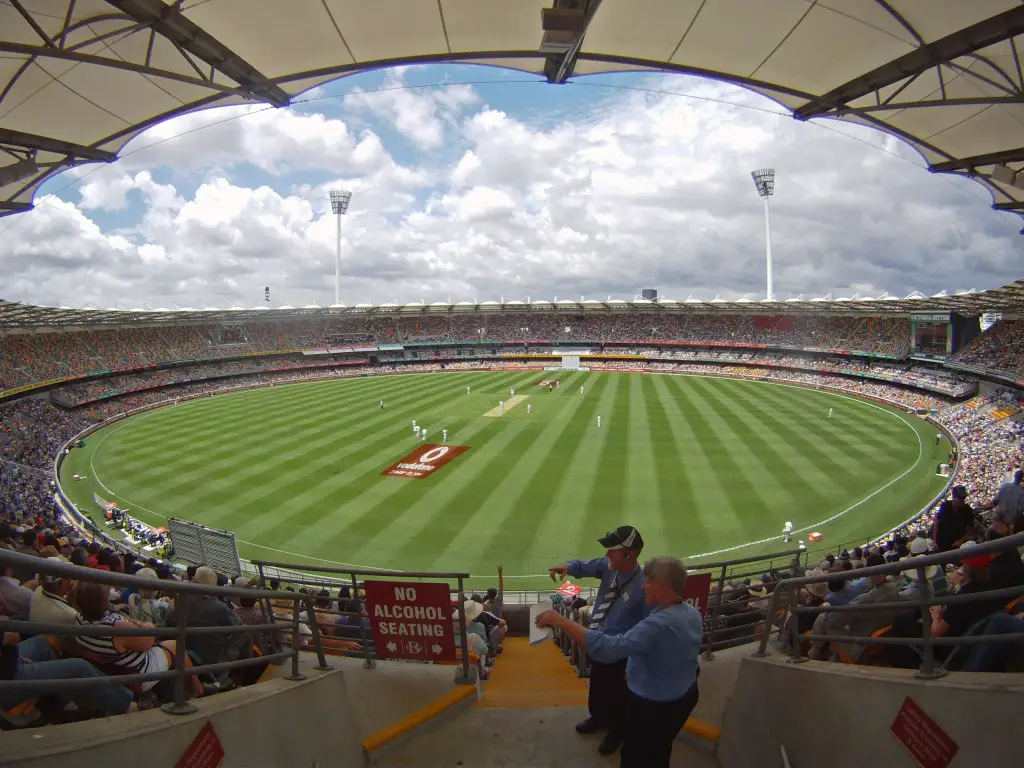
Recently, I posted a research article on the financials of County Cricket, which revealed the recent profit & loss trends of each County Cricket Club.
However, one piece of feedback I received was that it only painted part of the picture.
It was a valid critique. So I said to myself, why not go through the annual reports all over again but from a different perspective.
This time, we will look at how much debt each County is in, and how much asset they possess.
Key Takeaways
Yorkshire (£ 26.1 million), Hampshire (£ 14.3 million), and Surrey (£ 12.8 million) have the have the highest net current liabilities, while the MCC (£ 27.6 million), Warwickshire (£ 2.1 million), and Lancashire (£ 1.2 million) have the highest net currentassets.
Similar to last time, I separated the first class Counties (from worst to best) in terms of how much money they owe currently (net current liabilities/asset).
Note: It is not necessarily a bad thing to have liability. The MCC, for example, has £ 91 million in liabilities, but also have a mammoth £ 174 million in assets.
How Do You Read a Balance Sheet?
First a quick accounting lesson.
While the main instrument of our previous analysis was the ‘Profit and Loss Account’ statement, this time, we take a deep dive into the ‘Balance Sheet.’
Indian investor, Rakesh Jhunjhunwala, is accredited to have once said
“You know, a balance sheet is like a bikini. It shows more but it hides what is vital.”
– Rakesh Jhunjunwala
During this process, I had to teach myself how to read a balance sheet before I could start analyzing! So, I’ll try my best to condense the balance sheet information into digestible pieces of information for you.
In a balance sheet, everything basically needs to add up. The main equation to keep in mind here is:
Equity = Assets – Liabilities.
Assets are made up of fixed assets (like value of stadiums) and current assets. On the other, liabilities include amount falling due within one year (short-term debt) and amount falling due after more than one year (long-term debt like bank loans).
In long-term debt, we have included “creditors: amounts falling due after more than one year”, “less deferred income”, “provision for liabilities,” and “unamortised grants” among others.
So, which County Cricket Club has the Most Debt?
We rank the clubs based on the net current liabilities/debt or net current assets.
Since most clubs have healthy total fixed assets, we look at net current liabilities to see how much amount is owed by the club in the upcoming year or so.
(Note: I use Debt/Liability interchangeably but liabilities is the proper term because it can include debt, loan, deferred income, etc.).
1. Yorkshire (£ 26.1 Million Debt)
Assessment: Yorkshire is probably in the worst financial state of any of England’s first class county cricket clubs. The club has high liability (both short and long-term) and negative reserves.
They are currently going through refinancing and Colin Graves’ family trust loans are keeping the club afloat. Graves himself has stated that a private ownership model is needed for club’s financial health.
Debt Status:Red
“In the event that sufficient funding is not obtained, Colin Graves has undertaken to provide the necessary support.”
Net Current Liabilities: £ 26,129,858 (2023), £ 8,717,446 (2022)
Total Assets less current Liabilities:– £ 1,938,730 (2023), + £ 19,450,848 (2022)
We can see the CJ Graves and his family trust is owed a lot of money (about £ 15 million) by the Yorkshire County Cricket Club (see section 8: Creditors: amounts falling due within one year below).
Net Current Liabilities: – £ 12,815,000 (2023), – £ 7,075,000 (2022)
“As in previous years, net current liabilities includes deferred income – relating to membership subscriptions, advance ticket sales and hospitality deposits – which does not represent future cash outflows.”
Total Assets less current Liabilities:£ 62,992,000 (2023), £ 59,909,000 (2022)
Assessment: Gloucestershire’s short-term debt sky-rocketed in 2024. Clearing these liabilities as soon as possible would be in their best interest, even though their fixed assets are holding them up for the time being.
Assessment: Their long-term debt continued to go down and the value of their assets continued to rise. However, their short-term liabilities are also on the rise, which they need to keep in check.
*Note: Their 2022 liability section in their financial statement was empty, but we were able to calculate the total liabilities based on the rest of their balance sheet for 2022.
Net Current Liabilities: – £ 3,270,947 (2023), – £ 2,363,519 (2021)
Total Assets less current Liabilities:£ 4,756,819 (2023), £ (2022), £ 5,487,663 (2021)
Assessment: In 2022, Somerset reduced their long-term debt and declared a ‘positive financial result in a challenging environment’ in their financial report. We have marked them as yellow, because current liabilities still outweigh the value of their current assets.
Assessment: Middlesex took strides in decreasing their current liability from 2022 to 2023. However, their reserves are extremely low, so they need to be careful (due to low-valued fixed assets).
Debt Status:Yellow
2023
2022
Total Assets
+ £ 1,596,000
+ £ 1,421,000
Total Liabilities
– £ 1,527,000
– £ 1,483,000
Equity/Reserves
+ £ 69,000
– £ 62,000
Breakdown of Assets
Fixed Assets: £ 538,000 (2023), £ 580,000 (2022)
Current Assets: £ 1,058,000 (2023), £ 841,000 (2022)
Assessment: Their current liabilities decreased massively from 2021 to 2022. They are in the right direction, and should be able to come out of debt soon if the trend continues.
Assessment: Northamptonshire are slightly in debt, but not by much. However, they do not have high valued fixed assets like some of the other clubs, so they may need to tread the next couple of years carefully.
Assessment: Essex has seen a recent drop in every department—Lower equity, lower asset value, but also lower liabilities, but overall staying above water.
19. Marylebone Cricket Club, The MCC (£ 27.6 Million Asset)
Assessment:£ 118 million in fixed asset is all that you need to know about the MCC. Even though have about £ 63 million long-term liabilities, they are well above water. High reserves, positive current assets.
The ECB have managed to get approval from the 18 counties and the MCC for a ‘direction of travel’ (whatever that means) as a next step towards privatizing The Hundred. This will change the revenue model currently in place between the ECB & the Counties.
This made me wonder why the ECB had come up with The Hundred in the first place and why they are now moving towards privatizing the tournament.
Are all County clubs struggling financially? If yes, how bad are their situations?
I wanted to get to the bottom of this. So I researched all 18 Counties’ (and MCC’s) Annual Reports & Financial Accounts.
Here is what I found out after perusing through about 617 pages of annual reports.
Key Takeaways
Surrey (£ 8 Million – 2023), Lancashire (£ 2.4 Million – 2022), and Warwickshire (£ 1.3 Million – 2023) saw the most profit in a year, while Yorkshire (£ 7 Million Loss – 2023), Hampshire (£ 1.3 Million – 2022), and Gloucestershire (£ 1.2 Million – 2023) had the largest losses.
I separated the Counties in three categories based on their current financial health status.
Several teams highlighted inflation, rising interest rates, and rising energy costs as points of concerns looking at the future.
Although Test cricket is usually costly to host and results in losses for most cricket boards, County Clubs benefit when they host Ashes Tests (and ODIs). Membership soars, tickets are sold out, and the general interest in the County game increases. That is why many Counties experienced a boost in 2023 (except for Yorkshire).
The Counties below are arranged by the profit/loss in their latest released financial statements (not their overall reserves). We have summarized quotes from annual reports, factors contributing to growth, future outlook & concerns, etc. to provide a holistic view of the club. We made our financial health assessments as follows:
Green: Annual profits (mostly) for two years in a row and surplus reserves.
Yellow: (1) Recent annual losses but overall surplus reserves, (2) recent profits but negative reserves, or (3) concerns from the treasurer/CEO/chair in their written statements despite positive financials.
Red: Annual losses for two years in a row as well as negative reserves.
If debts and loan repayments were called out in the report, we mention it. However, other important metrics like detailed balance sheet and long-term debt analysis for each County is a deep dive for another day. (All the sources are linked at the end of each section if you are interested to learn more).
*Note: Results are presented from the club’s most recent Annual Report. Some clubs have already released their 2023 reports (that covers both 2023 & 2022 financial reports) while some others have only released 2022 reports (that cover 2022 & 2021 financial reports). The reports are sourced at the end of each section.
**The annual total represents the total comprehensive income for the club after taxation.
1. Surrey (£ 8 Million Profit)
Division: Division One
Home Ground: The Oval
Financial Health Status:Green
Assessment: Positive annual returns pushed their reserves even higher, but they are expecting a tough 2024.
Surrey’s 2-Year Profit/Loss
Year
2023
2022
Annual Total
+ £ 7,999,000
– £ 1,332,000
Total Reserves
+ £ 29,200,000
+ £ 21,167,000
Treasurer’s Report Summary
“We have delivered an excellent financial performance in 2023 and look forward to continuing growth over the medium term. In the short term however, we expect a difficult year in 2024. We have a Friday start in our Test match, and an IT20 not an ODI.”
Positive Highlights from Surrey’s Annual Report
Membership grew by 18,739
Men’s Ashes Test (Sold Out), India vs Australia WTC Final (Sold Out)
Women’s Ashes IT20 (20,000 tickets)
Strong T20 Vitality Blast Attendance
Financial Concerns for Surrey County Cricket Club
Inflation, Increases in Rent
Overheads expenses increased by £6,300,000 compared to 2022
Staffing Increase Costs (recovery from COVID staff reduction)
Assessment: The Ashes helped boost Warwickshire’s 2023 return. Financial growth moving in the right direction for the club.
Warwickshire’s 2-Year Profit/Loss
Year
2023 (10/01/2022-12/31/2023)
2022 (09/30/2021-09/30/2022)
Annual Total
+ £ 1,310,068
+ £ 123,791
Total Reserves
+ £ 8,783,073
+ £ 7,233,214
*Note: + £ 277,600 revaluation reserve was added to the + £ 1,310,068 for a total growth of + £ 1,588,069 in the 15-month period.
Chief Operating Officer’s Report Summary
“In summary, revenue for 2023 was substantially higher than in 2022, principally driven by hosting the men’s Ashes Test match. Costs were also substantially higher in 2023 primarily due to the increase in Major Match day (MMDs) staging fees paid to the English and Wales Cricket Board (ECB) and the additional 3 months salary costs…”
Positive Highlights from Warwickshire’s Annual Report
Men’s Ashes Test
Catering and hospitality revenues (driven by the Ashes Test)
T20 Blast and Hundred ticket revenue increases
Partnership revenue increases
Financial Concerns for Warwickshire County Cricket Club
Expenses increase (cost of sale, administrative cost, overhead costs)
Inflation
Operating EBITDA decreased 6%
*Year ending on 31st December, 2023 (Note: Warwickshire changed their annual report date from 30th September to December so had 15-months to account for in this latest report instead of just the 12).
Assessment: Although 2022 was not as profitable as 2021, the club retains its massive surplus.
Nottinghamshire’s 2-Year Profit/Loss
Year
2022
2021
Annual Total
+ £ 689,623
+ £ 1,331,476
Total Reserves
+ £ 6,726,973
+ £ 6,037,335
Treasurer’s Report Summary
“Although there were some positive and negative movements in comparison tour budget for the year, the end result was closely aligned to our forecasts. he continued generation of surpluses has ensured the club continues to meet all of its debt repayments, minimising any interest charges accrued…”
Positive Highlights from Nottinghamshire’s Annual Report
Hosted Test, T20I
“Larger-than-forecast number of membership subscriptions
Strong catering and retail return on Day 5 of Test match
“Successful staging of The Hundred…to a significantly better level than in 2021.”
Financial Concerns for Nottinghamshire County Cricket Club
Scheduling concerns (Friday start to Test match caused hospitality and Day 4 financial concerns)
3 home Vitality Blast games in five days
Rising electricity prices, rising national minimum wage
Assessment: From the financial statements, Somerset is growing and has ample surplus. However, the annual report suggests that the board of directors are wary of challenges that may impact them in this straining economy.
Somerset’s 2-Year Profit/Loss
Year
2022
2021
Annual Total
+ £ 399,328
+ £ 149,087
Total Reserves
+ £ 10,231,772
+ £ 9,833,700
Financial Review Summary
“…the year…represented a return to something resembling a more ‘normal’ year, although operations were negatively impacted by challenges emanating from the legacy of the pandemic…We are well positioned financially to absorb potential economic shocks over the coming months and to take advantage of opportunities that we are proactively seeking out, as we operate in an economic, political and cricketing landscape of rapidly-changing variables and volatility.“
Positive Highlights from Somerset’s Annual Report
Surplus in these two years meant that ‘debt levels remain manageable’
+ £ 540,562 resulting from membership subscriptions and match receipts
Strong year by the commercial team as it relates to business partners and sponsors
Financial Concerns for Somerset County Cricket Club
Inflation, conflict in Europe, rising interest rates
Assessment: Durham has benefitting from external events to add to their surplus and recent profits.
Durham’s 2-Year Profit/Loss
Year
2023
2022
2021
Annual Total
+ £ 1,531,190
+ £ 333,033
+ £ 1,560,754
Total Reserves
+ £7,888,727
+ £ 6,357,537
+ £ 6,024,504
*Note: In 2023, £ 285,756 was the profit for 2023, while £ 1,531,190 was the total comprehensive income for 2023 (including £ 1,245,434 was the revaluation of tangible fixed assets)
Chairman’s Review Summary
“With our events business performing strongly and the strong financial management of the last few years continuing, I am delighted to report a profit of £333,0333 in the current financial year as we look to continue strengthening our financial position for the challenges ahead…The key business risks affecting the group are considered to relate to staging of international cricket and the share of money we receive that is generated through the ECB…Failure to stage international cricket beyond this date would have a financial impact on the group through lost turnover.”
BusinessLive Article Summary
According to BusinessLive, who had access to Durham’s 2022 Annual Reports and financial statements, they quoted Chairman Lord Botham as follows:
“Current year turnover has risen to £ 8,048,739 as a result of the Durham Cricket Events business performing strongly over the year.”
*In 2021, the turnover was + £ 7,108,908
Positive Highlights
Plans of building a hotel on site
Concerts & events provide financial boost
Two fixtures two host (in 2026 & 2028)
Food and beverage income almost doubled
Potential Concerns
Average number of employees decreased by 16 (135 to 119)
*Year ending on 30th September, 2022
Note: I could not initially find Durham’s annual reports, so had to rely on the Business Live article. Special thanks to Reuben Herbert and Graham Smith for sending me Durham’s updated financials and pointing me in the right direction!
They should still publish accounts at Companies House.
“Middlesex Cricket can today announce that for the financial year ending November 2023, the Club has recorded a profit after tax of £ 131,000...After such an extended period of posting significant losses, to turn the business around a time when the game is under financial pressure is a credit to everyone involved.
“After two years of extremely heavy losses caused by the pandemic and the pension scheme deficit, in 2022 we began the slow journey back to financial stability…The net assets of the Club that were less than £ 200K at the start of the year have now been exhausted. What this means is that making a profit in the year ahead is non-negotiable and that our activities and ambitions must be focused on meeting this target.“
Positive Highlights from Middlesex’s Annual Report
ECB county partnership agreement fees increased
Member subscriptions, ground receipts, sponsorships, hospitality/events saw an uptick
Financial Concerns for Middlesex County Cricket Club
Wages and salaries cost increased
Insurance, social security, pension costs, etc. increased
Assessment: Not as much of a surplus as some of the bigger clubs, but they have been profitable and are slowly moving return to normal from the financial consequences of the pandemic.
Northamptonshire’s 2-Year Profit/Loss
Year
2023
2022
Annual Total
+ £ 110,164
– £ 1,474
Total Reserves
+ £ 1,361,920
+ £ 1,251,716
Directors’ Report Summary
“Post pandemic the club benefitted as the local community looked to enjoy life again. Season ticket sales, gate income, and conference & events revenue not only recovered, but far exceeded pre-pandemic levels.”
Positive Highlights from Northamptonshire’s Annual Report
Hosted T20I vs India (Sold Out)
Financial Concerns for Northamptonshire County Cricket Club
Increasing energy costs (now investing in solar panels to counter costs)
Assessment: An excellent two years means Derbyshire has accumulated a bit of surplus for themselves.
Derbyshire’s 2-Year Profit/Loss
Total
2023
2022
Annual Total
+ £ 70,000
+ £ 138,000
Total Reserves
+ £ 3,087,000
+ £ 3,017,000
Finance Director Summary
“From a financial results point of view, it has been another very good year for the Club, showing a strong income and expenditure performance and an improvement in the long-term balance sheet position…Looking ahead to 2024 and beyond there are a number of challenges we face which will inevitably make future years more difficult financially.”
Positive Highlights from Derbyshire’s Annual Report
Sponsorship, Advertising, Hospitality
Conference and Events
Financial Concerns for Derbyshire County Cricket Club
Inflation
“Commercial sponsorship is proving difficult across England….we will have to work hard to ensure we don’t see a drop in this income.”
Assessment: Although Worcestershire have a decent surplus for five years running, the losses in 2019 and 2022 were far greater than the minimal profits made in 2020, 2021, and 2023 respectively.
Worcestershire’s 5-Year Profit/Loss
Year
2023
2022
2021
2020
2019
Annual Total
+ £ 13,340
– £ 203,287
+ £ 8,477
+ £ 21,635
– £ 81,810
Total Reserves
+ £ 2,184,117
+ £ 2,170,801
+ £ 2,374,044
+ £ 2,365,567
+ £ 2,343,977
*Note: Worcestershire documents 5-year profit/loss on their annual reports rather than 2-year profit/loss as other clubs.
Accounts Commentary Summary
“There has been an uplift in revenue across nearly all sectors of our operations…Financial sustainability remains a paramount concern for the Club, as well as for other venues not hosting Test matches or The Hundred. It is imperative that we generate sufficient profits to ensure debt repayment. A strategic focus for 2024 will be the development of new revenue streams beyond cricket and the expansion of existing operations.”
Positive Highlights from Worcestershire’s Annual Report
15% increase in match ticket sales (both red & white ball games)
Catering Department delivers profit of £282,000
2 Music concerts
Financial Concerns for Worcestershire County Cricket Club
Assessment: Although Kent is in the profits over the last couple of years and have ample reserves, the chair of the board voiced his concern in the seismic shift that County Cricket is facing and what this uncertainty implies for the club.
Kent’s 2-Year Profit/Loss
Year
2023
2022
2021
Annual Total
– £ 469,448
+ £ 6,488
+ £ 282,235
Total Reserves
+ £ 6,986,301
+ £ 7,455,751
+ £ 7,449,232
Chair’s Report Summary
“Two of the High Performance Review’s conclusions – structure and schedule – presented an existential threat to both our Club and the essential fabric of the county game…There is no question that Sir Andrew did a high quality piece of of work in the context of his brief. He has come up with many good ideas and the game has gained useful insights from subject experts across sport. However, it was when suggesting a County game structure and schedule that had the sole purpose of improving the England teams, the matters became more vexed…Reducing County Cricket in Kent to five home Championship games, five T20s and potentially one or two 50 over games would have rendered the Club completely irrelevant. Four days of cricket a month throughout the season would have meant that we became invisible.“
Positive Highlights from Kent’s Annual Report
Development of media and marketing
New ‘state-of-the-art ticketing system’
Digital match day streaming service grew
Stable ticket sales
Financial Concerns for Kent County Cricket Club
“Inflation, labour shortages, rising interest rates, and higher energy prices”
The Hundred’s negative impact on T20 Vitality Blast crowds (due to change of schedule)
Assessment: From a five year outlook, we can see that Leicestershire has had 4 years of losses. Since surplus are still in a relatively healthy condition, I went with a ‘Yellow’ financial rating for them.
Leicestershire’s 2-Year Profit/Loss
Year
2023
2022
2021
Annual Total
– £ 440,112
– £ 320,341
+ £ 482,892
Total Reserves
+ £ 2,109,609
+ £ 2,549,723
+ £ 2,870,064
The past 5-year annual total summary for Leicestershire are as follows:
“Encouragingly the reliance on the central funding dropped from 78% to 65% during the year. However we must continue to reduce this number and become more self-sufficient. This will remain one of our key targets during during the short and medium terms.”
Positive Highlights from Leicestershire Annual Report
Facilities and commercial revenue grew
Increased hospitality
Record numbers for T20 attendance
Financial Concerns for Leicestershire County Cricket Club
Assessment: Losses for consecutive years, but still holding onto decent reserves.
Essex’s 2-Year Profit/Loss
Year
2022
2021
Annual Total
– £ 378,983
– £ 508,226
Total Reserves
+ £ 2,336,488
+ £ 2,715,471
Essex’s Notes to the Accounts Summary
“Based on current forecasts, total cash outflows exceed total cash inflows in the forecasted period to December 2024. The Club is actively looking to address this loss and cashflow situation to avoid having to sell part of its investment portfolio to cover this shortfall. These matters indicate that a material uncertainty exists that may cast significant doubt over the ability of the Club to continue as a going concern.”
Positive Highlights from Essex’s Annual Report
Matches, commercial activity, and membership resulted in the most profit for Essex
Financial Concerns for Essex County Cricket Club
Buildings (net – £ 690,254) and cricket operations (net – £ 435,987) resulted in the most net loss in 2022
Assessment: Massive positive reserves but the direction of annual losses are not going in the right direction.
Glamorgan’s 2-Year Profit/Loss
Year
2023
2022
Annual Total
– £ 528,294
– £ 39,248
Total Reserves
+ £ 9,767,471
+ £ 10,295,765
Chair’s Report Summary
“The club is reporting a reasonable financial outcome for the year…2024 will be a challenging year financially and the club has had to reduce its cost base in order to produce a budget with a similar EBITDA to 2023.”
“…It is worth remembering that the game of cricket is undergoing generational change as the rise of Indian cricket and the Indian Premier League has the potential to shift the old order and orthodoxies. While this process will undoubtedly be disruptive and challenging, it will also potentially provide opportunities for individual clubs to reset their financial, strategic, and operational activities onto a more positive and sustainable basis. Rest assured that the Board will work to ensure that Glamorgan is positioned to take advantage of these trends as they develop.”
Positive Highlights from Glamorgan’s Annual Report
International stadium
International match staging agreement with the ECB till 2031
“Stable financial position with minimal debt”
Hundred team/host based in Wales
Financial Concerns for Glamorgan County Cricket Club
“Adverse macro-economic environment in which we currently operate” (ex: higher interest rates)
Assessment: Similar to Glamorgan, two consecutive years of losses (and 2023 was way worse than 2022) is a bit of concern, but overall, they are still holding up well.
Sussex’s 2-Year Profit/Loss
Year
2023
2022
Annual Total*
– £ 735,616
– £ 39,418
Total Reserves
+ £ 8,461,170
+ £ 9,196,873
Note: In the annual report, both Sussex Cricket Limited and Sussex Cricket Foundation’s earnings have been reported. We only state SCL’s profit/loss (since it is based on membership, matches, etc.)
*Even though Sussex had + £443,929 operating profit in 2022, the total comprehensive income was – £ 39,418. Similarly in 2023, they had an operating loss (- £ 121,918) but an even larger total comprehensive loss (-£ 735,616)
Treasurer’s Report Summary
“Income decreased 5.6% in FYE 2023 while expenditure increased 2.8%.”
Assessment: Two consecutive years of losses (Losses for 2023/2024 almost doubled), but they do not have the luxury of reserves like Sussex & Glamorgan.
Gloucestershire’s 2-Year Profit/Loss
Total
2024
2023
Annual Total
– £ 1,190,000
– £ 570,000
Total Reserves
+ £ 1,790,000
+ £ 2,980,000
*Year ending on 31st January, 2024
Treasurer’s Report Summary
“This year has been a challenging year financially for a number of reasons and there is no doubt it is disappointing to be reporting a second consecutive financial deficit…Fundamentally, our finances have been impacted by the fixed nature of the majority of our central funding and the fact the growth of the business has not kept up with the rate of inflation…”
Positive Highlights from Gloucestershire Annual Report
Hosting England v Ireland (Men), Hosting Women’s Ashes ODI
Second fastest growth of any county in terms of ticket sales (although it still fell short of expectations)
Cheltenham Cricket Festival
Sponsorship and BS7 Gym
Financial Concerns for Gloucestershire County Cricket Club
Assessment: Things are not looking that great for Hampshire, who are on the verge of becoming one of the first County teams to sell shares to IPL team owners.
Year
2022
2021
Annual Total
– £ 1,346,883
– £ 1,535,292
Total Reserves
+ £ 2,440,783
+ £ 3,787,666
Group Strategic Report Summary
“The Group will look to consolidate its position as a leading leisure destination and international cricket stadium, although the Directors anticipate that a return to significant levels of profitability is unlikely in 2023 and 2024 given the poor allocation of international cricket in this period.”
Positive Highlights from Hampshire’s Annual Report
Hotel and events saw a rise in operating profit
Men’s Ashes in 2027, Women’s Ashes in 2031
Financial Concerns for Hampshire County Cricket Club
Net debt at 31st December, 2022 is approximately £ 61,423,363.
Assessment: Despite an Ashes season, Yorkshire reported devastating losses in 2023. Financial (and social) overhaul is required at Yorkshire.
Yorkshire’s 2-Year Profit/Loss
Year
2023
2022
Annual Total
– £ 7,050,776
– £ 2,169,332
Total Reserves
– £ 9,106,154
– £ 2,054,488
Chair’s Statement Summary
“The 2023 financial statements presented to you are very clear—it was an Ashes year for us, which should have been productive and profitable, but in the event there was a huge trading loss for the Club. The reasons behind this are explained throughout the financial statements but 2023 was definitely Yorkshire’s ANNUS HORRIBILIS!“
“The Hundred continues to generate significant income for the Club.”
Positive Highlights from Yorkshire’s Annual Report
Hosted Ashes at Headingley (provided £ 18.2 million revenue)
Membership numbers increased
New investment to come in
To host Men’s Test again India in 2025 along with some other T20Is
“The conversations around the Hundred are potentially extremely beneficial for us”
Vitality Blast sales increased 14%
Financial Concerns for Yorkshire County Cricket Club
More staffing in the executive team
Cost of running a stadium
Rising Interest rates
Cricket Disciplinary Committee investigation, legal and professional fees, settlement of employment claims, governance, EDI plans, etc.
No major capital investment
Restructuring of County Age Group pathway
Hosting and Administrative costs for Ashes
“It should be noted, however, that the costs of hosting the match, which include a staging fee payable to the ECB, stewarding and security, and the cost of delivering hospitality packages, were proportionally higher too, totalling £ 3.3 m.”
19. Bonus: Marylebone Cricket Club, The MCC (£ 7.7 Million Profit)
Financial Health Status:Green
Assessment: The MCC are doing really great at the moment on all accounts.
Year
2023
2022
Annual Total
+ £ 7,735,000
+ £ 2,849,000
Total Reserves
+ £ 82,916,000
+ £ 75,181,000
MCC Committee Report Summary
“We continue to evaluate the potential to own and manage a Hundred franchise based at Lord’s. It is anticipated that the ECB will put in place a new financial model from the start of the 2025 season and subject to more detail on the structure and economics of the tournament, we believe that owning a Hundred franchise could have a positive impact on all four of the Club’s objectives
“On the commercial side, income surpassed previous records across Retails, Tours of Lord’s, the Indoor Cricket Centre, Marketing and Advertising, Events and Experiences, shown within Catering and Hospitality, whilst performing strongly, was around 10% lower than the record World Cup year of 2019.”
Other Positive Highlights from MCC’s Annual Report
Lord’s Test, Women’s T20I, and the Hundred saw 500,000 spectators at Lord’s
Financial Concerns for the MCC
High Inflation, rising Employment Costs, rising energy costs
In the past five years, the ECB have made strides to bring financial stability and increase their standards in Test cricket (after success in the white ball game).
It is evident with Yorkshire and Hampshire, for example, that things need to change. However, we also found that not all County teams are struggling. In fact, a majority are doing just fine and many of them have bounced back from the days of the pandemic.
With the IPL increasing its influence around the world, international schedule tightening, number of freelance players increasing towards the growing franchise leagues, County cricket and ‘traditional’ old school cricket is definitely under threat.
Will ECB’s new financial model change things up for the better or the worse? Will it help all the Counties or only some?
Only time will tell.
What do you think? Let me know below!
Thanks for reading. Hope you enjoyed reading this and learned something new. Cheers!
****
Financial Glossary
Here are some of the definitions of terms we have used in the analysis above. The definitions are derived from various sources like Investopedia.
EBIDTA: Earnings before interest, taxation, depreciation, and amortization
Fair Value Reserve: Represents cumulative revalution gains and losses in respect of historic investment properties.
Operating Profit: Total earning from its core business functions for a given period. An operating loss occurs when core business income ends up being lower than expenses.
Total Comprehensive Income: Includes net income and unrealized income (ex: hedge/derivative financial instruments, transaction gains, etc.)
Also Read
If you liked this in-depth research article, you may also like the following articles:
It’s time to discuss the greatest cricketers of all time. This ultimate list will feature 155 top cricketers across formats and eras—from WG Grace to Kieron Pollard.
Kieron Pollard and Dwayne Bravo just retired as players from the IPL and left their imprints on T20 cricket. As T20s evolve and become central to the cricketing universe, why not make a list of the greatest cricketers of all time across formats and eras?
Over 250 cricketers were considered for this list. We consider Tests, ODIs, T20Is, T20 leagues, and first-class cricket played over 145 years.
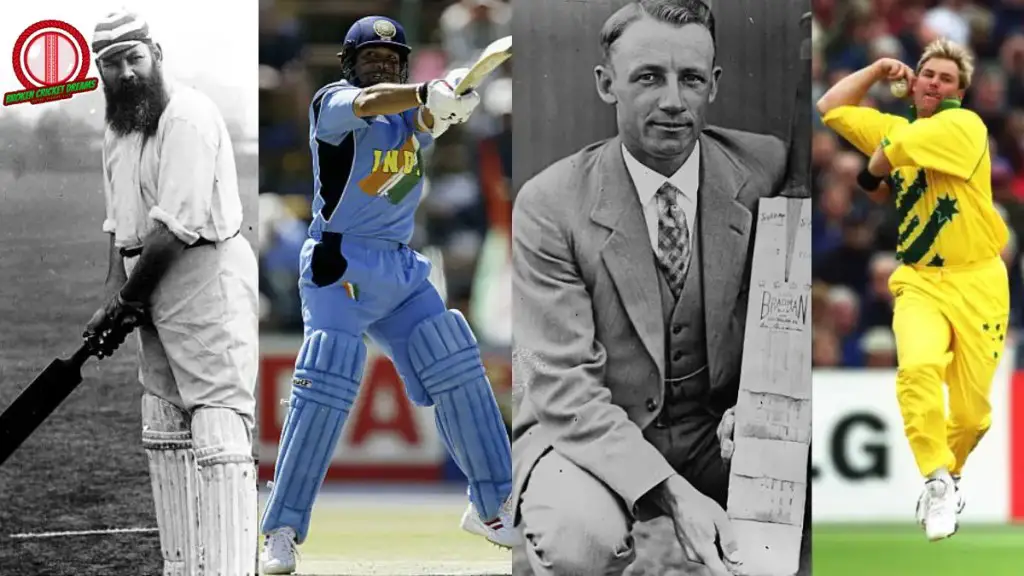
Sir Donald Bradman is chosen as the Greatest Cricketer of All-Time with WG Grace, Sachin Tendulkar, Jack Hobbs, Shane Warne, Frank Worrell, and Sir Garfield Sobers close behind.
England (40), Australia (31), West Indies (24) dominated the list due to their rich first class and World Cup histories. The breakdown of the rest of the countries are as follows: India (14), Pakistan (13), South Africa (12), Sri Lanka (10), New Zealand (7), Zimbabwe (1), Afghanistan(1), and Bangladesh (1).
Charles Bannerman, Johnny Tyldesley, Subhash Gupte, Mitchell Johnson, Mansur Ali Khan Pataudi, David Warner, Jeff Thompson, Shahid Afridi, Mark Waugh, Makhaya Ntini, Mike Brearley, Harbhajan Singh, Glenn Turner, Ben Stokes, Cheteshwar Pujara, Lance Klusener, Yuvraj Singh, Ian Healy, Vijay Hazare, Trent Boult, Ian Chappell, Saeed Ajmal
155 Greatest Cricketers of All Time: The Ultimate List
Picking the Top 155 players was a tough task, but do you know what was even tougher? Ranking them.
Without furthur ado, here is the list. Enjoy the classic photography and check out the videos linked under some players.
Disclaimer: The ranking is most likely going to not align with your views. Expect the unexpected. Several ‘great’ cricketers did not make the list (see the extended list of honorable mentions below) but the ones that did fundamentally helped change the game. Feel free to comment below on players who you think should be in the list.
155. Learie ‘Lord’ Baron Constantine (West Indies, 1921-1939)
Major Teams: West Indies, Barbados, Freelooters, Trinidad
An allrounder by trade, Constantine was one of West Indies’ early stars. More than his on-field accomplishments, he made an impact as a lawyer, politician, and Trinidad & Tobago’s High Commissioner to the UK.
An Australian left-arm pacer who “would be the most menacing new-ball bowler of his day” and was a handy batter in the lower order—The original Mitchell Johnson and Mitch Starc.
Major Teams: Australia, Australia U-19, New South Wales, Sydney Sixers, Yorkshire, Royal Challengers Bangalore
Speaking of Australian left arm pacers, Mitchell Starc. His World Cup exploits are alone to guarantee him a spot in the all-time list. Player of the Tournament when he helped Australia lift the trophy in 2015, he bettered himself in 2019 with the record tally of 27 wickets. Starc’s yorkers, early swing, and ability to clean up tails will be remembered forever.
Playing alongside Don Bradman, he was often overshadowed but was said to be a beautiful batter to watch. Even Sir Len Hutton remarked, “It would be hard to think of a greater Australian batsman. He had qualities that even Bradman hadn’t got.”He is best known for scoring 385 runs in that infamous Bodyline series.
Wisden remarks the Hunte “was one of the greatest West Indian batsmen of a great generation.” Even the great Desmond Haynes picked Hunte over himself in the All-Time Barbados XI “because he was simply the better batsman.”
ESPNCricinfo states that Evans was “arguably the best wicketkeeper the world has ever seen.” Played 91 Tests and even scored a couple of tons. Inflicted 1066 dismissals in his first-class career.
Major Teams: Sri Lanka, Delhi Giant, Sinhalese Sports Club
From 0,0.0,1,0,0 to establishing himself as the backbone of Sri Lanka’s Test batting seven years later and ending with six double centuries is a beautiful story. Decent ODI player with 8500 runs as well.
Before he was the voice of cricket, he was remembered as one of Australia’s greatest captains. His aggressive captaincy led to the first tied Test in cricket’s history. As a leg spinning allrounder, he was the first man to complete the double of 200 Test wickets and 2000 runs.
Major Teams: India, India U-19, Deccan Chargers, Mumbai Indians, Mumbai
264, 209, 208*, 171*, 162, 159, 152*, 150.
An ODI legend with a penchant for the mammoth hundreds. Easy on the eye, one of the best IPL captains, a T20 World Cup winner, and one of the best pullers the game has ever seen.
Major Teams: Australia, New South Wales, Western Australia
Played the third longest Test innings (743 balls) when he scored 311 against England in 1964. A leg-spinner allrounder who became an opening Test batter is a noteworthy achievement.
Major Teams: Pakistan, Karachi, Lahore, United Bank Limited, Agriculture Development Bank of Pakistan
A graceful left-hander, his 194 withstood the test of time until Sachin Tendulkar’s 200 broke his record. Anwar was the highest scoring opener in the 1990s in ODI cricket.
Major Teams: West Indies, Barbados, British Guiana
One of the famous ‘3 Ws’ in West Indies’ middle order, he was a steady cog of West Indies’ middle order. 15 Test hundreds, 40 first class centuries, and Test average of 56.68. Fun fact, Walcott holds the record for the fewest ducks in career.
Also See: Sir Frank Worrell (#6), Sir Clyde Walcott (#134)
Weekes was one of the best in his time. Centuries in five consecutive innings, joint fastest to a 1000 Test runs, and ended with a Test average of 58.61.
Major Teams: Pakistan, Agriculture Development Bank of Pakistan, Chittagong Division, Durham, Islamabad Leopards, Khan Research Labs, Kolkata Knight Riders, Pakistan International Airlines, Rawalpindi, Somerset, Surrey, Worcestershire
There’s a good reason why the England-South Africa trophy is named Basil D’Oliveira Trophy. As a South African-born mixed player, he was picked for England during the Apartheid era (known as the Oliveira affair). With 19,490 first class runs & important social legacy, he was named as South Africa’s Top 10 players of the century despite never representing the Proteas.
The greatest Zimbabwean batter and scored the highest runs in an innings by any keeper (232*). Over 11,000 international runs across formats, Flower lead the way during Zimbabwe’s golden years.
The most prolific bowler-keeper combination in the history of Test cricket is “c Rod Marsh, b Dennis Lillee”(95). World record holder for most Test dismissals at the time of his retirement, he was the best keeper Australia produced…until Ian Healy & Adam Gilchrist surpassed him.
Major Teams: India, Deccan Chargers, Hyderabad, Kochi Tuskers Kerala, Lancashire
If you played the greatest innings of the twenty-first century, THAT 281*, you deserve to be on this list. Had a stellar Test career of performing under pressure with the lower order (and frequent back spasms).
Major Teams: West Indies, Combined Islands, Leeward Islands, Hampshire, Leicestershire, New South Wales
The face of West Indies’ pace quartet, his bouncers were ruthless.Apart from his 202 Test wickets, also had an effective ODI career—87 wickets at 20.35.
Major Teams: New Zealand, Auckland, Central Districts, Wellington, Somerset
The greatest New Zealand batter of his generation and definitely one of the best captains. Hamstring Injury in the 1992 World Cup semi-final was a huge factor in their defeat. Apart from his cricketing talent, was one of the leading thinkers of the game.
Major Teams: Australia, South Australia, Victoria, Wellington
Credited for inventing the flipper, he was the second fastest to 200 Test wickets (and fastest before Yasir Shah) and the second oldest to take ten wickets in a Test match (44 years). New Zealand born Australian player.
Regarded as one of the best batters to ever don the baggy green. 7110 runs with 24 Test tons at 53.86 looks especially great given that batted in the era of the ferocious West Indian attack.
Major Teams: West Indies, Canterbury, Derbyshire, Jamaica, Lancashire, Tasmania
Although 249 Test wickets at an average of 23.68 & 50.9 strike rate already puts him in the top echelons of world cricket, it was his impact with sheer pace and that menacing action that took him to the next level. An iconic commentator as well.
Major Teams: West Indies, West Indies U-19, Adelaide Strikers, Barbados Tridents, Cape Cobras, Deccan Gladiators, Dhaka Dynamites, Karachi Kings, Kerala Kings, London Spirit, Melbourne Renegades, Multan Sultans, Mumbai Indians, Peshawar Zalmi, Somerset, South Australia, St. Lucia Stars, Stanford Superstars, Toronoto Nationals, Trinbago Knight Riders, Trinidad, Welsh Fire
With almost 12,000 T20 Runs at 150.25 SR, batting predominantly at the lower order, Kieron Pollard was arguably the first bona fide T20 globetrotter. A pioneer in T20 power-hitting and mainstay for the Mumbai Indians in their 5-peat, he was a crucial member of West Indies’ 2012 T20 World Cup victory.
Major Teams: Australia, New South Wales, Hampshire, Pune Warriors
Had one of the greatest peaks of a Test batter. 1595 runs at 106.33 with 5 hundreds, including a 329* and a couple of double hundreds. Captain of Australia’s 2015 World Cup victory.
Major Teams: South Africa, Border, Cape Cobras, Kolkata Knight Riders, Royal Challengers Bangalore
The wicketkeeper during South Africa’s golden generation and the most prolific keeper of all-time. Unfortunately, a bail hitting his eye ended his career. Played 147 Tests and inflicted an iconic 999 international dismissals (555 Tests, 425 ODIs, 19 T20Is).
Major Teams: Sri Lanka, Nondescripts Cricket Club, Kent, Auckland
107*(124), 3/42, & 2 catches—One of the best performances in a World Cup final. With over 15,000 international runs, Aravinda played his part in bringing Sri Lanka to the top tiers of world cricket.
At 6 ft 8 inches, Garner towered above all and provided West Indies with that extra edge. With 259 Test wickets at 20.97 and 146 ODI wickets, he was one of the best. Holds the record for the best ODI economy (3.09) and won the 1979 WC final with a 5/38 show.
Major Teams: South Africa, Free State, Warwickshire, Worcesterershire
Before there was Steyn, Morne Morkel, Makhaya Ntini, and Kagiso Rabada, there was Allan Donald. Bowled with menace and one of South Africa’s premier icons after they were reinstated in international cricket. Will also be remembered to be at the receiving end in the most infamous run-out of them all.”
Major Teams: West Indies, Barbados, Somerset, South Australia
115. Brett Lee (Australia, 1999-2012)
Major Teams: Australia, Kings XI Punjab, Kolkata Knight Riders, New South Wales, Otago, Sydney Sixers, Wellington
Probably the smoothest fast bowling action of all time. Over 700 international wickets, never compromised on pace despite injuries, THAT chainsaw celebration, and ended cricket career with a magnificent final over in the Big Bash.
Major Teams: South Africa, Barbados Tridents, Cape Cobras, Derbyshire, Dolphins, Essex, Khulna Tigers, Kings XI Punjab KwaZulu-Natal, Surrey, Trinbago Knight Riders
Elegant, high-class opener, and a massively underrated ODI batter. 55 International centuries, fastest to 7000 ODI runs, a triple centurion, partnership maker. From blockathons to two hundreds in T20 cricket, versatility was Amla’s strength.
Major Teams: England, Deccan Chargers, Delhi Daredevils, Dolphins, Hampshire, KwaZulu-Natal, Melbourne Stars, Nottinghamshire, Quetta Gladiators, Rising Pune Supergiants, Royal Challengers Bangalore, St. Lucia Zouks, Sunrisers Hyderabad, Surrey
The ODI series against home country, South Africa, would sum up his career. Had his doubters early on with the rebel style, but his gameplay was too good to ignore. The 2005 Ashes, 2010 T20 World Cup, and 2012 Test series victory in India. England legend, just left with self-inflicted unfortunate circumstances.
Major Teams: Australia, Tasmania, New South Wales, Yorkshire, Kent, Leicestershire, Sussex
Before MS Dhoni, Michael Bevan pioneered the ‘finisher’ role in ODI cricket. Averaging 53.98 after 232 matches, remaining unbeaten and hitting last-ball boundaries to win matcheswas his specialty.
Major Teams: Sri Lanka, Kandurata Maroons, Moors Sports Club, Tamil Union Cricket and Athletic Club, Wayamba, Surrey, Hampshire
A specialist of sorts. If ever a bowler was needed on spinning tracks in the fourth innings, it was Herath. 433 Test wickets and Sri Lanka’s only hope in the transition years.
Major Teams: Afghanistan, Afghanistan U-19, Kabul, Adelaide Strikers, Gujarat Titans, Sunrisers Hyderabad, Barbados Tridents, Comilla Victorians, Durban Heat, Kabul Eagles, Lahore Qalandars, Maratha Arabians, MI Cape Town, MI Emirates, Nangahar Leopards, Quetta Gladiators, St. Kitts and Nevis Patriots, Sussex, Trent Rockets
Not many have seen a rise as exponential as Rashid Khan has in cricket. 501 T20 wickets in 374 T20 matches. Already a legend and sought out for, he has played in almost every league around the world. Afghanistan cricket rises when Rashid Khan rises.
Major Teams: India, Delhi Leicestershire, Delhi Daredevils, Kings XI Punjab
You would think aggressive batting meant Sehwag would be dangerous in limited overs cricket. He was, but he truly changed the role of the opening batter in Test cricket. First ball boundaries and hitting double centuries in a single day was his forte. 319, 309, and 293 will be remembered forever.
Major Teams: West Indies, British Guiana, South Australia, Warwickshire
First spinner to pass 300 wickets and accumulated 1024 first class wickets, he will go down as West Indies’ greatest Test spinner. Has a Test hat-trick and once bowled a miserly spell of 53.3-37-38-8. Wow.
Major Teams: New Zealand, Brisbane Heat, Canterbury, Chennai Super Kings, Glamorgan, Gujarat Lions, Kochi Tuskers Kerela, Kolkata Knight Riders, Lahore Qalandars, New South Wales, Otago, Royal Challengers Bangalore, Sussex, Toronto Nationals, Trinbago Knight Riders, Warwickshire
Match after match, captain McCullum would announce that this journey was ‘the time of their lives’ in the 2015 World Cup hosted at home. Took New Zealand to the World Cup finals for the first time, brought NZ out of lows of 2012, and for all his T20 exploits, had the skill to score 302 vs India I’m a Test match. Retired with the fastest Test century of all-time. Also credited for launching the IPL with a remarkable 158.
One of the best Ashes batters, a member of the ‘Invincibles,’ Australian army man during World War II, and a rugby player, Morris can truly say he did it all.
Major Teams: Sri Lanka, Galle Cricket Club, Kandy, Kent, Galle Gladiators, Jamaica Tallawahs, St. Lucia Zouks, Guyana Amazon Warriors, Melbourne Stars, Rangpur Riders, Southern Express, Kent, Mumbai Indians
Malinga built a career out of pinpoint accurate yorkers and a slingy action. 4 wickets in 4 balls, couple of other hat-tricks, a T20 World Cup, and several IPL trophies with Mumbai Indians. Simply a legend.
Major Teams: Australia, Australia U-19, New South Wales, Queensland, Tasmania, Brisbane Heat, Sydney Sixers, Sydney Thunder, Canterbury, Chennai Super Kings, Royal Challengers Bangalore, Rajasthan Royals, Dhaka Dynamites, Rangpur Rangers, Islamabad United, Quetta Gladiators, St. Lucia Zouks
History will regard Shane Watson in awe. Gifted with a rare combination of skills, he established himself as a fast-bowling order who could bat in the top order. Player of the tournament in the 2012 T20 World Cup, 2008 & 2013 IPLs, the 2009 Champions Trophy, and key play-off knocks with CSK in the 2019 IPL, he stood up on the big occasions. A successful Test opener between 2009-10 alongside Simon Katich speaks to his versatility.
The Top 100 cricketers of all time will at least consist of all the 10,000 runs scorers (either format), or members of the 500+ (Test), 400+ (ODI) wicket taker group.
100. Tillakaratne Dilshan (Sri Lanka, 1993-2017)
Major Teams: Sri Lanka, Basnahira South, Bloomfield Cricket and Athletic Club, Delhi Daredevils, Guyana Amazon Warriors, Kalutara Town Club, Karachi Kings, Northern Districts, Peshawar Zalmi, Royal Challengers Bangalore, Sebastianites Cricket and Athletic Club, Singha Sports Club, Surrey, Tamil Union Cricket and Athletic Club
Dilshan is one of the most innovative cricketers of the modern era. Known for ‘The Dilscoop,’ he was one of the pillars of the Sri Lankan in their 2014 T20 World Cup victory, along with numerous other finals between 2007-2014. Also a handy off-spinner & acrobatic fielder.
Major Teams: India, Bengal, Glamorgan, Lancashire, Northamptonshire, Kolkata Knight Riders, Pune Warriors
Changed how India was viewed. Captained India to the 2003 World Cup final and several overseas Test victories. I will forever remember him for his ODI exploits and down the ground sixes.
Major Teams: Australia, South Australia, Queensland, Somerset
Noble is “regarded as the greatest Australian all-rounder ever produced by Australia.” In all, he took 624 first class wickets and hit 37 centuries as well.
Major Teams: Pakistan, Surrey, Nottinghamshire, Warwickshire, Yorkshire, South Australia, Rajasthan Royals
One of the only constants in Pakistan’s era of uncertainty. 10,000 runs Test runs, crisis man in the 4th innings, solid ODI batter & slip fielder, and a T20 World Cup winning captain.
Major Teams: India, Delhi, Northern Punjab, Northamptonshire
Part of India’s spin quartet, Bedi had it all—the flight, guile, turn, and grace. With plenty of county experience, he ended with a mammoth 1560 first class wickets.
Major Teams: Australia, South Australia, New South Wales, Adelaide Strikers, Sydney Strikers
A mainstay in Australia’s bowling line up. Bowling on Australian pitches for the majority of his career, Lyon became the tireless figure. Consistent line and length. Ball after ball. For an entire decade. 450+ Test wickets and counting.
Major Teams: New Zealand, New Zealand U-10, Central Districts, Durham, Sussex, Middlesex, Victoria, Guyana Amazon Warriors, Jamaica Tallawahs, St. Lucia Zouks, Trinidad & Tobago Red Steel, Victoria, Delhi Daredevils, Pune Warriors, Rajasthan Royals
The best #4 ODI batter of all-time and between 2016-19, was the best ODI batter. Started as a leg side slogger and became a steady middle order batter. Nice to sign off with an unbeaten knock in New Zealand’s WTC win.
Major Teams: England, Leicestershire, Nottinghamshire, Kings XI Punjab, Hobart Hurricanes
Statistically, the second highest fast bowling wicket-taker of all-time. Speaks of his fitness. Could get hit for six sixes or bowl spells to remember forever. At one point, also a handy batter down the order.
Major Teams: India, Tamil Nadu, Chennai Super Kings, Rising Pune Supergiants, Delhi Capitals, Kings XI Punjab, Rajasthan Royals, Nottinghamshire, Worcestershire
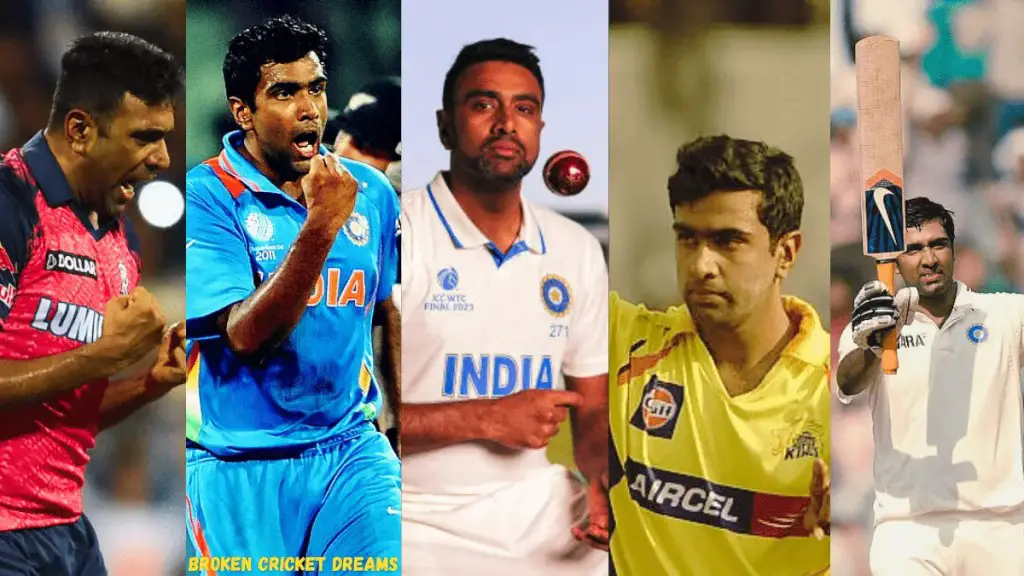
5 Test Hundreds. One of the greatest off spinners of all-time. Removed the stigma of non-strikers run-out almost single-handedly. Pioneered the ‘retired out’ in T20 cricket. Improved his batting to be a #3 in T20s, a decent finisher, Test match blockathon-specialist, off-spinner, leg-spinner, mystery spin, carrom ball. Has a succesfful YouTube channel. Cricket improviser at his absolute best. Ahead of his times.
Major Teams: England, Yorkshire, Northern Transvaal
Although Boycott had his troubles off the field, on the field, he was one of the great ones. In his era, not many scored more than his 151 first class hundreds and 8114 Test runs.
Major Teams: Australia, New South Wales, Victoria, Nottinghamshire
Miller is regarded as Australia’s greatest ever all-rounder. Although 2958 runs & 170 Test wickets flatter to deceive now, it was the best figures for an allrounder at the time.
Graham Gooch has perhaps scored the most runs. EVER. 44,846 First Class runs with 128 hundreds & 217 fifties to go along with 22, 211 List A runs with 44 hundreds and 139 fifties. In international cricket, he amassed 8900 Test runs, 4200 ODI runs, and 28 tons overall.
Major Teams: South Africa, Gauteng, Western Province, Somerset, Surrey, Cape Cobras, Rajasthan Royals
One of the greatest captains and grittiest opening batters of all-time. Batting with a broken hand against Mitchell Johnson in attempt to save a Test match will go down as one of the most courageous acts on the cricket field.
Major Teams: Sri Lanka, Basnahira North, Colts Cricket Club, Deccan Chargers, Hampshire, Middlesex, Northamptonshire, Worcestershire
The only player to take 8 wickets in an ODI matchand the spearhead of Sri Lanka’s fast bowling attack with 781 international wickets. Has a World Cup hat-trick, Test hundred, and ODI fifty as well.
In modern cricket, one of the most dominant opening batters. 7558 Test runs and 37354 runs with 92 centuries. Had a stellar ODI career as well in World Cups—highest scorer of the 1979 World Cup.
One of the greatest all-rounders in the modern era. If the pitch has something to offer, his left-arm spin is tricky to tackle. A great show at #3 in the 2019 World Cup. In one phrase, a living legend of Bangladesh.
Major Teams: Sri Lanka, Colombo Cricket Club, Somerset, Mumbai Indians
Apart from Sachin Tendulkar, he has the most man of the match awards.Revolutionized ODI powerplay batting in 1996, and a great asset with the ball as well.
Major Teams: Australia, Queensland, Hampshire, Northamptonshire, Chennai Super Kings, Brisbane Heat
An epic conversion rate (30-100s, 29-50s) and one of the most dominant openers of the generation. Dancing down the wicket with broad shoulders, he sent tremors in the opposition bowlers.
First England player to score 10,000 Test runs, Cook was the key constructor of England’s Ashes 2010 and India 2012 victories. Survived as an opener in one of the toughest eras to play fast and swing bowling. Best England Test batter (until Joe Root that is).
Major Teams: West Indies, Barbados, Middlesex, Western Province
Making one half of the third-highest Test partnership (6482 with Greenidge) of all time (and highest at the time), Haynes was a modern-day giant. In ODI cricket, he scored 8,648 runs with 17 centuries, a record that stood until 1998.
68. Robert George Dylan ‘Bob’ Willis (England, 1969-1984)
Major Teams: England, Surrey, Warwickshire, Northern Transvaal
One of the fastest English bowlers. Despite injuries, he took 325 Test wickets and played 90 Tests. Longevity and England fast bowlers is a common theme.
After being criticized for not converting fifties into hundreds, Joe Root’s stellar 2021 etched his name into greatness—1708 runs with six daddy hundreds. An ODI World Cup winner as well.
Major Teams: Sri Lanka, Sinhalese Sports Club, Delhi Daredevils, Kings XI Punjab
Class batter. 11,000 runs+ in each format. Most runs on a single ground (2921 runs in Sinhalese, Colombo), seven double hundreds, and a knack for long-partnerships.
Major Teams: West Indies, British Guiana, Lancashire
One of the most recognized left-handers in the game with the glasses & moustache, his calm demeanor was the feature that stood out the most. Playing over 100 Test matches and 490 first class matches, it was his captaincy with two ODI World Cups that crystalized his name in the hall of legends. Made a century in the inaugural World Cup final as well.
64. Fred “The Demon” Spofforth (Australia, 1874-1897)
Major Teams: Australia, South Australia, Victoria
Spofforth is regarded as “Australia’s first true fast bowler.”First bowler to take a Test hat-trick, he zoomed to 94 wickets in only 18 career Test matches.
According to Larwood’s Wisden obituary, he was “one of the rare fast bowlers in the game to spread terror in opposition ranks by the mere mentions of his name.” If Don Bradman struggled, then Larwood must have been really, really good.
Major Teams: Australia, New South Wales, Worcestershire, Rajasthan Royals
Averaging 60.00 after 87 tests with 28 hundreds is no joke. Started as a leg-spinner batting at #8 and ended up becoming the greatest modern-day Test batter.
Major Teams: West Indies, Royal Challengers Bangalore, West Indies U-19, St. Kitts & Nevis Patriots, Balkh Legends, Barisal Burners, Chattogram Challengers, Dhaka Gladiators, Dophins, Fortune Barishal, ICC World XI, Jamaica, Jamaica Tallawahs, Jozi Stars, Kandy Tuskers, Karachi Kings, Kings XI Punjab, Kolkata Knight Riders, Lahore Qalandars, Lions, Matabeleland Tuskers, Melbourne Renegades, Quetta Gladiators, Rangpur Riders, Somerset, St. Kitts and Nevis Patriots, Sydney Thunder, Vancouver Knights, Western Australia, Worcester
Although he is known for his big hitting and T20 exploits, Chris Gayle conquered all-formats over two decades. Just look at his record—14562 (T20), 13189 (List A), 13226 (First Class) runs, best of 333 in Tests, best of 215 in ODIs, 175* in T20s, and 117 in T20Is.
Major Teams: South Africa, Dolphins, KawZulu-Natal, Durham, Warwickshire
From a family of cricketing greats, Shaun Pollock became the most prolific wicket-taker of his time with 829 international wickets. Great consistent bowling and an effective all-rounder.
Major Teams: England, Somerset, Surrey, London County
Wisden’s obituary stated that “He will live in cricket history as perhaps the finest of all fast bowlers.” With 2104 first class wickets, best of 10/45 in an innings, and an average of 9.64 (11.06 average in Tests), he is certainly one of the best fast bowlers.
58. Shivnarine Chanderpaul (West Indies, 1991-2015)
Major Teams: West Indies, Guyana, Durham, Lancashire, Warwickshire, Derbyshire, Guyana Amazon Warriors
With his side-on technique and under-the-eye stickers, one of the most recognized batters. A hard batter to dismiss, will go down as a West Indian legend with 164 Test matches, 30 Test hundreds, and over 20,000 international runs.
Major Teams: India, Bihar, Jharkhand, Chennai Super Kings
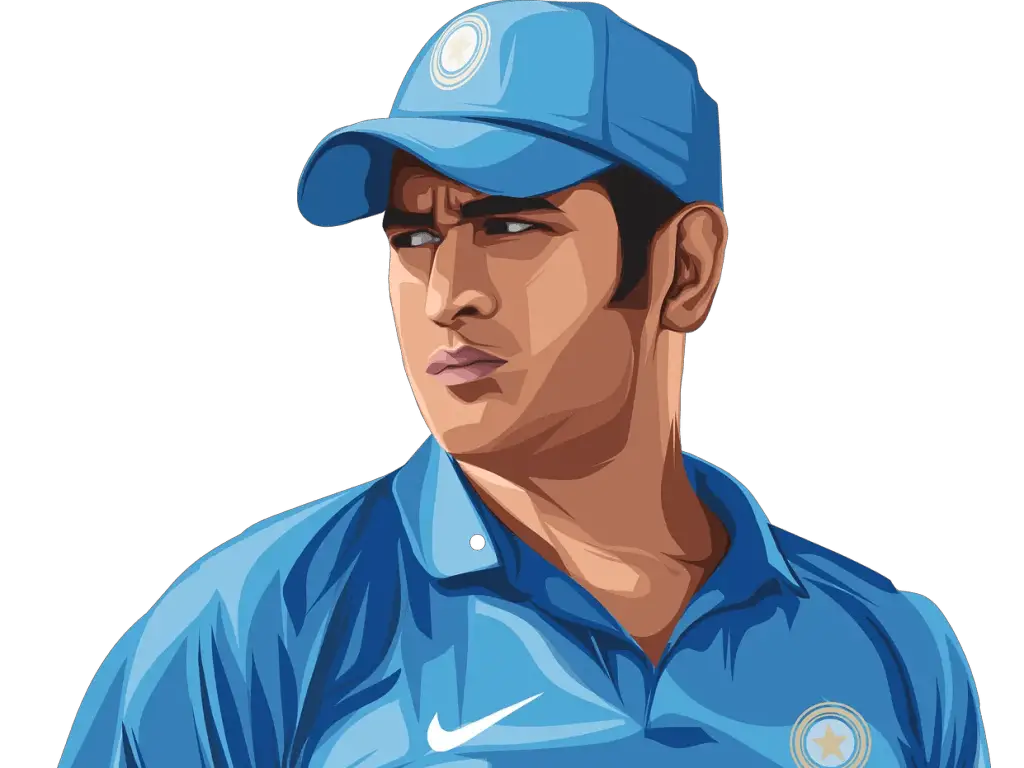
Greatest ODI finisher of all-time and one of the best captains in international cricket & the IPL. Gave Indian fans a moment to cherish with a World Cup winning six. Genius behind the wickets as well.
Major Teams: England, Sussex, Cambridge University, London County
Way ahead of his time, Ranjitsinhji “was probably one of the finest batsman of all time, not only in terms of runs scored but also because he brought new strokes to the game.”
Major Teams: Pakistan, Karachi, Habib Bank Limited, Sind, Glamorgan, Sussex
According to ESPNCricinfo, Miandad is the “greatest batsman Pakistan ever produced.” With over 16,000 international runs, 31 centuries, and 80 FC centuries, that certainly seems to be the case.
Major Teams: Sri Lanka, Kandurata, Warwickshire, Surrey, Kings XI Punjab, Deccan Chargers, Sunrisers Hyderabad
Like fine wine, Sangakkara grew better with age. Most runs in a calendar year across formats in 2014 and retired with 12,400 Test runs at an average of 57.40. A T20 World Cup winner and great keeper as well.
Yes, he played in the nineteenth century, but the best career bowling strike rate (34.1) of all-time meant he was a class apart. A medium fast bowler, Lohmann took 112 Test and 1841 first class wickets.
Top 50 Cricketers of All Time: The Absolute Greats
The next 50 are the absolute greatest cricketers of all time. They either played historic knocks, are highly spoken of, or changed the way the game was played.
50. Steve Waugh (Australia, 1984-2004)
Major Teams: Australia, South Australia, Kent, Somerset
Led Australia to an ODI World Cup and 16 consecutive Test wins. A middle order stronghold in Australia’s great generation with over 10,000 Test runs and 32 tons.
Major Teams: West Indies, Leeward Islands, Antigua and Barbuda, Northamptonshire
One of the most lethal bowlers of his time, he bowled some of the best spells in memory. Just watch his 7-1 spell. Ended up with 630 international wickets.
Major Teams: India, Karnataka, Royal Challengers Bangalore, Northamptonshire, Leicestershire, Surrey)
Kumble’s 10 wickets in an innings against Pakistan wrote his name in folklore. With 619 Test wickets & 337 ODI wickets, he was a central figure in India’s XI for over a decade.
Major Teams: South Africa, Northerns, Titans, Delhi Daredevils, Royal Challengers Bangalore
AB De Villiers could score the fastest hundred of all-time or could score 43 (297) in an attempt of a blockathon. The most versatile and innovative batter this world has ever seen. Also, Bangalore’s favorite son.
Major Teams: India, Karnataka, Kent, Royal Challengers Bangalore, Rajasthan Royals
The glue that held India together. ‘The Wall’ played the most balls in the Test history (despite playing seven years less than Tendulkar). His versatility speaks volumes—Kept wickets, became an effective ODI floater, and hit three sixes in T20s. Major contributions in India’s overseas Test victories.
The original ‘Little Master’, Hanif’s 970-minute 337 vs West Indies in 1958 is forever etched in history. His highest score was 499 in first class cricket. How unfortunate.
Major Teams: Australia, New South Wales, Western Australia, Deccan Chargers, Kings XI Punjab
Revolutionized the role of the wicketkeeper. 9619 ODI runs at 96.94 SR and 5570 runs at 81.95 SR. After Gilchrist, wicketkeepers were expected to score runs and score them quickly.
Major Teams: West Indies, Jamaica, Gloucestershire
Before Mcgrath, Anderson, & Broad, Walsh bowled the most balls in his Test career (30019) and took the most wickets by a fast bowler (519). Not to mention 1807 first class wickets.
Major Teams: Australia, New South Wales, Queensland, Essex, Gloucestershire
First captain from Australia to lift the World Cup trophy, he set an example for the Waughs and Pontings to follow. With more than 11,000 Test runs and 156 Test caps (record at the time), he was a constant for Australia for the better part of two decades.
Major Teams: Pakistan, Karachi, Lahore, Multan, Rawalpindi, Surrey, Glamorgan
Credited for the ‘reverse’ swing, his bowled compilations are droolworthy to watch. 373 wickets at a strike rate of 43.4 and 416 ODI wickets puts him at the top of the crop.
Major Teams: South Africa, Cape Cobras, Royal Challengers Bangalore, Deccan Chargers, Sunrisers Hyderabad
Arguably the best fast bowler of all-time. Fast, pace, swing, consistency, he had it all. With a clean action, he dominated opposition at home and abroad. Unfortunately, freak injuries ended his career. Went past Pollock to become South Africa’s highest Test wicket-taker.
Major Teams: India, Delhi, Royal Challengers Bangalore, India U-19
Will go down as the greatest ODI batter of all-time. Definitely the best chaser in the game, his peak across formats was second to none. Twice the T20 player of the World Cup, his aggressive attitude and captaincy was crucial to India’s rise in Test cricket.The King of Cricket in the modern era.
The world has never seen an Imran Khan before, and never will again. Fast bowler, effective batter, philanthropist, a Prime Minister, and a top candidate for the best-looking cricketer of all-time.
Major Teams: India, Haryana, Northamptonshire, Worcestershire
Three decades after he retired, India is still looking for another Kapil Dev. A long term fast-bowling all-rounder, he captained India to their first World Cup triumph.
Had it not been for World War II, who knows how much George Headley could have accomplished. Retired with an average of 60.83 after 22 Tests and 69.86 in 103 first class matches. Wisden remarked that “he scored an avalanche of runs with a style and brilliance few of any age have matched.” Must have been wonderful to watch.
The first player to break the 10,000 run Test barrier, the ‘Little Master’ set the standards for opening batsmanship in cricket. Playing without helmets against the West Indies was a daring task for sure.
Wisden remarked that O’Reilly was “probably the greatest spin bowler the game has ever produced” and Don Bradman is credited of saying, “he was the greatest bowler he had ever faced or watched.”
Greatest 25 Cricketers of All Time: The Undisputable Legends, Kings of Cricket
Time for the Undisputable Legends. These players are truly the greatest cricketers of all time.
25. Les Ames (England, 1926-1951)
Major Teams: England, Kent
According to Wisden, Ames was “without a doubt the greatest wicketkeeper-batsman the game [had] so far produced.” 418 stumpings, over 1,000 dismissals, and 102 first-class centuries.
The greatest line and length bowler the world has ever seen. He was instrumental in Australia’s World Cup wins. Holds the record for most World Cup wickets (71) and was the highest fast bowling Test wicket taker before Jimmy Anderson and Stuart Broad surpassed him.
22. Robert Graeme Pollock (South Africa, 1960-1987)
Major Teams: South Africa, Eastern Province, Transvaal
ESPNCricinfo reckons that Graeme Pollock was “perhaps the finest left-hand batsman the game has ever produced.” Another casualty of South Africa’s international exile, Pollock’s 60.97 average in his short 23-Test career gave the world a glimpse of his ability to go along his 64 hundreds in 262 first class games.
First to score 4 Test centuries in a series and fastest to 1000 Test runs (12 innings), he was easily one of the greatest. Wisden’s obituary remarks that “he never knew a season of failure” as he would score over 50,000 first class runs with 151 tons.
World War I meant that he lost some early years and only started his career around the age of 25.
The cricket world lost a gem in 1999 when Malcolm Marshall passed away at the young age of 41 due to cancer. However, he will be remembered as one of the most feared fast bowlers of all-time. 376 wickets at a strike rate of 46.7 & 20.94 average. Just watch some of his bouncers.
19. Barry Anderson Richards (South Africa, 1968-1983)
Major Teams: South Africa, Natal, Transvaal, Gloucestershire, Hampshire
South Africa’s exile meant Barry Richards could only play 4 Test matches, but still showed the world what he got—2 100s, 2 50s, and an average of 72.57. “One of the finest talents of the 20th century“, scoring 28,000 first class runs, 80 tons, and nine centuries before lunch display his greatness.
Best left-arm fast bowler of all time, key to Pakistan’s rise, and took the most wickets by a fast bowler in ODI cricket. He was the hero of the 1992 World Cup final and with Waqar Younis, formed a pair of the ages. Still holds the highest score by a #8 in Test matches, 257*.
58,959 runs. 145 centuries. 2066 Wickets. 978 first class matches. Wisden describes as “beyond doubt one of the finest and most elegant left-handed all-rounders of all-time.”
Brian Lara was one of the best left-arm batters of all-time His name will forever be etched in record books with 400* (Test) and 501* (first class).More than the numbers, though, you always wanted to watch him bat. Top notch elegance.
Ricky Ponting was one of the most dominant players of his generation. He ruled the world as a batter, fielder, and captain. Ponting holds the record for the fastest to 12,000 runs in both ODI and Test cricket, only behind Tendulkar.Ended with more than 27,000 international runs, 71 centuries, and 364 catches. However, his legacy is cemented with two World cup wins as captain.
129 first class hundreds in 513 matches. Not quite 99.96, but 40,140 runs at 55.51 is quite special. Handy leg spinner as well. Wisden remarked in Hutton’s obituary that he was “one of the greatest batsman the game has produced in all its long history.”
Major Teams: South Africa, Western Province, Warriors, Cape Cobras, Royal Challengers Bangalore, Kolkata Knight Riders, Sydney Thunder, Trinidad & Tobago Red Steel, Middlesex, Glamorgan
Once playing against India, a stat came up that aptly described Jacques Kallis contribution in Test cricket. With runs and centuries, Kallis rivalled Tendulkar. With the ball, he was an equal to Zaheer Khan. One of the greatest allrounders of the game, 10,000+ runs in each format, and had a decent T20 career as well. Would take South Africa two players to replace the balance he provided the Proteas.
Most prolific first-class wicket-taker of all time. 4204 wickets from 1110 matches. Close to 40,000 first class runs as well. Moreover, he had the longest first-class career with 30 years & 315 days. That’s commitment.
The best off-spinner of all-time and the most prolific international wicket taker of all-time with 1347 wickets. Takingthe 800th Test wicket with his final ball will go down as the one of the iconic moments in the game. A 1996 World Cup winner to cap it off.
10. Sir Isaac Vivian Alexander ‘Viv’ Richards (West Indies)
Major Teams: West Indies, Leeward Islands, Glamorgan, Somerset
Sir Viv Richards had just the right amount of talent, intimidation factor, and swag. One of the central pins of West Indies’ golden generation and way ahead of his time. Pioneer of modern ODI cricket.
9. Walter Reginald ‘Wally’ Hammond (England, 1920-1951)
Major Teams: England, Gloucestershire
7249 Test runs with 22 hundreds in the era that he played is already a huge achievement. Add to that, 50,551 first-class runs with a mammoth 167 centuries, 185 fifties, and 732 wickets, he is definitely one to be remembered.
Major Teams: England, Staffordshire, Lancashire, Warwickshire, Wales
6,229 wickets at an average of 8.33 from club to Test matches. Most wickets ever in a Test series (49). S.C. Griffith, secretary of MCC summed it up perfectly, “The extraordinary thing about him was that all his contemporaries considered him the greatest bowler.”
Sir Learie Constantine described Worrell as, ” a happy man, a good man, and a great one.” Worthy middle order batter & allrounder with a knack of big hundreds, his influence as a social icon was far greater. First long-term black captain of West Indian cricket, he helped unify the islands and moved West Indies move into the success of the 70s & 80s. Unfortunately, passed away at the age of 42 with a rich legacy, nevertheless. Key player in the first Tied Test, the Australia-West Indies series is still named the “Frank Worell Trophy.”
Major Teams: Australia, Victoria, Rajasthan Royals, Melbourne Stars
If you bowled the ‘Ball of the Century,’ took 708 wickets, and won a World Cup final on your own, you deserve to be in the Top 5 of every list. A larger-than-life icon who revolutionized leg spin. A leader that Australia never had as his later years with the Rajasthan Royals and T20 leagues showed. His death in 2022 shocked one and all.
4. Sir John Berry ‘Jack’ Hobbs (England,1908-1930)
Major Teams: England, Surrey
Most prolific first-class batter of all-time. 61,760 runs, 199 centuries, 273 fifties, oldest Test centurion (at 46), and opened the batting and bowling in South Africa in 1910. The original ‘Master‘ and first cricketer to receive Knighthood.
The greatest batsman the world in the modern era. Over 34,000 international runs, 100 hundreds, World Cup winner. The original God of cricket, and a beacon of hope for a billion people for over two decades.
2. Dr. William Gilbert ‘WG’ Grace (England, 1865-1908)
Major Teams: England, Marylebone Cricket Club (MCC), Gloucestershire, London County Cricket Club
Without Grace’s grace, we can only imagine how different cricket’s development as an official sport would have been in its early days. 44 years, 870 first class matches, 54,000 runs, 2800 wickets. Also practiced medicine and had that iconic beard.
Major Teams: Australia, New South Wales, South Australia
Not only regarded as the greatest Test batter of all-time in the world of cricket but also a well know trivia fact outside of the sport. 99.94. The elusive 4 runs. 6996. In fact, he scored 117 centuries in 234 matches at an average of 95.14 with the best of 452* in all first-class cricket. Technically gifted, daddy hundreds, Test captain, ‘Borderline’ series, leader of the ‘Invincibles’, and the comeback after World War II break. Legend in all senses.
Extended List (By Country): The Honorable Mentions
These players are one of the best to have played for their nations. Several of these players played over 100 Test matches. However, due to the extensive competition, they did not make the Top 151 Greatest Cricket Players of All Time List.
Greatest Players of All Time #175-270
England: Patsy Hendren, Graeme Hick, Phil Mead, Douglas Jardine, Eoin Morgan, Ian Bell, Jos Buttler, Andrew Strauss, Alec Stewart, Dennis Amiss, Bernard Bosanquet, Mike Atherton, Maurice Tate, Graeme Swann, Charlie Parker, Andrew Flintoff, Frank Tyson, Graham Thorpe, Sir Pelham Warner, Bill Lockwood, John Jackson, Johnny Briggs, Hugh Trumble
West Indies: Alvin Kallicharran, Rohan Kanhai, Carl Hooper, Lawrence Rowe, Roy Fredericks, Vanburn Holder, Charlie Griffith, Andre Russell, Jackie Hendricks, Colin Croft, Ian Bishop
Australia: Dean Jones, David Boon, Bill Ponsford, Charles Turner, Bill Lawry, Mark Taylor, Aaron Finch, Clem Hill, Andrew Symonds, Geoffrey Marsh, Mike Hussey, Charlie McCartney, Pat Cummins, Josh Hazlewood
India: Lala Amarnath, Mohammad Azharuddin, Erapalli Prasanna, Zaheer Khan, Mohinder Amarnath, Dilip Vengsarkar, S Venkataraghavan, B Chandrasekhar, Vijay Merchant, Gundappa Vishwanath, Vijay Manjrekar, Farokh Engineer, Javagal Srinath
South Africa: Trevor Goddard, Herschelle Gibbs, Gary Kirsten, Kagiso Rabada, Vernon Philander, Morne Morkel, Dudley Nourse, Mike Proctor, Jonty Rhodes, John Waite, Faf du Plessis
New Zealand: Tim Southee, Glenn Turner, Nathan Astle, Jacob Oram, Scott Styris, Stewie Dempster, Martin Donnely, John R Reid, Shane Bond, Martin Guptill, Ian Smith, Jack Cowie, Chris Cairns, Chris Harris, Bruce Taylor, Neil Wagner
Pakistan: Shoaib Malik, Umar Gul, Fazal Mahmood, Yasir Shah, Saleem Malik, Babar Azam, Mohammad Asif, Misbah Ul-Haq, Rashid Latif
Top 10 Greatest Cricketers of All-Time (By Country)
Who are the greatest Australian cricketers of all-time?
The greatest Australian cricketer of all-time is Sir Donald Bradman (#1). The Top 10 Australian cricketers in history are Don Bradman (#1), Shane Warne (#5), Ricky Ponting (#15), Dennis Lillee (#23), Glenn McGrath (#24), Bill O’Reilly (#26), Allan Border (#39), Adam Gilchrist (#41), Victor Trumper (#46), Steve Waugh (#50).
Who are the English cricketers of all-time?
The greatest England cricketer of all-time is Dr. WG Grace (#2). The Top 10 England cricketers in history are WG Grace (#2), Sir Jack Hobbs (#4), Sydney Barnes (#8), Wally Hammond (#9), Wilfred Rhodes (#12), Sir Len Hutton (#14), Frank Wooley (#17), Herbert Sutcliffe (#21), Les Ames (#25), and Fred Trueman (#27).
Who are the greatest Indian cricketers of all-time?
The greatest Indian cricketer of all-time is Sachin Tendulkar (#3). The Top 10 Indian cricketers in history are Sachin Tendulkar (#3), Sunil Gavaskar (#28), Kapil Dev (#32), Virat Kohli (#35), Rahul Dravid (#45), Anil Kumble (#48), Kumar Shri Ranjitsinhji (#56), MS Dhoni (#57), Ravichandran Ashwin (#88), and Bishan Singh Bedi (#95).
Who are the greatest West Indian cricketers of all-time?
The greatest West Indian cricketer of all-time is Sir Garfield Sobers (#6). The Top 10 West Indies cricketers in history are Sir Garfield Sobers (#6), Frank Wooley (#7), Sir Vivian Richards (#10), Brian Lara (#16), Malcolm Marshall (#20), George Headley (#30), Courtney Walsh (#40), Curtly Ambrose (#49), Shivnarine Chanderpaul (#58), and Chris Gayle (#61).
Who are the greatest Sri Lankan cricketers of all-time?
The greatest Sri Lankan cricketer of all-time is Muttiah Muralitharan (#11). The Top 10 Sri Lanka cricketers in history are Muttiah Muralitharan (#11), Kumar Sangakkara (#52), Mahela Jayawardene (#66), Sanath Jayasuriya (#74), Chaminda Vaas (#77), Tillakaratne Dilshan (#100), Lasith Malinga (#102), Rangana Herath (#109), Aravinda de Silva (#119), Arjuna Ranatunga (#126), and Marvin Atapattu (#149).
Who are the greatest South African cricketers of all-time?
The greatest South African cricketer of all-time is Jacques Kallis (#13). The Top 10 South Africa cricketers in history are Jacques Kallis (#13), Barry Richards (#19), Graeme Pollock (#22), Dale Steyn (#36), AB De Villiers (#47), Shaun Pollock (#60), Graeme Smith (#78), Aubrey Faulkner (#81), Hashim Amla (#114), and Allan Donald (#116).
Who are the greatest Pakistan cricketers of all-time?
The greatest Pakistani cricketer of all-time is Wasim Akram (#18). The Top 10 Pakistan cricketers in history are Wasim Akram (#18), Imran Khan (#34), Waqar Younis (#38), Zaheer Abbas (#43), Hanif Mohammad (#44), Javed Miandad (#55), Mohammad Yousuf (#69), Inzamam Ul-Haq (#93), Younis Khan (#97), and Saqlain Mushtaq (#112).
Who are the greatest New Zealand cricketers of all-time?
The greatest New Zealand cricketer of all-time is Sir Richard Hadlee (#37). The Top 10 New Zealand cricketers in history are Richard Hadlee (#37), Daniel Vettori (#89), Ross Taylor (#92), Brendon McCullum (#104), Kane Williamson (#108), Martin Crowe (#129), Stephen Fleming (#131), Tim Southee, Trent Boult, and Glenn Turner.
Who are the greatest Bangladesh cricketers of all-time?
The greatest Bangladeshi cricketer of all-time is Shakib Al Hasan (#75).
Who are the greatest Afghanistan cricketers of all-time?
The greatest Afghanistan cricketer of all-time is Rashid Khan (#107).
Who are the greatest Zimbabwe cricketers of all-time?
The greatest Zimbabwean cricketer of all-time is Andy Flower (#132).
The Criteria
The goal of this list is that from these 152 greatest cricketers of all time, you can pick sub-lists of the “Greatest All-Rounders of All-Time,” “Greatest Fast Bowlers of All-Time,” etc.
So how did we pick the greatest cricketers of all time? Well, we considered it all—Impact, captaincy, World Cup contributions, longevity, legacy, and statistics (10,000 runs, player of the match awards, 5-fers, 10-fers, ICC Hall of fame, Wisden cricketer of the century list, etc.)
This was a tougher challenge than I had initially anticipated. So to narrow down our choices, if a player satisfied any of the criteria below, they were automatically added to the list:
Member of ICC’s Hall of Fame
10,000 ODI or Test Runs
500 Test Wickets, 400 ODI Wickets
Selected as the Six Giants of the Wisden Century or Wisden Cricketers of the Century
To understand a player’s true impact from before the 1950s, excerpts from Wisden’s Almanack and ESPNCricinfo were used (and cited).
*Note: Sydney Barnes, Don Bradman, W.G. Grace, Jack Hobbs, Tom Richardson, and Victor Trumper were selected as the Six Giantsof the Wisden Century and Donald Bradman, Garfield Sobers, Jack Hobbs, Shane Warne, and Viv Richards were voted as Wisden Cricketer of the Century in 2000.
Thanks for reading the Greatest Cricketers of All Time. Do consider subscribing for more such content.
Frequently Asked Questions: Greatest Cricketers of All Time
Sir Donald Bradman is considered the best cricketer of all-time, followed closely by WG Grace, Sachin Tendulkar, Jack Hobbs, Shane Warne, Frank Worrell, and Sir Garfield Sobers.
Who is the best batsman of all time?
Sir Donald Bradman, Sachin Tendulkar, Sir Jack Hobbs, Sir Frank Worrell, and Sir Viv Richards are the best batsman of all time. Sir Len Hutton, Ricky Ponting, Brian Lara, Barry Richards, and Graeme Pollock are close behind.
Who is the best bowler of all time?
Shane Warne are Sydney Barnes are the best bowlers of all time. Behind them are Muralitharan, Wasim Akram, Malcolm Marshall, Bill O’Reilly, Glenn Mcgrath, Fred Trueman, Jimmy Anderson, Dale Steyn, and Waqar Younis.
Who is the best all-rounder of all time?
Sir Garfield Sobers is the best all-rounder of all time with Jacques Kallis close behind. Kapil Dev, Ian Botham, Imran Khan, Richard Hadlee, Jayasuriya, Shakib Al Hasan, Miller, and Faulkner also make the list.
— Broken Cricket Dreams Cricket Blog (@cricket_broken) October 2, 2022
Now, calls have come for his axe on the eve of the 2022 T20 World Cup following his horrid series against India where he scored 0(4), 0(7), and 0(8) while Hendricks sat on the sidelines. Although he led South Africa courageously in the 2021 T20 World Cup and handled Quinton de Kock during tough times, an average of 23.54 with 116.49 strike rate is way below par for a modern T20 opening batter.
Although Bavuma has rightly faced criticism, there has been lots of slander and accusations that he is only in the XI to fulfill the quota. We will explore this and debunk some myths.
Quota System in South African Cricket: The Complete Guide
*Disclaimer: I am trying to learn about this from an outsider’s point of view. Hence, this research is conducted through official documents from the South African cricket board with the hope of an unbiased analysis.
“Transformation is defined as a process describing the establishment of a sport system focused on the principles of Human capital development, equitable resource distribution, elimination of all inequalities, increased access to participation opportunities, skill and capability development at all levels and in all areas of activity, empowerment of the individual, respect for each other, fair and just behavior, innovation to give South Africa a competitive edge in world sport.”
In the SA cricket board’s 2021 Integrated Report, they further elaborate that “Transformation is about improved access, fair opportunity and support for all South Africans, within and beyond the boundaries of the cricket field.”
Key Points on Quota & Selections
The document provides an insight into how transformation targets play an part in South African cricket’s selection. Here is a brief summary with quotes from the official document. Some interesting finds.
“It is expected that the selection committee will play its role in ensuring that transformation is aggressively achieved at all levels without compromising the principle of selecting the best team based on current form and the pitch or game conditions.
“When selection between two players is debatable and neither is a clear choice (e.g. both have similar track records and ability), where relevant, preferencemust be given to the player of colour.“
“In measuring our transformation progress, the panel will be measured on a season average basis rather than on a match-by-match basis.”
“Special attention must be given to the development and the creation of opportunities to play black African cricketers at all levels”
“We acknowledge that transformation ins not progressing as fast as it could.”
South African Cricket Transformation Target: The Rules
The South Africa cricket reservation targets must be met as per the Eminent Persons Group (EPG) scorecard projections. By the latest transformation targets, on average about 6 players of color, including 2 black African cricketers should be in the playing XI.
Not only that, but the transformation target is also implemented all throughout South Africa’s cricketing system, from age-level groups to senior internationals.
Here is a truncated version of the projections for the men’s cricket team for the next decade.
Quota Projections
Team (Men’s)
Forecast December 2022 % Black African
Forecast December 2026% Black African
Forecast December 2030 % Black African
Senior International Team
24%
28%
32%
South Africa A/Emerging/U-19
27-29%
32-33%
34-35%
SA School & Colts
31%
35%
37%
U-17 National Camp
31%
35%
37&
Team (Men’s)
Forecast December 2022 % Generic Black
Forecast December 2026% Generic Black
Forecast December 2030 % Generic Black
Senior International Team
50%
56%
60%
South Africa A/Emerging/U-19
50-55%
56-60%
60-64%
SA School & Colts
52%
57%
62%
U-17 National Camp
52%
58%
62&
So, how does the South Africa cricket team reservation work?
For South Africa’s senior men team, in 2022, 24% of the players should be Black Africans while 50% overall should be colored.
This means about 2-3 Black African players and 5-6 colored members should be in the XI, while the corresponding figures are 3-4 Black African and 7-8 colored in the squad of 15.
By 2030, the figures will rise to 32% and 60% respectively i.e. the South African XI may need to have an average of 7 colored players (3-4 Black Africans).
Interesting Observations
One thing to note is that consistently in junior level cricket, the transformation target percentages are a lot higher than the international requirement. This definitely sheds a light on the focus of changing the system from the grassroots level and hoping to have an impact in the international level down the road.
The SA20 has no transformation targets (this could be a cause of conflict in the future. If the homegrown South African T20 league does not have transformation requirement since it is in the franchise model, why should the other parts of SA cricket have it? This may have been a factor in no interest for Bavuma in the SA20 auction).
What Happens if Transformation Targets are not Fulfilled by South African Cricket?
According to South African cricket’s Integrated Report 2020/21, here is what happens if guidelines are not followed.
Risks: “Non-adherence to CSA undertakings with the Minister of Sport, Arts, and Culture on transformation in cricket can lead to a withdrawal of privileges accorded to National Federations.“
Required Actions to Improve Performance: “Tranche payments linked to performance; CSA monitoring and evaluation to improve access and redress.”
To demonstrate how detailed the transformation targets are, here are the results from the 2020/21 selection report statistics.
Women’s Team
The Senior Women had an “on-field Black demographic representation of 48% against CSA target of 50%.” In particular,
Women’s Team
Target (2018-19)
Actual (2018-19)
Target (2019-20)
Actual (2019-20)
Black African
27%
26%
24%
20%
Black
54%
47%
54%
47%
Among the 154 selections for the women’s team, the proportions were
Women’s ODIs: 45 White, 22 Black African, 8 Colored, 13 Indian
Women’s T20Is: 35 White, 21 Black African, 4 Colored, 6 Indian
Men’s Team
The Proteas Men met their Black African player target for EPG 2020 – but did not meet is Black target.
Men’s Team
Target (2018-19)
Actual (2018-19)
Target (2019-20)
Actual (2019-20)
Black African
25%
22%
22%
23%
Black
60%
49%
50%
44%
South African Contracted Players
From the 16 nationally contracted players, the proportion is: 8 White, 2 Colored, 4 – Black African, 2 – Indian. 116 selections (62%) of all the 187 selections came from these contracted players. The other 71 selections (38%) came from 16 non-contracted – 10 White, 3 Colored, 3 Black African, 0 Indian. In particular,
Men’s T20I: 59 White, 24 Black African, 17 Colored, 10 Indian
So Where Does South Africa’s 2022 T20 World Cup Squad Stand?
So let’s get back to the question at the beginning. Where does Temba Bavuma fit in this conversation?
The World Cup squad has 3 Black Africans, 8 White, and 7 Colored players.
Black African: Temba Bavuma, Lungi Ngidi, Kagiso Rabada
Colored: Reeza Hendricks, Wayne Parnell
Indian: Keshav Maharaj, Tabraiz Shamsi
White: Quinton de Kock, Heinrich Klassen, Aiden Markram, David Miller, Anrich Nortje, Rilee Rossouw, Tristan Stubbs, Marco Jansen
Can South Africa Afford to Drop Temba Bavuma?
In short, yes…if they play both Lungi Ngidi & Kagiso Rabada.
South Africa’s quota concern for the upcoming world cup is NOT Temba Bavuma. Instead, it may be how to balance the bowlers.
With Quinton de Kock-Rilee Rossouw-Aiden Markram-David Miller-Tristan Stubbs, South Africa have a very stable and explosive core of batters. Since no adjustment can be made in the middle order, SA will have to fit all their colored players in the bowling line up. For example, in the India vs South Africa ODI, they went with a bowling line up Parnell, Maharaj, Rabada, Shamsi, and Ngidi (which is all good for now since they are in decent form).
In conclusion, regardless of SA’s choice to play Bavuma or Hendricks, the quota is not impacted. However, with Parnell, Ngidi, and Rabada almost certainties, Nortje & Jansen might be in the sidelines.
None of this actually matters since the first tenet of the transformation goals is to select the best team on the day and the targets will be calculated on average at the end of the season.
Should South Africa Drop Temba Bavuma?
It is never a good sign to drop a captain on the eve of a World Cup, so Bavuma should still be in the squad for sure. However, it may still be good to give Reeza Hendricks some game time since he was in red-hot form.
It may be worth dropping Bavuma down the order and play him as an insurance policy to stem the flow of wickets in case of a collapse rather than as an opening batter.
2015 World Cup Semi-Final, Kyle Abbott, & Vernon Philander
The quota system is South African cricket came into focus on March 24, 2015. South Africa crashed out of the World Cup due to Grant Elliot heroics.
Thriller of a game, but so near, yet so far for the Proteas yet again.
In the days to come, news came of the internal politics. Although SA had been fielding up to 5 players of color in the early matches (Amla, Duminy, Philander, Tahir, Behardien). However due to injuries, only 3 players were fielded including in the Quarter Finals, where South Africa crushed Sri Lanka by 9 wickets.
Instead of going with an unchanged XI, Vernon Philander (injured in the prior couple of games) replaced Kyle Abbott, who had a good tournament till that point. Later, it was revealed that the South African administrators called the coach/captain and interfered with the selection process.
This broke the team apart and unraveled the heights of the 2007-2015. Kyle Abbott took a Kolpak deal, while Philander retired early. Philander, himself is quoted that there are no hard feelings between him and Abbott.
“When I go to Durban, I have a beer with Kyle. There are no hard feelings between us two. But the point is: Cricket SA must sort out their stuff. What happened was a knock to both of us.”
Where Does South African Cricket Go from Here?
Kevin Pietersen’s exodus to England had already signaled for things to come due to unofficial quotas in the early days. However, South African cricket’s success had hidden the internal conflicts under the carpet.
The Khaya Zondo case revealed that several black African cricketers were picked, but only to ‘make up the numbers and carry the drinks.’ Michael Holding in his conversation with Makhaya Ntini expressed in the SJN hearings how secluded Ntini felt. Kagiso Rabada has been over bowled and not rested/rotated because he ticks the boxes and is really good.
From Faf du Plessis’ “we don’t see color,’ to AB de Villiers’ captaincy hesitations to the SJN hearings, Black Lives Matters, kneeling, etc., the matter is more complex than it seems from the outside.
Is the Transformation Quota System the way to go for South African cricket?
South Africa is not the only country to combat this issue. In the United States, Affirmative Action & India’s reservations with the Mandal Commission have similarly been implemented and received backlash at some point or time or another.
In my own analysis, I did not like treating human beings as statistics and separating them by categories. I am sure as the years go by the implementation will become less strict as equal opportunities would create more organically grown diverse players.
So, is the quota system the best way to go for South African cricket?
I’m not in the best way to answer that, but in order to reverse the prejudice of centuries of discrimination, systematic and grassroots changes are indeed needed.
What do you think about the quota system in South African cricket?
Sources and Further Reading on Quota System in South African Cricket
Frequently Asked Questions (FAQ) – Quota System in South African Cricket
What is the quota system in South African?
As of 2022, 2 players of black African ethnicity and 6 colored players need to be fielded in the XI (on average).
Does South Africa cricket team have reservation policy?
Yes, the South African cricket team has a reservation policy to meet transformation targets. The men’s South African team has a target of 22% Black African and 20% Black cricketers in their squads and XIs.
In 1900, German mathematician David Hilbert proposed a list of 23 unsolved mathematics problems that would keep mathematicians busy for the next century.
And indeed, they did. Over the next hundred years, several of these challenging problems were either completely answered or partially solved. However, some of these problems remain unsolved even after a few centuries and failed attempts by great mathematicians.
So, at the turn of the 21st century, the Clay Institute of Mathematics put a $1 million reward (the hardest way to get a million dollars, I would say) for anyone who would solve any of the 7 proposed problems, known as the legendary Millennium Prize Problems [Millenium Maths Problem Explained in 90 Seconds].
So far, only one of them has been successfully solved (and the mathematician Grigori Perelman rejected the monetary award).
At this point, you must be thinking, “Why I am reading four paragraphs of math when I signed up for cricket?”
Don’t worry. Here comes the cricket.
2021 had a fair share of its problems for cricket—The Azeem Rafiq scandals, Tim Paine’s sexting exit, Thailand women losing a spot in the World Cup due to a flawed system, Glenn Maxwell, Jos Buttler, Ben Stokes, Tom Banton taking time off due to mental health, Quinton de Kock’s kneeling issue in the T20 World & then retiring from Test cricket at the age of 29, the dissolution of the ODI Super League, New Zealand & England pulling out of Pakistan, the Afghanistan crisis, The Hundred Vs County Cricket debate, and just a general overdose of the IPL & cricket.
For a full read on these issues, check the following articles out:
Today I propose a list of 15 problems that will keep the cricket community (ICC, administrators, and cricketers themselves) busy for the next decade.
This is by no means an exhaustive list. Neither do I have any monetary reward for you. I offer possible solutions—some of them you might like. Others? Not so much. So, then what is the point of all this?
The point is to churn up debate and conversations in the cricket community so eventually some of these solutions reach the upper echelons of the cricket boards and ICC. Comment below on your thoughts and ideas. Who knows, your idea might one day change cricket altogether.
If you like this content on Captain Virat Kohli, please subscribe above for FREE and follow us on our social media accounts.
1. Need for a Global Cricket Calendar and T20 Leagues
The Problem: How can the cricket calendar provide space to the three international formats—Test, ODI, and T20I—as well as the growing T20 leagues?
These days, cricket is here, there, and everywhere. Today, we have the BPL, PSL, IPL, Global T20 Canda, T20 Vitality Blast, The Hundred, CPL, Shpageeza Cricket League, T10 League, SLPL, MSL, Super Smash, and the Big Bash running from January to December.
Cricket will hit its ceiling in the next 5-10 years. With new T20 leagues growing around the world, IPL becoming a 10-team venture (twice a year IPL also proposed), T10 leagues, The Hundred, a ‘Ninety-90 Bash’, & other retired professional leagues adding to the calendar, what is the limit?
And don’t get me wrong. Leagues are not necessarily a bad thing—more opportunities for Associate cricketers, professional life for players who cannot make their international XIs, and more match practice & auditions to make comeback cases, but it does threaten the existence of international cricket as a whole.
Two-Three month reservation for the pinnacle of international cricket (T20/ODI WC, WTC Final), without T20 leagues during this period.
Reinstatement of the Champions League as the center of the T20 yearly calendar.
Enforcement of maximum of 3 leagues per year for a nationally contracted player.
Eventually, cricket may need to adopt the soccer (European football) model.
International games reserved only for ODI World Cup qualification, WTC matches, and some friendlies/warm-ups. As many have suggested, bilateral T20Is should be scrapped totally.
Players contracted by year-long leagues. They take leave to play a couple of international games every now and then until the World Cup, which dominates the summer every couple of years.
Experimental formats like T10 cricket and ‘Ninety-90’ Bash should end. Who knows, we might be playing a Super Over league at this rate.
Possible Pitfalls
The Indian Premier League and the BCCI holds a bit of influence over the cricket finances. If they reject any of the calendar limits, that may the end of any negotiations even though all the other cricketing nations might agree.
2. Decisiveness and Pathways on Olympics
The Problem: The ICC on cricket’s inclusion in the Olympics—Yes, No, maybe so?
For too long, cricket has dabbled with the idea of being in the Olympics and are closer than ever in making a decision. The 2022 Birmingham Commonwealth Games will include a women’s 8-team T20 tournament. USA Cricket hopes for the inclusion of cricket in the 2028 LA Olympics and the 2032 Brisbane Olympics being ICC’s long-term goal.
However, what format will it be? T10? T20? If it is T10, does that mean cricket will have a fourth international format? How will qualification work? At this point, there are way too many questions and zero details on a path forward.
If cricket is serious about being in the Olympics, the administrators need to get their acts together. One or two meetings a year just doesn’t cut it.
Possible Solutions
It is worth a try regardless of the format. Ideally T20 cricket, starting from the 2028 LA Olympics (building upon USA’s Major League Cricket) would be great for the game.
The format of soccer’s 4 group of 4 is a good template (16 teams in the Olympics instead of 32 in the FIFA World Cup to keep the WC as the pinnacle product). If the T20I WC expands to 16-24 teams (both men/women) in the next decade, the Olympics can start with 8-12 teams with the best 2-3 teams qualifying from each region.
Not every country has cricketing infrastructure. To create a consistent following, cricket at Olympics can only succeed if it is at every iteration. Unless cricket stadiums are built in every nation on earth, the ICC will have some complications in the early years at the Olympics.
Another tricky slope to navigate is the West Indies. Since each nation like Jamaica and Barbados will play the Olympics as its own nation, those teams will be significantly weaker in strength than the West Indies cricket team.
3. Expansion of the Women’s Game and Need for WIPL
The Problem: Women’s cricket is now mainstream, but is the structure in place to take the game forward?
Between 2017- March 2020, women’s cricket enjoyed a sort of golden era. The quality of cricket and broadcast in the 2017 ODI World Cup brought new fans to the game, and a record 86,174 attendance at the MCG for the 2020 WT20 Final proved that women’s cricket was on the rise.
However, the pandemic has exposed several gaps in the women’s game. For almost 12 months, women’s international cricket was largely halted around the world while the men’s IPL happened twice. Several smaller boards like Bangladesh and Sri Lanka have not seen much gameplay. Although India have played a few internationals, there does not seem to be a plan for women’s domestic cricket. And a request for the women’s IPL is falling on deaf ears.
Add to that, the crisis faced by Thailand, one of the rising teams in women’s cricket. When omicron abruptly cancelled the qualifying tournament, it was tough to not see them qualify for the ODI World Cup despite being #1 in the group since their ODIs were not given ODI status.
Surely the structure and expansion in women’s cricket needs more thought, structure, and investment.
Multi-format series have been a brilliant idea but should become the standard across all teams.
The Hundred was a huge success for the women’s game in terms of awareness and equal split of men’s/women’s game. Each top league needs to adopt the same structure.
In order for the multi-format series to become the standard, more Test cricket and 3-day practice matches have to become the norm, which will take time.
4. Planned T20 Exposure for Cricket’s Growth
The Problem: Roadmap and resource management needed for the rapid growth of T20I cricket in emerging markets.
While women’s cricket and the Olympics are avenues to cricket’s global expansion, the ICC is utilizing T20 cricket for the spread of the game. In 2018, T20I status was granted to every cricket team (As of January 2022, 91 men’s teams and 53 women’s teams are in the T20I rankings). Further, a regional qualifier structure was provided for future T20 World Cups, which will be held every two years.
All this is good, but how are the resources going to be divided among these nations? Will they get professional international stadiums, broadcasting rights, DRS, and facilities? Will they be able to host tournaments? (like the earlier ICC Knockout tournaments). Step in the right direction, but a lot of work to do in the decade ahead.
Possible Solutions
Just like a major Asia Cup tournament, each continent should set up their own major tournament (separate from the regional qualifiers). This will ensure that there is a systematic ranking/room to grow for the newer teams in each continent, and they are not here just to make up the numbers.
Possible Pitfalls
If teams ranked at the very bottom continue to lose, they might leave the game altogether. Some sort of incentive needs to be provided to these lower ranked newer cricketing nations.
II. Standard of Cricket
5. Standardization of Pitches in Test Match Cricket
The Problem: How Can We Balance Pitches to Minimize Boring Draws and 2-Day Tests?
In the 2000s, stellar middle orders and flat pitches combined for some high scoring matches and boring draws. Over the last 5-10 years, a great crop of fast bowlers (and spinners in the subcontinent) combined with pitches suited to the home side has made 2-day and 3-day Tests a recurring event.
Possible Solutions
Keep the pitches suited to home teams with 4-Day Tests (more on this later)
Preparing pitches suited to overseas conditions in domestic cricket (example: More spin tracks – weather permitting – in England’s county circuit) or encouraging/funding spin from an age group level (How India progressively became a better fast bowling nation, England can do that in the long run).
ICC standardize the pitches across the globe.
Possible Pitfalls
The beauty of Test cricket is in its variety. If the batters cannot overcome the challenge, so be it. That is life.
6. The Toss
The Problem: Is the toss leading to too many predictable results?
It was clear in the IPL and the 2021 T20 World Cup in the UAE that teams winning the toss and batting second had a higher probability of winning.
The beauty of the toss is in the uncertainty, and when things start to get predictable, innovation becomes the need of the hour.
Possible Solution
Tosses impact T20Is and Test cricket more than ODIs. So, one thought is to start experimenting with various ideas (listed below and more) in T20 leagues or domestic 4-day cricket, while leaving ODI cricket the same as it is now.
Each team alternates decision to bat/bowl in a series. (If an odd number, last match is decided by a coin toss…)
If it ain’t broke, don’t fix it. Cricket is already complicated, why make it more complicated?
7. Bat Vs Ball Debate
The Problem: The Eternal Debate—How Can We better balance bat vs ball advantage?
This is the Riemann Hypothesis of cricket. A seemingly intuitive problem that is always up for discussion, has never been solved, and is the unproven underlying assumption that is the basis of strategy for the rest of cricket.
In limited overs cricket, the bat dominates (bigger bats, flat pitches, stronger players, etc.). In Test cricket over the last decade, the ball has dominated.
Possible Solutions
I have a truly marvelous solution to this, but the margins are too narrow to contain for my answer [Fermat’s Last Theorem].
Just kidding! Here they are:
Abolish wide behind leg side in limited overs. Small margins really do hurt the bowlers.
In Test cricket, one more review to the batting side instead of the bowling side.
In limited overs, one bowler can bowl a couple of overs more than the maximum limit of 10 overs (ODI) or 4 overs (T20I)
Possible Pitfalls
As players get physically stronger and technology increases, the balance will always remain one side or another. However, as spinners have shown in the middle overs in a T20 or fast bowlers during the death with the slower balls, adaptation of skill is required, not so much the mechanics of the bat and ball.
III. Survival of Test & ODI Cricket
8. Disparity Between Level of Performance in Test Cricket
The Problem: How can the gap between top and mid-tiered teams be reduced?
The gap between top and mid-tiered Test nations is gradually eroding confidence in Test cricket. Even though some spectacular matches in the last five years have reinvigorated Test cricket, gaps in skill level between the top sides and mid-tiered/bottom ranked teams makes for a boring viewing on the other end of the spectrum.
Social media’s pendulum swings from “Test cricket is the best format” claims to “Is Test cricket dying?” every few months.
Case and point: Men’s Ashes 2021-2022. Except for Jonny Bairstow’s 4th Test, there was absolutely no resistance. There have been several subsequent calls for the 5-Test Ashes to be reduced to a 3 or 4 match affair. If England, who play 10-15 Tests a year, are not properly utilizing resources and are behind the golden standard, how can we expect the likes of Sri Lanka, Bangladesh, West Indies, Zimbabwe, Ireland, and Afghanistan to compete?
Possible Solutions
Regularized international schedule should dominate bilateral agreements. Australia’s refusal to host Bangladesh, Zimbabwe, and now Afghanistan (for other reasons) does not help smaller teams get the experience. The more the Top 4 countries play the mid-tiered teams, the better they will get in the long run.
Prioritizing domestic funding over white ball funding (County cricket vs white ball dominance)
Abolishment of two-Test series (The smaller countries only get to play 2 Tests while the Big 3 and South Africa gets 4-5 matches per series).
Relegation-Promotion system (details outlined below) in three brackets: Bracket A (#1-6), Bracket B (#7-12), and Bracket C (non-Test playing nations)
Money, money, money. Even the World Test Champions like New Zealand cannot afford to host more than two Tests due to finances. Ideally, we would like an equal distribution of Test match cricket, but if there are no finances, there is no cricket.
9. Associate nations, the ODI Super League, and the Expansion of Test Cricket
The Problem: Lack of clarity is hurting the survival of Associate nations, the backbone of global cricket.
The ODI Super League provided Ireland and Netherlands much needed game time against the top eight teams. Ireland actually has done a pretty decent job and Netherlands’ cricketers received much needed stability, but the inexplicable cancellation of the ODI Super League has stumped many. The World Test Championship has flaws, but the ODI Super League was a step in the right direction.
Yes, T20I is the right vehicle for growth in globalization of cricket, but should teams like Ireland be alienated, who have invested in ODI cricket and want to play Test cricket?
Possible Solutions
The ICC suggested that they may trial teams like Scotland and Netherlands into Test cricket as a temporary Test status. That might be a good move if it actually happens, but here are some other solutions:
Touring Associate and new Test nations before embarking on a 4-5 Test tour (playing ODIs/T20Is vs Scotland/Netherlands & 1-off Test vs Ireland before a series in England, vs Afghanistan before India, vs PNG before NZ & Aus, Namibia/Zimbabwe vs SA). This is happening more and more with Ireland’s progress, but it is only the beginning.
Revival of the Tri-Series? Similar idea as above, but to reduce logistic and travel issues, two full members plus an Associate nation for an ODI tri-series in a common location.
Mandatory 1-2 Associate players per squad per T20 league. Rashid Khan, Mohammad Nabi, Tim David, and Sandeep Lamichanne are great templates. These players will be a boon for the franchises, not a burden.
Possible Pitfalls
10. 4-Day Tests for Men, 5-Day Tests for Women?
The Problem: Making Test cricket accessible for spectators without jeopardizing the game.
The Decision Review System (DRS) and pink-ball day-night Tests have now been adopted as major innovations in the game which had resistance in the early days. In the age of technology and innovation, cricket has to find ways to re-invent itself and stay relevant every 5-10 years.
One such suggestion is 4-day Tests (plus a 5th day for rain affected games) for men’s cricket, while expanding to 5-day Tests in women’s cricket, especially since they do not play as many Tests.
Possible Solutions
Just like D/N Tests were tested one Test per series every now and then, similarly one of the Tests can be scheduled as a 4-day game (and vice-versa for women)
Possible Pitfalls
Draws. One of the major drivers for 5-matches in women’s Tests are the number of draws. This forces teams to declare early (even when they are trailing) and enforce follow-on more often. If men’s game introduces 4-day Tests, then strategies will similarly begin to change and/or draws will increase.
11. Fixes to the World Test Championship
The Problem: Test matches are now better contextualized, but a lot is still left to be desired in achieving a better system.
We have already provided several solutions for World Test Champions in our earlier articles (shown below), so here is a summary:
Number of Tests Played is uneven: In the first WTC cycle, England played 21 Tests, while West Indies, South Africa, and New Zealand played 11 each. Marquee series like Ashes, Border-Gavaskar, Basil D’Oliveira Trophy, etc. are 4-5 Tests each while SL & NZ only play 2 Tests regularly.
Currently no distinction is made for Home/Away advantage: Bangladesh winning in NZ, West Indies winning in Bangladesh, India winning in Australia, or Australia drawing in England should be worth more than home wins.
All-or-Nothing System:Test matches occur over 5 days or a max-of-15 sessions. One session can have a huge impact on the series. Yet, the points are awarded on an all-or-nothing basis.
No system is every going to be perfect, but at least more of an attempt can be made. One of the other pitfalls is the pandemic. This has severely restricted travels between countries and longer, more straining quarantine rules. Hence, even more uneven number of Tests are begin played.
IV. Other Concerns
12. Mental Health Support & Overkill of Cricket
The Problem: Mental Health Awareness A Necessity in Today’s sport
Non-stop cricket alongside heavy quarantine is changing the commitments of a professional cricketer. Itis no longer feasible to play three international formats, travel around the world, away from family, and still have a sane mental health.
Marcus Trescothick, Glenn Maxwell, and Ben Stokes are some of the many high-profile players who have taken time off the game to focus on their health. They have paved a way for many others in the future to follow. The real question is, does the cricket fraternity have the support each player needs and deserves?
Possible Solutions
Support Groups/Staff, Paid Leave
Separate teams for separate formats (Maximum of two formats per player)
Possible Pitfalls
Mental health is still looked as taboo in many cultures. Even though awareness is increasing, some players may still keep things to themselves, which is detrimental.
In addition to mental health, physical health is also a concern as more research is done on concussions in general. Concussion substitutes were a great innovation to the game, but it took the death of Phillip Hughes for the radical change. Let us make sure to be proactive before any such incidents. Injury prevention and player health should be duly monitored.
13. Spot Fixing and Associate Nations
The Problem: Match-Fixing for the Next Decade
Brendan Taylor’s story illustrates that even in the year 2022, match fixing & spot-fixing is still an issue cricket needs to be careful against. After the spot fixing that emerged from Pakistan’s tour of England in 2010 and the growth of T20 leagues, there is a lot more education and maturity in ICC’s anti-corruption unit.
However, teams like Zimbabwe and Associate nations, whose players do not earn a survivable income or cash flow from leagues, are easy targets for corruptors (as seen in the UAE). So the nature of match fixing might have changed since the 1990s, but it is still a problem that threatens the core fabric of the sport in one way or another.
Possible Solutions
The structure of the ICC anti-corruption unit and education before every major tournament shows that cricket has already matured in most of this regard. The real responsibility now lies on the players for self-reporting such approaches.
Healthy compensation for Associate players can also prevent such instances.
Possible Pitfalls
In the age of technology, new forms of corruption might appear (cyberattacks, ransomwares, NFTs?) ICC needs to be proactive and take actions earlier.
The Problem: ICC and cricket boards’ philosophical stand on the Afghanistan women’s team and the status of the men’s team.
Post the Taliban takeover of Afghanistan in September, cricket’s stakeholders have been sending mixed messages. Australia rescinded their invitation to Afghanistan for a Test match due to a lack of a women’s team/Taliban’s stance on women. However, requirement for a women’s team was waived off when Afghanistan became a Full member four years ago.
The ICC allowed Afghanistan in the 2021 T20 World Cup at UAE and many Afghani players are contracted around the world despite the drama. On the other hand, Zimbabwe was not allowed to qualify for the 2019 ODI World Cup due to crisis in the Zimbabwean government.
Why are players/ sports’ teams penalized for government interference? Why is different approach taken against different countries? Who sets the precedent?
Possible Solutions
Afghanistan is a cricket-loving country, and we should not stop its growth despite political tensions. They have now qualified for their 2nd U-19 semi-finals in the last three attempts. Let the men’s team continue to blossom while promoting cricket in age levels for women’s cricket if situation allows.
Possible Pitfalls
Each country might have a different political relationship with Afghanistan, which may mean a conflict of interest. As a byproduct, the relationship between other cricket boards can get strained.
15. Player Behavior
Problem: Similar Player Behavorial Issues, Different Consequences
As players gain more power over administrators due to financial security and unions, there have been some side-effects. Players have been acting up a lot lately.
Shakib Al Hasan’s antics (not much backlash), Ollie Robinson’s tweets (socially alienated), Alex Hales & Joe Clarke (not selected in the national side), Sri Lanka’s players in England (suspended for six months), Steven Smith, David Warner, & Cameron Bancroft’s sandpaper gate ball tampering scandal (banned by Cricket Australia for 1 year), Netherlands’ ball tampering (4 matches ICC), Quinton de Kock defying teammates (kneeling and not playing) and Virat Kohli shouting at the stumps (no consequence).
Possible Solution
Digging up old tweets should be removed as a cultural practice.
For major offences, a uniform code of conduct that applies to every player regardless of the cricket board they are playing under.
An impartial body assigned to monitor and judge player behavior for uniform convictions
Possible Pitfalls
Each circumstance is different. Uniform offences might not be ideal. On the other hand, ICC vs national boards hierarchy will become muddled if ICC centralizes power.
This is not the end. More avenues and ideas to explore for sure. Please bring in your comments. Would love to hear YOUR opinion. Thanks everyone for reading ❤ Anyway, time to go the duel or swim across the shores of France…
*Thank You Credit: In conversation with my friend, Vandit. Thanks for listening to my ideas and engaging in meaningful discussion.
This is going to be a different sort of article — No World T20 match reviews, not dissecting India’s disaster or praising Namibia’s story, no analysis or stats either, and surprisingly, not even any predictions. Just pure reflection with a hint of philosophy.
91 years after Don Bradman hit his first out of 12 Test double centuries, I finally have my first double as a writer. How did I get here? Why did I start this journey? What have I learned?
To give this article a twist, the theme of this article will rally around the lyrics of some pieces of music. I would highly encourage you to click on the song and give them a listen as well.
“It means no worries for the rest of your days. It’s our problem-free philosophy…
Hakuna Matata!”
Situation: Finally starting this blog and website after England Vs West Indies 1st Test as cricket resumed post-COVID
What Is My Story?
I have been watching cricket for my whole existence, ever since the 2003 Cricket World Cup. My close ones tell me that I used to memorize the line ups of all the teams, from Australia to Zimbabwe, dragged my plastic bat around the house, and tried to copy actions of bowlers like Brett Lee, Harbhajan Singh, and Anil Kumble and the strokes of batters like Sachin Tendulkar, Ricky Ponting, Sanath Jayasuriya, Rahul Dravid, and Mohammad Yousuf.
Not much has changed 18 years later. From Afghanistan to Papua New Guinea, I still memorize players’ names, follow most cricket, play cricket casually with my brother and friends, and try to copy mystery spinners like Ajantha Mendis and Theekshana (since Rashid Khan is too hard to emulate). Moreover, I now go into in-depth analysis before the game, after game, read articles on Cricinfo, watch CricBuzz Live, crunch up the numbers, and more.
You can say that I am obsessed with cricket. Not much has changed all these years…except that I talk a lot more now.
I was told I should start writing about cricket but for years, I never took that action. However, after Jason Holder & a hobbling Campbell secured a victory after Jermaine Blackwood’s counterattack, I was filled with emotion. In that moment, I realized what we had all missed during the sports break. A few minutes later, I began my journey as a cricket writer.
Life Lesson #1
From that moment, I changed my working philosophy—If you have any idea, take the action. Do not just play scenarios in your head or think what others would think of you or how you would be judged. Take your destiny in your own hands, channel your inner Timon & Pumba, and live a problem-free life just as you want.
Situation: Cricket writing fulfilled a life long dream
What Was My Underlying Motivation?
Once this website opened, the natural question was what it going to be called? What was my motivation? Here is the story.
I dreamed of becoming a cricketer, as did billions of people around the globe. Staying till the end, winning matches for your team are moments I would visualize and imagine.
I finally got my opportunity and began playing school level cricket way back in third and fourth grades. A few months later, our school finally was invited for a knockout tournament. I was guaranteed a place in the second match. In the first match, we lost a last over thriller, and our team was knocked out. We moved, and little did I know that it would be my last game of cricket or sports.
Broken Cricket Dreams.
Guess what? There are numerous other fans with similar stories. And that is why we created this platform. You can share your own pain and share your joy from cricket. Here, dreams come true. Little did I imagine that people would appreciate my content, I would get a chance to interact with some of my favorite players, journalists, writers, and love the game even more from the outside.
Life Lesson #2
Always expect the unexpected. Life may not go to plan, but whatever comes your way might be a blessing in disguise as writing was for me. Don’t have regrets, smile, enjoy your journey, celebrate the struggle, dream big, follow your passion, appreciate the small things in life, and things will be good.
“You may say I am a dreamer, but I am not the only one…:
Situation: Cricket Twitter
Sharing Is Caring
Living in a non-cricket playing nation, it was difficult to find people to talk to with whom I could share this passion for cricket. Before I started this website, I used to talk in-depth about each and every cricket match with my family and a couple of close friends. Since I had no other outlets, I used to chew their brains off.
What I have realized since the inception of this website 15 months ago is that even though I am a dreamer and live in my own cricket bubble….I am not the only cricket fan on Earth. In fact there are more like me. There are fans of the game who go to even more of an extent for the love of the game. Fans with a greater sense of loss or broken dreams.
The other, more darker aspect of Twitter and social media in general is the divisiveness. When things are going well, social media is usually a nice happy place. However, fan wars, cancel culture, trolling, tagging cricket players themselves, abusing their families take away from the game.
Life Lesson #3
Loving one country does not mean detesting the opposition. You can have too different views without contradicting each other. Spread Love. Sharing is Caring, Shouting is Not. Man has created boundaries. Cricket can unite the broken world. This is where the final line of John Lennon’s song comes in.
I hope someday you will join us, and the world will live as one”
“When there was doubt, I ate it up and spit it out.
I faced it all, and I stood tall,
And I did it my way.”
Situation: Trying to be me
Thinking Outside The Box
One of my main goals when starting this project was to do things differently from a normal cricket or news site. There are several better platforms for that.
I have tried to make content unique by embedding my personality via life lessons, philosophy, and cultural references or by experimenting with different styles and formats (A Shakespearean play, The Comedy of Overs,for example). Everything has not worked. I have struggled, doubted myself, overworked, but in the end, I learned, improved, changed things, and progressed further.
Life Lesson #4
There are millions of ways to manifest your love for something. I choose to portray my love of cricket via writing. Yours might be different. There is no one right or wrong answer. You can express your love or admiration for anything in numerous ways. Just whatever you do, give it your all and do it YOUR way. Be honest. Be yourself.
Life is a game. You win some, you lose some. Sportsmanship make your life easier. You become a better human being when not bogged down by failures. Learn from failures, work hard, and rise again. Any setbacks just make you stronger.
Situation: Thank You to everyone out there reading this
Thank You
Okay, this is not really a goodbye. I just love this piece of music. This is just the beginning of my writing journey, but I wanted I want to end this article with a Thank You. Thank you for all my readers and all the followers on Twitter, Facebook, and Instagram as well. I love the engagement and learning from y’all. Friendly banter, memes, stories, art make my day. Hoping for many more years of conversation ahead!
Life Lesson #5
Be grateful. For everything and everyone. Hug your family. Keep in touch with your friends. Make that call you have been waiting for. Reach out if there are any mental health struggles. Appreciate one another. This pandemic has taught us some harsh lessons. Cherish every moment. To be human is to be grateful.
If you like this content on Dinesh Karthik, please subscribe and follow us on our social media accounts.
If you are one of my new followers, I will leave you with some of my best writing and featured articles.
Featured Articles
I. My Favorite Cricket Heroes and What We Can Learn From Them?
My cricket writing journey began with a tribute to Rahul Dravid. Since then, I have written about some of my other favorite players—Dale Steyn, Ellyse Perry, Ross Taylor, Faf Du Plessis & AB De Villiers, Umar Gul, Nicholas Pooran, Dinesh Karthik, Lasith Malinga, Joe Denly, Sam Curran, Dean Jones, the Bangladesh Fab Five, and the duo of Suresh Raina & MS Dhoni.
Just swipe the photos for more articles in each category.
Have you ever tried to compile an XI of South African born players playing for other countries? Or wondered what the most beautiful stadiums in the world are? Here is some of my lists—Players who retired too early, most underrated cricketers, unluckiest XI, commentators XI, most stylish, etc.