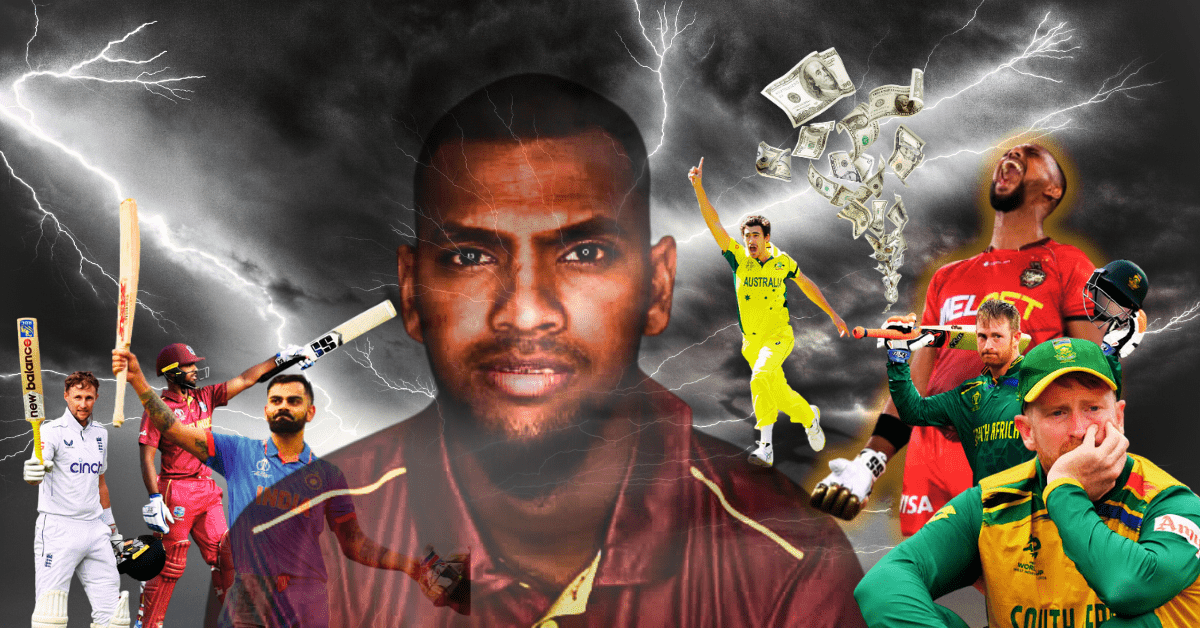
Twenty nations. One World Cup. Vastly different financial realities.
From Italy’s debut to Nepal fans turning stadiums into home grounds, cricket finally looked like the global sport it had always claimed to be at the 2026 T20 World Cup.
Then the tournament ended. And the brutal economic reality set in.
In 2024, USA hosted a World Cup, stunned Pakistan, and filed for bankruptcy just 14 months later. Scotland came within touching distance of Full Membership, only to implode amid a racism scandal and now sit on barely $100,000 in reserves.
These are not isolated cases.
Last year, we broke down the finances of the 12 Test-playing nations. Today, we turn our attention to over 20 Associate nations trying to survive the same system.
Are these nations on track to become the next Afghanistan? Or will they collapse into obscurity like the once-promising Kenya?
Let’s find out.
Key Takeaways
India alone sits on $923 million in reserves. Canada, the financially strongest Associate, has $3.4 million, a 271x gap. Netherlands runs its entire national cricket operation on $6 million a year. Cricket Australia spent $212 million in 2024 alone.
Nepal fields the most structured contract system of any Associate nation: 33 men and 19 women, but pay remains extremely low.
Rishabh Pant’s single IPL auction price of ~$3.1 million could (1) pay Nepal’s Grade A men’s captain, Rohit Poudel ($741/month) for 349 years, (2) fund Nepal’s entire men & women contract pool for 16 years, or (3) single-handedly bankroll two Associate nations’ entire annual ICC grants.
The Financial Scorecard: 20+ Associate Nations Ranked
Unlike the 12 Test-playing nations, only Netherlands, Scotland (partially), Italy, USA, and Canada have publicly available audited financial statements. For most Associate nations, there is no public financial data due to the lack of professionalization, making accountability and long-term planning far more difficult.
Where financial statements were unavailable, I assessed the financial health based on central contract announcements, budget documents, strategy plans, and news reports.
🟢 Financially & Institutionally Strong: None
🟡 Stable: Netherlands, UAE, Namibia, Nepal
🔴 At Risk: Scotland, Uganda, Kuwait, Italy, Brazil (women)
🟠 Not Professional Yet: Bermuda, Germany, Jersey, Thailand (women), Argentina, Tanzania, Japan, Hong Kong, Fiji, Denmark, Spain, Samoa, all other Associate nations
💀 In Crisis: Canada, USA, Kenya, Oman, PNG
All 98 Associates share approximately $67.2 million in annual ICC funding, an average of $690,000 per nation, though actual grants range from about $12,500 for the smallest members to up to $2 million for top-tier nations. Allocations are determined by a scorecard measuring participation, infrastructure, staffing, and non-ICC income generation.
These Associates have demonstrated centrally funded contracts, growing infrastructure, and revenue sources beyond pure ICC dependency.
Netherlands ($1.69 Million Reserves)
Financial Strength: 🟡 Stable
Central Contracts: 10 Men/11 Women
Bottom Line: $1.69 million is thin for a national cricket board running a $6 million annual operation. The KNCB needs to earn more to provide stronger central contracts for their core players.
After their best financial year in 2023, a sponsorship dispute with their principal partner, Nordek, almost halved their sponsorship revenue in 2024. Their liquid cash dropped from $2.38 million to $1.29 million in a single year. They need to find a new major sponsor before that trend continues.
Revenues and Expenses
Koninklijke Nederlandse Cricket Bond (KNCB) – Royal Dutch Cricket Association
KNCB Reserves Summary
2021:+ €1,411,166 (+ $1,632,879)
2022:+ €1,219,660 (+ $1,411,147)
2023:+ €1,699,680 (+ $1,966,430)
2024:+ €1,462,006 (+ $1,691,741)
Of the $1.69 million, only $1.29 million is in liquid cash, down from $2.38 million in 2023.
*Note: €1 = $1.157 as of 03/20/2026
Year
Revenue
Operating Cost
Other Gains/Charges*
Total Comprehensive Income
2021
+€3,017,816 (+$3,491,603)
-€2,757,956 (-$3,191,945)
-€348,821 (-$403,786)
-€88,961 (-$102,968)
2022
+€3,883,693 (+$4,493,433)
-€3,794,315 (-$4,390,082)
-€280,885 (-$324,944)
-€191,506 (-$221,613)
2023
+€5,078,352 (+$5,875,653)
-€4,585,332 (-$5,305,019)
-€13,000 (-$15,041)
+€480,020 (+$555,383)
2024
+€5,044,915 (+$5,836,967)
-€5,287,613 (-$6,117,768)
+€5,024 (+$5,813)
-€237,673 (-$274,988)
*Other Gains/Charges includes net financial income (interest received) and result from Cricket Nederland B.V.
KNCB Revenue Breakdown
Year
ICC Contributions
Sponsorship
Domestic (Competitions & Membership)
NOC*NSF
Other Income*
2021
€2,479,197 (82.2%)
€21,173 (0.7%)
€85,252 (2.8%)
€91,216 (3.0%)
€341,978 (11.3%)
2022
€2,906,086 (74.8%)
€46,549 (1.2%)
€204,695 (5.3%)
€107,210 (2.8%)
€619,153 (15.9%)
2023
€3,934,718 (77.5%)
€487,326 (9.6%)
€203,136 (4.0%)
€116,536 (2.3%)
€336,636 (6.6%)
2024
€3,645,610 (72.3%)
€253,832 (5.0%)
€242,816 (4.8%)
€167,219 (3.3%)
€735,438 (14.6%)
*Other includes own contributions, education & development, other income, and exchange rate result.
NOC*NSF (Nederlands Olympisch Comité * Nederlandse Sport Federatie) is the Dutch Olympic Committee and Sports Federation, essentially government’s investment in sport.
The ICC income (2024) can be further broken down as follows:
Average Salary: €40,500 (~$46,859 USD) – Men, €15,000 (~$17,355 USD) – Women
Total player payment pool for 2026: €570,000 — Men €405,000 (71%), Women €165,000 (29%)
Men: 7 Contracts for 9 Months, 3 High Performance (HP) contracts for 6 months (Total Playing Days: 86)
Women: 11 HP Contracts for 6 months – 4 Senior, 7 Junior (Total Playing Days: 57)
Highlight from the 2024 Annual Plan
“For 2024, it is important for us to have set up a High Performance management structure, to develop a player monitoring system including elements of talent recognition, progression and development, as well as to bring the brand and ‘the story’ of Dutch cricket to the masses and potential sponsors….Also high on the agenda for 2024 is offering our top players the contractural (and therefore) financial security they need to fully focus on cricket and their role in the governing body. Their employment position is still too often insecure. For example, 6-month temporary contracts are often used and these provide little to no certainty for the longer term.”
Interesting Observations
A dispute with principal sponsor Nordek in 2024 almost halved sponsorship revenue. The KNCB had already committed to higher player contracts and coaching staff expecting the World Cup to bring more sponsors. It did not, resulting in a net loss for the year.
Membership grew 7% and the number of clubs increased by 5 to total of 50. Playing members have increased from 4800 in 2018 to about 6000 in 2025 with rise among all categories: girls, boys, men, and women.
The Dutch women qualified for the 2026 Women’s T20 World Cup for the first time, capping a remarkable rise for the programme. Last year, three Cricket Festivals were organized for girls and women, with 150+ participants and 300 registrations.
Bottom Line: Namibia punches well above its weight. No published financials, but the evidence points to a well-run federation: men’s contracts since 2009, the first women’s professional contracts in any sport in the country, the largest grassroots cricket programme in Africa, and now a brand new national stadium.
Highlights
The Ashburton Kwata Mini-Cricket Programme reached 58,560 participants in 2024 (31,400 boys, 27,160 girls), making it the largest cricket initiative on the African continent, helping them win the 2024 ICC Development Initiative of the Year.
Cricket Namibia signed 10 women’s contracts for the Capricorn Eagles, the first professional contract for any women sport in the country.
Men’s Contracts were offered as early as 2009 to 9 professional cricketers. The budget for the cricket federation at that time was N$9 Million (~$1.2 Million USD)
The FNB (First National Bank) Namibia Cricket Ground opened in October 2025 in Windhoek, the country’s first national stadium. They stunned South Africa in the opening match.
Bottom Line: The most sophisticated contract structure of any Associate country. Pay is low by global standards, but the system exists now and is growing. With a passionate fanbase and a growing NPL, the future is bright for Nepali cricket.
The Nepal Premier League (NPL) launched in 2024, generated NPR 27.69 Crore (~$2 million) in the inaugural season and jumped to about 40-45 Crore (~$3 million) in 2025.
For 2025, Cricket Association of Nepal (CAN) offered 33 men across five grades and 19 women across grades under central contract.
The pay ranges from NPR 100,000 ($670/month) for Grade A players down to NPR 25,000 ($167/month) for emerging players. Women’s Grade A sits at about NPR 50,000 ($334/month).
Match Fees: The men’s team receives NPR 10,000 ($67) per ODI and NPR 5,000 ($34) per T20I, while the women receive 5,000 and 3,000 ($20) for ODI and T20I respectively.
Nepal has some of the most passionate fans in world cricket, which came to life in the 2026 T20 World Cup, where Nepal defeated Scotland and ran England close, falling short by only 4 runs.
Central Contracts: 20 Men (10 full-time, 10 part-time), started in 2016
Bottom Line: UAE’s position is uniquely advantaged among Associates: The ILT20 sold its media rights for $120 million over 10 years to Zee Network and is among the top paying franchise leagues. UAE also regularly hosts Tests, Asia Cups, IPL matches, and is home to the ICC itself.
II. Hanging On: The Associates Surviving on ICC Life Support
These Associates are almost entirely ICC-dependent with thin or no reserves, but they still might have central contracts in place.
Scotland ($100,000 Reserves)
Financial Strength: 🔴 At Risk
Central Contracts: 14 Men/9 Women
Bottom Line: The 2019 peak of +£362,484 (+$483,696) represents the high watermark of operational health before COVID, the racism scandal, and the governance crisis that followed. A dream of full membership in 2021 now looks distant. Participation in 2026 T20 World Cup will provide temporary financial relief.
Reserves
2016:+£304,559 (+$406,400)
2017:+£351,582 (+$469,151)
2018:+£352,272 (+$470,071)
2019:+£362,484 (+$483,696)
2020:+£337,470 (+$450,335)
2021:+£335,614 (+$447,859)
2022:+£457,807 (+$611,143)
2023:+£52,034 (+$69,435)
2024:+£77,465 (+$103,388)
Revenues and Expenses
Note: £1 = $1.3344 as of 03/21/2026
Year
Revenue
Expenses
Other Gains/Charges
Total Comprehensive Income
2017
+£2,187,190 (+$2,918,769)
-£2,144,323 (-$2,861,566)
+£4,156 (+$5,546)
+£47,023 (+$62,758)
2018
+£2,329,762 (+$3,109,324)
-£2,334,434 (-$3,115,562)
+£5,362 (+$7,155)
+£690 (+$921)
2019
+£2,576,214 (+$3,438,843)
-£2,566,529 (-$3,425,921)
+£527 (+$703)
+£10,212 (+$13,627)
2020
+£1,668,010 (+$2,225,869)
-£1,787,129 (-$2,384,874)
+£98,450 (+$131,393)
-£25,014 (-$33,389)
2021
+£2,264,382 (+$3,021,982)
-£2,361,196 (-$3,151,259)
+£98,670 (+$131,646)
-£1,856 (-$2,477)
Note: Other Gains/Charges includes interest and furlough (government bailout due to COVID)
Year
Total Assets
Total Liabilities
Net Assets/Reserves
2022
+£663,300 (+$885,137)
-£205,493 (-$274,369)
+£457,807 (+$611,143)
2023
+£801,789 (+$1,070,227)
-£749,755 (-$1,000,522)
+£52,034 (+$69,435)
2024
+£338,519 (+$451,878)
-£261,054 (-$348,391)
+£77,465 (+$103,388)
After 2022, Cricket Scotland stopped releasing detailed Profit & Loss statements and only Total Assets/Net Reserves. Hence, the sharp drop from +£457,807 to +£52,034 in 2023 is largely unexplained.
Excerpt from Cricket Monthly
“In 2021, Cricket Scotland was in a secure enough place to think about applying for Full Member (FM) status at the ICC. The criteria for applications had changed and the status was no longer explicitly linked to playing multi-day cricket…By mid-2022 discussions were ongoing with the ICC about the application…Barely a year later Cricket Scotland is in meltdown, any aspirations of FM status blown to dust.”
-Osman Samiuddin, ESPNCricinfo
Interesting Observations
In 2023, Cricket Scotland announced its first-ever women’s professional contracts, with nine players signing, a landmark moment for the women’s game in Scotland. In 2024, Scotland qualified for the ICC Women’s T20 World Cup for the first time.
Cricket Scotland’s 2024-28 Strategy commits to equitable pay across men’s and women’s teams by 2028.
Scotland’s last minute participation in the 2026 T20 WC at the expense of Bangladesh may boost Scotland’s revenue by $1 million this year.
There are more than 130 cricket clubs in Scotland.
Bottom Line: Italy’s funding comes from two major sources: the ICC and government grants. A net loss year in 2024 has wiped out gains from the previous few years. Qualification for the 2026 T20 World Cup and win against Nepal will boost both ICC funding and awareness for the sport at home.
Federazione Cricket Italiana (FCRI) Annual Net-Equity (Reserves)
2020:+€232,470 (+$269,068)
2021:+€70,089 (+$81,093)
2022:+€135,531 (+$156,819)
2023:+€138,812 (+$160,626)
2024:+ €75,670 (+$87,550)
FCRI Revenue and Expenses
Year
Revenue
Operating Cost
Other Charges
Total Comprehensive Income
2021
+€642,094 (+$742,903)
-€793,573 (-$917,964)
-€11,003 (-$12,730)
-€162,382 (-$187,876)
2022
+€1,056,194 (+$1,222,017)
-€965,120 (-$1,116,644)
-€25,632 (-$29,656)
+€65,442 (+$75,726)
2023
+€1,240,749 (+$1,435,547)
-€1,198,564 (-$1,386,638)
-€38,904 (-$45,012)
+€3,280 (+$3,795)
2024
+€1,839,882 (+$2,128,733)
-€1,902,559 (-$2,201,261)
-€486 (-$562)
-€63,141 (-$73,054)
2025
~+€1,841,706 (+$2,130,895)
~-€1,761,712 (-$2,038,453)
~+€66,334 (+$76,749)
Note: The data for 2025 is from FCRI’s budget, while the others (2021-24) are actual financial statements after year end.
FCRI Revenue Breakdown
Year
ICC Contributions
CONI / Sport&Salute
Member Fees & Fines
Intl Event Revenue
Other Income
2021
€273,476 (42.6%)
€183,154 (28.5%)
€61,603 (9.6%)
€99,634 (15.5%)
€24,227 (3.8%)
2022
€440,000 (41.7%)
€413,194 (39.1%)
€113,111 (10.7%)
€77,175 (7.3%)
€12,714 (1.2%)
2023
€451,099 (36.4%)
€380,176 (30.6%)
€116,673 (9.4%)
€282,913 (22.8%)
€9,889 (0.8%)
2024
€1,175,600 (63.9%)
€118,000 (6.4%)
~€75,000 (4.1%)
~€459,000 (24.9%)
~€12,000 (0.7%)
CONI (Comitato Olimpico Nazionale Italiano) is Italy’s National Olympic Committee, while Sport & Salute is a government owned company.
Brazil: In 2020, Brazil offered 14 central contracts to the women team before men, first Associate nation to do so. Programme grew from 26 orphanage children in 2009 to 5000 kids across 50 schools. Two ICC Americas development awards in 2024.
Bottom Line: Although Canada has diversified revenue with the T20, has growing reserves, and featured back-to-back Men’s T20 World Cup appearances, governance issues have held them back: Their CEO was fired, player salaries frozen, GT20 contract terminated, and match-fixing allegations emerged.
he money is there. The question is whether the institution can be trusted to use it well.
Cricket Canada Reserves
2019:+CAD $983,833 (+$717,804 USD)
2020:+$1,821,276 (+$1,329,203)
2021:+$2,467,488 (+$1,800,865)
2022: +$2,177,793 (+$1,589,368)
2023:+$2,967,330 (+$2,165,433)
2024:+$4,628,667 (+$3,378,756)
Year
Revenue
Operating Cost
Total Comprehensive Income
2021
+$1,605,116 CAD (+$1,171,093 USD)
-$958,904 CAD (-$699,749 USD)
+$646,212 CAD (+$471,517 USD)
2022
$1,876,730 (+$1,369,167)
-$2,166,425 (-$1,580,696)
–$289,695 (-$211,415)
2023
$3,176,869 (+$2,317,839)
-$2,387,332 (-$1,741,698)
$789,537 (+$576,141)
2024
$5,702,483 (+$4,160,692)
-$4,041,146 (-$2,948,580)
$1,661,337 (+$1,212,111)
Cricket Canada Revenue Breakdown
Year
ICC Contribution
GT20 (Bombay Sports)
Sponsorship (Boundaries North)
Sports Canada
Other*
2021
$935,241 CAD (58.3%)
$421,000 CAD (26.2%)
$129,500 CAD (8.1%)
$119,375 CAD (7.4%)
2022
$1,488,112 (79.3%)
$29,361 (1.6%)
$104,550 (5.6%)
$254,707 (13.6%)
2023
$1,393,783 (43.9%)
$1,030,470 (32.4%)
$345,990 (10.9%)
$100,740 (3.2%)
$305,886 (9.6%)
2024
$3,637,766 (63.8%)
$1,184,838 (20.8%)
$336,667 (5.9%)
$80,000 (1.4%)
$463,212 (8.1%)
Other* includes interest income, provincial dues, grant revenue, and miscellaneous.
The men’s team have qualified for back-to-back T20 World Cups in 2024 & 2026, but the women team is far behind, failing to qualify for the Global Qualifier in 2025.
Bottom Line: New stadiums, hosting a successful home World Cup, victory against Pakistan, LA2028 on the horizon, qualifying for two back-to-back World Cups, and hosting a stable franchise league signalled that things were on the right track. However, with the ACE contract falling through, ICC’s suspension of USA cricket, Aaron Jones’ corruption charges, cricket in America is failing to overcome its major bottleneck: governance.
Reserves
2018:-$12,082
2019:-$119,463
2020:+$878,336
2021:-$639,867
2022:-$783,330
2023:-$126,016
2024:+$437,749
*Note: USA Cricket filed for Chapter 11 bankruptcy protection on October 1, 2025, meaning the surplus from the 2024 T20 World Cup and MLC ventures did not translate into organizational stability.
Revenues and Expenses
Year
Revenue
Operating Cost
Total Comprehensive Income
2019
+$4,059,233
-$4,166,614
-$107,381
2020
+$2,998,852
-$2,001,053
+$997,799
2021
+$2,634,159
-$4,152,362
-$1,518,203
2022
+$3,257,437
-$3,400,900
-$143,463
2023
+$3,228,689
-$2,571,375
+$657,314
2024*
+$5,651,835
-$5,531,070
+$120,765
USA Cricket Revenue Breakdown
Year
ICC Contributions
ACE Contract
Domestic (Events & Membership)
Sponsorship
Other
2019
$2,361,537 (58.2%)
$1,525,240 (37.6%)
$13,120 (0.3%)
$10,000 (0.2%)
$149,336 (3.7%)
2020
$1,449,456 (48.3%)
$1,439,800 (48.0%)
$182 (0.0%)
$5,000 (0.2%)
$104,414 (3.5%)
2021
$1,528,254 (58.0%)
$826,241 (31.4%)
$157,553 (6.0%)
$60,000 (2.3%)
$62,111 (2.4%)
2022
$2,056,036 (63.1%)
$422,000 (12.9%)
$313,303 (9.6%)
$316,959 (9.7%)
$149,139 (4.6%)
2023
$1,793,062 (55.5%)
$439,297 (13.6%)
$828,122 (25.6%)
$102,300 (3.2%)
$65,908 (2.0%)
2024
$4,392,619 (77.7%)
—
$1,219,005 (21.6%)
—
$40,211 (0.7%)
Highlights
$500,000 was invested in women’s cricket tournaments across ages which included 338 players across 24 teams.
USA cricket membership grew 30% year-over-year to about 22,100 paid members in 2024.
Players protested, and the board terminated 11 contracts. Since Oman residency is based on employment, this resulted in several players being forced to leave the country.
Kenya
At the peak of its powers, Kenya reached the 2003 ODI World Cup semi-final, defeating Sri Lanka, Bangladesh, and Zimbabwe on the way.
In the early 2000s, Kenya used to give central contracts with as many as 13 contracted players in 2011.
Kenyan players went on strike after 2003 due to unpaid wages, did not play an ODI for 18 months, and the former Kenya Cricket Association was dissolved (replaced by Cricket Kenya).
By 2014, Kenya had lost its ODI status. In 2018, they were relegated to Division III of the World Cricket League (WCL) and were suspended in 2019.
In 2014, PNG started offering 16 central contracts for their men’s team.
PNG lost its ODI status in 2023, which meant an $800,000 ICC funding loss till 2028. Women’s programme is expected to lose $428,000.
However, by that time, PNG had already hired two international coaches and setup overseas prep camps. This resulted in tensions with the players demanding the removal of the CEO.
The game is still growing in the region with the number of junior hardball competitions increasing from about 20 teams in 2022 to upwards of 165 teams in 2023.
IV. The Next Wave: The Associates Still Finding Their Feet
These nations are almost entirely ICC-dependent and have no central contracts.
American Prospects
Argentina: Oldest cricket nation in the Americas, first match in 1868 (If not for the British commonwealth elitism, they could have been a Test nation). Two full-time staff, ~34 clubs, ICC funding is the primary source. Women’s Flamingos have won 5 of the 6 South American Championships and are the stronger program.
Bermuda: Surplus of about ~$344,000 with total assets about $958,000 and $614,000 in liabilities. They earned a revenue of $1.38 Million in 2023, but with a total net loss of $190,000. 13 clubs, ICC funding ($675,000) and government grants ($259,000) are primary sources of funding. Dwayne Bravo helping out in dreams of Bermuda qualifying for the 2028 T20 World Cup.
Tanzania: Tanzania’s participation grew from 40,000 in 2022 to 73,300 in 2024 with 10 academies across the country. The country qualified for the U-19 World Cup for the first time in 2025.
Jersey: 405 males players across 56 teams, 3787 school participants, 200% growth in female players. No professional contracts. Defeated Scotland in a famous T20 World Cup qualifier win, but failed to qualify on NRR.
Germany: The DCB targets 15,000 regular cricketers, 32 women’s hardball teams, a 300% increase in sponsor revenue, and a push for full DOSB (German Olympic Sports Confederation) membership, which would unlock public funding.
Spain and Denmark (qualified for the 1993 and 1997 Women’s World Cups) are also prospects but were left out of this analysis.
Thailand (women): The women’s team ranked as high as 10th in T20s and won gold at the 2023 Southeast Asian Games. No central contracts, men’s game not up to the mark. Low government funding does not help either.
Japan: Japan has zero central contracts or professional cricketers, yet still qualified for the U-19 2026 World Cup. A permanent cricket ground is being built in Nagoya. Cricket’s inclusion in the 2028 Olympics has triggered Japan’s elevation to JOC first tier membership, meaning government-funded part-time staff — a doctor, coach, and trainer — will support the national programme for the first time.
Hong Kong: Regularly qualify for the Asia Cup with reasonable domestic infrastructure and expatriate cricket population. Player emigration/relocation holds them back to go to the next stage.
Fiji: One of the original Associate nations in 1965 and with a history of cricket in the early 1900s, cricket has not developed professionally in the country since. They reached the semi-finals of the first ACC in 1996 and hosted the South Pacific Games in 2003.
Samoa: Ross Taylor’s return raised Samoa’s profile in the 2026 T20 World Cup qualifier. They reached the Super Six of the Asia-EAP Regional Final, but did not make the Top 3 cut. They have a strong women’s programme as well.
Expanding the T20 World Cup to 20 teams was the right call by the ICC. But if the ICC genuinely dreams of building a 32-team competition that rivals the FIFA World Cup, it cannot afford to let its Associates survive on goodwill alone. Most are one bad financial year away from complete collapse.
So what is the fix?
The ICC should increase Associate funding so each Associate board (especially top-tiered nations) can guarantee 15 men and 15 women a full-time contract, indexed to the living wage in that country. The ICC already has the data and the resources. It just needs to be directly more deliberately.
The 2026 World Cup proved Associate cricket belongs on the global stage. The question is whether the ICC’s wallet will match its ambition.
Today, I am going to take on a monumental task. I will attempt to rank 150 years of Australian cricketers across formats and eras.
Six ODI World Cups, a World Test Championship, a T20 World Cup, 30 ICC Hall of Famers, and decades of Ashes dominance, and that’s just scratching the surface.
This is going to spark some serious debate. Let’s get started.
Key Takeaways
Sir Donald Bradman tops the list of the greatest Australian cricketer of all-time. Following up close behind are Ricky Ponting, Shane Warne, Glenn McGrath, Steve Waugh, Allan Border, Steve Smith, Adam Gilchrist, Mitchell Starc, and Keith Miller.
The list of 78 features the following-mix: 32 specialist batters, 20 fast bowlers, 10 all-rounders, 8 wicketkeepers, and8 spinners.
Era-wise, the list includes 33 players who featured after the year 2000, 26 players from the 1950–1990 era, and 19 pioneers from 1877 to 1950.
Usman Khawaja has just retired, Mitchell Starc has had an all-timer of an Ashes series, and Travis Head has produced some of the great match-winning innings of all time. It is the perfect time to re-evaluate where they stand in history.
The goal is that the list contains all the contenders for the greatest Australian fast bowlers, spinners, keepers, and batters.
Using the same framework that I used to rank England’s greatest 65 cricketers, I evaluated every player on a 100-point scale. The score is heavily weighted toward Career Stats, Match-Winning Performances, and Big Stage Impact (20 points each), with the remainder split between Longevity, Versatility, Leadership, and Era-specific adjustments to ensure a fair fight between the 1890s and the 2020s.
In the event of a tie, the player with more Test matches is ranked higher.
Top 78 Greatest Australian Cricketers of All-Time (Ranked)
Honorable Mentions
Over 130 Australian cricketers were considered for this list. While I initially aimed to include every Wisden Cricketer of the Year or World Cup hero, the list became stretched out. Below are some impactful players that missed out.
Honorable Mentions: Norm O’Neill, Bert Ironmonger, Ted McDonald, Syd Gregory, Adam Voges, Billy Murdoch, Joe Darling, George Bailey, Tom Moody, Rick McCosker, Herbie Collins, Ian Redpath, Colin Miller, Darren Lehmann, Kim Hughes, Geoff Lawson, Jack Ryder, Chris Rogers, Phil Hughes, Simon Katich, Michael Slater, Terry Alderman, Matthew Wade, Marcus Stoinis, Ian Harvey, Keith Stackpole, Peter Burge, Gil Langley, Jim Burke, George Tribe, Bruce Dooland, Bill Brown, Jack Fingleton, Alan Fairfax, Sid Barnes, Johnny Mullagh (“The WG Grace of Aboriginal cricketers”)
World Cup Heroes & Players with Brief Peaks That Missed Out:
Charles Bannerman: Scored 67% of the runs in the first ever Test when he scored 165*
Gary Gilmour: Most Wickets in the 1975 ODI WC (11)
Alan Turner: Most Runs for Australia in the 1975 ODI WC, 5th most overall
Damien Fleming: Joint 3rd Highest Wicket Taker in 1996 WC
Ryan Harris: Took 113 wickets in a short 6-year career including a delivery we will never forget: Ryan Harris to Alastair Cook. If only the knee would have persisted.
Zampa, why is Zampa in the list? It is because he is Australia’s highest T20I wicket-taker by a fair distance. Made an impact in both the 2021 T20 WC and 2023 ODI WC campaigns. Underrated.
Role: Leg Spinner
Domestic Teams: South Australia, New South Wales
Matches: 99 (ODIs), 87 (T20Is)
Wickets: 169 (ODIs), 105 (T20Is)
Bowling Average: 28.05 (ODIs), 22.46 (T20Is)
5-Wicket Hauls: 1/1 (ODIs/T20Is)
Player of Match Awards: 12
Player of Series Awards: 1
World Cup Winner? ✅✅
Captained Australia? ❌
100 Tests? ❌
Notable Achievements: 2nd Most Wickets in 2021 T20 WC (13); 2nd Most Wickets in 2023 ODI WC (23)
Arguably the most technically perfect wicketkeeper in Australian history. Even 80 years after his retirement, he holds the record of most stumpings in Test cricket of all-time. Before his cricket career, he was a corporal during WWI and almost died.
Role: Wicketkeeper
Domestic Team: New South Wales
Matches: 54 (Tests), 245 (FC)
Runs: 1427 (Tests), 6135 (FC)
Hundreds: 0/6
Average: 22.65 (Tests), 23.77 (FC)
Catches/Stumpings: 78/52 (Tests), 399/263 (FC)
Captained Australia? ❌
Notable Achievements: Most stumpings in Test cricket
Not many cricketers get the honor to take hat-tricks on their birthday. Mostly a 3rd seamer in the attack, Siddle still broke the 200-Test wicket mark. His energy on the cricket field was unmatched.
Although he played 9 Tests (8 for Australia, 1 for England), he has the second best bowling strike rate (37.73) and average (12.70) of all-time behind England’s George Lohmann.
Role: Left Arm Swing
Domestic Team: New South Wales
Matches: 9 (Tests), 198 (FC)
Wickets: 61 (Tests), 812 (FC)
Bowling Average: 12.70 (Tests), 17.54 (FC)
5-Wicket Hauls: 6/63 (Test/FC)
Captained Australia? ❌
100 Tests? ❌
Notable Achievements: Best bowling strike rate and average for an Australian bowler; Wisden Cricketer of the Year (1889)
Known as “The Voice” for his constant chatter, Grout was a livewire wicketkeeper whose “grizzling” grit and sharp reflexes made him the heart of Australia’s golden era under Richie Benaud. Grout once refused to run-out Titmus since he had slipped while running between the wickets. In his Wisden obituary, Bob Simpson mentioned, ‘He was the greatest wicket-keeper I ever saw.’
Role: Wicketkeeper
Domestic Teams: Queensland
Matches: 51 (Tests), 100 (FC)
Runs: 890 (Tests), 2824 (FC)
Average: 15.08 (Tests), 23.93 (FC)
Catches/Stumpings: 163/24 (Tests), 473/114 (FC)
Captained Australia? ❌
100 Tests? ❌
Notable Achievements: Member of Australia Cricket Hall of Fame; Australia did not lose a Test series while he played
65. Graham ‘Garth’ McKenzie (1961-1971) — 67 Points
Between Alan Davidson and Dennis Lillee, there was Garth McKenzie who flew Australia’s fast bowling flag high.Played his last Test at the age of 29 for a County contract, falling two short of Richie Benaud’s 248 Test wickets, Australia’s record at that time.
Role: Fast Bowler
Domestic Teams: Western Australia, Leicestershire
Matches: 60 (Tests), 383 (FC)
Wickets: 246 (Tests), 1219 (FC)
Bowling Average: 29.78 (Tests), 26.96 (FC)
5-Wicket Hauls: 16/49 (Test/FC)
Captained Australia? ❌
Notable Achievements: Member of Australia Cricket Hall of Fame, Wisden Cricketer of the Year (1965)
He was a great fast bowler and had a beautiful action. Part of the one of the finest bowling line ups in world cricket. However, he will go down in cricket history as the man who scored 201* after being sent in as a night watchman.
Did Khawaja live up to his potential? Maybe, maybe not. But he was an important Australian cricketer, both on and off the field. In a tough era for opening batters, he became one of the standouts. Will forever be remember for his 9-hour marathon in Dubaito save a Test. The man of many comebacks.
The “Unshakeable” captain during the Bodyline series who led with immense moral courage and technical grit against the most controversial tactics in history. Known as ‘The Rock’ for his temperament. Died while playing golf.
Role: Top Order Batter
Domestic Teams: Victoria
Matches: 35 (Tests), 174 (FC)
Runs: 2300 (Tests), 13388 (FC)
Average: 46.00 (Tests), 64.99 (FC)
Hundreds: 7/49 (Test/FC)
Captained Australia? ✅
100 Tests? ❌
Notable Achievements: Wisden Cricketer of the Year (1927); Member of Australia Cricket Hall of Fame; 7th highest FC average of all-time
A pioneer in T20 cricket. Led Australia to their first T20 World Cup victory, a format where Australia had languished behind the rest of the world for 15 years.
Role: Top Order Batter; Part-Time Left Arm Spinner
Notable Achievements: Has highest scores of 172 and 156 in T20Is; 11th most career T20I runs; 3rd Most matches as captain in T20Is; 2nd Most runs in T20I for Australia
Does Maxwell even deserve to be in this list? Known for his X-factor and innovation, he had a rather up and down career. But when he did deliver, he was second to none. It all came together in the 2023 ODI World Cup against Afghanistan, when he produced the greatest World Cup innings of all-time. On one-leg.
After years of disappointing the Australian public, he finally lived up to his potential during the 2021 World Cup Final. On his best days, Mitchell Marsh is a true match-winner. A funny bloke too.
World Cup Winner? ✅✅✅ (2015 ODI, 2023 ODI, 2021 T20)
Captained Australia? ✅ (T20Is)
100 Tests? ❌
Notable Achievements: Allan Border Medal (2024); Player of the Match – 2021 WC Final; Best of 177* from #5 in ODIs
Career Stats (20)
Match-Winning (20)
Big Stage Impact (20)
Longevity (15)
Versatility (10)
Accolades (10)
Leadership (5)
Era Bonus (5)
Fielding Bonus (3)
100-Test Bonus (2)
Total
10
15
15
14
8
4
4
0
0
0
70
57. Bill Ponsford (1924-1934) — 71 Points
If Bradman was Mozart, then Ponsford was Salieri. Apart from Brian Lara, only Ponsford has the distinction of two quadruple first-class centuries with 429 & 437.
Role: Top Order Batter
Domestic Teams: Victoria
Matches: 29 (Tests), 162 (FC)
Runs: 2122 (Tests), 13819 (FC)
Average: 48.22 (Tests), 65.18 (FC)
Hundreds: 7/47 (Test/FC)
Captained Australia? ❌
100 Tests? ❌
Notable Achievements: Wisden Leading Cricketer of the Year (1927), Wisden Cricketer of the Year (1935); Member of Australia Cricket Hall of Fame; 6th highest FC average of all-time
One of the greatest left-handed Test batters Australia produced, Morris combined technical brilliance with a calm temperament to become one of the game’s most respected run-getters. Averaged 53.78 away compared to 41.18 at home.
Role: Top Order Batter
Domestic Teams: New South Wales
Matches: 46 (Tests), 162 (FC)
Runs: 3533 (Tests), 12614 (FC)
Average: 46.48 (Tests), 53.67 (FC)
Hundreds: 12/46 (Test/FC)
Captained Australia? ✅ (2 Matches)
100 Tests? ❌
Notable Achievements: Wisden Cricketer of the Year (1949); Member of Australia Cricket Hall of Fame; Member of ICC Hall of Fame
McDermott was the premier strike bowler of the late 80s and early 90s, renowned for his rhythmic, textbook action and lethal outswing. His pivotal role in the 1987 WC and 1990-91 Ashes cemented his place as an elite quick bowler of the era.
Role: Fast Bowler
Domestic Teams: Queensland
Matches: 71 (Tests), 138 (ODIs)
Wickets: 291 (Tests), 203 (ODIs)
Bowling Average: 28.63 (Tests), 24.71 (ODIs)
5-Wicket Hauls: 14/1 (Tests/ODIs)
Player of Match Awards: 8
Player of Series Awards: 3
World Cup Winner? ✅ (1987)
Captained Australia? ❌
100 Tests? ❌
Notable Achievements: Most Wickets in the 1987 ODI World Cup (18); Member of Australia Cricket Hall of Fame
An immovable opening batter who specialized in blunting the world’s fastest attacks, Lawry’s legendary defensive grit and stoic leadership provided the backbone of Australia’s top order for a decade before he became the iconic voice of the summer. Averaged 47 as a Test opener.
Role: Top Order Batter
Domestic Teams: Victoria
Matches: 67 (Tests), 1 (ODIs), 249 (FC)
Runs: 5234 (Tests), 27 (ODIs), 18734 (FC)
Average: 47.15 (Tests), 27.00 (ODIs), 50.90 (FC)
Hundreds: 13/50 (Test/FC)
Captained Australia? ✅
100 Tests? ❌
Notable Achievements: Wisden Cricketer of the Year (1962); Member of Australia Cricket Hall of Fame
With 46 fifties and 67 not-outs, Michael Bevan was the original “Finisher” who turned the art of the ODI chase into a cold, calculated science. With nerves of steel and an unmatched ability to find the gaps, he consistently pulled off miracles when victory seemed impossible.
Role: Middle Order Batter
Domestic Teams: New South Wales, Tasmania
Matches: 18 (Tests), 232 (ODIs)
Runs: 785 (Tests), 6912 (ODIs)
Average: 29.07 (Tests), 53.58 (ODIs)
Hundreds: 0/6 (Tests/ODIs)
Player of Match Awards: 13
Player of Series Awards: 1
World Cup Winner? ✅✅ (1999, 2003)
Captained Australia? ❌
100 Tests? ❌
Notable Achievements: Member of Australia Cricket Hall of Fame; Member of the 5000 ODI runs and 50 dismissals club; 8th highest ODI career average (53.58) and highest of any player in his era
Gritty heart of Australia’s 80s and 90s resurgence, famously immovable at both the crease and short leg. Allegedly had 52 cans of beer on a flight from Australia to England.
Role: Top Order Batter
Domestic Team: Tasmania
Matches: 107 (Tests), 181 (ODIs)
Runs: 7422 (Tests), 5964 (ODIs)
Average: 43.65 (Tests), 37.04 (ODIs)
Hundreds: 21/5 (Tests/ODIs)
Captained Australia? ❌
Player of Match Awards: 15
Player of Series Awards: 5
World Cup Winner? ✅
100 Tests? ✅
Notable Achivements: Player of the Match in the 1987 WC Final; 2nd Highest Run-Scorer in the 1987 ODI World Cup (highest for Australia); 4th Highest Run-Scorer of 1992 WC (Highest for Australia), Wisden Cricketer of the Year (1994); Member of Australia Cricket Hall of Fame
The “Grace of Australia” and the nation’s first true colossus of the game. As a giant all-rounder who could carry an entire team, he was the foundational superstar of the late 19th century.
Role: All-Rounder
Domestic Teams: South Australia
Matches: 31 (Tests), 251 (FC)
Runs: 1238 (Tests), 11758 (FC)
Average: 23.35 (Tests), 29.54 (FC)
Wickets: 103 (Tests), 1023 (FC)
Bowling Average: 27.09 (Tests), 21.31 (FC)
Captained Australia? ✅ (4 Matches)
100 Tests? ❌
Notable Achievements: The first Australian to achieve the double of 1000 runs and 100 wickets in Test cricket
The fastest and most frightening bowler of his generation. With a unique slinging action and a “sand-shoe crushing” delivery, he provided the terrifying edge to Australia’s 1970s resurgence.
Role: Fast Bowler
Domestic Teams: New South Wales, Queensland
Matches: 51 (Tests), 50 (ODIs)
Wickets: 200 (Tests), 55 (ODIs)
Bowling Average: 28.00 (Tests), 35.30 (ODIs)
5-Wicket Hauls: 8/0 (Tests/ODIs)
Player of Match Awards: 1
Player of Series Awards: 0
World Cup Winner? ❌ (Runner up 1975)
Captained Australia? ❌
100 Tests? ❌
Notable Achievements: Wisden Leading Cricketer of the Year (1974); Member of Australia Cricket Hall of Fame
“Tubby,” the tactical visionary who inherited the captaincy from Allan Border and built the foundation for Australia’s decade of dominance. A masterful opening batter and slip fielder, his record-equaling 334* in Peshawar remains a monument to his endurance and class.
Role: Top Order Batter
Domestic Teams: New South Wales
Matches: 104 (Tests), 113 (ODIs)
Runs: 7525 (Tests), 3514 (ODIs)
Average: 43.49 (Tests), 32.23 (ODIs)
Hundreds: 19/1 (Tests/ODIs)
Player of Match Awards: 11
Player of Series Awards: 2
World Cup Winner? ❌ (Runner up 1996)
Captained Australia? ✅
100 Tests? ✅
Notable Achievements: Wisden Cricketer of the Year (1990); Member of Australia Cricket Hall of Fame
43. Charles ‘Terror’ Turner (1887-1895) — 77 Points
One of the best fast bowlers of his generation, forming a formidable pair with JJ Ferris. Went past Fred Spofforth’s record of 94 wickets. He holds the best bowling average of all-time for an Australian bowler with at least 50 wickets.
Role: Fast Bowler
Domestic Teams: New South Wales
Matches: 17 (Tests), 155 (FC)
Wickets: 101 (Tests), 993 (FC)
Bowling Average: 16.53 (Tests), 14.25 (FC)
5-Wicket Hauls: 11/102 (Test/FC)
Captained Australia? ❌
Notable Achievements: Member of Australia Cricket Hall of Fame; First Australian bowler to reach 100 Test wickets
If Gilchrist and Hayden don’t get you, Ponting well. If Ponting doesn’t, Damien Martyn or Clarke will. If all fails, there is still the X-factor, Andrew Symonds, to change the game. His 2003 World Cup heroics remains the gold standard for middle-order dominance. One of the best fielders of the game. Unfortunately passed away at the young age of 46.
The “Iron Glove” who set the gold standard for Australian wicketkeeping and defined the “caught Marsh, bowled Lillee” era. A combative lower-order batter, his aggressive style and tactical sharp mind made him the heartbeat of the 1970s team.
Role: Wicketkeeper Batter
Domestic Teams: Western Australia
Matches: 96 (Tests), 92 (ODIs)
Runs: 3633 (Tests), 1225 (ODIs)
Average: 26.51 (Tests), 20.08 (ODIs)
Hundreds: 3/0 (Tests/ODIs)
Catches/Stumpings: 355/12 (Tests), 120/4 (ODIs)
Player of Match Awards: 3
Player of Series Awards: 0
World Cup Winner? ❌ (Runner up 1975)
Captained Australia? ❌
100 Tests? ❌
Notable Achievements: Wisden Cricketer of the Year (1982); Member of Australia Cricket Hall of Fame; Member of ICC Hall of Fame
A tall, deceptive off-spinner with Trumble remains the only player in Test history to take two separate hat-tricks against England.
Role: Off Spinner
Domestic Teams: Victoria
Matches: 32 (Tests), 218 (FC)
Wickets: 141 (Tests), 929 (FC)
Bowling Average: 21.78 (Tests), 18.44 (FC)
5-Wicket Hauls: 9/69 (Test/FC)
Runs: 851 (Tests), 5395 (FC)
Average: 19.79 (Tests), 20.35 (FC)
Captained Australia? ✅ (2 Matches)
100 Tests? ❌
Notable Achievements: First player to take two hat-tricks; Member of Australia Cricket Hall of Fame; Held the record for most Test wickets at the time of his retirement
Stan McCabe was the artist that even the Don admired. A counterattacking genius of the 1930s. McCabe’s 187 in the Bodyline series is considered one of cricket’s great knocks.
Role: Middle Order Batter, Part-time Medium Pacer
Domestic Teams: New South Wales
Matches: 39 (Tests), 182 (FC)
Runs: 2748 (Tests), 11951 (FC)
Average: 48.21 (Tests), 49.39 (FC)
Hundreds: 6/29 (Test/FC)
Captained Australia? ❌
100 Tests? ❌
Notable Achievements: Wisden Leading Cricketer of the Year (1935), Wisden Cricketer of the Year (1935); Member of Australia Cricket Hall of Fame; Member of ICC Hall of Fame
The man who redefined modern wicketkeeping with his clinical skill and vocal leadership, serving as the vital anchor of the Warne and McGrath era.
Role: Wicketkeeper Batter
Domestic Teams: Queensland
Matches: 119 (Tests), 168 (ODIs)
Runs: 4356 (Tests), 1764 (ODIs)
Average: 27.39 (Tests), 21.00 (ODIs)
Hundreds: 4/0 (Tests/ODIs)
Catches/Stumpings: 366/29 (Tests), 194/39 (ODIs)
Player of Match Awards: 4
Player of Series Awards: 0
World Cup Winner? ❌ (Runner up 1996)
Captained Australia? ✅ (8 ODIs)
100 Tests? ✅
Notable Achievements: Wisden Cricketer of the Year (1994); Member of Australia Cricket Hall of Fame; 3rd Most Catches & dismissals in Test career; Most Stumpings in an ODI innings (3)
The uncompromising captain who transformed Australia into a ruthless, aggressive powerhouse during the 1970s. A courageous top-order batter, his “win-at-all-costs” mentality defined the modern Australian cricketing identity.
Role: Top Order Batter
Domestic Teams: South Australia
Matches: 75 (Tests), 16 (ODIs)
Runs: 5345 (Tests), 673 (ODIs)
Average: 42.42 (Tests), 48.07 (ODIs)
Hundreds: 14/0 (Tests/ODIs)
Player of Match Awards: 3
Player of Series Awards: 0
World Cup Winner? ❌ (Runner up 1975)
Captained Australia? ✅
100 Tests? ❌
Notable Achievements: Wisden Cricketer of the Year (1976); Member of Australia Cricket Hall of Fame; Member of ICC Hall of Fame
Famous for his 150 kph+ rivalries with Shoaib Akhtar and battles against Sachin Tendulkar, Brett Lee was one of Australia’s most prolific and beloved all-format strike bowlers. Loved his bowling action and trademark chainsaw celebration.
Notable Achievements: 2nd Most Wickets in 2003 ODI WC (22); Wisden Cricketer of the Year (2006); Member of Australia Cricket Hall of Fame; 4th Highest wicket-taker for Australia across formats
Travis Head is getting in the habit of silencing crowds around the world. He has breached the Trifecta with match-winning performances in World Cup Finals, World Test Championship Final, and the Ashes.
Notable Achievements: Allan Border Medal (2025); Player of the Match – 2023 ODI World Cup Final; Player of the Match – 2023 WTC Final; 3rd Most runs in 2024 T20 WC
Notable Achievements: ICC Cricketer of the Year (2014); Allan Border Medal (2014); Took 59 wickets at 15.23 vs South Africa and England in 2013/14; Best of 123* in Tests
With Australia’s dominant batting line up of the 2000s, Hussey was a late bloomer. Once he broke in though, he was too good to ignore. He single-handedly took Australia to the 2010 T20 WC finals with that knock against Pakistan and Saeed Ajmal. Mr. Cricket for a reason.
The quintessential left-hander of the Golden Age, Hill was a prolific run-scorer and was regarded for his fielding as well. Once had a run of 99, 98, and 97 against England.
Role: Top Order Batter
Domestic Teams: South Australia
Matches: 49 (Tests), 252 (FC)
Runs: 3412 (Tests), 17213 (FC)
Average: 39.21 (Tests), 43.57 (FC)
Hundreds: 7/45 (Test/FC)
Captained Australia? ✅
100 Tests? ❌
Notable Achievements: Member of Australia Cricket Hall of Fame; Held the record for the most runs in Tests for Australia for over 40 years; Scored 6274 runs at 5.228 in Sheffield Shield, record until Bradman broke it; First batter to score 1000 Test runs in a calendar year
A powerful all-format force who won two Allan Border Medals and remains statistically Australia’s most dominant white-ball all-rounder of the 21st century. A big tournament player and reinvented himself as a Test opener in 2009. A pioneer in the T20 franchise circuit as well.
Notable Achievements: Allan Border Medal (2010, 2011); Player of the Series – 2012 T20 WC; Most runs in 2012 T20 WC; 2nd Most runs in 2009 Champions Trophy
28. Alan ‘The Claw’ Davidson (1953-1963) — 82 Points
The premier left-arm spearhead of the mid-century, renowned for his devastating swing and pinpoint accuracy. He was a genuine all-rounder who famously dominated the 1960 Tied Test with 5/135 & 6/87.
Role: All-Rounder
Domestic Teams: New South Wales
Matches: 44 (Tests), 193 (FC)
Wickets: 186 (Tests), 672 (FC)
Bowling Average: 20.53 (Tests), 20.90 (FC)
Runs: 1328 (Tests), 6804 (FC)
Batting Average: 24.59 (Tests), 32.86 (FC)
Captained Australia? ❌
100 Tests? ❌
Notable Achievements: Wisden Leading Cricketer of the Year (1961), Wisden Cricketer of the Year (1962); Member of Australia Cricket Hall of Fame; Member of ICC Hall of Fame; First man to score 100 runs and take 10 wickets in a Test
The ultimate professional who dragged Australian cricket into the modern era through technical discipline and relentless slip-fielding. A gritty opening batter and a visionary coach, his influence on the baggy green’s culture is immeasurable.
Role: All-Rounder (Top Order Batter / Leg Spinner)
Domestic Teams: New South Wales, Western Australia
Matches: 62 (Tests), 2 (ODIs), 257 (FC)
Runs: 4869 (Tests), 34 (ODIs), 21029 (FC)
Average: 46.81 (Tests), 17.00 (ODIs), 56.22 (FC)
Hundreds: 10/60 (Tests/FC)
Wickets: 71 (Tests), 2 (ODIs), 349 (FC)
World Cup Winner? ❌
Captained Australia? ✅
100 Tests? ❌
Notable Achievements: Wisden Cricketer of the Year (1965); Member of Australia Cricket Hall of Fame
The “Junior” of the twins and perhaps the most effortless stroke-maker to ever wear the baggy green. Known for his “silky” elegance and world-class slip catching, he turned batting into an art form, making even the most difficult centuries look like a casual Sunday stroll.
Role: Middle Order Batter
Domestic Teams: New South Wales
Matches: 128 (Tests), 244 (ODIs)
Runs: 8029 (Tests), 8500 (ODIs)
Average: 41.81 (Tests), 39.35 (ODIs)
Hundreds: 20/18 (Tests/ODIs)
Player of Match Awards: 26
Player of Series Awards: 0
World Cup Winner? ✅
Captained Australia? ❌
100 Tests? ✅
Notable Achievements: 2nd Highest Scorer of 1996 WC – 484 Runs (Highest for Australia); Wisden Cricketer of the Year (1991); Member of Australia Cricket Hall of Fame
Career Stats (20)
Match-Winning (20)
Big Stage Impact (20)
Longevity (15)
Versatility (10)
Accolades (10)
Leadership (5)
Era Bonus (5)
Fielding Bonus (3)
100-Test Bonus (2)
Total
18
14
15
14
6
6
1
3
3
2
8
11-25: The Hall of Famers
These are the giants who would be the first names on the team sheet in any era of history. Consistent, dominant, and feared worldwide. The standard bearers of Australian excellence.
25. Fred ‘The Demon’ Spofforth (1877-1887) — 83 Points
In chase of 85, England collapsed from 51/2 to 77 all-out due to Spofforth’s spell of 7/44. And that was the birth of the Ashes.One of the pioneers of fast bowling in early Test cricket.
Role: Fast Bowler
Domestic Teams: New South Wales, Victoria
Matches: 18 (Tests), 118 (FC)
Wickets: 94 (Tests), 853 (FC)
Bowling Average: 18.41 (Tests), 13.55 (FC)
5-Wicket Hauls: 7 (Tests), 79 (FC)
Captained Australia? ❌
100 Tests? ❌
Notable Achievements: Was in the running for the Six Giants of the Wisden Century, but did not make the final cut; Member of Australia Cricket Hall of Fame; Member of ICC Hall of Fame; First bowler to take a Test hat-trick; First bowler to take 50 Test wickets
Known as “The Governor-General,” he was the most audacious and destructive batter of the 1920s.
Role: Batting All-rounder (Right-hand bat, Slow left-arm orthodox)
Domestic Team: New South Wales
Matches: 35 (Tests), 170 (FC)
Runs: 2131 (Tests), 15019 (FC)
Average: 41.78 (Tests), 45.78 (FC)
Hundreds: 7/49 (Test/FC)
Wickets: 45 (Tests), 419 (FC)
Bowling Average: 27.55 (Tests), 20.91 (FC)
Captained Australia? ❌
100 Tests? ❌
Notable Achievements: Wisden Leading Cricketer of the Year (1921, 1926), Was in the running for the Six Giants of the Wisden Century, but did not make the final cut; Member of Australia Cricket Hall of Fame
A dazzling left-handed stroke-maker and the finest Australian batsman of the 1950s. His superb footwork and youthful flair made him the vital link between the Bradman era and the modern age. Also known for his athletic fielding.
Role: Top Order Batter
Domestic Teams: Victoria, New South Wales
Matches: 79 (Tests), 306 (FC)
Runs: 6149 (Tests), 21699 (FC)
Average: 48.41 (Tests), 50.93 (FC)
Hundreds: 21/67
Captained Australia? ✅ (1 Match)
100 Tests? ❌
Notable Achievements: Wisden Cricketer of the Year (1954); Member of Australia Cricket Hall of Fame; Member of ICC Hall of Fame; Scored 6 hundreds in first 13 Test innings; 2nd Highest Test hundred maker and run scorer at the time of his retirement
The greatest off-spinner Australia ever produced. A constant workhorse supporting the line of fast-bowlers. His famed battles with Pujara will be remembered. He can bat a bit down the order as well.
Role: Off Spinner
Domestic Teams:
Matches: 141 (Tests), 29 (ODIs), 2 (T20Is)
Wickets: 567 (Tests), 29 (ODIs), 1 (T20Is)
5-Wicket Hauls: 24/0
Bowling Average: 30.15 (Tests), 46.00 (ODIs)
Player of Match Awards: 6
Player of Series Awards: 1
World Cup Winner? ❌
Captained Australia? ❌
100 Tests? ✅
Notable Achievements: 5th Most Balls bowled in a career (34832); 2nd Highest Wicket-Taker for Australia of All-Time
When he passed away at the age of 37, 250,000 people came to pay their respects. That was the stature of Victor Trumper, the most stylish player of cricket’s Golden Age. Although his stats may not be Bradman-esque, he played in the era of sticky wickets. He changed the perception of old school batting and and once hit a Test century before lunch on Day 1.
Role:
Domestic Team: New South Wales
Matches: 48 (Tests), 255 (FC)
Runs: 3163 (Tests), 16939 (FC)
Average: 39.04 (Tests), 44.57 (FC)
Hundreds: 8/42 (Test/FC)
Captained Australia? ❌
100 Tests? ❌
Notable Achievements: Wisden Leading Cricketer of the Year (1902), Named one of the Six Giants of the Wisden Century; Member of Australia Cricket Hall of Fame; Member of ICC Hall of Fame
The technical benchmark of his era, Chappell was the standard for aesthetic perfection and ruthless run-scoring in the 1970s.
Role: Top Order Batter
Domestic Teams: South Australia, Queensland
Matches: 87 (Tests), 74 (ODIs)
Runs: 7110 (Tests), 2331 (ODIs)
Average: 53.86 (Tests), 40.18 (ODIs)
Hundreds: 24/3 (Tests/ODIs)
Wickets: 47 (Tests), 72 (ODIs)
Player of Match Awards: 16
Player of Series Awards: 1
World Cup Winner? ❌ (Runner up 1975)
Captained Australia? ✅
100 Tests? ❌
Notable Achievements: Wisden Leading Cricketer of the Year (1979), Wisden Cricketer of the Year (1973); Member of Australia Cricket Hall of Fame; Member of ICC Hall of Fame; Scored 100s in his first and last game; Selected in Australia’s Team of the Century
Don Bradman once said, “Bill O’Reilly was the greatest bowler he ever faced.”
Role: Leg Spinner
Domestic Teams: New South Wales
Matches: 27 (Tests), 135 (FC)
Wickets: 144 (Tests), 774 (FC)
Bowling Average: 22.59 (Tests), 16.60 (FC)
5-Wicket Hauls: 11/63 (Test/FC)
Captained Australia? ❌
100 Tests? ❌
Notable Achievements: Wisden Cricketer of the Year (1935); Was in the running for the Six Giants of the Wisden Century, but did not make the final cut; Member of Australia Cricket Hall of Fame; Member of ICC Hall of Fame; Took 27 wickets in the Bodyline series; Selected as member of Australia’s Team of the Century
Was the leading bowler in the ‘Invincibles’ side, forming a legendary new-ball partnership with Keith Miller. One of the most perfect bowling actions, Lindwall ended as the first Australian fast bowler to reach the 200-wicket milestone.
Role: Fast Bowler
Domestic Teams: New South Wales, Queensland
Matches: 61 (Tests), 205 (FC)
Wickets: 228 (Tests), 794 (FC)
Bowling Average: 23.03 (Tests), 21.35 (FC)
5-Wicket Hauls: 12/39 (Test/FC)
Captained Australia? ✅ (1 Match)
100 Tests? ❌
Notable Achievements: Wisden Cricketer of the Year (1949); Was in the running for the Six Giants of the Wisden Century, but did not make the final cut; Member of Australia Cricket Hall of Fame; Member of ICC Hall of Fame; Selected in Australia’s Team of the Century;
After losing six years of his early career to injury, Cummins returned to become the most consistent fast bowler of the modern era. His ability to maintain elite pace and accuracy across long spells is a testament to this physical and mental toughness. At 45.68, he has one of the best bowling strike rates for a modern-day fast bowler. Now a World Cup and WTC winning captain as well.
Role: Fast Bowler
Domestic Teams: New South Wales
Matches: 72 (Tests), 90 (ODIs), 57 (T20Is)
Wickets: 315 (Tests), 143 (ODIs), 66 (T20Is)
5-Wicket Hauls: 14/1 (Tests/ODIs)
Bowling Average: 22.05 (Tests), 28.78 (ODIs)
Player of Match Awards: 10
Player of Series Awards: 3
World Cup Winner? ✅✅✅
Captained Australia? ✅
100 Tests? ❌ (Not yet, at least)
Notable Achievements: Wisden Leading Cricketer of the Year (2023), Wisden Cricketer of the Year (2020); Allan Border Medal (2019)
16. Matthew ‘Haydos’ Hayden (1993-2009) — 87 Points
Hayden redefined the role of the modern opener. With 30 Test tons, two World Cup medals, a then-world record of 380 against Zimbabwe, he was the immovable rock of Australia’s greatest era. The 2001 India tour was one of the highlights of his career. Left a lasting image of walking down the track to quick bowlers.
Role: Top Order Batter
Domestic Teams: Queensland
Matches: 103 (Tests), 161 (ODIs)
Runs: 8625 (Tests), 6133 (ODIs)
Average: 50.73 (Tests), 43.80 (ODIs)
Hundreds: 30/10 (Tests/ODIs)
Player of Match Awards: 19
Player of Series Awards: 6
World Cup Winner? ✅✅
Captained Australia? ❌
100 Tests? ✅
Notable Achievements: Most Runs in 2007 ODI WC (659); Most Runs in 2007 T20 WC (265); Wisden Leading Cricketer of the Year (2002); Member of Australia Cricket Hall of Fame; Allan Border Medal (2002); Member of ICC Hall of Fame; Scored 1000+ Test runs in five consecutive years (2001-05)
A combative and revolutionary opener who conquered all three formats with sheer aggression. Despite the controversy and one-year ban, he was a bonafide match-winner, which included a Test match triple-century, a brilliant 2019 ODI WC and 2021 T20 WC campaigns. Ended as Australia’s 2nd highest run-getter across formats.
Notable Achievements: Player of the Series – 2021 T20 WC; Most Player of the Series Awards for Australia across formats; Allan Border Medal (2016, 2017, 2020); 2nd Most Hundreds in ODI World Cups (6); 6th Most Runs in ODI World Cups (1527); 2nd Most Runs in 2019 ODI WC (647)
From a ton on debut in Bangalore to the 2015 WC victory as captain, Clarke had a remarkable career. His 2012 remains one of the most dominant statistical peaks in the history of Test cricket.
Notable Achievements: Wisden Leading Cricketer of the Year (2012), Wisden Cricketer of the Year (2010); Member of Australia Cricket Hall of Fame; Allan Border Medal (2005, 2009, 2012, 2013); ICC Cricketer of the Year (2013); Scored 1595 runs at 106.33 in 2012 with 5 hundreds. Followed it up with 1093 in 2013; Highest Individual Test Score for a #5 (329*); Member of the 2006 Champions Trophy, 2007 & 2015 WC squads; 134 catches in Tests and 106 in ODIs
The “Grand Old Man” of leg-spin and the mastermind who pioneered the flipper. As the first bowler in Test history to reach 200 wickets, he provided the tactical blueprint for every leg-spinner who followed. Once took 44 wickets in a series against South Africa.Formed one of the great spin partnerships with Bill O’Reilly.
Role: Leg Spinner
Domestic Teams: Victoria, South Australia
Matches: 37 (Tests), 248 (FC)
Wickets: 216 (Tests), 1424 (FC)
Bowling Average: 24.21 (Tests), 22.28 (FC)
5-Wicket Hauls: 21/127 (Test/FC)
Captained Australia? ✅
100 Tests? ❌
Notable Achievements: Wisden Cricketer of the Year (1931); Member of Australia Cricket Hall of Fame; Member of ICC Hall of Fame; Took 29 wickets in the 1930 series vs England; First Bowler to take 200 Test Wickets
One of the game’s greatest all-rounders. Was Australia’s captain during the famed tied Test against the West Indies in 1962. Later became the voice of cricket.
Role: All-Rounder (Leg Spinner)
Domestic Teams: New South Wales
Matches: 63 (Tests), 259 (FC)
Wickets: 248 (Tests), 945 (FC)
Bowling Average: 27.03 (Tests), 24.37 (FC)
5-fers: 16/56 (Test/FC)
Runs: 2201 (Tests), 11719 (FC)
Average: 24.45 (Tests), 36.50 (FC)
Hundreds: 3/23
Captained Australia? ✅
100 Tests? ❌
Notable Achievements: Wisden Cricketer of the Year (1962); Member of ICC Hall of Fame; First player to complete the double of 200 wickets and 2000 Test runs
Lillee was a constant force in the 70s and 80s for Australian cricket. Retired with 355 Test wickets, the world record at that time.
Role: Fast Bowler
Domestic Teams:
Matches: 70 (Tests), 63 (ODIs)
Wickets: 355 (Tests), 103 (ODIs)
5-Wicket Hauls: 23/1 (Tests/ODIs)
Bowling Average: 23.92 (Tests), 20.82 (ODIs)
Player of Match Awards: 5
Player of Series Awards: 2
World Cup Winner? ❌ (Runner Up 1975)
Captained Australia? ❌
100 Tests? ❌
Notable Achievements: Wisden Leading Cricketer of the Year (1972, 1977), Wisden Cricketer of the Year (1973); Member of Australia Cricket Hall of Fame; Member of ICC Hall of Fame; Selected as part of Australia’s Team of the 20th Century; Part of the 1975 WC runner-up team; Lillee-Marsh has the best fielder-bowler combination of 95 wickets
Career Stats (20)
Match-Winning (20)
Big Stage Impact (20)
Longevity (15)
Versatility (10)
Accolades (10)
Leadership (5)
Era Bonus (5)
Fielding Bonus (3)
100-Test Bonus (2)
Total
20
20
17
13
2
10
3
3
0
0
88
Top 10: The Immortals
And finally, the immortals. These players not only emerged as Australia’s greatest, but also redefined the very soul of cricket. Mythical aura, freakish statistics, they sit on a pedestal above the rest. Names that will be spoken of as long as cricket is played on this planet.
An Air Force pilot and Australia’s greatest all-rounder, Keith Miller will forever be remembered in Australian folklore as the golden boy who defined the post-war era.
Role: All-Rounder
Domestic Teams: Victoria, New South Wales
Matches: 55 (Tests), 226 (FC)
Runs: 2958 (Tests), 14183 (FC)
Average: 36.97 (Tests), 48.90 (FC)
Hundreds: 7/41 (Test/FC)
Wickets: 170 (Tests), 497 (FC)
Bowling Average: 22.97 (Tests), 22.30 (FC)
5-fers: 7/16
Captained Australia? ❌
100 Tests? ❌
Notable Achievements: Wisden Leading Cricketer of the Year (1951), Wisden Cricketer of the Year (1954), Was in the running for the Six Giants of the Wisden Century, but did not make the final cut; Member of Australia Cricket Hall of Fame; Member of ICC Hall of Fame; Selected as vice-captain of Australia’s team of the Century; Had best all-round statistic (wickets/runs) in world cricket at the time of his retirement
Australia are blessed to have had multiple left arm fast bowling Mitchells. When Johnson left the stage, Starc came in the picture. Mitchell Starc’s career was a testament to the level of fitness he had over his career. Always stood up at the big stage, Ashes 2005, T20 World Cup, and the ODI World Cups. The Ben Stokes bowled in 2019 and the 2015 games against New Zealand, both at Eden Park and the first over in the Final will be etched in fans’ memories for generations to come.
Role: Fast Bowler
Domestic Teams: New South Wales
Matches: 105 (Tests), 130 (ODIs), 65 (T20Is)
Wickets: 433 (Tests), 247 (ODIs), 79 (T20Is)
5-Wicket Hauls: 18/9 (Tests/ODIs)
Bowling Average: 26.51 (Tests), 23.58 (ODIs)
Player of Match Awards: 20
Player of Series Awards: 7
World Cup Winner? ✅✅✅
Captained Australia? ❌
100 Tests? ✅
Notable Achievements: Most Wickets in 2019 ODI World Cup (27); Player of the Series – 2015 ODI WC; Most Wickets in 2015 ODI WC (22), 3rd Most Wickets in ODI World Cups (65); 3rd Most Wickets in 2012 T20 WC (10); 2nd Most 5-Fers in ODI World Cups (3); Wisden Cricketer of the Year (2024) ; Allan Border Medal (2022)
Changed the role of the wicketkeeper. His 2007 World Cup Final innings against Sri Lanka remains one of the highlights. He struck at 81.95 in Tests and 96.94 in ODIs, 20 years ahead of his day.
Role: Wicketkeeper Batter
Domestic Teams: New South Wales, Western Australia
Notable Achievements: 2nd Most Catches and Dismissals in Test Career; Player of the Match – 2007 ODI World Cup Final; 4th Most Runs in 2003 ODI WC (408); Wisden Cricketer of the Year (2002); Member of Australia Cricket Hall of Fame; Allan Border Medal (2003); Member of ICC Hall of Fame; 3rd Most Sixes in Tests
The greatest Test batter of the modern generation. When he ‘finds his hands’, he is such a joy to watch. Even though not as prolific in ODI cricket, he hit the winning runs in the 2015 ODI World Cup. His one-handed catches are a sight to watch. The 2018-19 ball-tempering scandal was the only blemish in an otherwise spotless career, but his comeback in the 2019 Ashes started defined his greatness.
When an Australian cricketer does well over a year, they receive the ‘Allan Border Medal.’ And rightly so. 27131 First Class Runs with 70 tons. Played most Tests, captained the most, and took most catches than anyone else by the time he retired. Began the legacy of Australia winning the ODI World Cup in 1987. Handy fielder and part time bowler as well.
Role: Middle Order Batter, Left Arm Orthodox
Domestic Teams:
Matches: 156 (Tests), 273 (ODIs)
Runs: 11174 (Tests), 6524 (ODIs)
Average: 50.56 (Tests), 30.62 (ODIs)
Hundreds: 27 (Tests), 3 (ODIs)
Player of Match Awards: 28
Player of Series Awards: 1
World Cup Winner? ✅
Captained Australia? ✅
100 Tests? ✅
Notable Achievements: Wisden Leading Cricketer of the Year (1989), Wisden Cricketer of the Year (1982); Member of Australia Cricket Hall of Fame; Member of ICC Hall of Fame; Held the record for the most Consecutive Test appearances (153) at one point; Retired as Australia’s highest run scorer in both Tests and ODIs at the time of his retirement
Led Australia to 16 successive Test wins and the 1999 ODI World Cup. Most players of the series awards for Australia in Tests after Shane Warne.
Role: Middle Order Batter
Domestic Teams: New South Wales
Matches: 168 (Tests), 325 (ODIs)
Runs: 10927 (Tests), 7569 (ODIs)
Average: 51.06 (Tests), 32.90 (ODIs)
Hundreds: 32/3 (Tests/ODIs)
Player of Match Awards: 35
Player of Series Awards: 8
World Cup Winner? ✅
Captained Australia? ✅
100 Tests? ✅
Notable Achievements: 398 Runs in ODI WC (2nd Highest Run Scorer); Wisden Leading Cricketer of the Year (1999), Wisden Cricketer of the Year (1989); Member of Australia Cricket Hall of Fame; Member of ICC Hall of Fame; Member of the 1987 and 1999 WC winning teams; Won 72% of Tests as captain (41 wins/57)
The most consistent, line and length bowler of all-time. With 563 wickets in Test cricket, he was the benchmark for fast bowlers. McGrath was Australia’s backbone in the 3 back-to-back ODI World Cup wins and led the bowling attack for a decade.
Role: Fast Bowler
Domestic Teams: New South Wales
Matches: 124 (Tests), 250 (ODIs), 2 (T20Is)
Wickets: 563 (Tests), 381 (ODIs), 5 (T20Is)
5-Wicket Hauls: 9/0 (Tests/ODIs),
Bowling Average: 21.64 (Tests), 22.02 (ODIs)
Player of Match Awards: 26
Player of Series Awards: 7
World Cup Winner? ✅✅✅
Captained Australia? ❌
100 Tests? ✅
Notable Achievements: Most Wickets in 2007 ODI WC (26); 3rd Most Wickets in 2003 ODI WC (21); 18 Wickets in 1999 ODI WC; Most Wickets in ODI World Cups (71); Wisden Leading Cricketer of the Year (2001); Member of Australia Cricket Hall of Fame; Selected in Australia’s Team of the Century; Allan Border Medal (2000); Member of ICC Hall of Fame
Romanticized leg spin bowling. A constant sight in Australia’s dominance in the 90s and 2000s across both formats. He bowled perhaps the greatest delivery the world has ever witnessed. Was handy with the bat, and once even scored a 99 in Tests.
Role: Leg Spinner
Domestic Teams: Victoria, Rajasthan Royals
Matches: 145 (Tests), 194 (ODIs)
Wickets: 708 (Tests), 293 (ODIs)
5-Wicket Hauls: 37/1 (Tests/ODIs),
Bowling Average: 25.41 (Tests), 25.73 (ODIs)
Player of Match Awards: 29
Player of Series Awards: 8
World Cup Winner? ✅✅
Captained Australia? ✅ (11 matches)
100 Tests? ✅
Notable Achievements: Player of the Match in the 1999 WC Final; Most Wickets in 1999 WC; Joint-3rd highest wicket taker in 1996 WC (highest for Australia); Wisden Leading Cricketer of the Year (1993, 1997), Named one of the 5 Wisden Cricketer’s of the Century, Wisden Cricketer of the Year (1994); Member of Australia Cricket Hall of Fame; Member of ICC Hall of Fame
When you think of Australia in World Cups, you think of Ricky Ponting. Highly decorated captain. The heartbeat of Australian dominance. One of the best #3s and fielder the world has ever seen.
Role: Top Order Batter
Domestic Teams: Tasmania
Matches: 168 (Tests), 375 (ODIs), 17 (T20Is)
Runs: 13378 (Tests), 13704 (ODIs), 401 (T20Is)
Average: 51.85 (Tests), 42.03 (ODIs)
Hundreds: 41 (Tests), 30 (ODIs)
Player of Match Awards: 48
Player of Series Awards: 10
World Cup Winner? ✅✅✅
Captained Australia? ✅
100 Tests? ✅
Notable Achievements: Player of the Match in 2003 ODI WC Final; 3rd Most Runs in 2007 ODI WC – 539 Runs; 3rd Most Runs in 2003 ODI WC – 415 Runs; 3rd Most Runs in ODI World Cups (1743); 6th Most Centuries in ODI World Cups (5); Most Runs & Player of the Tournament – 2009 Champions Trophy; Wisden Leading Cricketer of the Year (2003, 2004), Wisden Cricketer of the Year (2006); Member of Australia Cricket Hall of Fame; Allan Border Medal (2004, 2006, 2007, 2009); Member of ICC Hall of Fame; 3
99.94, the benchmark of all sporting greatness, nearly 40 runs ahead of the rest of the pack in any era. Survived the Bodyline series and still averaged 56.57. Captained Australia with great pride, and was the leader of the ‘Invincibles’ in 1948. Never before, never again, has cricket seen a player with such aura.
Role: Top Order Batter
Domestic Teams: New South Wales, South Australia
Matches: 52 (Tests), 234 (FC)
Runs: 6996 (Tests), 28067 (FC)
Average: 99.94 (Tests), 95.14 (FC)
Hundreds: 29 (Tests), 117 (FC)
Captained Australia? ✅
100 Tests? ❌
Notable Achievements: Wisden Leading Cricketer of the Year (1930, 1931, 1932, 1934, 1936, 1937, 1938, 1939, 1946, 1948), Wisden Cricketer of the Year (1931), Named one of the 5 Wisden Cricketer’s of the Century; Named one of the Six Giants of the Wisden Century; Member of Australia Cricket Hall of Fame; Member of ICC Hall of Fame; Selected as captain of Australia’s Team of the 20th Century; Bradman’s averages against the countries he played: 201.50 (SA),178.76 (India), 89.78 (England), and 74.50 (West Indies)
Career Stats (20)
Match-Winning (20)
Big Stage Impact (20)
Longevity (15)
Versatility (10)
Accolades (10)
Leadership (5)
Era Bonus (5)
Fielding Bonus (3)
100-Test Bonus (2)
Total
20
20
20
15
7
10
5
5
1
0
104
Final Thoughts
After weeks of internal debate, the list is finally complete.
Researching this list has made me appreciate Australian cricket even more. Every generation, they produce a number of world-class legends, and I hope they continue to do so.
What do you think? Is Greg Chappell too low? Is Starc too high?
Would you rank the players any differently? Comment below, would love to discuss!
***
Thank you all for reading. Below is the appendix with resources and data that I used to research this article.
100-Point Ranking System
Here is how I broke down each category.
Career Stats (20): Runs, wickets, averages, centuries, five-fors
For players who debuted pre-1975, FC performances were also considered. Otherwise, performances in domestic cricket or franchise leagues do not count
Big Stage Impact (20): Performances in World Cups, ICC finals, or major Test series like the Ashes
Longevity (15): Sustained excellence across number of years. Roughly 1 point per year of international cricket played, capped at 15 points
Versatility (10): Success across formats, roles, conditions (ex: All-Rounders)
Accolades (10): Major awards, ICC & Wisden recognitions, Player of the Match/Series awards
Leadership (5): Impact as captain, leading bowling attacks, building winning cultures or historic victories.
A couple of bonus metrics were also added:
Era Bonus (5): For excelling in tougher eras (uncovered pitches, no World Cups, etc.).
Pre-1950: +5
1950-75: +4 (More Tests were played)
1975-90: +3 (ODI cricket introduced)
Debut 1990-1994: +2
Fielding/Wicketkeeping Bonus (3): Outstanding fielding, slip catching, or wicketkeeping achievements.
100-Test Bonus (2): Rewarding consistency over long periods of time
In event of a tie, player with more Test matches won the tiebreaker.
Appendix A: Australia’s World Cup Squads
1987 ODI World Cup
Allan Border (C), Greg Dyer (WK), David Boon, Dean Jones, Geoff Marsh, Tim May, Craig McDermott, Tom Moody, Simon O’Donnell, Bruce Reid, Peter Taylor, Mike Veletta, Steve Waugh, Andrew Zesers
1999 ODI World Cup
Steve Waugh (C), Adam Gilchrist (WK), Michael Bevan, Damien Fleming, Paul Reiffel, Shane Warne, Mark Waugh, Shane Lee, Brandon Julian, Tom Moody, Darren Lehmann, Glenn McGrath, Adam Dale, Ricky Ponting, Damien Martyn
2003 ODI World Cup
Ricky Ponting (C), Adam Gilchrist (WK), Michael Bevan, Andy Bichel, Nathan Bracken, Jason Gillespie, Ian Harvey, Nathan Hauritz, Matthew Hayden, Brad Hogg, Brett Lee, Darren Lehmann, Jimmy Maher, Damien Martyn, Glenn McGrath, Andrew Symonds
2007 ODI World Cup
Ricky Ponting (C), Adam Gilchrist (WK), Brad Haddin, Nathan Bracken, Stuart Clark, Michael Clarke, Matthew Hayden, Brad Hodge, Brad Hogg, Michael Hussey, Mitchell Johnson, Glenn McGrath, Andrew Symonds, Shaun Tait, Shane Watson
2015 ODI World Cup
Michael Clarke (C), Brad Haddin (WK), George Bailey, Pat Cummins, Xavier Doherty, James Faulkner, Aaron Finch, Josh Hazlewood, Mitchell Johnson, Mitchell Marsh, Glenn Maxwell, Steve Smith, Mitchell Starc, David Warner, Shane Watson
2021 T20 World Cup World Cup
Aaron Finch (C), Matthew Wade (WK), Josh Inglis (WK), Pat Cummins, Ashton Agar, Josh Hazlewood, Mitchell Marsh, Glenn Maxwell, Kane Richardson, Steve Smith, Mitchell Starc, Marcus Stoinis, Mitchell Swepson, David Warner, Adam Zampa
2023 World Test Championship Final
Pat Cummins (C), Alex Carey (WK), Josh Inglis (WK), Scott Boland, Cameron Green, Marcus Harris, Travis Head, Usman Khawaja, Marnus Labuschagne, Nathan Lyon, Todd Murphy, Michael Neser, Mitchell Starc, Steve Smith, David Warner
2023 ODI World Cup
Pat Cummins (C), Alex Carey (WK), Josh Inglis (WK), Sean Abbott, Cameron Green, Travis Head, Marnus Labuschagne, Mitchell Marsh, Glenn Maxwell, Steve Smith, Mitchell Starc, Marcus Stonis, David Warner, Adam Zampa
Appendix B: Australian Cricket – A Statistical Overview
Most Wickets for Australia
Test: Shane Warne (708), Nathan Lyon (567) Glenn McGrath (563), Mitchell Starc (433), Dennis Lillee (355), Pat Cummins (315), Mitchell Johnson (313), Brett Lee (310), Josh Hazlewood (295), Craig McDermott (291), Jason Gillespie (259), Richie Benaud (248), Graham McKenzie (246), Ray Lindwall (228), Peter Siddle (221), Clarrie Grimmett (216), Merv Hughes (212), Stuart MacGill (208), Jeff Thomson (200)
ODI: Glenn McGrath (380), Brett Lee (380), Shane Warne (291), Mitchell Starc (247), Mitchell Johnson (239), Craig McDermott (203)
T20I: Adam Zampa (134), Josh Hazlewood (79), Mitchell Starc (79), Pat Cummins (66), Nathan Ellis (50)
Most Wickets for Australia Combined Across Formats
Player
Wickets
Shane Warne
999
Glenn McGrath
948
Mitchell Starc
759
Brett Lee
718
Nathan Lyon
597
Mitchell Johnson
590
Pat Cummins
524
Josh Hazlewood
516
Craig McDermott
494
Dennis Lillee
458
Jason Gillespie
402
Most Runs for Australia
Test: Ricky Ponting (13378), Allan Border (11174), Steve Waugh (10927), Steve Smith (10763), David Warner (8786), Michael Clarke (8643), Matthew Hayden (8625), Mark Waugh (8029), Justin Langer (7696), Mark Taylor (7525), David Boon (7422), Greg Chappell (7110)
ODI: Ricky Ponting (13589), Adam Gilchrist (9595), Mark Waugh (8500), Michael Clarke (7981), Steve Waugh (7569), David Warner (6932), Michael Bevan (6912), Allan Border (6524), Matthew Hayden (6131), Dean Jones (6068)
T20I: David Warner (3277), Aaron Finch (3120), Glenn Maxwell (2835), Mitchell Marsh (2083), Shane Watson (1462), Marcus Stoinis (1338), Matthew Wade (1202), Travis Head (1197), Steve Smith (1094), Travis Head (1038)
Most Runs for Australia Combined Across Formats
Player
Runs
Ricky Ponting
27368
David Warner
18995
Steve Waugh
18496
Allan Border
17698
Steve Smith
17657
Michael Clarke
17112
Mark Waugh
16529
Adam Gilchrist
15437
Matthew Hayden
15064
David Boon
13386
Mike Hussey
12398
Mark Taylor
11039
Shane Watson
10950
Other Australian Records
Most Dismissals: Adam Gilchrist (903), Ian Healy (628), Rod Marsh (479), Brad Haddin (474), Alex Carey (329), Matthew Wade (255), Tim Paine (224), Wally Grout (187), Bert Oldfield (130)
Most Catches: Ricky Ponting (363), Steve Smith (346), Mark Waugh (289), Allan Border (283), Michael Clarke (253), Steve Waugh (223), Mark Taylor (213), Mike Hussey (210), Shane Warne (205), Matthew Hayden (197)
100 Test Club: Ricky Ponting (168), Steve Waugh (168), Allan Border (156), Shane Warne (145), Nathan Lyon (141), Mark Waugh (128), Glenn McGrath (124), Steve Smith (123), Ian Healy (119), Michael Clarke (115), David Warner (112), David Boon (107), Justin Langer (105), Mitchell Starc (105), Mark Taylor (104), Matthew Hayden (103)
Most Matches as Test Captain: Allan Border (93), Ricky Ponting (77), Steve Waugh (57), Mark Taylor (50), Greg Chappell (48), Michael Clarke (47), Steve Smith (44), Bob Simpson (39), Pat Cummins (38), Ian Chappell (30), Richie Benaud (28), Kim Hughes (28), Bill Lawry (25), Bill Woodfull (25), Don Bradman (24), Lindsay Hassett (24), Tim Paine (23), Joe Darling (21)
Most Matches as ODI Captain: Ricky Ponting (229), 178 (Allan Border), Steve Waugh (106), Michael Clarke (74), Mark Taylor (67), Steve Smith (64), Aaron Finch (55)
In his 8th Test, Zak Crawley scored 267. By himself.
Ollie Pope was the Player of the Match in South Africa in just his 6th Test, scoring 135* and taking six catches.
Jamie Smith took Test cricket by storm with scores of 70, 95, 111, 67, 89, 40, 44*, 184, 88, 51 in his first year, batting in the lower order.
Ben Stokes once scored 258 runs at 130.3 SR in South Africa. On a good, he wins you Test matches single-handedly. On a great day, he wins you World Cups.
Harry Brook is already England’s next big start with 10 tons at 26, and Ben Duckett pioled up 462 runs against India not too long ao.
England don’t lack talent. This batting line up is designed to look unbeatable on their best days.
The problem is…this team is built only for those days. At the slightest hint of discomfort, it falls apart.
The Argument: England Optimized for Their Best Days, Not the Non-Ideal Ones
I have been trying to build habits for the last couple of years: going to the gym, eating healthy, reading. Some stick. Most vanish within a few months.
It finally dawned on me why I was not consistent. I was trying to optimize for my ideal day—getting up early, meditating, coming home, hitting the gym, cooking, writing, reading, all while sleeping at a reasonable hour.
The moment I stayed a little later at work, my ideal day completely fell apart. Come home, eat junk, watch TV, go to sleep.
“Don’t have enough time? Do the short version. Don’t have enough energy, do the easy version. Find a way to show up, not put up a zero for that day because doing something is almost always infinitely better than doing nothing.”
England optimized for their peak. On their best days, they could chase record 4th innings totals. On their worst, they simply didn’t show up.
Crawleys, Ollies, and a Whole Lot of Dropped Dollies
In the first two Tests, England lasted just 32.5, 34.4, 76.2, and 75.2 overs. The Ashes was lost then and there.
Ben Duckett managed only 221 balls across all ten of his innings.
Zak Crawley was dismissed in the first over three times, and twice more within the first five. Even though he had a couple of decent innings later, the opening partnership never gave England enough time at the crease.
Ollie Pope started positively but was dropped after the 3rd Test, having survived just 189 balls at an average of 20.83.
Jamie Smith’s horrendous shot, Will Jacks’ dropped catch, the list goes on. At least Stokes fought, but even he ended up a walking wicket by the end of the series.
This was supposed to be the worst Australian team of the decade. And maybe it was. No Hazlewood, Cummins barely played, Lyon hobbled out of the series.
And yet, they still found a way to get the job done.
In the first Test, Australia were 83/6. Carey and Starc did the bare minimum and hung around for 35 runs to take the total to 132. Enough to swing momentum back to Australa.
Weatherald and Labuschagne did not set the series on fire. Yet they batted 288 and 404 balls respectively. On his worst days, Labuschagne took screamers at slip and plucked wickets before lunch bowling his Dibbly Dobblies. Khawaja, out of form, batting out of place, sidelined by golf injury & controversy, with risk of a mid-series career-end, came back to score crucial knocks of 82 & 40 at Adelaide.
Even Scotty Boland wasn’t at his accurate best, yet he and his fellow 35-year old pacers, Neser and Starc, maintained their fitness level and discipline through the series.
Add in-form players, Mitchell Starc, Steve Smith, Alex Carey, Beau Webster, and Travis Head, and you’ve got a world-beating, Ashes-conquering side.
Commentators say Australia won the ‘big moments.’ I say, they just did the bare minimum, and England crumbled under pressure.
The Australian Test team managed to show up. They did not put up a Zero even on their worst days.
It is easy to criticize this England side through the lens of recency bias.
England’s peak from 2010-12 was built on a simple formula: The grit of Cook-Strauss-Trott at the top, with the KPs and Bells to capitalize further down. It worked brilliantly.
In the following decade, England tried to replicate this strategy without much success. Stoneman, Carberry, Compton, Lees, Hameed, Malan, Vince, Sibley, Denly, Burns. A revolving door with the same result.
And so, the pendulum swung the other way. England overcorrected.
Fortune favors the brave. Eoin Morgan showed it can be done in limited overs cricket, so why not try that out? Surely, it can’t be any worse than 68/10 at MCG in 2022, right?
The easy answer: England needs more Joe Roots, players who can adapt to Bazball on their best days, but have an inner Cook-ball when the situation demands.
But that’s easier said than done. County Cricket does not produce dozens of Joe Roots anymore.
What England need is an insurance policy. A compromise blending the old and the new. Think Sehwag-Dravid, Smith-Amla, Langer-Hayden, Fleming-Astle, partnership-builders alongside dominators.
Even when Crawley scored 267, Burns and Sibley had dented the swing threat for 27 balls. When Pope scored 135, Joe Denly batted exactly 100 balls, Sibley 95, and Crawley scored 44 (137). Stokes, meanwhile, had the advantage of a 55.3-over old ball when he came in to bat before his 258.
A strong batting line-up needs all sorts of characters.
I am not suggesting that England go back to Sibley-Burns. That experiment has failed, but the Crawley-Duckett-Pope experiment has not delivered either.
Crawley averages 31.98 in FC cricket, 31.18 in Test cricket, 32.22 in the preceding India series, and 27.30 in the Ashes. Is that the standard England want to settle for? Is flamboyance more important than victories?
Why Don’t England Succeed for Long Periods of Time?
On the TalkSport podcast, host Jon Norman asks Jarrod Kimber and ‘Bumble’ a deceptively simple question, “Why is that England don’t maintain their success for long?”
Apart from the 1950s, there is not a single period of Test cricket dominance in their cricketing history unlike the West Indies of the 80s, Australia of the 2000s, or the current Indian age. They show glimmers of brilliance—think Ashes 2005, the 2010-12 era, and the early days of Bazball.
The pattern is clear: England’s peaks come when everything falls into place, but they lack a backup plan on their ‘bad days.’ As James Clear says,
“In a lot of ways, the bad days are more important the good days…What can I stick to even on the bad days, and that becomes the baseline. That’s where you start from, and then on the good days, you have got capacity to go ahead and ramp it up.”
High ceilings are useless without a floor, and that is why long-term success has always eluded them. Hopefully, England management recognizes this and can harness the talents of Jacob Bethell, Asa Tribe, and James Rew to build that floor for future Test dominance.
****
On a personal note, this year I am optimizing my schedule for non-ideal days. Too early to say if this system is working better to build habits, but I am definitely more consistent now than without this mindset.
In the summer of 2007, my family moved to the United States. I was ten and had spent the previous three years playing cricket for my school in Mumbai. Cricket was the dream, and life revolved around it.
In Oklahoma, that structure simply did not exist. There were no school teams, no coaches, and no obvious place for a young cricketer to develop.
It became just my brother and me, sometimes joined by a couple of friends, playing makeshift Test cricket on a basketball court in the neighborhood park.
That absence is why Liam Plunkett’s work in America is worth paying attention to.
This piece looks at the second act of World Cup winner Liam Plunkett. No longer just a cricketer, he is now also a coach, commentator, businessman, and one of the driving forces behind grassroots cricket in the United States.
Investors often view the United States as a potential goldmine for cricket. Critics, on the other hand, point to administrative issues within USA cricket and dismiss the American market as a hopeless cause.
Both views hold some truth. The reality sits somewhere in the middle.
The launch of Major League Cricket (MLC) four years ago, the construction of new stadiums, and the arrival of international names such as Corey Anderson and Liam Plunkett helped jumpstart the conversation. Club cricket is already well established across major metropolitan areas, driven largely by expatriate communities. Journeys like Avinash’s in Iowa show the range of competitions that exist within American college and club cricket.
Liam Plunkett began his County career with Durham in 2003, shortly after turning eighteen.
He broke through quickly, taking 50 wickets in the 2005 season and earning an England call-up soon after that 2005 Ashes. County success followed, including a starring role in the 2007 Friends Provident Trophy and back-to-back County Championship titles in 2008 & 2009.
His international career, however, was far less linear. After his first stint with England in 2006-07, he went nearly seven years without a sustained run in the national side. Even then, he was a valuable contributor, an exceptional fielder and also featured in England’s highest 9th wicket ODI partnership with super-sub Vikram Solanki in just his 2nd ODI.
Things changed after 2016.
Plunkett re-emerged as a permanent fixture in England’s white-ball teams, first at the 2016 T20 World Cup, and then more decisively in ODI cricket. From 2016 to the 2019 ODI World Cup Final, he took 90 wickets in 53 innings at an average of 27.02, establishing himself as one of the game’s most reliable middle-overs bowlers.
He played a defining role in England’s 2019 World Cup win, finishing the tournament with 11 wickets. His spell of 10-0-42-3 in the final removed Kane Williamson, Henry Nicholls, and Jimmy Neesham, keeping England in the contest. Not to forget the 17-run crucial partnership with Ben Stokes in the tense chase.
Plunkett’s first act was shaped by adaptation, finding a role, refining it, and remaining relevant.
Dropped, But Not Done
As it would turn out, the World Cup Final was his last appearance in an England jersey. At the peak of his powers, Liam Plunkett was dropped with little communication. In his own words, “disappointment is an understatement.”
The pandemic soon followed, bringing international cricket to a halt. For a time, it was easy to assume that his career was over.
Then began the second act.
Plunkett’s wife is American, and Philadelphia had long been familiar territory. He spent a few months there each year even before his England exit. After the axe, he began playing Minor League with the Philadelphians, a team with deep historical ties to the American game.
When Major League Cricket followed, Plunkett became affiliated with the San Francisco Unicorns. What initially looked like a farewell began to resemble a transition instead.
Three years on, Plunkett is still playing in MLC, with at least one more professional season left in him. America has helped him to branch out further.
In an episode of Under the Lid by The Cricketer, Plunkett spoke how his involvement with the game has expanded well beyond playing. This has taken several forms:
Launching Beach Cricket Blast in partnership with the CPL in Barbados, designed to introduce the game to new and casual audiences
Co-hosting of That’s Cricket podcast with Adam Bannon, in collaboration with Jomboy Media, helping translate cricket for American sports fans
Starting Liam Plunkett Cricket (LPC) in partnership with Gameday Athletics with a focus on professionalizing coaching and training for young players. They have former English women cricket World Cup winner, Lauren Winfield Hill, and South African born MLC cricketer, Corne Dry, on their coaching staff.
When Plunkett signed for MLC, his role was not limited to playing in the Minor League and Major League. It also included a stint as a national development coach and coaching at the local academy level. That exposure made one gap impossible to ignore.
“In terms of the coach education, it never was there…And it sparked like…Why is there not a platform to coach coaches, to coach kids properly?…It’s our job to get kids strong and fit to complement their cricket skills…We want to help make cricketers healthy and fit, not just for cricket but also outside of cricket, healthy, faster, and stronger.”
– Liam plunkett
LPC is built around that gap. The focus is not only talent, but structure, helping young players learn correctly, and helping coaches learn how to teach.
Now in the US, Liam Plunkett is introducing a new generation to cricket & also helping coaches learn how to effectively teach it 👏
Another great example of a member enhancing their personal development during #FuturesMonth 👊
Technology, Training, and the American Sports Model
I recently got into golf and indoor soccer this year, and one thing stood out immediately: how central training infrastructure is to both sports.
Golf has invested heavily in technology from indoor simulators to tracking apps like TopTracer Range, used by both professionals and amateurs alike. Indoor soccer follows a similar model, with organizations such as TOCA Soccer offering year-round training, coaching, and leagues for kids.
These high performance training centers are essential to those sports develop talent. Cricket, by comparison, has largely lagged behind.
On That’s Cricket, Stuart Giles spoke about efforts to introduce indoor simulation facilities to the United States through Century Cricket, his company based in Australia working in partnership with Bangalore Tech Labs in India. Their simulators aim to allow cricketers to train year-around, regardless of weather. A training center has opened in Houston with another planned for Manhattan.
“If you put your Australia hat on, our best player and probably the key to our Ashes success, spends six months of the year in New York with nowhere where he can train or get better.”
Following Steve Smith’s journey in New York can further engage the audiences.
Jomboy, Baseball, and the American Fan
Infrastructure along is not enough. Awareness matters just as much.
For most Americans, cricket remains unfamiliar. That’s where platforms like Jomboy Media come in and help bridge the gap.
What began as a baseball podcast has grown into a full-scale media operation. His cricket breakdowns are iconic and the Warehouse Games, a hybrid format between cricket and baseball are bridging the gap between audiences. Plunkett’s Beach Cricket initiative featured Jomboy, and they have since collaborated on various podcasting gigs.
The intersection of audiences is where the future may lie in commercializing cricket in America.
How Can You Get Involved?
Liam Plunkett and his coaching staff cannot be everywhere. That is why LPC was designed to scale coaching across the US. At present, LPC offers two core pathways:
Rookie Player Course – Designed for beginners, this course covers the fundamentals of batting, bowling, wicketkeeping, and fielding.
Coaching Courses – This is for both Rookie Coach (Level 1) and Development Coach (Level 2). These courses are well suited for up and coming coaches that want to learn how to structure their sessions and to learn how to really coach cricket effectively.
For readers interested in exploring these programs, you can use code PlunkettBCD2025 to receive 20% off.
Disclosure:This is an affiliate link, which means we may receive a small commission, at no additional cost to you. This helps support our efforts in bringing you valuable content. Thank you for your support.
Here is a glimpse at what kind of online training you may receive.
Why This Second Act Matters
Liam Plunkett is still bowling bowling fast, and we may yet see one more season out of him sending down absolute rockets.
“82, 83 on a good day…I’m 41 next year. You know, I would love to actually bowl one more ball at 90 miles an hour. I’m not sure if I got it in my locker, but I’ll do my best training to get to that point.”
The story of Liam Plunkett has been one of re-invention, and I am excited to see what all he pursues behind the scenes in building American cricket.
These efforts will not on their own solve American cricket’s infrastructure problems, but at least, it is a start. It is a recognition that visibility, business investment, and grassroots programs are needed if cricket has any chance of surviving in the United States.
Perhaps 30 years from now,a kid in Oklahoma will fall in love with cricket the same way, but won’t have to stop there because coaching, facilities, and a pathway to pursue the dream will already exist.
****
Thank you all for reading! I’ll leave you with this, Liam Plunkett rattling the stumps.
Back in 2022, I was at the University of Iowa finishing my PhD when I noticed a force quietly taking over campus: Caitlin Clark.
Over the next couple of years, Clark reshaped women’s college basketball: Viewership exploded with her jaw-dropping 3 pointers, every game was sold out (unfortunately before I could get a ticket), and Iowa reached the Final Four one season and finished as NCAA championship runners-up the next.
After graduation, she was picked up by the WNBA for a whopping…$78,000, far below the value she brought to the league.
Women’s cricket is entering a similar era. India’s World Cup victory has sparked excitement and optimism that the sport may finally see professional growth and meaningful investment.
But as momentum builds, the finances become increasingly important. In my previous article on The Economics of Women’s Cricket, we explored how each cricketing nation is investing in the women’s cricket. In this article, we broaden the scope and ask:
How wide is the gender pay gap across major sports?
Where does cricket sit within that debate?
And most importantly: are women cricketers earning a livable wage that supports a basic standard of living in their countries?
Will the Clark effect translate to cricket? Let’s find out.
Key Takeaways
Nat Sciver-Brunt earns an estimated $931,978 per year, one of the highest for a women’s cricketer (without sponsorships). However, that is less than the highest paid women in tennis, golf, and other sports where players are making $4-10 million annually.
Rishabh Pant and Pat Cummins (~$4-4.5 Million) are among the highest paid cricketers, but their annual salaries are not as competitive as Stephen Curry ($59.6M) or Shohei Ohtani ($70M).
The average international women’s cricketer in Australia, India, England, and New Zealand earns about $100,000-$200,000 a year, while players in Pakistan, Sri Lanka, Bangladesh, and Zimbabwe earn between $2,000-$12,000 per year.
Tennis was the pioneer in pushing for pay parity with the US Open offering equal prize money for both men & women in 1973.
When the gender pay debate comes up, there are usually two sides of the debate.
Revenue-proportional pay: Athletes should earn proportional to the amount of money they generate for the league.
Investment-driven growth: Paying athletes fairly strengthens the league, improves quality, and drives revenue over time.
To understand pay in women’s cricket, I’ll compare league revenue, player salaries, and recent investments across team sports like basketball and soccer, and individual sports like tennis and golf.
We also look at Gross National Income (GNI) per capita with Atlas method, a social marker that determines the average income based on GDP, currency exchange rates, inflation, etc. (including income earned outside of the country).
For example, we will be looking at several leagues in the US. It’s good to keep in mind that the GNI of the United States is $83,660 (2024) so we can see how athletes salaries fare in comparison.
League by League Revenue and Salary Breakdown
I read over 110 articles to bring you salary and revenue information from different sports all in one sports.
*Note: Although the NFL is the most profitable league in the US sports market ($20.24 billion), we do not consider it in our analysis since there is no women equivalent of the NFL.
1. Basketball
Pay Disparity:Extremely High
NBA: National Basketball Association, WNBA: Women’s National Basketball Association
The average NBA salary ($11.9M) is over 116 times higher than the average WNBA salary ($102,249).
Even the lowest-paid NBA player makes more than 4 times the highest paid WNBA athlete.
The NBA generates approximately $28.9 million per player, while the WNBA revenue player generates $1.22 million per player.
NBA vs WNBA at a Glance
Category
NBA
WNBA
Founded
1946
1996
Estimated Salary Range
$1.16-$55.76 Million
$66,000-$250,000
Average Salary
$11.9 Million
$102,249
League Revenue
$13 billion (2024)
$180-200 Million (2023)
Salary as % of League Revenue
0.09% (11.9M/13B)
0.05% ($102K/190M)
Number of Teams
30
13
Number of Games/Team
82
34
Average Attendance
18,834/match 22.2 million (total)
10,986/match 3.14 million (total)
Highest Paid Athlete (Men): $59.6 million (Stephen Curry), $304 Million (Jaylen Brown for 5-year contract)
Highest Paid Athlete (Women): $252,450 (Jackie Young on contract extension), $249,244 (Kelsey Mitchell)
The WNBA has secured a $2.2 billion deal for the next 11 years, averaging $200 million/year, up from the current deal of $60 million/year.
According to Sportico, the NBA is projected to hit $14.3 billion revenue in the 2025/26 season.
Revenue Per Player:
NBA: $28.9 million = ($13 billion league revenue)/(30 teams x 15 players per standard roster
WNBA: $1.22 million = ($190 million)/(13 x 15)
Bottom Line: While salaries remain far below NBA levels, rising media deals and growing brand valuation suggest the WNBA’s momenum may finally be shifting.
In 2022, the US Women’s team won a historic equal-pay settlement of $22 million in 2022, divided among 30 players on the USWNT roster (~$733,333 per player).
The USWNT, USMNT (Men’s National Team) CBA came to an agreement to pool FIFA prize money and split it equally (after 10% to US soccer for youth programs). The US Women’s Team has won 4 FIFA World Cups and 5 Olympic golds, while the men have not made it past the quarter-finals in recent history.
According to Forbes, top USWNT players like Alex Morgan and Megan Rapinoe earned around $7 million in 2023, combining on-field and off-field earnings. In contrast, the top male players like Kylian Mbappe, Cristiano Ronaldo, and Lionel Messi earn around $120 million annually.
MLS: $2.86 million = $2.23B/(30 teams x 26 players)
NWSL: $223,000 = $75M/(14 x 24)
Note: MLS has 20 players on the roster with up to 10 supplemental players. Similarly, NWSL has 22 minimum players with up to 4 supplemental players.
Bottom Line: Although NWSL salaries are lower than MLS salaries, the disparity in league salary is nowhere near as extreme as basketball. Culturally, women’s soccer is more popular and the US women’s national team has made strides in pay parity (though other national soccer teams may still face wide gaps).
ATP: Association of Tennis Professionals, WTA: Women’s Tennis Associations
The median earnings for male professional tennis players ($22,362) is lower than for female players ($75,888). This is due to over 1000 professional men players compared to about 550 women.
The prize money for Grand Slams and other tournaments are largely equal.
Highest Paid Athlete (Men): $20.3 million (Jannik Sinner, $47.3 million total with off-court earnings), $13.3 million (Carlos Alcaraz, $48.3 million with off-court earnings)
Highest Paid Athlete (Women): $12.4 million (Aryna Sabalenka, $15 million with off-court), $12.2 million (Coco Gauff, $25 million with off-court)
Prize money for this year’s Roland-Garros will total EUR 49.6m, up 12.3 per cent on 2022. With the aim of ensuring a more even distribution between players, the tournament organisers have significantly increased the prize money for first-round losers in the women’s and men’s… pic.twitter.com/3HC75KlnIP
In 1973, the US Open became the first Grand Slam to offer equal prize money for both men & women ($25,000 then) after movement driven by Billie Jean King. The other Grand Slams would take a quarter of a century to make the same move: 2001 (Australian Open), 2006 (French Open), 2007 (Wimbledon).
Australian Open offered equal pay in 1984 and reverted to paying the men more in 1996 before going back in 2001.
In 2024, 28 men & 15 women earned at least $2 million. In his career, Novak Djokovic has won more than $190.2 million in prize money alone. Roger Federer is said to have breached the $1 billion mark.
2023 French Open total prize money was $56.8 million (€ 49.6 million). The winner of a Grand Slam, like the US open is about $2.5 million whereas even a first-round loss can yield $100,000.
According to Forbes, the world’s top ten highest paid tennis players made an estimated $285 million (the record was $343 million during the height of Federer-Nadal-Djokovic-Serena Williams).
The US Open’s revenue in 2024 was about $559.6 million. About 3.2 million fans attended the Grand Slams in 2025 (1.1 million – US, 1 million – Australian, 650,000 – French, 550,000 – Wimbledon)
Bottom Line: Prize money in professional tennis is far more balanced than most other sports. While off-court earnings still have large gaps, equal Grand Slam payouts show that both men & women have more equitable financial opportunities for this individual sport.
The average PGA salary (~$1.48M) is nearly seven times the median LPGA salary (~$213K).
Although women golfers are earning up to $6M in recent times, the highest paid male golfers are earning between $60-90M.
PGA vs LPGA at a Glance
Category
PGA
LPGA
Founded
1929
1950
Estimated Salary Range
$6,000-$92 million
$2,300-$6 Million
Average Salary
$1.48 million (2021)
$213,159 (Median 2024)
Winning Prize Money
$4.3 million (US Open) $3.6 million (The Masters) $3.3 million (PGA Championship) $3.1 million (Open Championship)
$2.4 Million (US Open) $487,500 (The Annika)
Highest Paid Athlete (Men): $92 million (Jon Rahm, $102 million including off-course earnings), $67 million (Scottie Scheffler)
Highest Paid Athlete (Women): $4.5 million (Nelly Korda, $12.5 million with off-course)
Growth Trend and Recent Landmark Changes
Tiger Woods’ career earnings total about $120 million with Rory McIlroy closing in at $108 million.
According to Reuters, LIV golf, backed by Saudi funding, has invested about $5 billion over the last couple of years. The organization reportedly offered players like Jon Rahm $300 million to defect from the PGA Tour.
PGA, in response, upped the 2025 season prize money to $366.9 million. Combined with other tournaments, PGA golfers have an opportunity to play for $700 million in a year.
The total prize money for the ladies’ US Open was a $12 million purse and the Memorial PGA tournament was about $20 million. Other tournaments like the Chevron Championship, Evian Championship, and the AIG Women’s Open had a total purse around $8-10 million.
CBS and NBC renewed a 9-year media rights contract in 2022 for about $700 million.
The LPGA is currently in negotiations for a media deal that will put all North American golf matches live on TV. More investment like the ones with FM, U-NEXT deal in Japan is around the corner.
Bottom Line: Despite being around since the 1950s, the gap between top male and female golfers remain among the widest in professional sports.
National Professional Fastpitch (also known as the Women’s Pro Softball League) ran from 2004-2021. The average season salaries were around $3,000.
Although MLB players earn high average salary ($4.66M), they also play the most games (162), which brings their amount per match down to about $28,800.
Bottom Line: Softball players earn a fraction of their MLB counterparts, but the landscape is improving. AUSL is a major upgrade from the now defunct National Professional Fastpitch in terms of investment and support. Meanwhile, the men still have the potential to earn substantial amounts of money both on and off the field.
The NHL and Rogers Communications announced a $11 billion media rights deal in Canada. The NHL also has 7-year deals with Disney & Turner Sports around $200-400 million.
The PWHL signed deals with Fox, Paramount, and other networks.
Premier Hockey Federation, the precursor to the PWHL, paid its players an average of $45,000-$60,000 with top salaries reaching $80,000.
Bottom Line: The pay disparity may look extreme, but PWHL is a new league and is growing rapidly. Only time will tell if it succeeds, but it will take a lot to match a 100-year old NHL league.
UFC fighter Rousey said in 2019, “How much you get paid should have something to do with how much money you bring in. I am the highest paid fighter not because Dana or Lorenzo wanted to do something nice for the ladies. They do it because I bring in the highest numbers. They do it because I make them the most money. I think the money that they make should be proportionate to the money they bring in.”
College Sports, Law Suits, and Miscellaneous
College sports in the US is a separate altogether, but with NIL (Name, Image, and Likeness), college athletes have started to get paid. However, now we are seeing disparity in college pay as well. Men’s basketball players earned an average of $171,272, while the women earned about $16,222 in 2024.
After tennis in 1972, several other individual sports followed equal prize money. By 2004, volleyball and skating offered equal prize money. By 2019, skiing, snowboarding, biking, and even the World Surf League announced equal prize money for both female & men competitors.
IPL: Indian Premier League, WPL: Women Premier League
The average IPL salary (~$460K) is higher than the highest-paid WPL player ($415K) with IPL players earning on average 5.5 times more than their WPL counterparts.
The revenue per player is approximately $2.7-$3.8 million in the IPL compared to about $816K in the WPL.
Even in the lower-tier cricket nations (Pakistan, Sri Lanka, Bangladesh, Zimbabwe), where salaries are lower, player earnings are still significantly above their countries’ GNI.
Category
IPL
WPL
Founded
2008
2023
Salary Range
$24,000-$3.2 Million
$12,000-$415,000
Average Salary
$459,743 (2023)
$82,522 (2023)
League Revenue
$691.3 Million (5761 Crore INR)
$71.86 Million (637 Crore INR)
Salary as % of League Revenue
0.067%
0.11%
Number of Teams
10
5
Number of Games/Team
14
8
Average Attendance
26,000/match
9,000-13,000/match
Highest Paid Athlete (IPL): $3.21 Million (Rishabh Pant)
The average salary for a WBBL player is $30,812 while the average BBL salary is $110,312. The Women’s Hundred pays around $38,077, while the men’s Hundred pays around $75,440 on average.
Men’s vs Women’s Salaries in Cricket (Country By Country Breakdown)
Australia, England, New Zealand, and India now have equal match fees for both men & women. West Indies has signed a MOU to create a pathway for equal match fees by 2027.
Note that match fees is not the same as equal salary, but it is still a step in the right direction. Match fees is how much a player is paid per match. However, women cricketers do not play as much volume of cricket (for example, NZ have equal match fees for Test cricket but the White Ferns have not played a Test in ages).
Bottom Line: Since 2017, women’s cricket has gained momentum through increased visibility, equal match fees, and the emergency of women’s franchise leagues, important steps toward professionalizing the sport. However, more needs to be done in the lower-tiered country to diminish the gap within women’s cricket. Finally, even though men’s cricketers earn high salaries, it is nowhere in comparison to the MLB or the NBA.
For the highest paid cricketers, we looked at franchise league earnings along with match fees and central contracts. Here is an example of how we calculated Pooran and Klaasen’s earnings.
Country
Men
Women
Australia
$3.6-$4.5 Million (Pat Cummins)
$831,951 (Ash Gardner)
England
$3.5-$3.85 Million (Jos Buttler)
$931,978 (Nat Sciver Brunt)
New Zealand
~$2.29 Million (Daryl Mitchell)
$435,755 (Amelia Kerr)
India
$4-$4.4 Million (Rishabh Pant)
$757,420 (Smriti Mandhana)
West Indies
$3.1-$4.1 Million (Nicholas Pooran)
$269,200 (Deandre Dottin)
South Africa
$3.5-$3.9 Million (Heinrich Klaasen)
$400,000-$480,000 (Marizanne Kapp)
Sri Lanka
$1.6-$1.8 Million (Matheesha Pathirana)
$226,741 (Chamari Athapaththu)
Pakistan
~$750,000 (Babar Azam)
N/A
Bangladesh
$390,000-$410,000 (Mustafizur Rahman)
$17,000-$20,000 (Nigar Sultana)
Ireland
$600,000-$800,000 (Josh Little)
$60,000-$100,000 (Gaby Lewis)
Zimbabwe
$122,000-$516,000 (Sikandar Raza)
N/A
Afghanistan
$2.2-$3.36 million (Rashid Khan)
N/A
Final Thoughts
Women in sports continue to earn far less than their male counterparts, but times are changing. Investment and visibility towards women’s sport is increasing, and so are their salaries.
Caitlin Clark may not get a paycheck close to Steph Curry’s at the moment, but the impact of athletes like Caitlin Clark & Angel Reese, Billie Jean King & Serena Williams, and of course, Harmanpreet Kaur leading India to victory is reshaping the landscape and pushing world sports closer to fair pay.
Gutenberg’s Printing Press. Columbus setting sail in 1492. The assassination of Archduke Ferdinand. Hiroshima and Nagasaki. The Moon Landing.
Rarely does an event feel so monumental that it promises to change the course of the world as we know it.
But on November 2nd, it felt like one of those moments: India’s women cricket team winning the World Cup. Alright, perhaps not at the level of Gutenberg or the Moon Landing, but you get the point. Some moments carry an emotional force that transcends the game itself.
India has long been called the “Sleeping Giant” of world sport, a nation of passion and population, yet far from realizing its global potential. We are reminded of this with every passing FIFA World Cup and the Olympics. But even within cricket, India’s most popular sport, women’s cricket remained the final frontier.
This wasn’t an underdog story like Kapil Dev’s men of ‘83. There were expectations for the home nation, shadowed by past disappointments. A semi-final run felt realistic, but beating this world-class Australian side? Let’s be honest, not many dreamed that far.
And yet, here we are.
It wasn’t a flawless campaign by any measure. This was an imperfect victory, and that’s what made it so special. Three losses in a row. Mandhana and Harmanpreet not quite at their best early on. In-form Pratika Rawal getting injured on the eve of the semi-finals. The public turning against the team on social media. We had seen this story before.
But when Jemimah Rodrigues fought her inner demons to script an unforgettable semi-final chase, every run she took held a nation’s breath. Her silky cover drives gliding across the field, the hunger burning fiercely in her eyes, and that smiling face, the charming grace masking the depths of fear, self-doubts, and the what-ifs. She stretched her body and mind to the limit because she knew she had to see it through and remain at the crease till the end. Oh, that muddied jersey, I’ll never forget.
Then came Shafali Verma, the out-of-favor young star meeting the moment. Dancing around the pitch, hitting sixes down the ground, taking magical wickets that turned the tide as if pressure meant nothing to her.
And when the ever-positive Amanjot Kaur sprinted in for Laura Wolvaardt’s catch…dropped, caught, dropped, and caught again, in that moment, we finally started to believe.
Every player stood up and in the field, they put their bodies on the line, diving around the boundary. Lifting the trophy in the presence of Diana Edulji, Anjum Chopra, and other pioneers, bringing in Rawal on a wheelchair, celebrating with Mithali Raj and Jhulani Goswami, this was poetic justice.
Deserved world champions, a team whose grit, grace, and courage have the power to ignite the nation.
The barrier is now shattered.
Think of the impact this win will have on India’s sports culture and even its social fabric. Somewhere in a small town, a mother realizes that her daughter could dream bigger than she ever dared to. Somewhere in a boardroom, an executive finally questions pay disparity. Somewhere in the stands, a young girl’s destiny just changed, dreaming of becoming the next Richa Ghosh or Shree Charani, inspired by World Cup heroines like Deepti Sharma.
Change will not come overnight.
But on this night, it began.
This is part of a new series of short articles, where I try to aim for 500 words and make every word count. This one ended up at 549 words.
At 3:30 AM, I woke up with a jolt. First instinct: check Cricinfo. Were Kohli and Rohit still batting? Had I overslept my the innings-break nap?
Kohli was in the 20s, Rohit nearing his fifty. Phew. Relief. Breathe. They were still alive.
With one eye half-shut and one thumb on Twitter, I watched the duo bat on, one ball at a time.
At 4:47 AM, Rohit brought up his century, moments after Kohli reached his 50. Kohli gave him a hug. Both smiled. The crowd erupted. For that moment, the world seemed to pause. As if nothing else mattered.
Through the series, I celebrated each run, every fist bump, every catch and dive of Rohit and Kohli. My dad and brother would talk before and during each game as if the world’s luck depended on us.
I’d pray that India win the toss and bat. And shut off the TV after Kohli’s ducks.
But why was I acting like this? Growing up, you wouldn’t called me RoKo’s #1 fan. I used to watch every ball of any international game, follow all the T20 leagues, and stay up for a Bangladesh-Zimbabwe Test. So, why did this meaningless ODI bilateral series suddenly matter so much?
Maybe it was the realization that the end is near. Maybe because Australia appreciated these two players and knew how to give a proper farewell.
Both Kohli and Rohit retired from T20Is after winning the T20 World Cup. Expected.
Both retired from Tests. Slightly unexpected.
Then Rohit was replaced by Gill as ODI captain. Shocking. Questions started to murmur: Are they going to make it two more years? Will every series be an examination? Why is Jaiswal waiting in the wings?
And then Kohli scored two consecutive ducks for the first time in his career and waved goodbye to his beloved Adelaide supporters. All hell broke loose. Was the 3rd ODI going to be his last? Is his form dropping off the cliff? Was our childhood finally coming to an end?
We have seen transitions before. Father Time waits for no one.
Gavaskar and Kapil faded, Tendulkar and Dravid retired, Dhoni left (kinda). With each passing generation, India found new heroes, leaving behind a tinge of nostalgia for the past.
But for that one hour and seventeen minutes, Father Time paused, letting Rohit and Kohli shine, giving us a glimpse of what two upcoming emotional years could look like.
The post-match interviews ended. The sun rose. I drifted back to sleep. Time had moved on, but the memory of that morning will stay with me forever.
Thank you all for reading!
This is part of a new series of short articles, all under 500 words, where I try to make every word count. This one ended up at 429 words.
“The King Is About to Arrive”
I will leave you with these pieces of commentary gold from SEN cricket.
But in true Australian fashion, Beth Mooney’s magnificent century, Kim Garth grit at #9, and Alana King’s fiery 51* turned it into a 107-run victory. Earlier, Ash Gardner had rescued them with 115 (83) from #6 and later repeated the feat alongside Sutherland against England.
Add seven ODI and six T20 World Cup victories, the picture is clear: What other nations have built in the last five years, Australia have been perfecting for over 50.
How far behind are the rest, and can we actually quantify the health of women’s cricket across the top nations?
Let’s find out.
Key Takeaways
Australia ($19.56 M), England ($15.02 M), India ($2.37 M), and New Zealand ($2.27 M) spend the most on women cricketers’ salaries (both central contracts and domestic combined).
Cricket Australia aims to generate $121 million in revenue alone from women’s cricket by 2024. On the other hand, nations like South Africa, Ireland, and Bangladesh are just now starting to professionalize domestic cricket.
Despite leading women’s cricket in pay, Australian women still earn far less than the men: $139,719 AUD vs $951,046 AUD in 2023–24 average retainer value.
How I Assessed Cricket Boards’ Financial Commitment and Long-Term Vision for Women’s Cricket
To understand the full picture of each cricket board’s investment in women’s cricket, I examined the following factors for the top women’s cricket boards:
Long-term investment in girls’ and women’s sports
Salaries of centrally contracted players
Number of contracted female players (both international & domestic)
Performance in ICC tournaments*
Socioeconomic indicators. These include UN/WHO metrics such as
Female Labor Force participation: % of women actively employed or seeking work
Female Literacy Rate: Share of women who can read and write at a certain level
Global Inequality Index: Measures income and opportunity gaps affecting women
Women, Peace, & Security Index (WPSI): Assesses women’s safety, inclusion, and empowerment
After analyzing these factors, I grouped the nations into five categories:
🟢 Strongly Invested: Australia, England
🟡 Progressing: New Zealand, India
🟠 Transitioning from amateur to professional: South Africa, Ireland, West Indies, Bangladesh, Sri Lanka, Pakistan
🟣 Emerging: Scotland, Zimbabwe
🔴 At Risk: Afghanistan
*Includes the 2022 Commonwealth Games along with 13 ODI World Cups and 9 T20 World Cups.
My Theory on Women’s Economics in Cricket
In theThe Economics of Sport Dominance article, I theorized how a nation evolves from a single-nation sport into a multi-nation and Olympic dominating nation based on GDP per capita, Global Hunger Index, and poverty rate.
We can apply a similar framework to women’s sports. For a nation to rise in women’s sport, certain base needs must be met: A female literacy rate of at least 60-80%, female labor force participation rate above 40-50%, and no government restrictions on women (unlike Afghanistan).
7 Steps of Achieving Sustainability in Women’s Cricket
Once these prerequisites are achieved, a cricket board typically progresses through seven steps:
Professionalize the Base: Create contracts, domestic leagues, and comprehensive player support to elevate ‘amateur’ players, allowing them to focus on cricket rather than juggling other jobs.
Have a Catalyst Moment: A breakthrough win or tournament performance that sparks interest (ex: India’s 2017 ODI World Cup run).
Institutionalize Momentum: Build grassroots pathways and scholarship programs to build on the momentum from the initial spark.
Build Systems: Invest in coaching, leadership, administration as well as grown fans of women’s cricket and increase sponsorships.
Deepen Talent Pool: Expand local tournaments, scouting networks to increase depth so women’s cricket does not only depend on one ‘golden generation’.
Expand International Exposure and Raise Standards: Create domestic T20 league, invest in emerging, A, and U-19 tours, and raise standards for new batch of players.
Achieve Profitability and Re-invest: At this stage, both the talent pool and the audience have matured. Domestic leagues, sponsorships, TV rights are set. Money is flowing in and being re-invested into local talent and systems built earlier, which outputs in increased depth and better tournament performance.
Top 10 Richest Women Cricket Boards (By Overall Salary)
Alright, now time for the reveal.
Here are the cricketing nations ranked loosely by estimated salaries for women’s cricketers (central contracts and domestic cricketers combined). We also look at investment trajectory, strategic vision, and recent grassroots development.
Note: Salaries and match fee information of some emerging nations were not available. Also, Women CPL salary information was not publicly available, so they are not used for this analysis.
$800,000 AUD ($520,495 USD) $500,000 AUD ($325,000 USD) for next 6
$163,322 AUD ($106,260 USD)
Number of Players
18 central contracts
131 across 7 teams (including the 18 central)
Match Fees
$2,000 AUD/match day
Included in average
1 $AUD = $0.65 USD, WNCL – Women’s National Cricket League, WBBL – Women’s Big Bash League
Highest Paid WPL Australian Player Breakdown: In 2024, Ash Gardner earned an estimated $831,951 USD (or $1.28 million AUD) annually across WPL ($380,000 USD), The Hundred ($86,613), central contract/WBBL ($325,000), and match fees ($40,338 USD/$62,000 AUD), not including awards, bonuses, or sponsorships.
She played 31 days of international cricket: 1 Test (3 days), 12 ODIs, and 16 T20Is in 2024.
Bottom Line: Australia’s high socioeconomic index and investment in women’s cricket is unparalleled, directly translating into high salaries, strong grassroots participation, team depth, and World Cup success.
Potential Challenges: Australia are in a unique place, culturally. They have an abundance of sports culture and women in sports. Hence, the main challenge I see for Australia is retaining cricket as the #1 sport for young girls aspire to pick up.
Average women’s match attendance → 600,000 (from 110,000)
80% of women’s matches telecasted in primetime
40% of women in leadership roles
$500 million AUD invested in infrastructure
Revenue from women’s cricket → $121M AUD (from $21M)
Quotes from Action Plan and Annual Report
“…some of our girls who are playing in India earn significant amounts of money in the WPL, and on top of this deal now, they will become million-dollar athletes. And so they should because they’re the best in the world at what they do.“
-Todd Greenberg, CEO Australia Cricketers’ Association
“We are also exceptionally proud that following the last MOU, our elite players are by far the highest paid female team sport athletes in Australia.”
Investment & Grassroots Growth
Registered women/girls: 47,000 → 80,000 (2014-24)
2023-24 season: +18% to 93,091 registered players, including 44% rise in school competitions
~$100M AUD ($65 M USD) invested in facilities over last 10 years.
CommBank’s Growing Cricket for Girls Fund supported 4,408 girls aged 5-18
Weber WBBL: Most-watched sports league in Oct-Nov.
How we estimated salaries for Australian women cricketers
We estimated the average salary for an Australian contracted player as follows:
According to the 2023–28 MOU, the average retainer for centrally contracted women’s cricketers was $139,719 AUD, which rose ~8% to $150,897 AUD the next year.
Adding the estimated average WBBL salary of $48,800 AUD brings most players’ total earnings to about $200,000 AUD.
When accounting for top earners, the squad-wide average rises to roughly $333,000 AUD, with the top player at $800,000 AUD and the next six around $500,000–$600,000 AUD.
Women’s Cricket Health: 🟢 Exceptionally Strong 5-Year Investment Trajectory: The ECB plans to invest £20-25 Million ($27-33M USD) annually in women’s cricket by end of the decade.
Central & Domestic Contracts
Category
Central Contracts
Domestic State Contracts
Salary Range
£90,000-£130,000 ($118,600-$171,250)
Minimum (Tier 1): £33,333 Average (Tier 1): £53,333
Tier 1 counties include Durham, Essex, Hampshire, Lancashire, Nottinghamshire, Somerset, Surrey, and Warwickshire with Yorkshire to join in 2026 and Glamorgan in 2027.
£1 = $1.33 USD
The salary cap for Tier 1 counties is £500,000-£800,000, and a minimum of 15 contracted players are required for each Tier 1 county. The average domestic salary otherwise is £25,000, with £28,000 for senior pro level and £20,000 for Rookie level.
Note: Although 270+ players play across the domestic system, only 153 are supported by official domestic contracts.
Highest Paid WPL England Player Breakdown: England captain Nat Sciver-Brunt earns around $931,978 annually excluding sponsorships, match awards and bonuses:
Do they have a T20 league? Yes, The Women’s Hundred.
Tournament Performance:Number of ICC Trophies/Commonwealth: 17/23 (5 Wins, 12 Runners-Up)
Bottom Line: England’s women’s cricket is thriving. From leading the charge in the equal pay movement & the Women’s Hundred revolution to investing in domestic cricket & nationwide grassroots push, women’s cricket is in good place in England.
Potential Challenges: Although England has invested in the grassroots level, their social progress has not directly translated into tournament wins. Increasing salaries in the Women’s Hundred and increasing the standard of domestic cricket will hopefully lead them to create dominance like the Australian dynasties.
+£19M per year investment in women’s domestic cricket by 2027.
+£25M investment annually above forecasted revenues by 2029.
Equity Commitments (ICEC Report 2023)
The 2023 Independent Commission for Equity in Cricket (ICEC) recommended the following:
Equal match fees for men and women ✅ (implemented in 2023)
Equal domestic pay by 2029
100% equal international salary parity by 2030
Other Recommendations: Parity in Hundred salaries, captain’s allowances, win bonuses, introduction of Rookie Contracts, merit-based and inclusive talent pathway, financial aid, and more
Investment & Grassroots Growth
£1.2 million invested in a network of 100 Cricket Development Officers
Core City Hubs Programme: 285 hubs across 13 cities, engaging 30,000 players including 9,000 women and girls
£3.7M public funding from ESC Lottery fund, of which £850,000 was allocated for for Tacking inequality – Womens and Girls and £101,000 for “Female Talent Pathway”
Participation & Engagement (2023)
20% growth in women’s and girls’ teams from 2022 to 2023.
717 new women’s & girls’ teams
26,752 girls participated in Stars and Dynamos
7.4 million total audience for women’s cricket across formats
140% increase in women’s international (122,000) and 167% increase in viewership of Women’s Test
349,401 attended the 2025 The Women’s Hundred
+3000 bursaries (scholarships) to “enable individuals, especially women, ethnically diverse individuals, and disabled people, to qualify as coaches.”
538% increase in women’s professional players from 2020 to 2025
Quotes from PCA Women Impact Report
“For years I had a full-time job alongside playing top level domestic cricket as an amateur. The progress made in the past five years has been astounding…”
-Eve Jones, Lancashire
“A key priority for the players was agreeing a maternity policy which supports those wishing to start a family whilst still playing the game. The ECB were supportive of the policy and in 2025 now provide a fully paid maternity leave period of up to 12 months, with a 12-month contract extension for players returning from maternity leave.”
How We Estimated Salaries for England women cricketers
120 Tier 1 players * £53,333 average = £6,399,960
150 Tier 2 players × £20,000 = £3,000,000
20 central contracts × £110,000 = £2,200,000
Subtract overlapping County pay (20 * £53,333)
Adding everything up, England spends about £11,283,300 on player salaries, or about $15.02 million.
Women’s Cricket Health: 🟡 Financially Improving, fewer resources 5-Year Investment Trajectory: NZC short-term focus is on developing young cricketers and increasing financial sustainability with TV rights and free-to-air opportunities for women’s cricket.
Central & Domestic Contracts
Category
Central Contracts
Domestic State Contracts
Average Salary*
$152,796 NZD ($87,859 USD)
$18,646 NZD ($10,722 USD)
Maximum Salary
$163,246 NZD ($93,868)
$19,146 NZD ($11,009 USD)
Number of Players
17
72 players across 6 teams
Match Fees
$85,700 NZD* (included in salary)
$13,750 NZD* (included in salary)
$1 NZD = $0.58 USD
The salary for the Rank 1 player breakdown: $63,000 (Retainer), $85,700 (Match Fees), $6,750 (CPPT), $6,300 (Retirement Fund), Insurance ($1,496)
Match fees and CPPT is the same for all White Ferns contracts; only retainer and retirement fund fluctuate by ranking
CPPT: Cricket Players’ Property Trust
Match Fees Includes:
$10,250 (Test – which White Ferns have not played for 20+ years)
$4000 (ODI), $2500 (T20I)
$800 (Domestic ODI), $575 (Domestic T20)
Highest Paid New Zealand WPL Player breakdown:Amelia Kerr earns about $435,755 annually excluding bonuses, match awards, and sponsorships. In 2024, she earned around $582,960 with the 2024 T20 WC prize money.
$192,000: WPL
$147,203 ($256,000 NZD): 2024 T20 World Cup prize money
$86,539 (£65,000): The Hundred
$85,545 ($148,946 NZD): Salary (retainer + match fees)
Bottom Line: The 2024 T20 World Cup win boosted the White Ferns, and they have recently focused on developing grassroots cricket. However, compared to the Big 3, they do not have nearly as much participation in girls cricket or financial investment in women’s cricket.
Potential Challenges: As the senior pros head towards retirement, NZ need to focus on increasing their talent depth. They do well with the resources they currently have, but risk falling behind with the lack of resources.
The landmark agreement between NZC, New Zealand Cricket Players Association (NZCPA), and Major Associations in 2022 yielded the following:
Equal match fees for men and women on the same day
Player payments based on 29.75% of NZC’s projected commercial revenue over 5 years (NZ$349m), expected to total NZ$104M.
Prioritizes growth in participation of women and girls, leveraging free-to-air TVNZ coverage.
“At domestic level we increased the number of women’s annual contracts awarded by 30% to further invest in the development of our pipeline…As a result, cricket is becoming the most attractive professional sport in the country for young female athletes…The 15-strong squad who contested the World Cup final received circa NZ$256,000 in prize money each, on top of their annual retainers and match fees.”
Investment & Grassroots Growth
Average Live Audience for White Fern matches → 190,000 in 2020/21 (from 31,000 in 2016/17)
Around 821,000 people watched at least one of 20 Women’s Super Smash matches
In Otago alone, about 124 teams of girls took place in Girls Smash. Wellington, Marlborough, and Canterbury followed with over 1,000 girls involved now.
Around 43,596 females participated in 2020-21 before the Covid-19 dropoff to 26,321 the next year
Aspiring Female Umpire & Pathway to Performance Programs: 20 coaches/umpires trained in 2023-24, 12 women promoted to Head or Assistance Coach roles in the 2024 National U-19 Women’s Tournament, 15 new female coaches developed through Cricket Wellington Women & Girls Coaching Course
Female Leadership Initiatives: Leadership Development Contestable Fund, other leadership programs for women and girls
How We Estimated Salaries for White Ferns central contracts:
NZC lays out the salary bands of players based on different rankings:
Rank 1 – $163,246
Rank 9 – $148,946
Rank 17 – $142,346
However, it does not layout the rankings in the middle so we take the average between the highest and lowest for this average: ($163,246+$142,346)/2 = $152,796.
Combining both domestic and central contracts, NZCricket spends around $2.27 million on player salaries
Women’s Cricket Health: 🟡 Financially Stable, Lacking Vision 10-Year Investment Trajectory: BCCI spends around $10-11 million per-year on women’s domestic cricket, which means they will spend more than $100M in a 10-year cycle on women’s cricket.
Bottom Line: As the financial powerhouse of world cricket, India is pouring money into the WPL and have thousands of women cricketers playing in the domestic circuit. However, there seems to be a lack of longterm vision and systemic grassroots growth.
Potential Challenges: India’s main challenge will be navigating an evolving socioeconomic landscape and create a better cricket infrastructure for more girls to participate.
Australia Women’s Tour to India: 15.53 Crore, England W tour to India: 9.39 Crore
England A Women’s tour: 1.98 Crore
Women’s Emerging Asia Cup: 1.7 Crore, Women’s Tour to Bangladesh: 5.91 Crore, Women’s Asian Games: 2.22 Crore
Note: According to Times of India, about 96 Crore INR is budgeted for women’s domestic cricket in the 2025/26 BCCI budget. We have not been able to find the BCCI budget, but it is close to the 89.82 Crore INR from BCCI’s 2023/24 annual report.
Strategic Vision
Apart from match fees pay equity and annual financial reports, I did not find any strategic visions or 5 to 10-year plans from BCCI like Australia, England, or New Zealand have neatly presented.
Hence, I looked at Jay Shah’s tweets to see his vision for women cricket and grassroots development in India.
Hosting the @ICC@cricketworldcup in India enables us to have a significant impact at the grassroots level.
My sincere thanks to @DP_World, who share our vision of promoting the game and empowering women's cricket. As part of the Beyond Boundaries Initiative, 250 kits were… https://t.co/D1oWXNWuQ3
Test cricket remains the pinnacle of the game, and I am dedicated to preserving its stature while enhancing its appeal to fans. Simultaneously, women's cricket will be a cornerstone of our growth strategy as we take the sport to new horizons.
Women’s Cricket in India is on the upswing and the World Cup triumph has taken the stature of women’s cricket several notches higher. I am delighted to announce INR 5 crore for the entire team and support staff as prize money. This is surely a path-breaking year.
In a historic stride for Indian cricket, Jacintha Kalyan has become the trailblazing pioneer as the first female cricket pitch curator in our nation. 🙌 Taking the helm of pitch preparation for the inaugural leg of the Women's Premier League in Bengaluru, Jacintha embodies the… pic.twitter.com/AVqLondy77
After pay equity, today's bidding for media rights for Women's IPL marks another historic mandate. It's a big and decisive step for empowerment of women's cricket in India, which will ensure participation of women from all ages. A new dawn indeed! #WIPL@ICC@BCCIWomen
How We Estimated Average Domestic Indian Women Cricket Salaries
There are two major tournaments: Senior Women’s T20 Trophy and Senior Women’s ODI Trophy. In both tournaments, teams play about 7 matches in group-stages and can further qualify to pre-quarters, quarters, semi-finals, and finals.
1072 women cricketers are named in the Senior Women T20 Squad for the 31 teams, averaging 34.58 players per team. This means 11 players will play each match and about 23.6 players will be on the bench.
Playing XI earns 20,000 INR: 11 * 20,000 = 220,000. Bench earns 10,000: 23.6 *10,000 = 236,000
Hence, each team pays their players about 456,000 INR per match on average.
If teams do not qualify, the tournament spend on salary is 456,000 * 14 = 6,348,000 INR. If qualifying teams play ~ 16 matches, the total is close to 7,296,000 INR. From the 31 teams, if 8 qualify and 23 do not, we can estimate the total cost as follows: (8*7,296,000) + (23*6,348,000) = 205,200,000/1072 = 191,441 INR per player per season.
Overall, the BCCI pays its central contract holders about 3.6 Crore INR and about 20.5 Crore INR to its domestic players, for a total of 20.8 Crore INR (or $2.37 million total) excluding match fees for international players.
Women’s Cricket Health: 🟠 Have vision, but in the process of professionalizing Investment Trajectory: South Africa government investment 15M ZAR ($USD 869,000) in women’s cricket in the lead-up to the 2023 T20 World Cup and the U-19 T20 WC.
Central & Domestic Contracts
Category
Central Contracts
Domestic State Contracts
Average Salary*
N/A
N/A
Number of Players
15
68 (plus 17 high performance and academy contracts)
Match Fees
Test: $6,925 ODI: $1,900 T20I: $911
N/A
1 ZAR = $0.06 USD ($1 = 17.23 ZAR)
Unfortunately, there is no publicly available information of how much the central contracts are worth for women’s cricketers in South Africa. The match fees is from ESPNCricinfo’s 2017 report and may be outdated. CSA now provides equal match fee for both their women’s and men’s cricketers.
Highest Paid South African WPL Player breakdown:Marizanne Kapp earns between $400,000-$480,000 annually before sponsorships, etc. Here is the breakdown:
Bottom Line: South Africa have produced world-class cricketers in the last few years, but women’s domestic cricket is just becoming professional. Hosting the 2023 T20 World Cup created a cycle of investment in women’s cricket according to the Nielsen report. They are now focusing on investing in women’s domestic and junior level cricket to complete the transition from amateur to professionalization.
Potential Challenges: Making the finals of the 2023 and 2024 T20 World Cups was no easy feat, but can they sustain the momentum once the golden generation retires?
“…the continued professionalisation of the women’s game through the appointment of a permanent head coach marks a landmark achievement.“
-Rihan Richards, President (CSA)
“Focus on women’s cricket: Significant attention was given on advancing the growth and professionalisation of women’s cricket. The committee supported increased investment in domestic women’s structures, advocated for broader enhanced media coverage and commercial partnerships and the integration of former women players in strategic discussions, reflecting CSA’s commitment to transformation and gender inclusivity.”
Women’s Cricket Health: 🟠 Increasing Investments 10-Year Investment Trajectory: In 2023, CWI announced they would start significant investments in women’s cricket. For example, business class flights for long-haul travels and single rooms for international assignments were added to match the men’s team policy, adding $500,000 in budget alone.
Central & Domestic Contracts
Category
Central Contracts
Domestic State Contracts
Average Salary*
$50,000-$100,000
N/A
Number of Players
15 (3 with multi-year contracts)
14 (Women’s academy)
Match Fees
ODI: $2,300 T20I: $1,735
N/A
*Note: The match fees reflects equal match fees, when it does come into effect, based on our estimates for Men’s match fees.
Highest Paid West Indian WPL Player breakdown:Deandra Dottin earned approximately $269,200 in 2023-24. She had retired from international cricket, so no salary estimate is added.
West Indies played about 7 ODIs and 16 T20Is in 2024, which could add an additional $43,860 in match fees for those who played on top of the central contract.
Bottom Line: Failure to qualify for the 2025 ODI World Cup marked a low note for the 2016 T20 World Cup winners and the 2022 ODI World Cup semi-finalists. The successes in the last decade would have inspired a new generation of players. Does the WI have systems in place to capitalize for this talent?
Potential Challenges: The need to widen talent pool and depth to match the dominance of Australia & England.
“The MOU was signed by Cricket West Indies and the West Indies Players’ Association and set a clear path for West Indies cricket to achieve parity in international and regional match fees, international captain’s allowances, international team prize money and regional individual prize money for all West Indies cricketers by 1 October 2027.”
Goals
“Establishment of Key Performance Indicators for Territorial Boards linked to new funding model with clear minimum standards including dedicated support for women and girls programmes and high-performance programmes.”
Women’s Cricket Health: 🟠 Increasing Investments, low resources 10-Year Investment Trajectory: Increased annual investment from €500,000 ($582,000) before 2019 to €1.5M ($1.75M). The investment will go towards player contracts and match fees, coaching and support staff, infrastructure, etc. In 10 years, about $15-20M can be invested in women’s cricket if they continue on this path.
Average Salary: $50,000-$75,000 (including match fees).
Highest Paid Irish WPL Player breakdown: Gaby Lewis was selected in The Hundred as an overseas wildcard in 2023, where salaries may be between £7,500-£15,000 ($10,000-$20,000). This means her annual salary that year could have been close to $60,000-$100,000.
Ireland’s Women’s Socioeconomic Metrics
Female Labor Force Participation: 60.1%
WPSI: 0.892 (#13)
Female Literacy Rate: 99%
Global Inequality Index: 0.054 (#19)
Do they have a T20 league? No.
Tournament Performance: 0/23
Bottom Line: With high socioeconomic indices, Ireland shouldn’t have trouble progressing to the next level of professionalization in women’s cricket. The next step is to find more players that can consistently be selected in overseas T20 leagues to raise their standards.
Potential Challenges: They are investing well for their size, but they also need to think about widening their talent pool.
45% increase in women’s cricket investment (from 2016 to 2021)
1,582 female cricketers registered across all levels
Funding: Received €70,000 from Sport Ireland for 2024, with €103,038 total expenditure after carryover.
Broadcast Boost:Virgin Media aired women’s internationals free-to-air for the first time; €60,000 allocated to televise the England series at Clontarf.
Professionalization: Entry into the ICC Women’s Championship (2021) led to the first full-time contracts for women.
Sponsorship:Certa renewed as main team sponsor.
Goals (by 2023)
Get Cricket to be in top 10 choice of sports for girls in Ireland
Achieve 50% increase in participation
Develop talent pool of accredited female coaches and officials
Women’s Cricket Health: 🟠 National investment in grassroots women’s cricket growing, the beginning of professionalization for women’s cricket in the country. Investment Trajectory: Increased women cricket’s spending from 70M PKR ($249,000) to 240M PKR ($854,000).
Central & Domestic Contracts
Category
Central Contracts
Domestic State Contracts
Average Salary*
$2,000-$12,500
420,000 PKR ($1,495)
Number of Players
20 (18 central, 2 emerging)
65
Match Fees
N/A
20,000 PKR/match 10,000 PKR (bench)
$1 = 281.04 PKR
Currently, a domestic Pakistan player can play upwards of 31 days of cricket in a year
The retainer salaries of Pakistan’s contracted players is not available. I’d expect it to be higher than their domestic salaries.
A number of players including Fatima Sana are in the upcoming WBBL draft. However, in the past, not Pakistan players have made it to the Hundred or WBBL teams.
Pakistan’s Women’s Socioeconomic Metrics
Female Labor Force Participation: 24.3%
WPSI: 0.481 (#158)
Female Literacy Rate: 46.5%
Global Inequality Index: 0.536 (#145)
Do they have a T20 league? No.
Tournament Performance: 0/23
Bottom Line: Pakistan have started domestic contracts, which is a step in the right direction. However, domestic pay is too low to encourage widespread growth at the moment.
Potential Challenges: Overcoming cultural and socioeconomic challenges to increase awareness and promote more girls taking up sports. Pakistan needs an inspiring tournament run to motivate a generation.
In the 2019-23 5-Year Plan, the PCB laid out their vision as follows:
Develop a National High Performance Center for women
Build infrastructure and development programs for female coaches
Ensure inclusion of women in reformed grassroots programs and integrate women’s cricket into the six Cricket Associations.
Pakistan’s 2025-26 domestic season includes tournaments for Women’s U-19 T20 Tournament, Inter-university tournaments, and National Women’s ODI and T20 tournaments signifying a step in the right direction.
“Our Pathways structure continues to evolve with the aim of building a strong future for Pakistan women’s cricket. The U19 T20 tournament, followed by the tour to Bangladesh will offer young players valuable exposure and an opportunity to develop the skills required at the international level…We are also actively engaging in discussion with various departments to introduce a departmental tournament for women’s cricket. This initiative will provide additional playing opportunities for our women cricketers.”
– Rafia Haider, Head of Women’s Cricket
This PCB Podcast with Rafia Haider is a revelation, which shows the planning and vision PCB has women’s cricket.
Overview of Women’s Cricket in Pakistan
“Socially, we have a limitation. We have been able to overcome these challenges, credit to PCB and support of parents...Progress has been made in the last couple of years especially with budgetary approvals, working on FTP, domestic setup add-ons. I am having a good time that I have an empowered role. We have domestic programs, 9 academies with dedicated support staff across Pakistan that works round the year…The rewards for best players have been enhanced. For our regional tournament, skills and fitness will be emphasized. We were lacking fitness standards, and this is a focus for us. Contracts will be based on fitness and performance...”
Create a Robust Inter-Collegiate Ecosystem
“Schools are non-existent (as development pool). Most of our players come from a handful of colleges and universities. The PCB has started new program for schools to register in and nominate their players (over 50 institutions have showed interest). Men’s cricket have clubs and street cricket. The goal is to create a proper inter-school and inter-collegiate tournaments. We are targeting U-15 and U-17 development to start off early that builds our U-19 pool…We are increasing number of series and engagements with international teams in both U-19 and national level…Merit based selection is key.”
Increasing Visibility
Until we increase visibility, we cannot increase engagement. Lack of awareness in women’s cricket can only be solved when our national stars become household names (ex: Sadia, Fatima, Diana who have broken the barrier). People appreciated our show in the Women’s WC Qualifiers. Projection is key, so families know that things can better. Trying to create positive engagement with current players via social media platforms so younger players to be part of the story.”
Domestic Infrastructure for Women’s Cricket
“HPC Karachi is dedicated for women’s cricket. Karachi stadium and facilities are available to women’s teams, U-19, and extended skill camps. We are working with the NCA to ensure additional support staff. We are also working with increasing stadium availability and intra-region practice matches. Coaching staff will engage within their districts and schools. We lack in the refereeing and coaching side. There are ex-players who have taken Level 2 & Level 3 coaching. We are trying to facilitate this with ICC and NCA to organize this. We are also increasing a focus on mixed refereeing.”
Message for the People
One thing that should change is the people’s attitude is bring their kids in. There is progress, but a lot more needs to come in. This is a societal effort, we need to realize that women’s sports is important. If you put your heart into it, hardwork is essential. Yes there are limitations in society and administration. We are trying our level best to bring cricket to their doorsteps, but people need to come forward as well.”
Women’s Cricket Health: 🟠 Low player salary, but structures beginning to be put in place Investment Trajectory: 30 domestic state contracts started this year.
Bangladesh player Salary breakdown: In 2024, Nigar Sultana played 6 ODIs and 19 T20Is, which earned her about $4,650 in match fees. Presuming that she has a Grade A contract, Sultana’s overall salary annually is between $17,000-$20,000.
Unfortunately, not many Bangladesh players have been selected for the WPL, WBBL, and the Hundred.
Bangladesh’s Women’s Socioeconomic Metrics
Do they have a T20 league? No.
Tournament Performance: 0/23
Female Labor Force Participation: 44.2%
WPSI: 0.593 (#131)
Female Literacy Rate: 72%
Global Inequality Index: 0.487 (#125)
Bottom Line: Bangladesh are showing signs of professionalizing, but need to elevate to the next level. If they produce 2-3 more world class players who get into the WPL/Hundred/WBBL drafts, then that can change the perspective of women’s cricket in Bangladesh.
Potential Challenges: Pay may be too low for aspiring women’s cricketers to devote a career into the sport.
“The women’s national contract is similar to the first-class players’ contract for male cricketers. The board has decided to introduce this in an effort to provide financial stability to a large pool of women cricketers. Thirty cricketers, who are not a part of the central contract, have been placed in the women’s national contract…”
Women’s Cricket Health: 🟠 Lower paid, just started professionalizing Investment Trajectory: A 23,855,000 LKR ($78,667) “ICC Women’s Cricket Financial Grant” was provided to SLC for 2023.
Central & Domestic Contracts
Category
Central Contracts
Domestic State Contracts
Average Salary*
2,400,000 LKR ($7,915)
N/A
Maximum Salary
3,600,000 LKR ($11,872)
N/A
Number of Players
25
15
Match Fees
$750/match $250 bonus for matches won
N/A
$1 = 303.24 LKR
National Contracts are divided in Grades A-D, but the amounts are not specified (salaries may range from 100,000 LKR to 300,000 LKR).
*Emerging players earn a ‘fixed monthly rate and an attendance allowance’
Highest Paid Sri Lankan WPL Player breakdown:Chamari Athapaththu earns approximately $226,741 annually before sponsorships and other awards:
$86,539 (£65,000): The Hundred
~ $71,671 ($110,000 AUD): WBBL, pre-signed
$34,159 (30 Lakh INR): WPL
$22,500: Match Fees (9 ODIs, 21 T20Is in 2024)
$11,872: Central Contract
Sri Lanka’s Women’s Socioeconomic Metrics
Female Labor Force Participation: 31.6%
WPSI: 0.743 (#60)
Female Literacy Rate: 91.6%
Global Inequality Index: 0.367 (#93)
Do they have a T20 league? No.
Tournament Performance: 0/23
Bottom Line: Sri Lanka have the heart, but the structure is just not there yet. I hope that the 2024 Asia Cup win inspired the next generation of talent so Sri Lanka are in a safer place after Athapaththu retires
Potential Challenges: Raising domestic salaries to professionalize the sport is the most important challenge Sri Lanka must overcome.
The ICC and other boards have pooled in money to support the displaced Afghanistan women’s cricket team to provide them with facilities, training camps, and practice matches.
USA, Netherlands, Thailand, and the UAE women’s teams are also teams that may rise in the next couple of decades.
I'm proud to announce on behalf of the @ICC a landmark initiative we've partnered on with the BCCI, England & Wales Cricket Board and Cricket Australia to assist displaced Afghan women cricketers in both their cricketing and development journeys.
Final Thoughts: Where Does Women’s Cricket Go from Here?
Aside from the lack of marketing and rain, the 2025 ODI World Cup marks another milestone with a record $13.88 million prize money. It reflects how much the women’s game has grown in visibility and value since the successful 2017 and 2020 World Cups.
Women’s cricket is no longer.a niche sport.
However, unless more countries 10x their investments in women cricket (and maybe the ICC needs to help out), Australia & England will almost always be in the finals and two out of South Africa-West Indies-India-New Zealand will complete the rest of the semi-finalists.
I am hopeful of Ireland, Scotland, and Sri Lanka rising up the ranks, but only time will tell.
For now, let’s admire Australia’s dominance and let it remind us what long-term planning can achieve in women’s cricket.
The fielders glance at the sky. Spectators snap their fingers.
Tick. Tock. Tick. Tock.
****
You step away from the cricket and take a walk.
Flowers drift with the breeze, river streams glisten. Even inside, you can hear each droplet of water as you wash the dishes, the TV humming softly in the background.
Back on the field, applause drifts across the stands. Commentators fill the silence. You begin to notice the shades of grass, the cracks on the pitch, the shape of the umpire’s hat.
Hours pass. The sun begins to set.
Friends catch up over a beer, rivals turn partners, families reunite.
The bowlers are still running in. And Cheteshwar Pujara is still there.
Block. A single. A couple of runs. A four down the ground. Block again.
Tick. Tock. Tick. Tock.
****
Cheteshwar Pujara could make you feel time and cricket in its purest form.
The crisp sound of his defensive stroke striking the middle of the willow had a beauty of its own.
You might not be glued to your screens for every ball, but you knew: as long as he was there, Team India was safe.
That safety net is now gone. Pujara has officially retired. In his own words, “All good things must come to an end.”
I vividly recall Pujara’s debut in 2010. In a tense second-innings chase of 207, he was sent in at #3 while Rahul Dravid was dropped down the order.
Pujara scored 72 (129) at a strike rate of 80.89. In that moment, I thought to myself, India had found an absolute gem.
At the same time, it felt like the beginning of the end for Rahul Dravid, my favorite player growing up (Here is the first article I ever wrote, What Rahul Dravid Taught Me).
The passing of the torch was happening in real time.
The Dawn of the Pujara Decade
Later that year in South Africa, Pujara struggled against the pace and bounce. However, after the horrors of 0-8 in 2011 and the retirements of Laxman and Dravid, he roared back into the side in 2012.
Between August 2012 and March 2013, Pujara score 159, 206*, 135, and 204 against New Zealand, England, and Australia, cementing his place in the team for a decade to come.
He continued delivering memorable knocks over the next four years: 153 at Johannesburg, carrying in bat with a 145* in Colombo, 202 at Ranchi, and a string of hundreds against Sri Lanka in 2017.
By the end of 2017, the 29-year old Pujara had played 53 Tests, averaging 53.38.
Pujara’s Annus Mirabilis – Australia’s Nightmare, His Masterpiece
In 1905, Albert Einstein published papers on photoelectric effect, special relativity, Brownian motion, and e=mc^2, all in a single year. Such a feat is called a scientists’ Annus Mirabilisor “miracle year.”
Sir Isaac Newton had his miracle year in 1665-1666 (calculus, laws of motion, gravity). Marie Curie discovered polonium and radium in 1898, Ramanujan revolutionized partitions and prime numbers in 1919-20, Usain Bolt and Michael Phelps dominated 2008, and Sachin Tendulkar owned 1998.
For Cheteshwar Pujara, it was the 2018-19 Border-Gavaskar series.
Australia is notoriously a graveyard for visiting sides, especially Asian teams. India came close in 2003-04 with a 1-1 draw, but a series win remained elusive.
Against Cummins, Starc, Hazlewood, and Lyon in their prime, Pujara’s performances were nothing short of heroic: From 3/19, Pujara’s 123 at Adelaide revived India, followed it up with a 71 (204) in the second innings, a Boxing day century at the MCG, and a 193-run epic in Sydney.
After facing 1258 balls, scoring 521 runs with 3 centuries, he deservedly won the Player of the Series award in India’s historic 2-1 victory.
Pujara carried India on his shoulders in that series, cementing his place in the pantheon of legends in Indian cricket.
Border-Gavaskar Trophy 2020-21: The Series That Defined Grit
The next tour was not as prolific for Pujara, but he was every bit as instrumental.
He would score 271 runs off 928 balls. No hundreds, and three of his own slowest fifties. Yet he hung in there, took the body blows, and helped India edge to a 2-1 victory once again, coming back from 36/9.
An unlikely triumph, one of the most memorable in recent history.
The 2023 WTC Final, where India lost its second consecutive title, would be his last Test. In the final four years, Pujara averaged 20.37, 28.08, 45.44, and 25.85, dropping his career average from a peak of 67.63 (after 16 Tests) to 43.6.
Pujara-Kohli-Rahane were meant to succeed Dravid-Tendulkar-Laxman. They all had their moments, a few prolific years, but it ended far too soon.
Rahane did not make it to 100 Tests, and Kohli fell 770 runs short of the 10K club. While Pujara crossed the 100-Test milestone, played 13 years, and scored 7195 runs, he faced 15,041 fewer balls than Dravid.
But numbers tell only part of the story. He batted in an era of challenging pitches where top-order batters struggled worldwide. Yet, he conquered the mighty Australians, not once, but twice.
Rahul Dravid’s ESPNCricinfo profile begins with “Rahul Dravid was probably one of the last classical Test match batters.”
He was a rare breed but was not alone: Chanderpaul, Younis Khan, Graeme Smith, Sangakkara stood alongside him. Later came Cook, Trott, Elgar, Azhar Ali, and yes, Pujara.
Although Root and Williamson carry on the tradition of Test match batting, their style blends the old with the modern.
But with Pujara’s retirement, it feels like the cricket world has truly witnessed the last of the classical Test batters.
The end of an era.
What Cheteshwar Pujara Taught Me
We live in a world of Reels and TikToks, where watching a 15-second clip seems too long, a 45-minute class boring, and a five-year career? Unfathomable.
In a world of instant gratification, Pujara reminds me that old-school values still matter.
Resilience. Patience. Grit. These words immediately spring to mind when you think of Pujara. His relationship with time was beyond imagination. The ability to have a long-term vision, while making every moment count.
What Will I Remember the Most?
Apart from the Australia series and the partnerships, I will remember Pujara’s cut shots, and movement against spin. Speaking of spin, a word on Nathan Lyon.
Nathan Lyon vs Pujara was one of our generation’s greatest contests. One of the finest off-spinners of all-time tried every trick, and all Pujara does is dance down the wicket, and pad him away. Something I will never forget.
I highly recommend watching the first season of The Ashes. The Australians saw so much of Pujara that he broke them mentally and physically. I will leave you with some quotes from that web series:
“Pujara, to a younger generation, is almost a curiosity. As the game moves more and more towards T20, the savior of our game, the word ‘resilience’ starts to go out, because there is no time for resilience.”
– Harsha Bhogle
“Pujara is old school, he’s a classic Test match batsman.”
“It would be lovely to just look at this here this week and go, why do we complain, why do we worry about Test match cricket?
…Why do people knock this format? It is just so wonderful, but I am afraid, other countries don’t have the luxury that England, India, Australia have…So, we and India and Australia have to keep an eye on the future of Test match cricket. If we let this go, we are not doing the game a service…We need to keep an eye on this and keep pushing it forward and look after those who are not as fortunate.”
Nasser Hussain
It is a beautiful sentiment, and most fans would likely agree, Nasser.
But it is also paradoxical.
This is probably not the ideal week to bring this up—not after five gripping Tests, packed crowds, and an absolute bonkers of a finish. But here is the uncomfortable truth:
In trying to save Test cricket, the Big 3 may be unintentionally suffocating it.
The Narrative that ‘Test Cricket Is Dying’ is Hurting the Game
Each time the Ashes, the Border-Gavaskar Trophy, or an India-England series rolls around, we hear the same recycled narrative: “Test Cricket is in Danger.”
But is it really?
The love for the format was evident in the World Test Championship final, with South Africa showcasing their quality and a neutral English crowd adding to the occasion.
Test cricket is thriving, at least in England, Australia, and India.
And that’s precisely the problem. In their effort to protect and profit from the format, the Big 3 have increasingly started playing exclusively amongst themselves.
The spectators get quality Test cricket, packed stadiums, polished broadcasts, and high TV ratings. The format “stays alive.”
The Never-Ending Tri-Series
At this point, Test cricket has morphed into a never-ending tri-series between India, England, and Australia.
ENG in IND (Nov 16-Feb 17)
AUS in IND (Feb-Mar 17)
IND in ENG (Jul-Sept 18)
ENG in AUS (Nov 17-Jan 18)
IND in AUS (Nov 18-Jan 19)
AUS in ENG (Aug-Sep 19)
IND in ENG (Aug-Sept 21/22)
IND in AUS (Nov 20-Jan 21)
ENG in IND (Feb-Mar 21)
ENG in AUS (Dec 21-Jan 22)
AUS in IND (Feb-Mar 23)
AUS in ENG (Jun-Jul 23)
ENG in IND (Jan-Mar 24)
IND in AUS (Nov 24-Jan 25)
IND in ENG (Jun-Aug 25)
ENG in AUS (Nov 25-Jan 26)
Whoever said it was right.
India vs England is prep for the upcoming Ashes. Just like the Ashes will be prep for the next BGT.
Meanwhile, the rest of the world waits:
Zimbabwe have not toured Australia for a Test series since 2003.
Australia last played a Test against Bangladesh in 2017.
England did not tour Sri Lanka between 2012 and 2018.
India last visited New Zealand 2-match Test series in February 2020 before the pandemic. That feels ages ago.
Even the popular NZ-Eng series hasn’t seen a four-Test series since 1999.
And these are just a few examples.
Test cricket has practically only grown from 2 thriving cricketing nations to 3 thriving nations in a 150 years.
— Broken Cricket Dreams Cricket Blog (@cricket_broken) August 5, 2025
The Game Theory Problem: Everyone for Themselves
The Prisoner’s Dilemma is a classic game theory problem, a study of how rational decisions made in self-interest can lead to worse outcomes for everyone involved.
Imagine two individuals who are both accused of a crime and interrogated separately. Each has two choices: stay silent (cooperate) or betray the other (defect):
If both stay silent, they get out with light sentences (let’s say 1 year each).
If one defects while the other stays silent, the defector goes free (0 years) while the other gets a heavy sentence (10 years).
If they both defect, they each serve moderate time (3 years).
Logically, each person would want to defect to avoid the worst-case scenario. But when both individuals make the ‘rational’ choice, they end up worse off than if they had trusted each other. And that’s the dilemma:
Acting in self-interest leads to a collectively worse outcome, even when cooperation would have helped them both.
Cooperation Requires Sacrifice, but Cricket’s Not Designed for It
We have all criticized the ICC at one point or another.
But let’s give them some grace. Unlike other global sporting bodies, the ICC isn’t a centralized power.
Cricket is not a single unified business. Rather, it is network of competing bodies trying to protect their self-interests with the ICC acting as a mediator. Consider the Test-playing nations:
12 International Boards with their own finances and calendars. The boards need to care of their players, staff, stadiums, and local boards.
And of course, the broadcasters, whose rights deals prop up the whole system
That’s 50+ separate individual business entities, each trying to show profits, satisfy sponsors, and keep their board of directors happy.
Now, in theory, this can work. Money is not a zero-sum game, and multiple businesses can succeed together.
However, cricket has two unavoidable constraints:
The calendar: There are only so many days of the year and even fewer in a cricket summer seasons are even shorter.
The players: Unlike soccer, where there is a plethora of international quality athletes, cricket keeps copying and pasting the same pool of global T20 stars (think Rashid Khan, Pooran, Klaasen, Faf, Russell, etc.).
And when everyone’s fighting for the same weeks and the same set of players, it turns into Survival of the Fittest, a capitalistic model where some thrive but at the expense of the others.
Supply and Demand: The Big 3 Leagues are Draining the World’s Talent
England and Australia have short cricket summers, which means cramming Tests, County, bilateral series, and T20 leagues in a tight window.
The impact?
We rarely see the stars like Steve Smith or Mitchell Starc playing a full season of Big Bash or Ben Stokes playing in The Hundred.
Here’s the catch: The Big Bash and The Hundred and the individual franchises still need to maintain profitability. So what do they do?
They import talent. They poach the West Indians, South Africans, Kiwis, Pakistanis, and beyond to elevate the standard of their own leagues.
While England, Australia, and India try to ‘preserve Test cricket’ at home, their T20 leagues drain the talent pipelines of Test cricket elsewhere.
The smaller nations have a supply of great talent, but they don’t have the financial strength to retain them. These players have to go where the demand is: The IPL, Big Bash, MLC, The Hundred, SA20, ILT20.
But wait, Cricket West Indies, PCB, CSA, NZC, they all need to make money too, right?
To survive in the limited calendar, they have to make tough choices: Launching their own T20 leagues, trimming down Test tours due to cost and scheduling clashes, and squeezing random bilateral ODI series with India to stay financially afloat.
This creates a cascading effect: (1) oversaturation of cricket, (2) early Pooran-esque retirements, (3) higher injury risks, and (4) growing friction between players and their boards.
The Vicious Cycle of Modern Test Cricket
We can summarize the vicious cycle of modern Test cricket that we have know become accustomed to.
1. Big 3 Dominate the Calendar
India, England, and Australia pack their summers with high-profile Test series, leaving no room for their stars in domestic T20 leagues (except for the IPL)
2. Top Players are Poached from Smaller Nations
Leagues like the BBL and The Hundred fill the gaps by importing talent from smaller nations.
3. Smaller Boards Cut Tests to Survive
With finances tight, smaller boards prioritize limited over bilateral and launch their own leagues, but are unable to retain their players.
4. Test Quality Drops Justifying More Big 3 Series
Then, once in a blue moon, an Australia visits a West Indian side and completely decimates it. The “Test cricket is dying” narrative returns, reinforcing the idea that only the Big 3 can keep the format alive.
Final Thoughts: The Big 3 Didn’t Mean to Kill It. But They Are
As fans, we want it all—packed stadiums in the Caribbean, epic five-Test rivalries, a thriving County game, an entertaining IPL season, the Poorans & Klaasens lighting up the 2026 T20 World Cup, an ODI game that still provides finishes like the 2019 WC Finals, return of the Champions League T20, room for Associates to grow, and much more.
Unfortunately, with a finite cricket calendar, a limited player pool, and every board, franchise, and broadcasters all acting rationally in their own self-interest, something has to give.
The Big 3 claim to be protecting Test cricket, but what have they actually sacrificed?